Falling Ears

We have many old trees on our property. One of my chores is to pick up the fallen sticks. This isn’t as boring as it sounds. Sticks have many tenants on board as they die and fall back to earth.

Gravity alone does not purge trees of their dead branches. Other forces are also at work.

Dead wood is dead weight, but not usually heavy enough on its own to break off of the tree.

Fungal spores are airborne specks that land on everything. If there is enough moisture and nutrients, these spores sprout and grow to become mushrooms and bracket fungi.

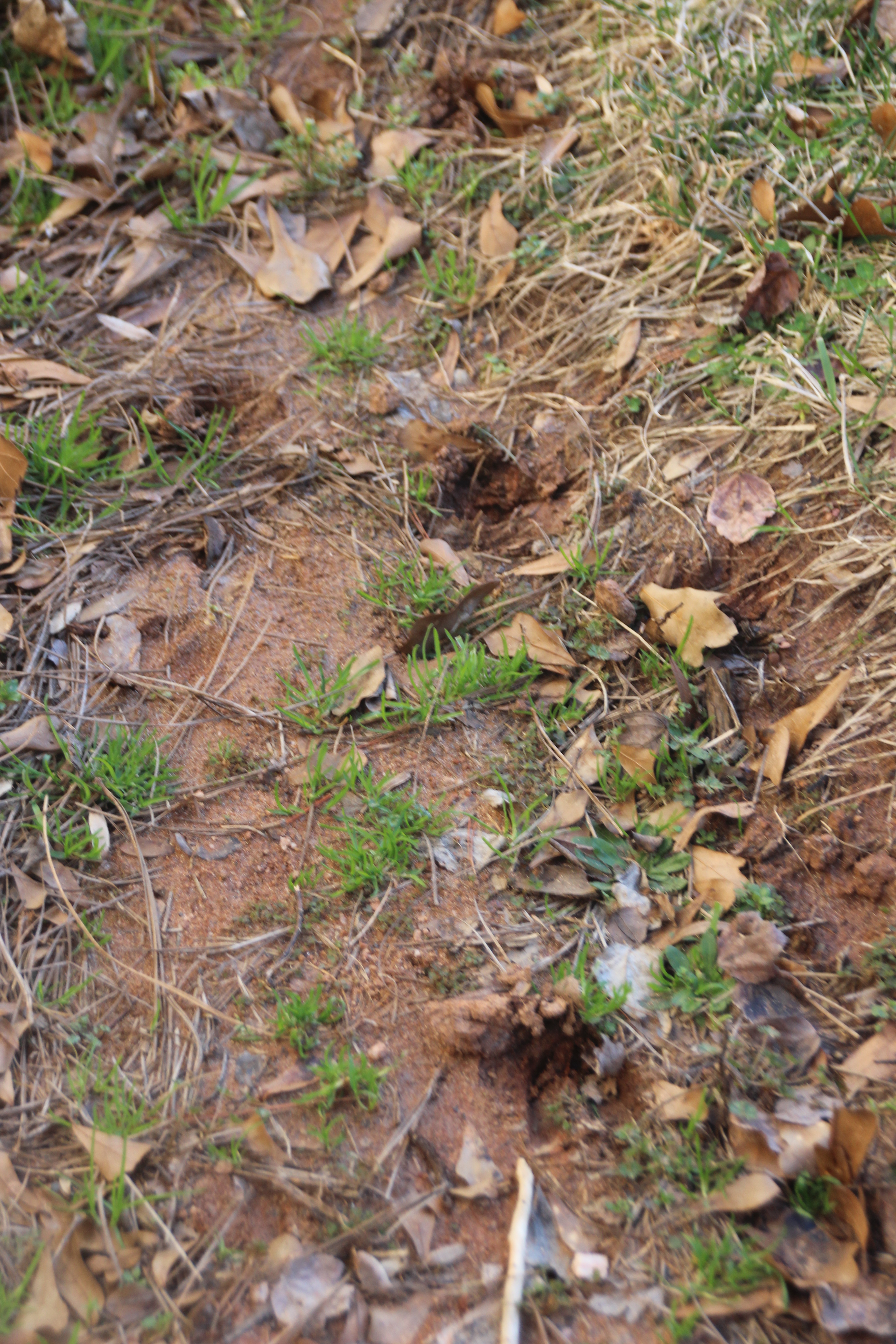
The most abundant passengers I find on the downed sticks during the winter months are jelly ears/ Auricularia auricula-judae.

Jelly Ear / Auricularia auricula-judae

These brown, ear-shaped forms are cold and rubbery on the outside and slimy on the inside. The top side acts like a cup to hold rain until it can be absorbed.

The ears grow in clusters and get large and heavy by winter from the fall rains.

I try to remember to wear gloves as I pick up sticks, so as not to get the jelly from an ear on my hands.

Bigger ears and more ears mean more weight. That is what brings the dead branches down.

Do not blame the ears. The jelly ears and gravity are just doing their jobs to bring down the wood to be recycled back into the soil.

These are edible, but eating an ear does not appeal to me. How about you?

FLOW

Tricky, Sticky Mistletoe

I found many large clumps of mistletoe in nearby trees today. The poor trees are being robbed by their lovely tenants.

Mistletoe is a tricky thief. It uses the tree for nutrients and to gain elevation without bothering to grow in height itself.

The genus name of Phorandendron flavescens means tree thief.

Mistletoe depends on birds to eat its berries. The sticky, berry-laden poop sticks to the feathers until the bird lands on a tree and picks them off. This increases the chance that the seed will end up on a branch.

The name mistletoe means dung on twig.

So, sticky is its second trick. Attracting a bird to eat its berries is the first.

Its third trick is to grow root-like haustoria that penetrate the tree bark and tap into the trees’ nutrient moving tissues. No need to get its own water or nutrients, it steals from its host. Mistletoe can successfully photosynthesize because its seed is high up in the branches nearer the sun without ever supporting itself.

Both the berries and leaves are poisonous to humans. Some of its compounds have been tried to treat diseases.

So why do we use this trickster in our holiday traditions? Why hang a poisonous thief over our doors and kiss under it?

There are many legends about the origins of this tradition. I have my own hypothesis.

During the cold winter months, we are lonely for anything green. Balls of green leaves and pearly berries seem almost magical among the stark browns and grays.

We admire the grit of anything high and green when everything else is dormant.

Phoradendron flavescens/ mistletoe

These admirable qualities are due to tricks and theft. The prices for its height were paid by birds with sticky bottoms. The support of the tree keeps it able to remain green while others must pull in their resources and save them for spring.

I won’t be hanging any mistletoe over my door. A parasite does not inspire any romantic thoughts from me.

The tricky, sticky mistletoe can remain on the poor tree.

Happy Holidays

FLOW

Winter Roses

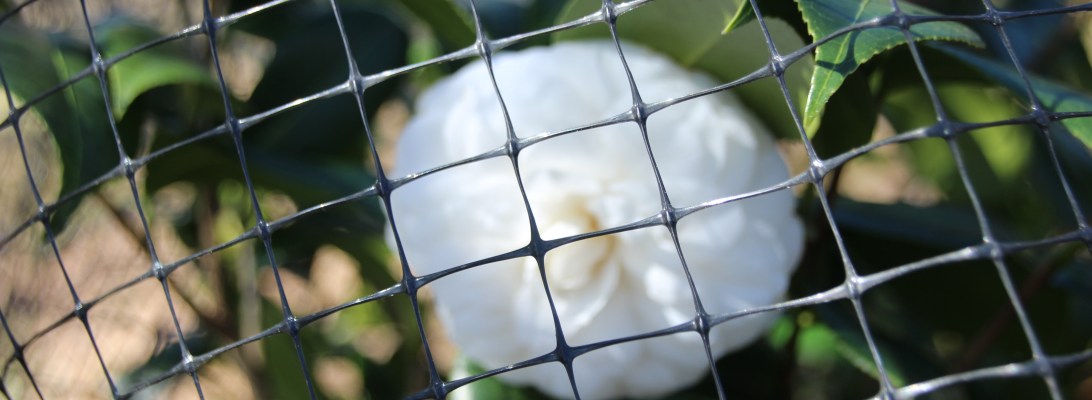
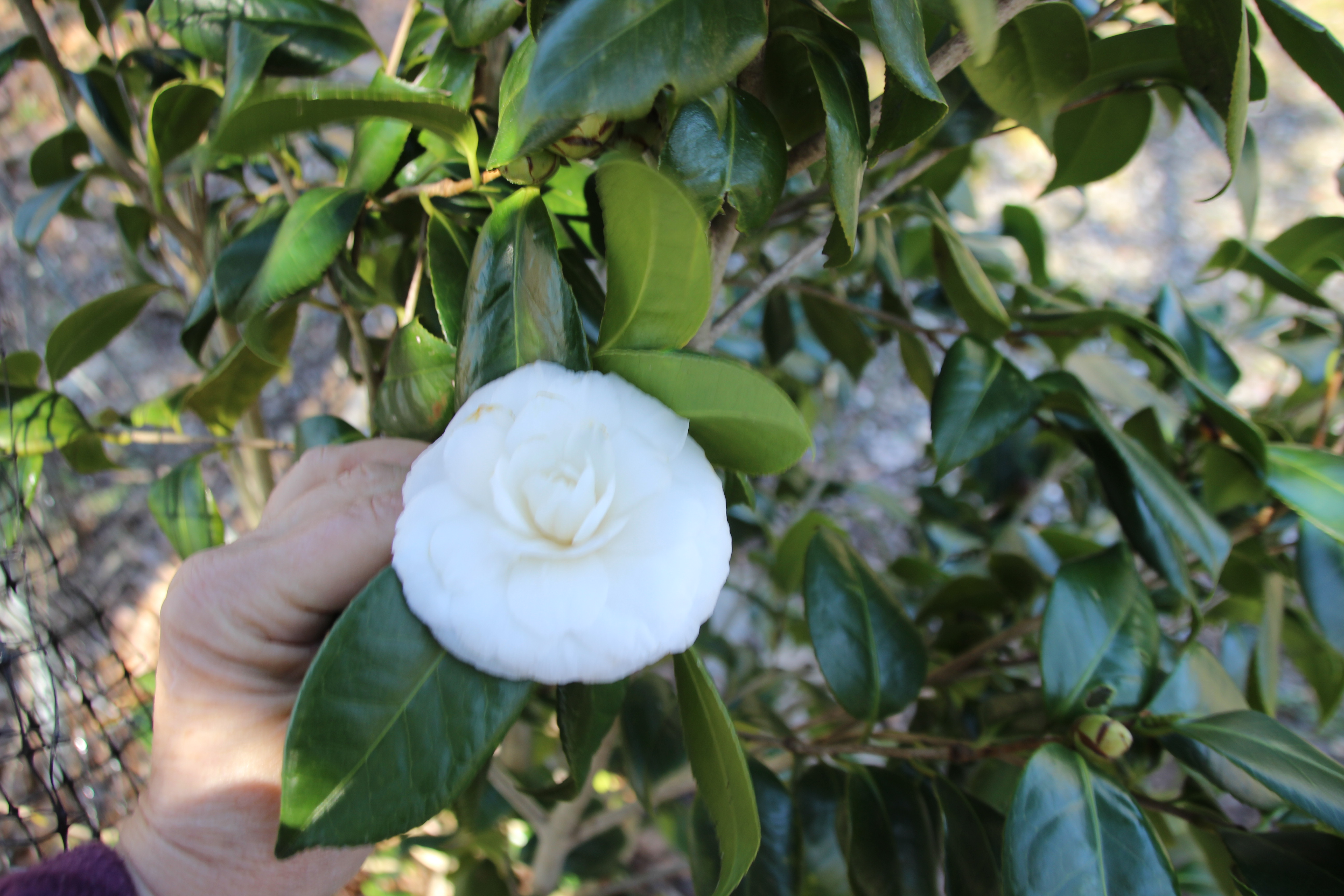
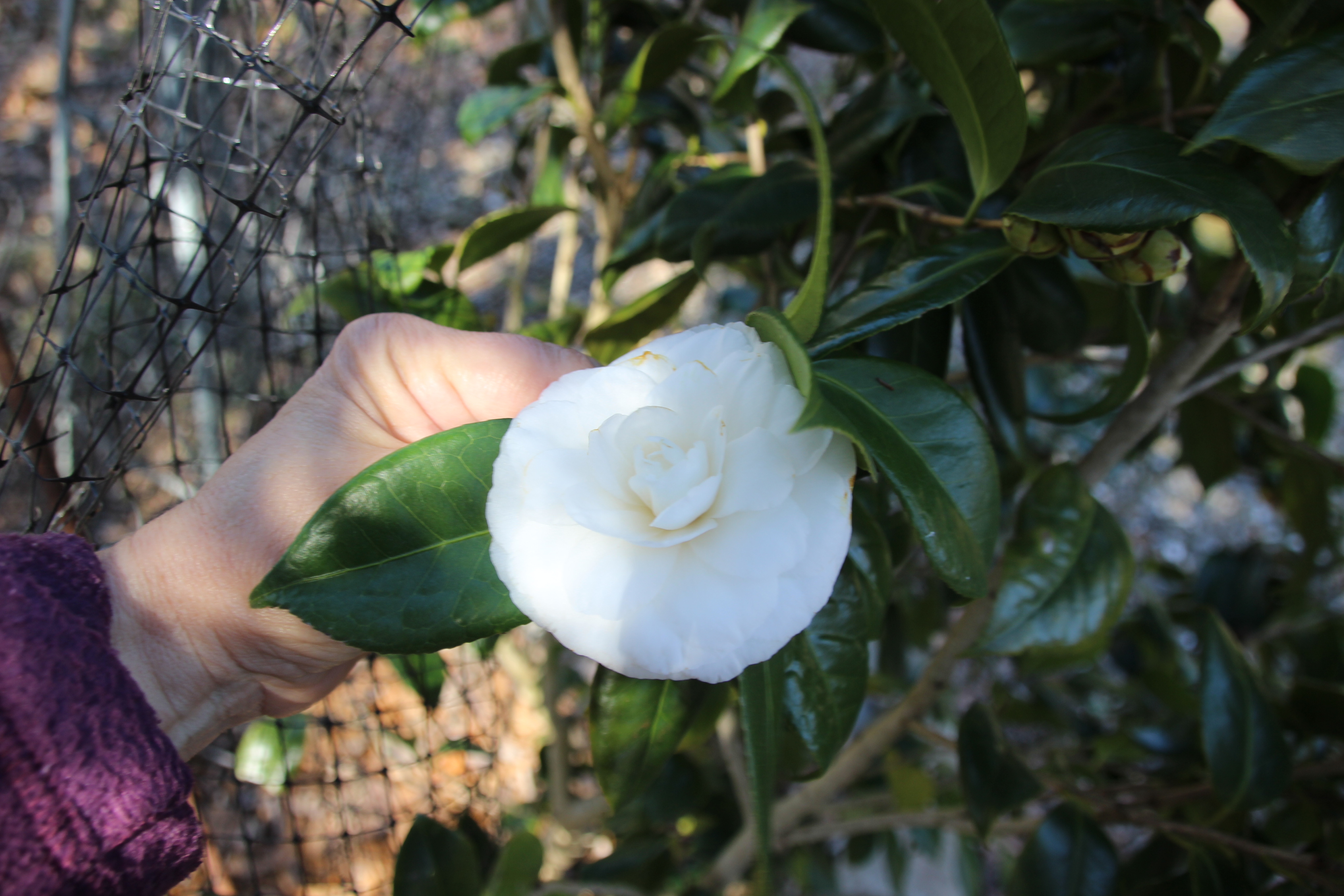
Camellias are my winter roses.

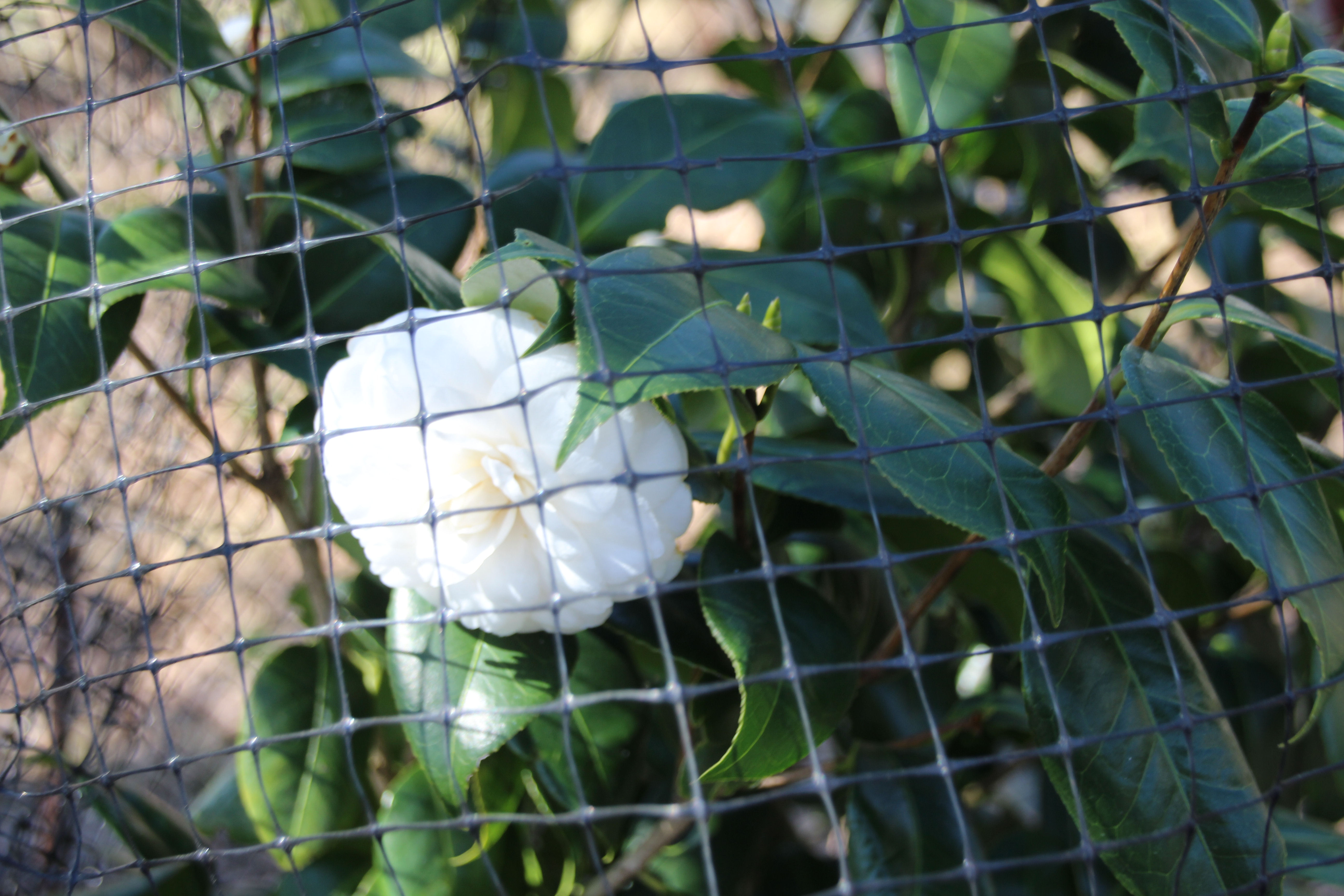
The large bloom is ‘White by the Gate.’ It will have a few blooms at a time all winter.

The smaller pink is ‘Jean May.’ She has been blooming for months and will continue until a hard freeze.

I love them both for blooms in the cold. Such a sweet winter treat!

Flower

Into the Woods

I have trouble staying inside, even in winter. A ceiling is stifling and walls are confining.

I have to get out just a bit to breathe and regain balance.

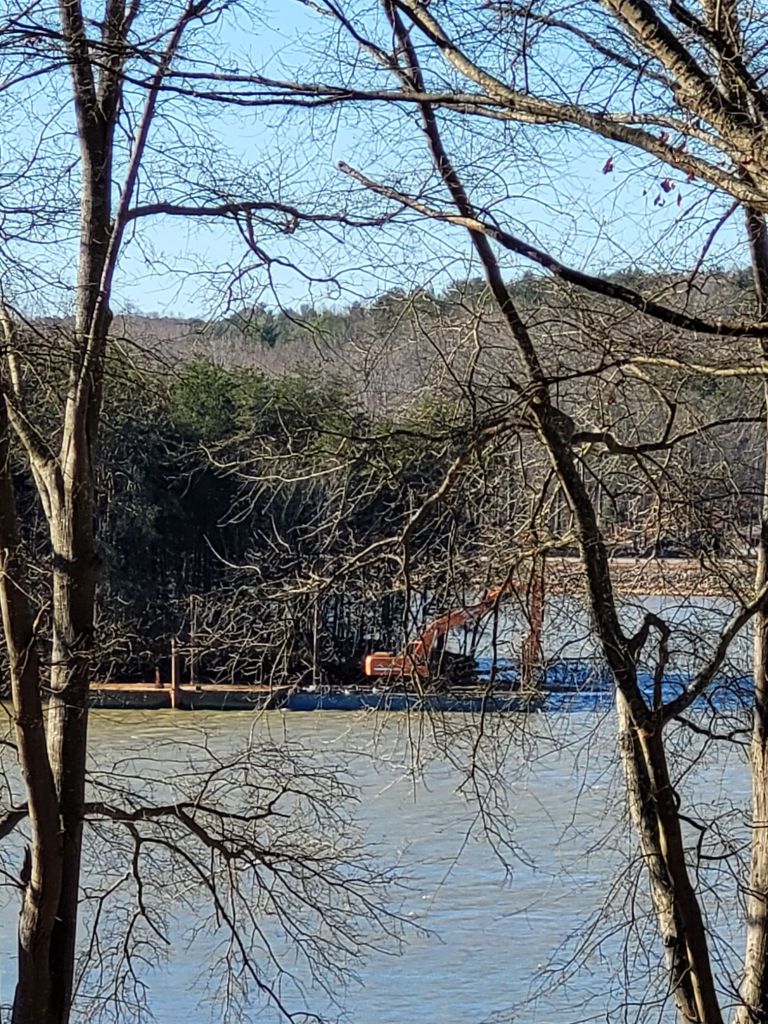
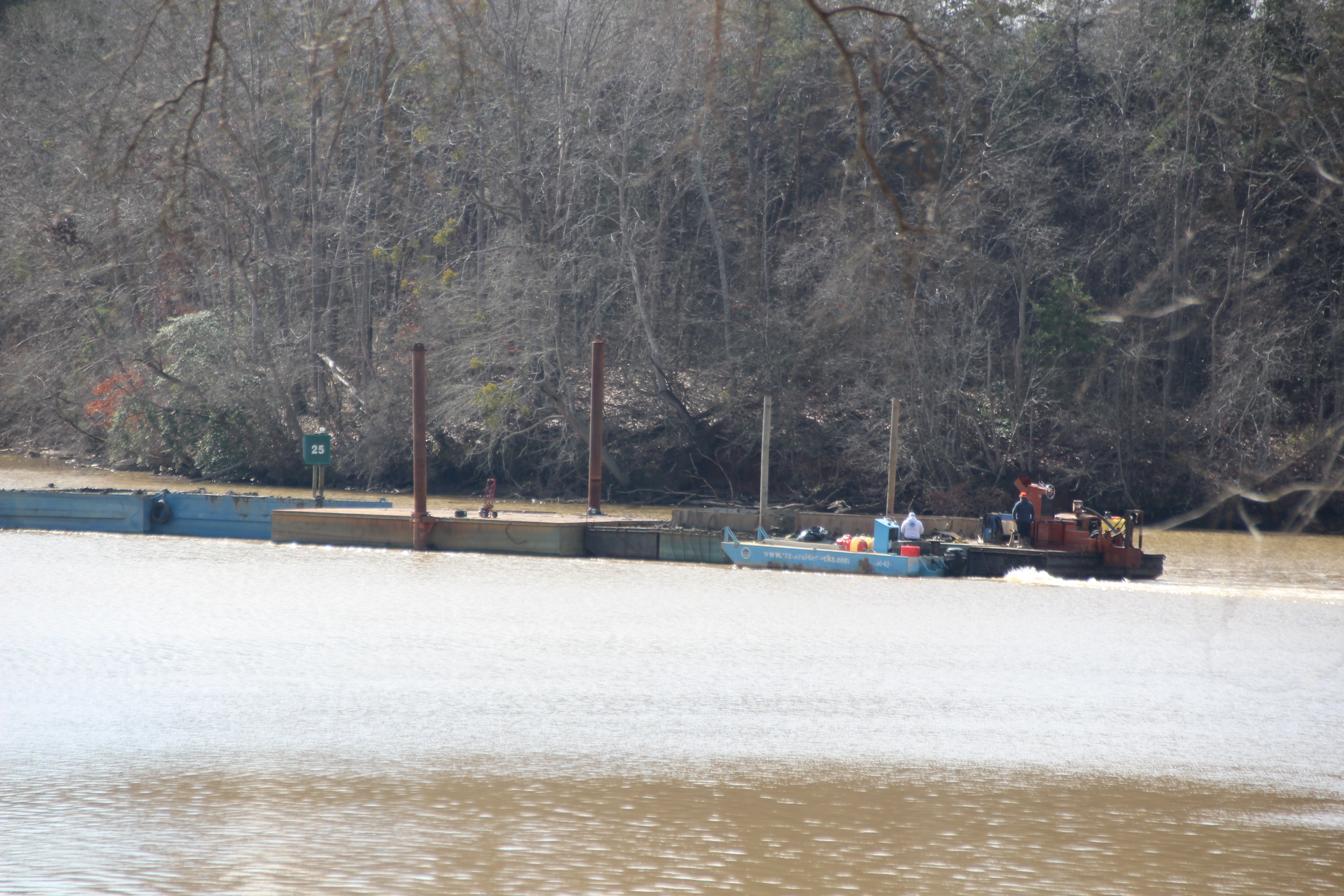
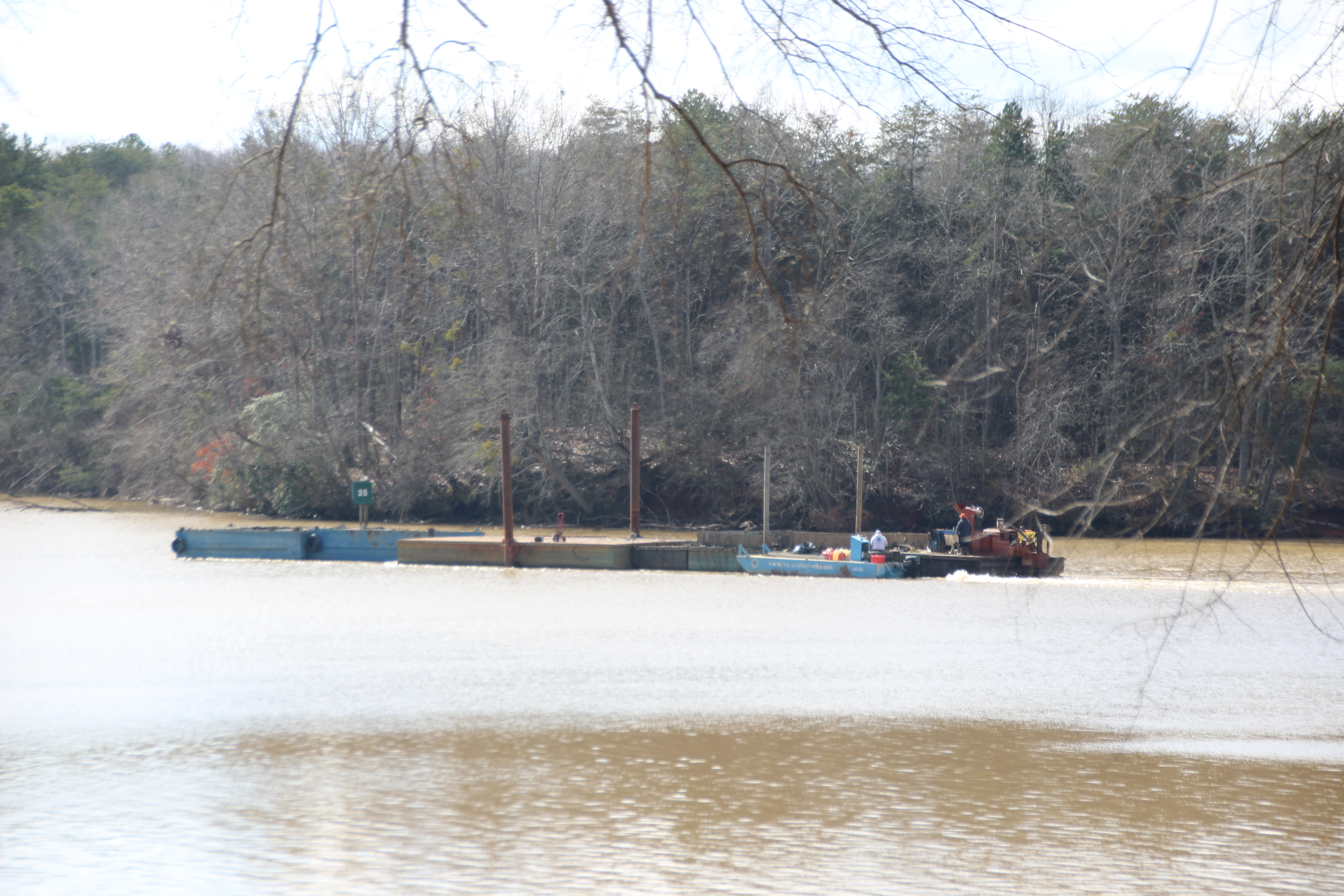
Of course, I take my camera. Here are some scenes from my latest foray into the forest.

There is a lot to find in a forest.

FLOW

Holding Up Home

The holidays are about family and food. Many folks are lucky enough to travel back home.

My childhood home is just the same except Daddy is gone and Mama is in an assisted living facility.

My husband’s family farm is in the process of being cleaned out. Both his parents are gone.

So, where is home now?

My children are under the roof of the house my husband and I built ourselves. This is their home.

We will spend Thanksgiving at the farm and tomorrow with Mama and my sister at the facility.

So, where is home now?

I never questioned where home was before. Home was wherever my parents and sister were.

Home was daddy’s garden, the swing, the living room with the piano, daddy’s chair by the window.

That place is still there, but empty and quiet. It is full of old things and fond memories, not people.

Home is warm and noisy and busy.

We are the home now. We are holding up home. We are the foundation, whether solid or cracked.

We must hold up home for our children. We must be the home.

I never felt this weight before. Holding everyone together, preserving the family.

Today as I make Mama’s sweet potato casserole and Nana’s stuffing, I will appreciate all the holidays behind me

and realize that I am holding up home like a bridge between the past and the future.

Home for the holidays.

I am home. I am the home.

Happy Thanksgiving

FLOWER

My Morning Visitor

I look out the front door every time I pass through the foyer from one side of the house to the other. On many a morning I spy my little friend, Chip, sitting on the bench outside. I have tried several times this week to get its photo. It disappears so quickly that sometimes I wonder if I imagine these visits.

I finally got its photo this morning. It is cold. We had frost. My friend moved more slowly than usual.

I am glad to have evidence of these visits because something happened here. I do not know for sure, but I fear some human put out poison. My gardens used to have many little friends darting around as I worked. Some of them got so used to me that they would stop and watch me.

Then one day this summer, they all disappeared. I did not see any for weeks. My neighbor and I discussed this. She would text me to report a sighting. We were relieved to see even one. Now, there are two or three at the most. I know there are at least two because one is very small.

They skitter across my acorn strewn deck filling their cheeks with the best acorns. The little one looks comical with his bulging head and tiny body. I like to think that the small one is the baby I rescued from the fish pond.

I do not put out food. That creates dependency. I do grow plants that provide food for them to forage.

When I see my visitor on the bench, I wonder if it remembers the Ground Cherry ‘Goldie’ that grew in a pot on that very spot for two summers. They would climb the plant and shake down the fruits. I enjoyed watching this trick.

This is one of the joys of gardening, the visitors that come.

FLOW

Tea and Stones

Sometimes I am lead down unexpected paths of discovery. I have been sick for ten days, so I have spent a lot of time searching shoes, purses and brooches on-line. I have been sucked into the internet for hours at a time. Here is an example of one of my internet adventures.

My latest path started with a tea box. I was perusing the many choices of teas on the internet and was drawn to a specific type due to its lovely box. I purchased the tea to get its box to make a bookmark with it. I was drawn to the box because it reminded me of the botanical work of Mary Delany.

Then I looked up Mary Delany and ordered this lovely box of cards with photos of her flower mosaics on them. I was trying to tell folks about this remarkable woman who did not start making these marvels until the age of 72. She is one of my ‘old lady idols. ‘

The cards came in the most beautiful box…another box for me.

I realized I wanted to learn more about Mary Delany, so I looked up books about her life. I ordered the one by Molly Peacock and put another by Ruth Hayden on my Christmas list. I hope Santazon brings it!

We even waited at the gate for the book’s delivery. (I stalk my delivery people on-line.) It was later delivered to our neighbor’s porch, so Mr. Flower had to go retrieve it in the dark. Since he went to all that trouble, I felt compelled to start reading the book immediately. It is fabulous and has many photographs of Mary Delany’s art and several of Mary herself.

Then a fellow blogger posted a lovely blog about painted rocks being left out for folks to find.

https://wordpress.com/read/feeds/24620341/posts/4372809849.

I thought this was an interesting idea since I am intimidated by the thought of painting on canvas. I have plenty of river rock and paint. I also have thousands of photographs of flowers. I figured that painting my flowers onto rocks would make better plant markers than my chop sticks, plastic knives, etc. that I inevitably step on and break.

So, this is how a box of tea lead to stones.

FLOW

The Gran Plant

I spent decades calling this ‘The Gran Plant’ before I knew its proper name. Our family still refers to it as such. My Gran kept this plant in her foyer in the winter and on her porch in the summer. It was planted in a gorgeous Majolica Jardiniere. My Aunt has this planter in her dining room.

It seems strange to call it ‘Christmas Candle Plant’ or ‘Redbird Cactus’ since I have never seen it bloom.

I won’t be calling it ‘Devil’s Backbone’ because I have too many other “Devil’s” all ready. Its Latin name is Euphorbia (Pedilanthus)tithymaloides. I definitely will not be calling it that.

There are many conflicting facts about this plant on the internet. The most interesting pair was that the milky sap is poisonous versus making a cocktail with it. Some say water it in winter, some say do not. Another tip is to root cuttings in dry soil, while I have always successfully rooted them in water.

I am the guardian of ‘The Gran Plant’ and ‘The Pearson Peony’ for the family. I consider this responsibility of great importance. These living legacies are of great value.

The FLOWER Keeper

My Big Begonias

My favorite begonias can get rather large. They can also change colors.

This type of angel wing begonia is gorgeous in a pot, in a vase or in the ground.

It is time to take cuttings. This means sharing. I have had this begonia for decades. It is a keeper.

I cut the longest stems and remove most of the leaves. Stems must be cut at an angel just before putting them in water.

Blooms should be removed, but I like to leave them to enjoy for a bit longer. Remove when they start to shed.

A sunny location will make the blooms red and the leaves bronzed.

I prefer green leaves so mine get less sun. New leaves tend to be bronze wherever this begonia is planted.

Shade makes the blooms a light pink and white. This is lovely also.

The blooms hang in clusters.

I think an individual flower is worth inspection.

This is a perfect fall or winter gift. This vase just went to my neighbor, Nancy, this afternoon.

Cuttings will grow in water for years, but the plants need to be put in the ground if you want to see how big they can get.

Pots brought inside for winter will go semi-dormant if not in heated space and kept lightly watered.

Begonias left in the ground go dormant and take longer to get going in the spring. (I am in zone 7.)

I vary my over-wintering methods to a few each way. This ensures that I will have this big begonia forever to pass along.

FLOWER (with scissors)