Mr. Flower chops firewood. He keeps big chunks of stumps near the woodpile to split wood on. These serve their purpose for many years until the fungi find them.
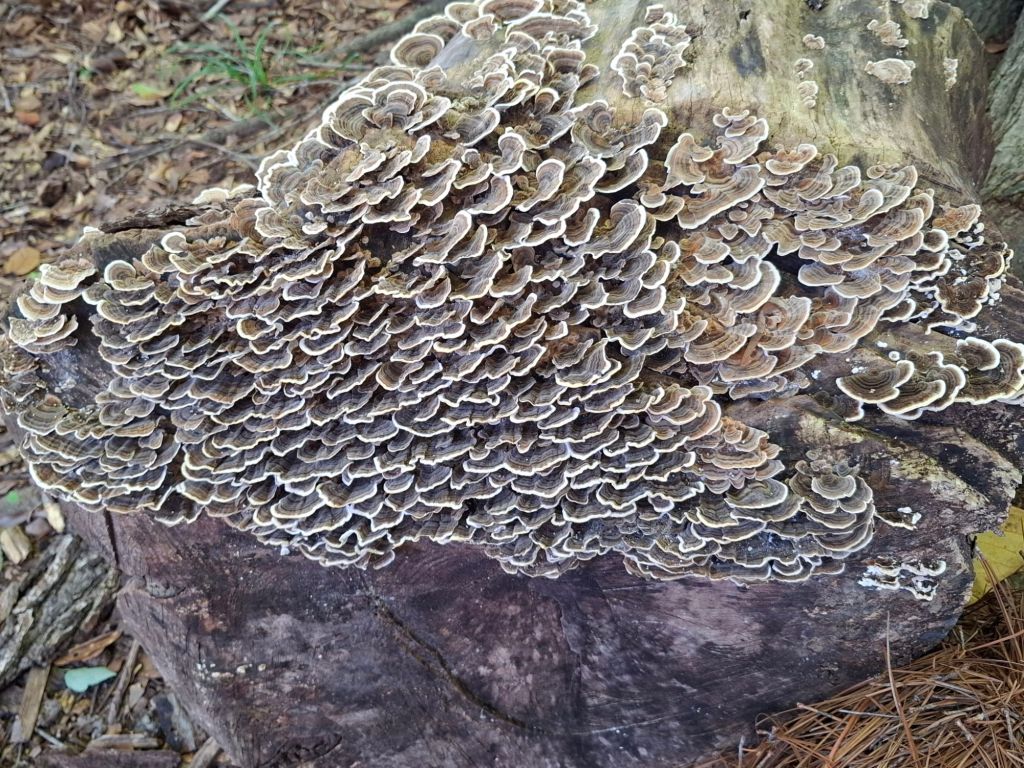
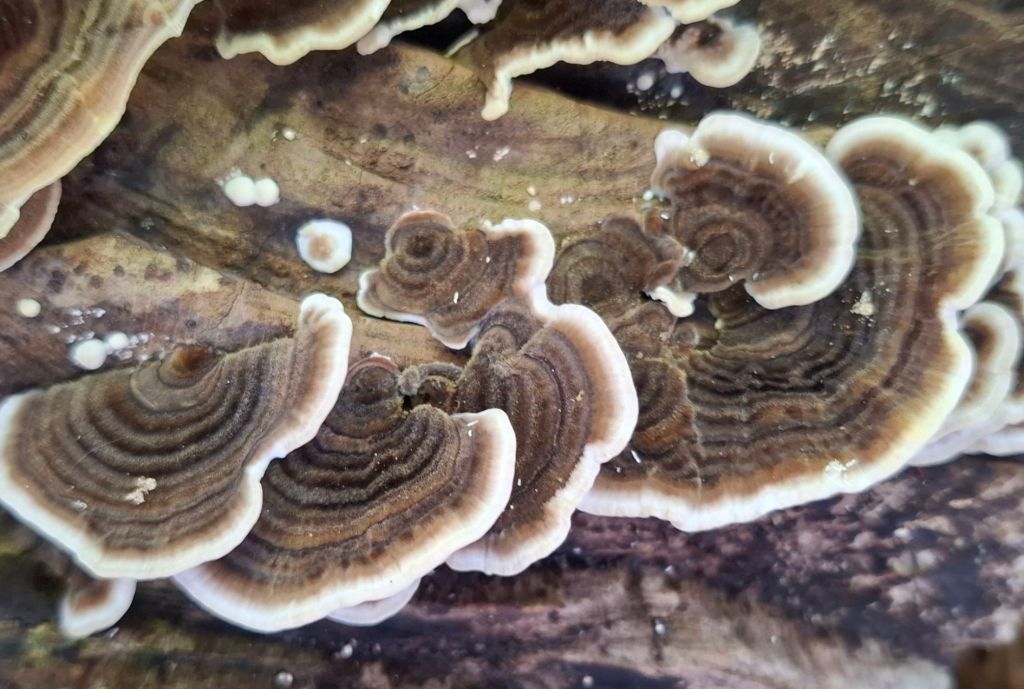
Layers of Turkey Tail fungus
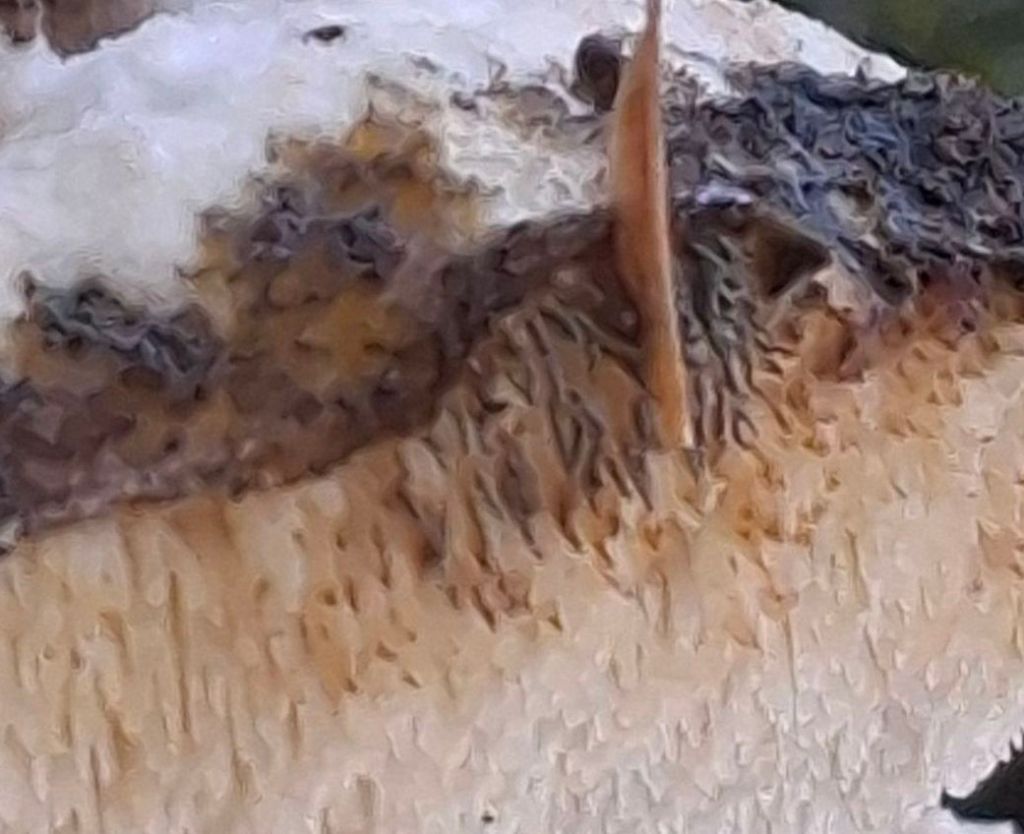
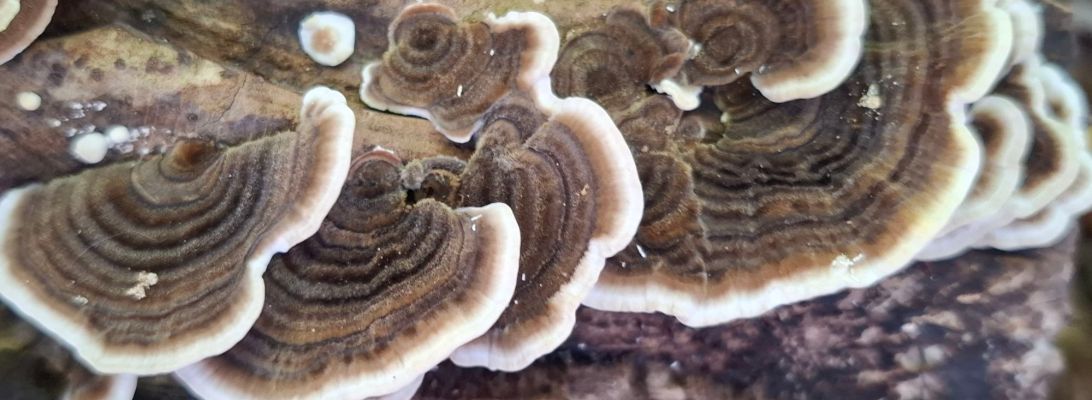
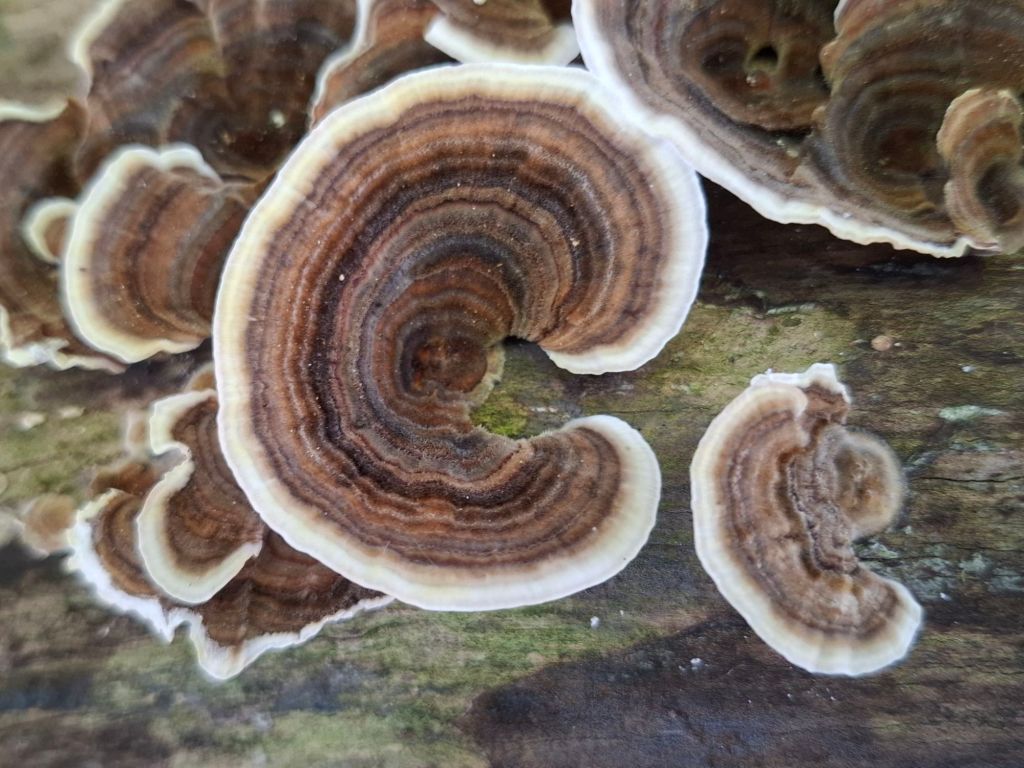
This chunk is covered in hundreds of Turkey Tails. The proper name is Trametes versicolor. The name is due to the concentric rings of various colors. The top is velvety not smooth.
Trametes versicolor
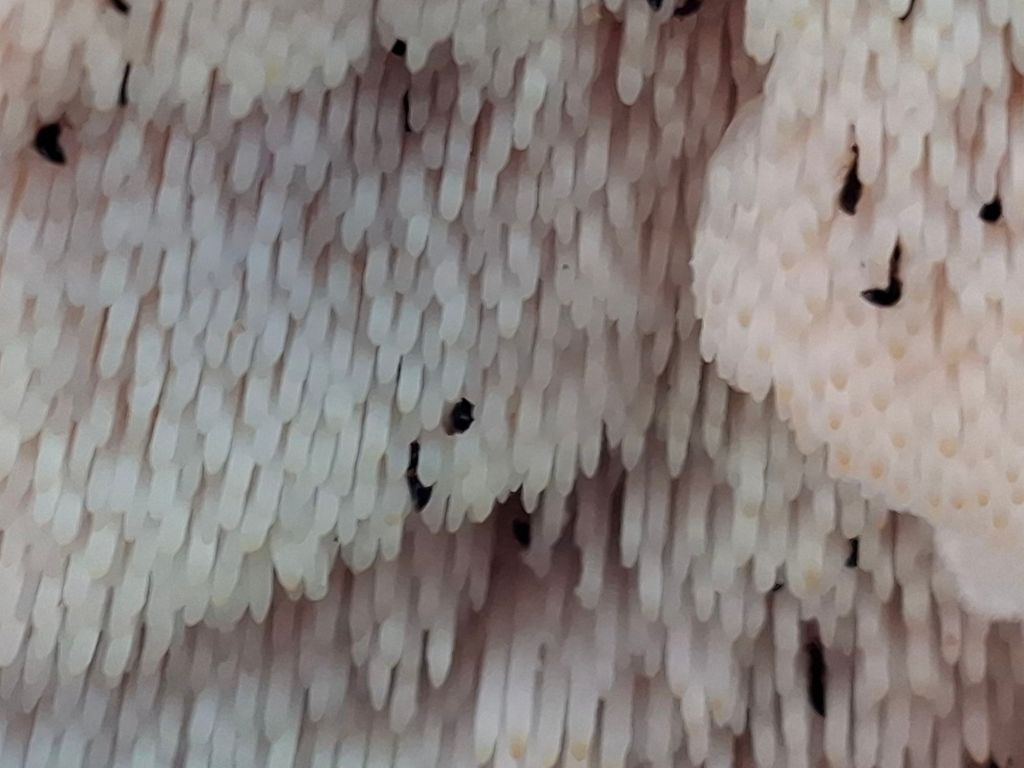
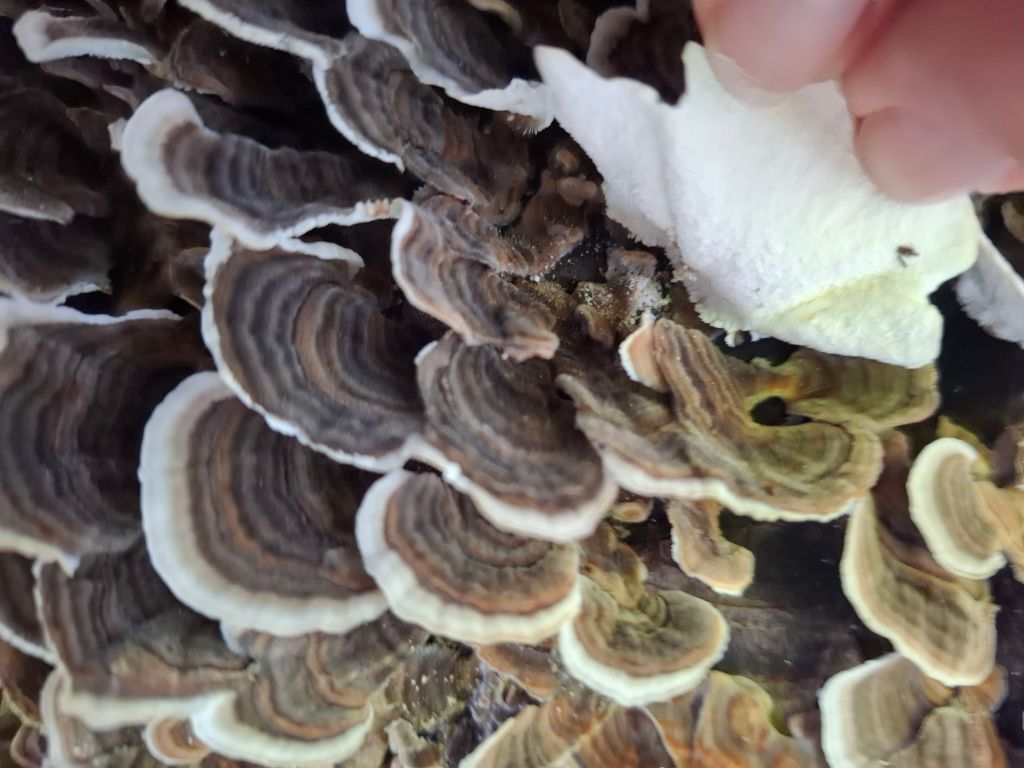
The porous underside is white. The margin is a lighter color.
Polypore under-surface
Its lower layers are fan-shaped with the top looping around to look kidney-shaped.
I spotted something bright pink and red among brown woodchips. The shape screamed stinkhorn. I did not care to take a whiff to confirm my suspicion. I have seen phallus fungi before. All types of fungi show up on the mountain when it rains. This one is named Mutinus ravenelii.
Mutinous ravenelii
It was named for a South Carolina biologist, Henry William Ravenel. He lived in the eighteen hundreds. I am not sure naming this tiny fungus a Latin term meaning Ravanel’s penis was an honor. It is rather small.
Stand of stinkhorns
They white orbs are “eggs” from which new little stinkhorns will emerge and elongate. I had been monitoring this stand of stinkhorns, so that I could have record of the process.
Stinkhorn eggs
My hopes were smashed when my yardman drove over the little, pink stinkhorns. They were no match for the riding mower. Poor little pinkies.
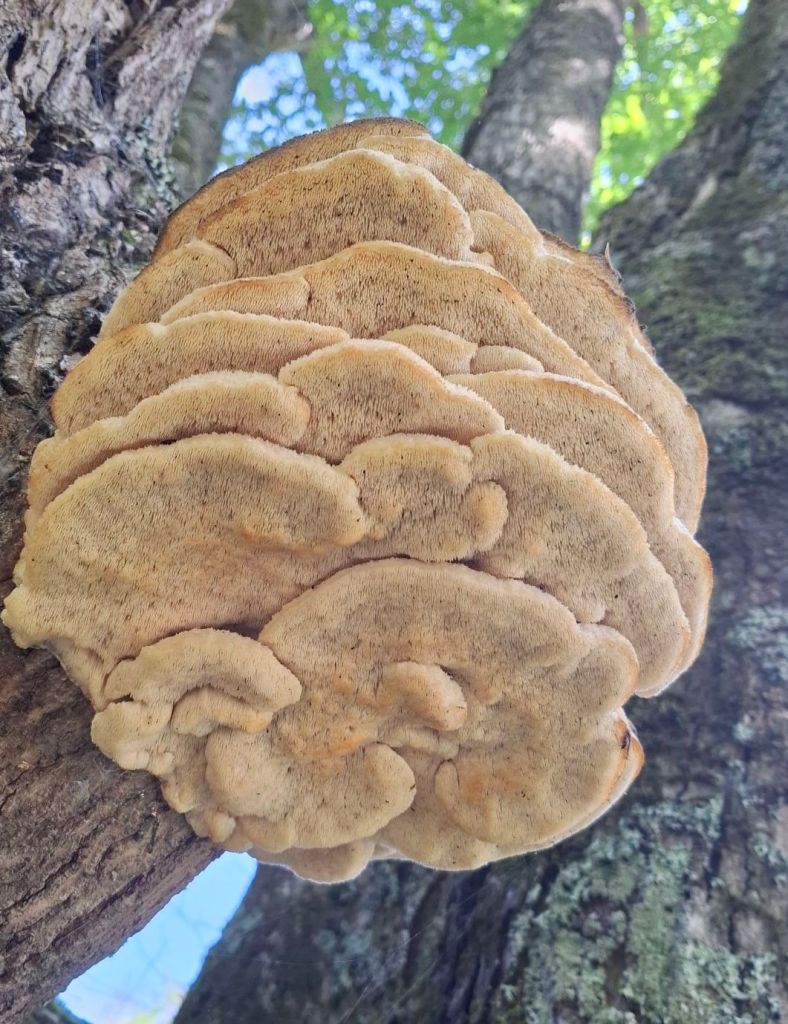
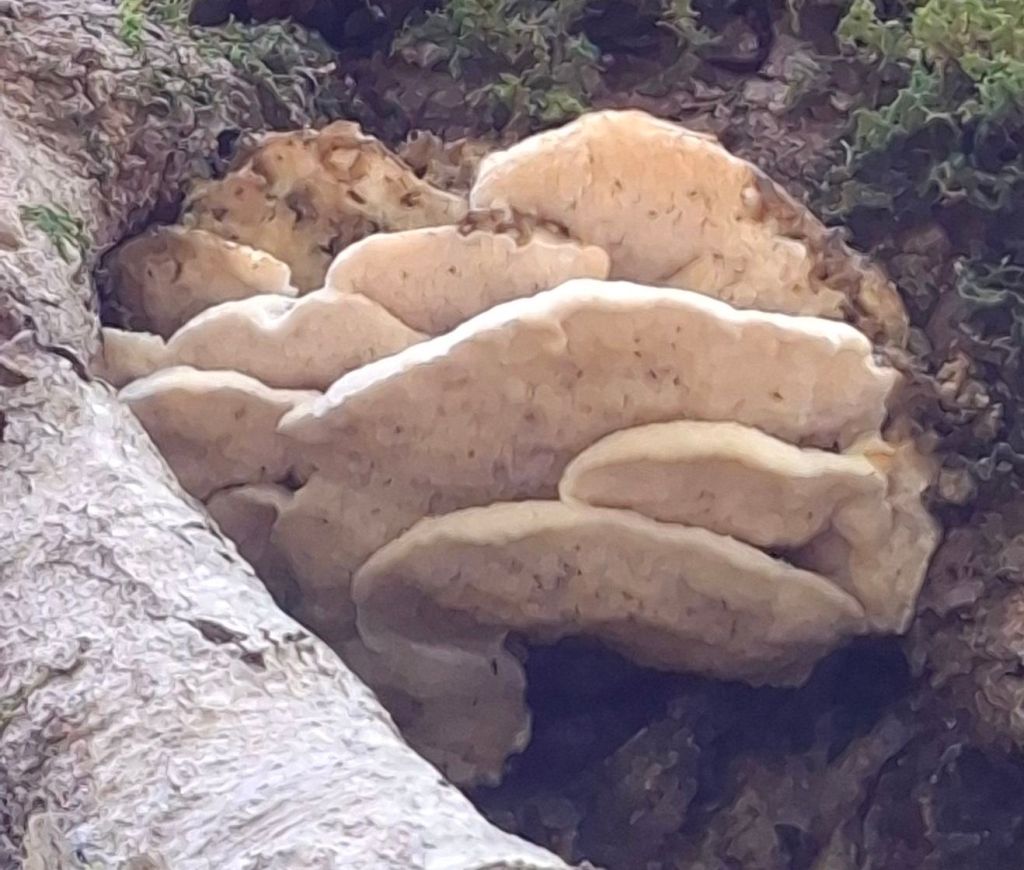
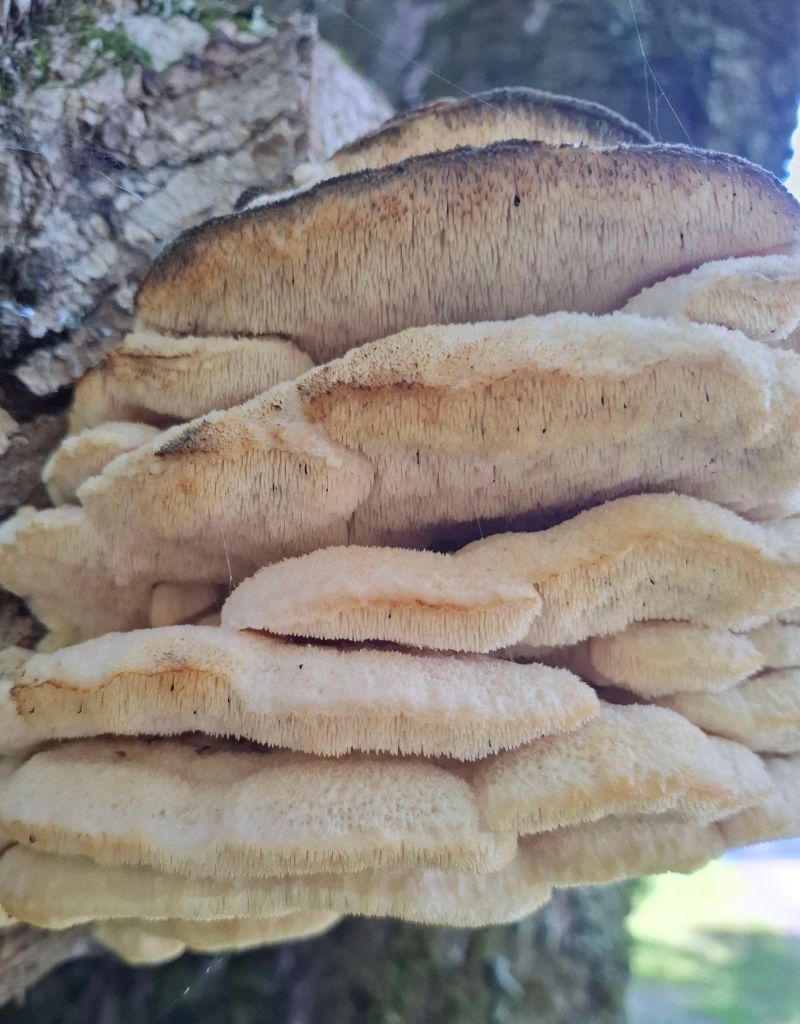
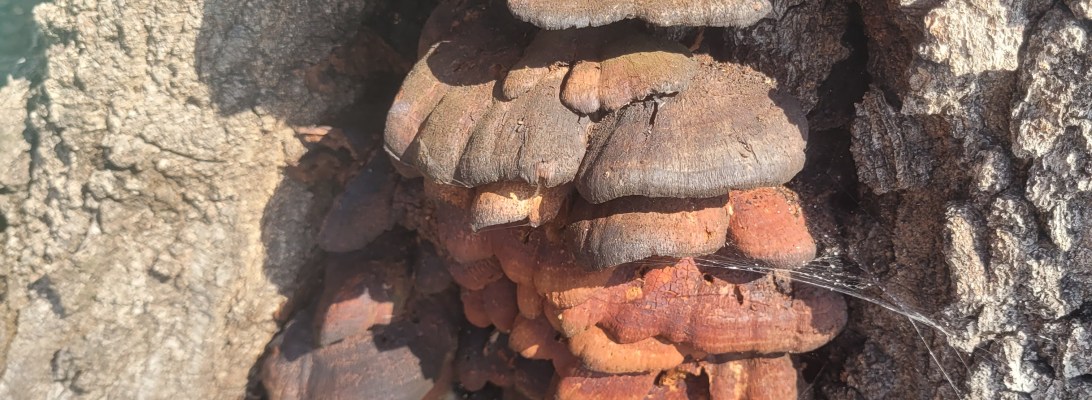
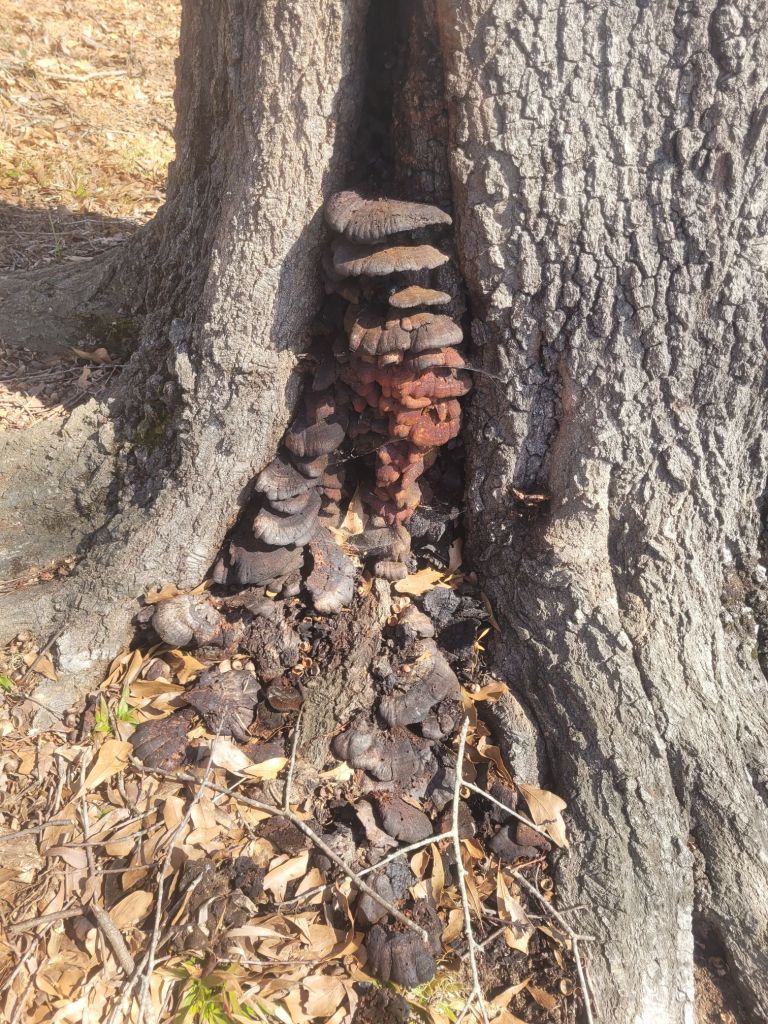
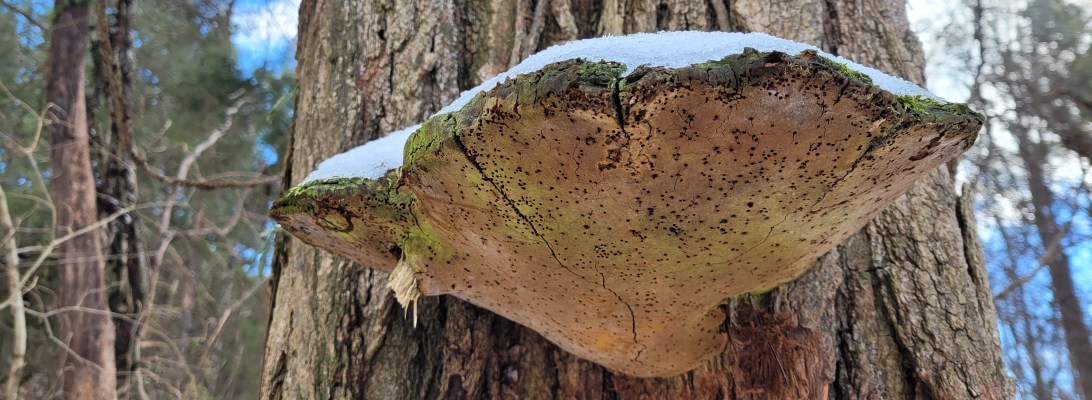
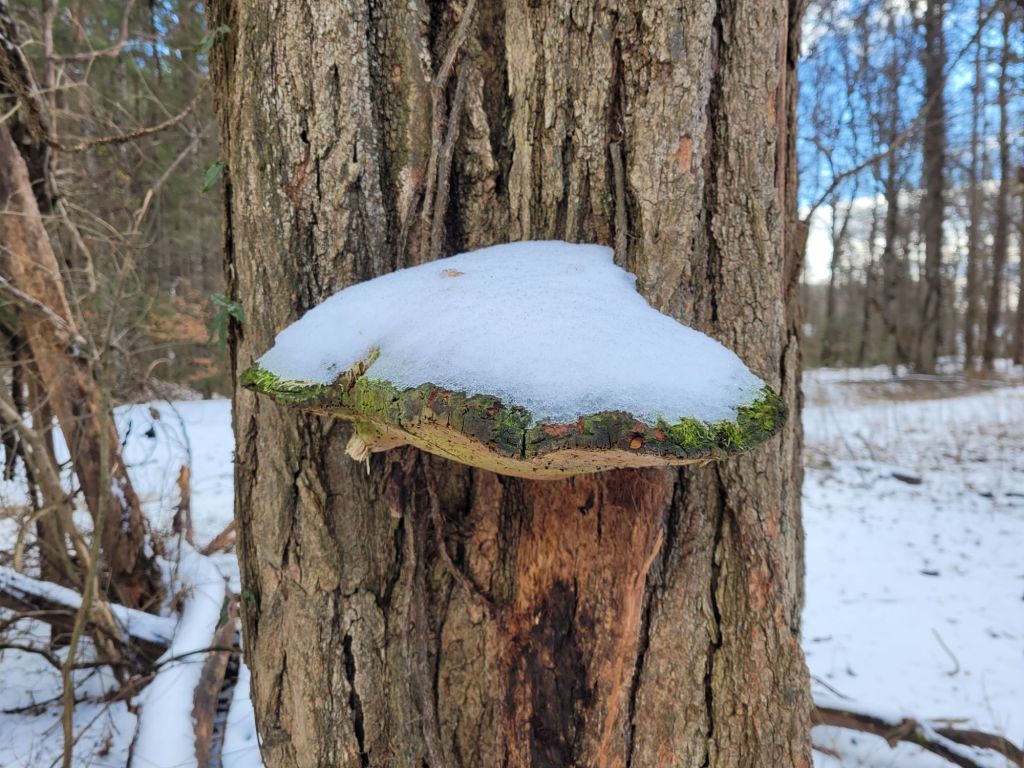
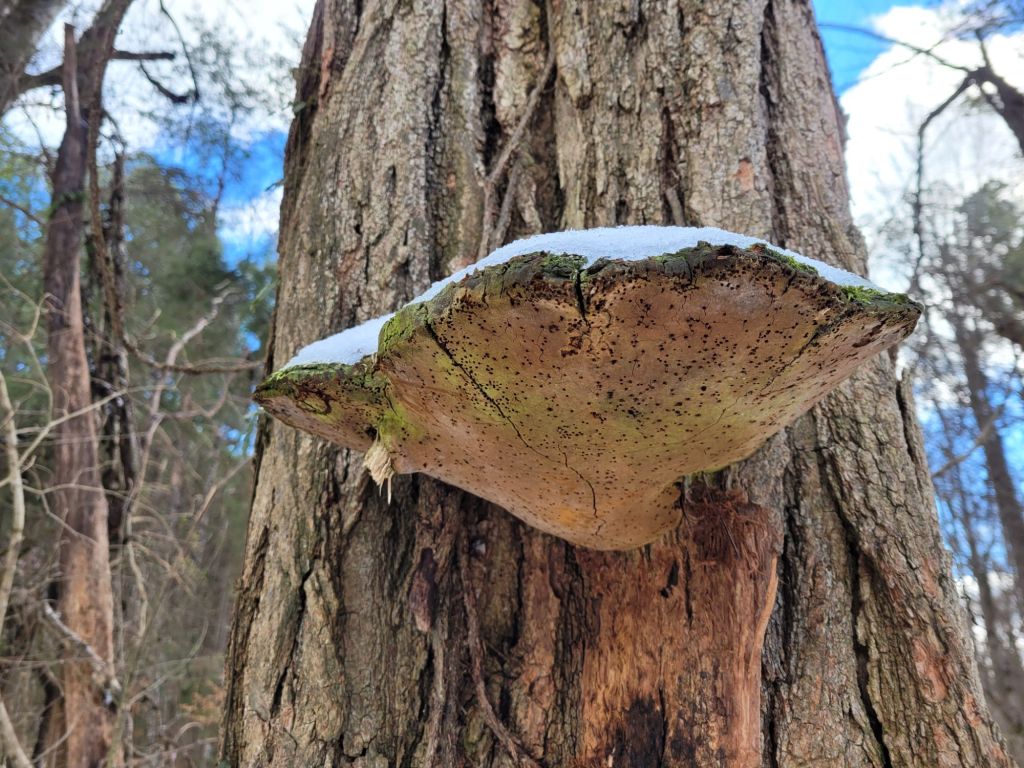
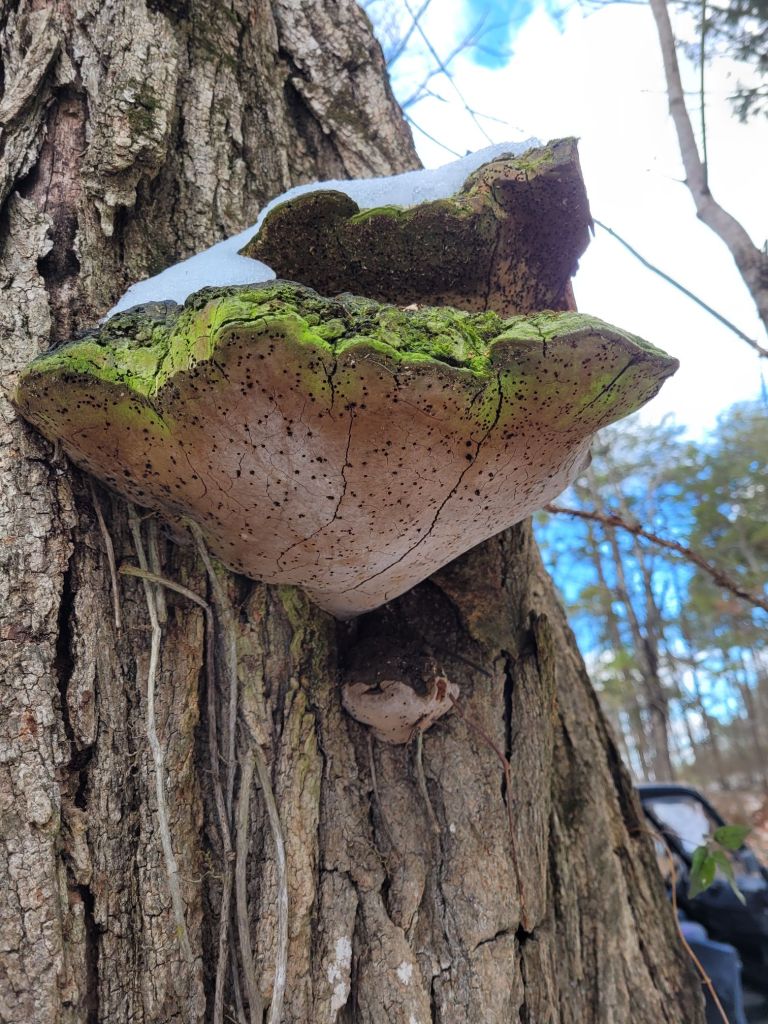
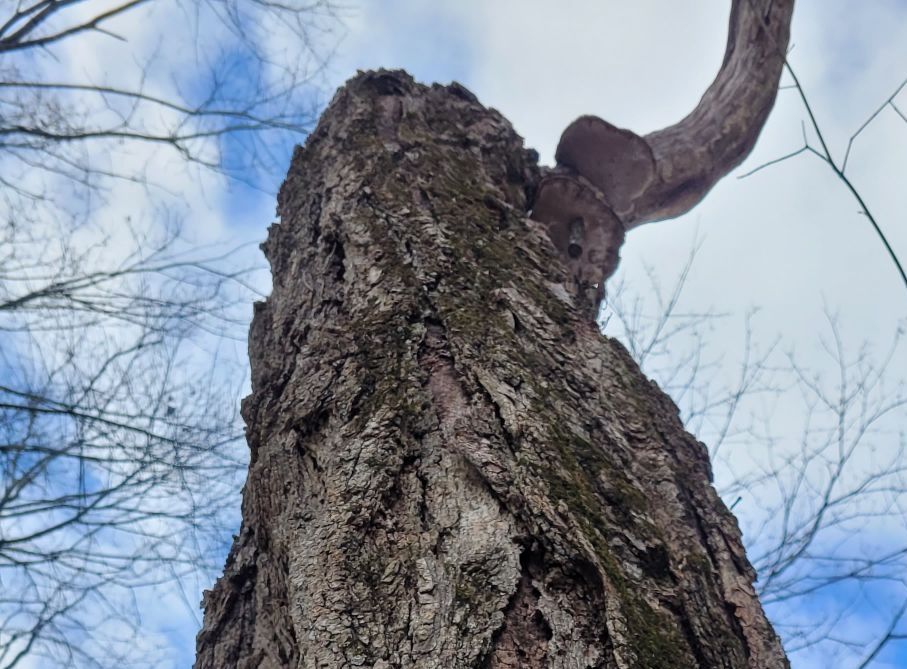
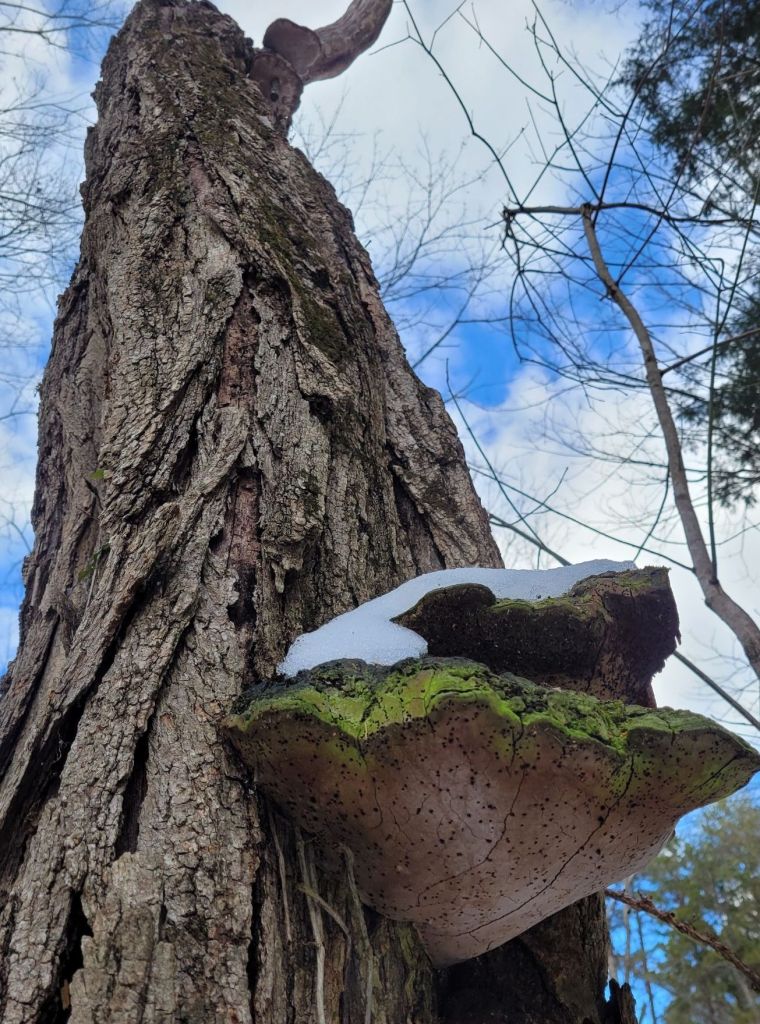
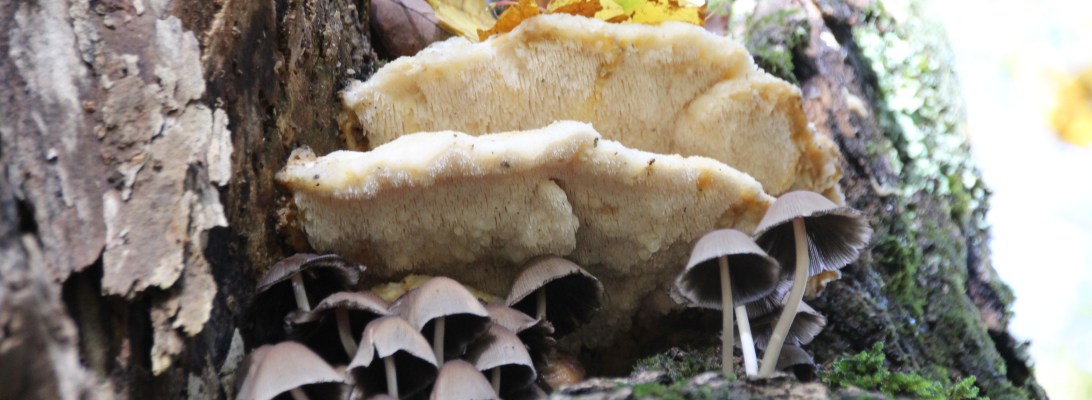
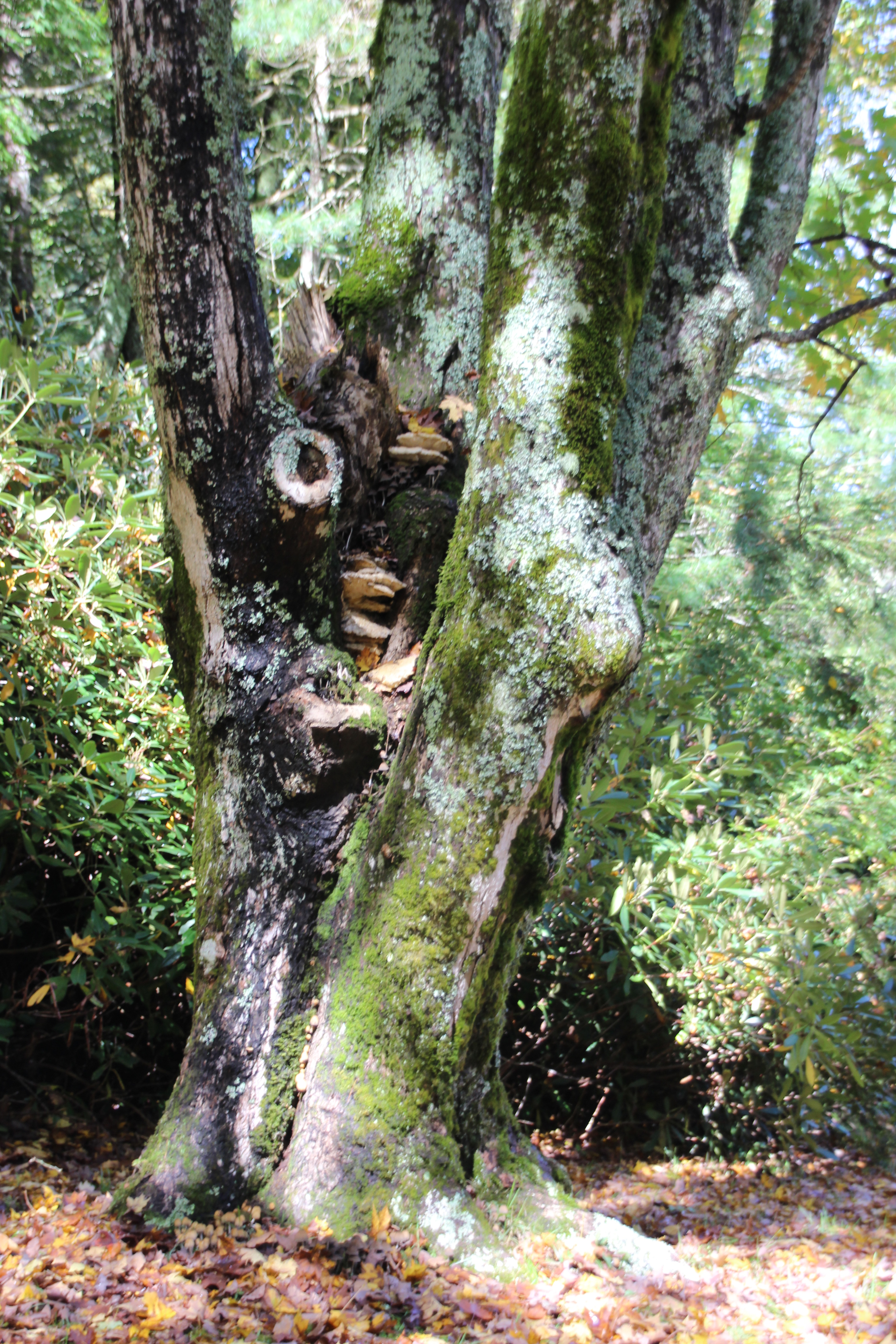
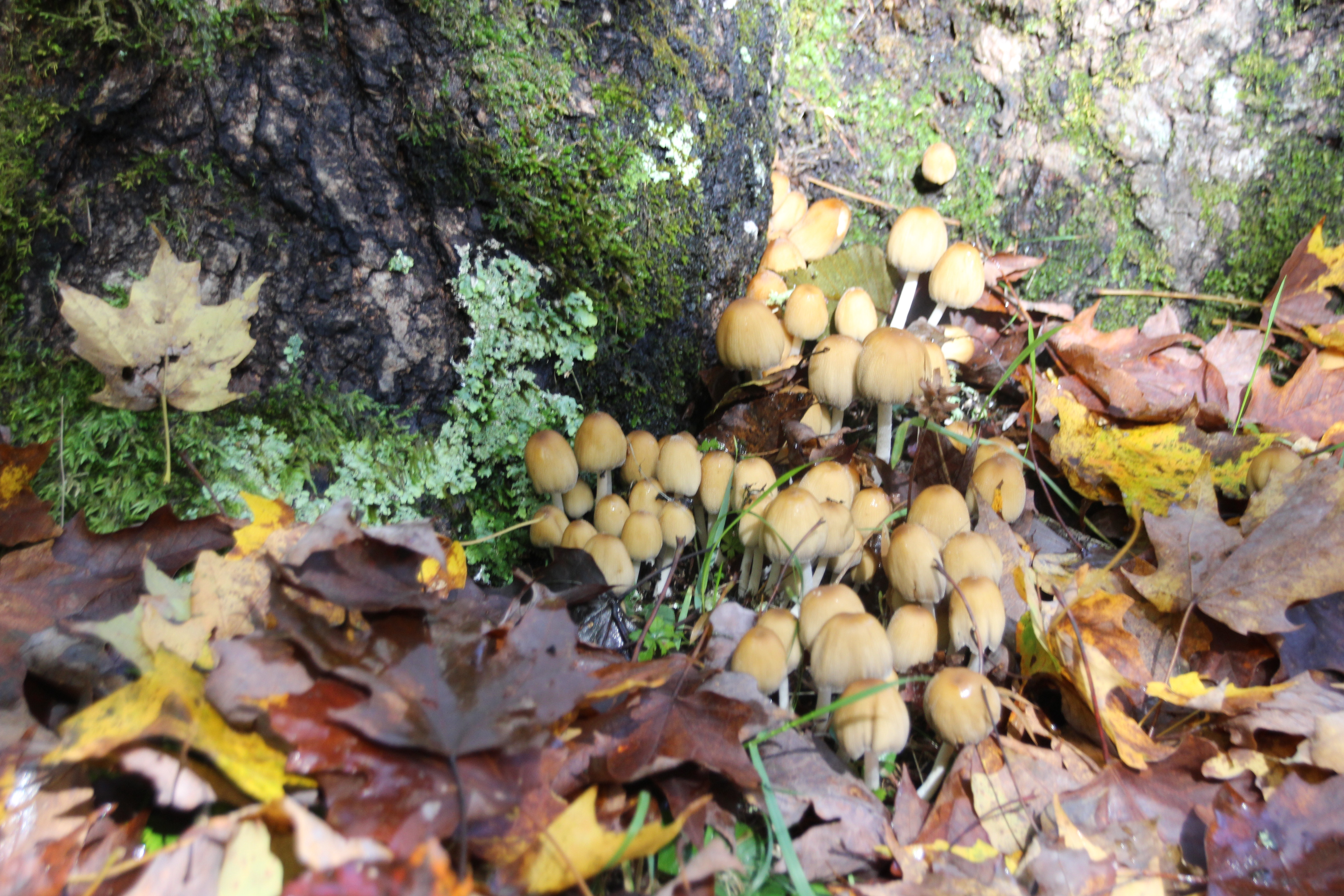
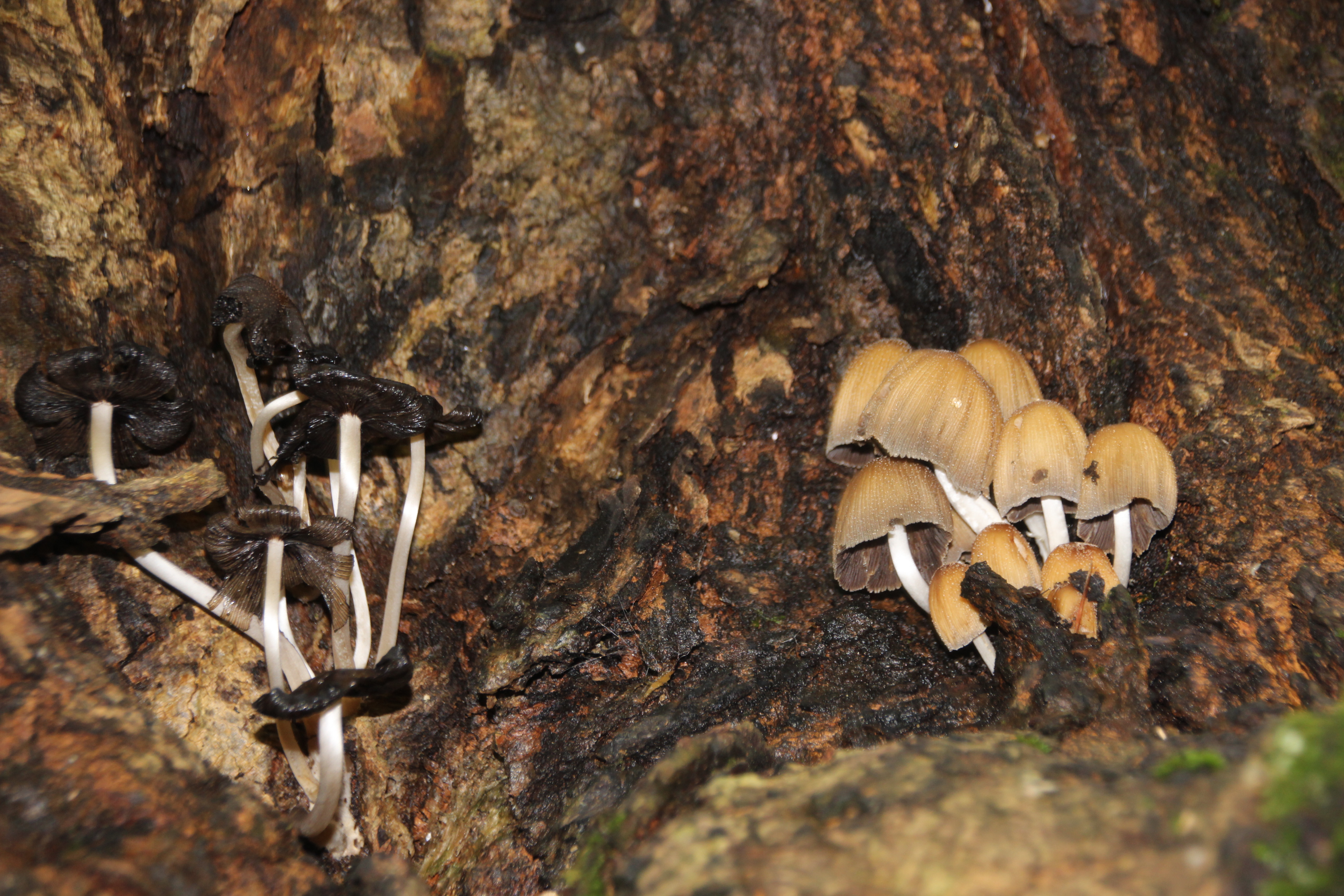
Sometimes the signs are too obvious to ignore. I have been monitoring the conchs at the base of this oak for many years. Next, a species of bracket fungi colonized in a crevasse at its base several years ago and have continually replaced several generations of fruiting bodies.
Old brackets are dark. Newer ones are rust.
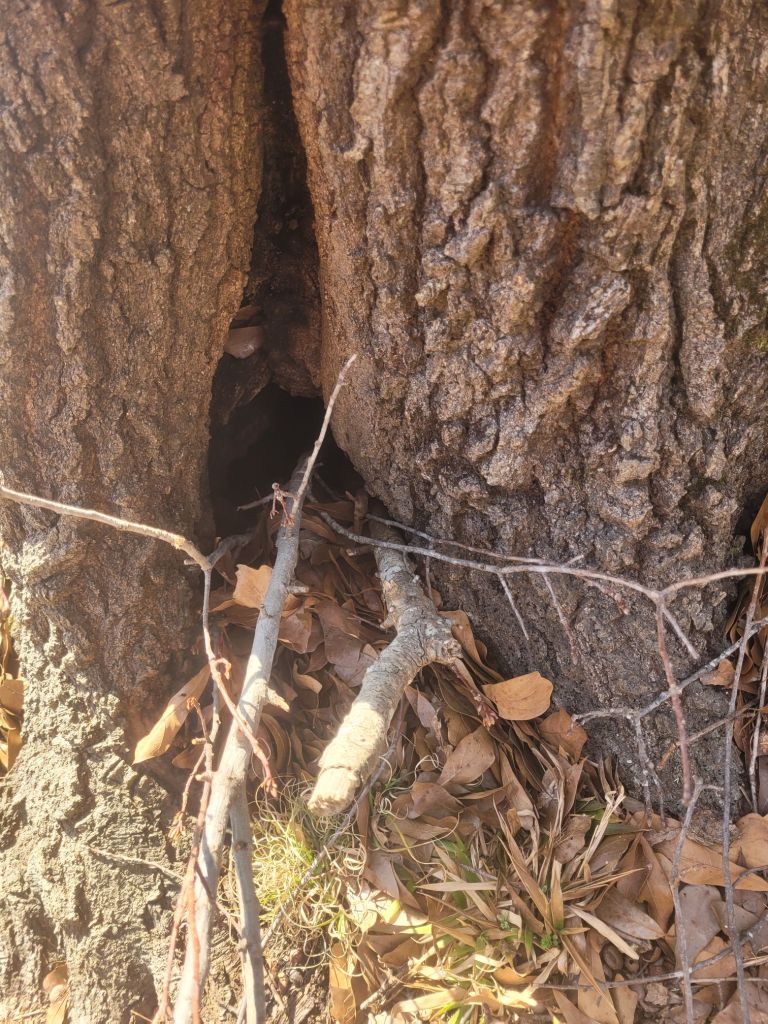
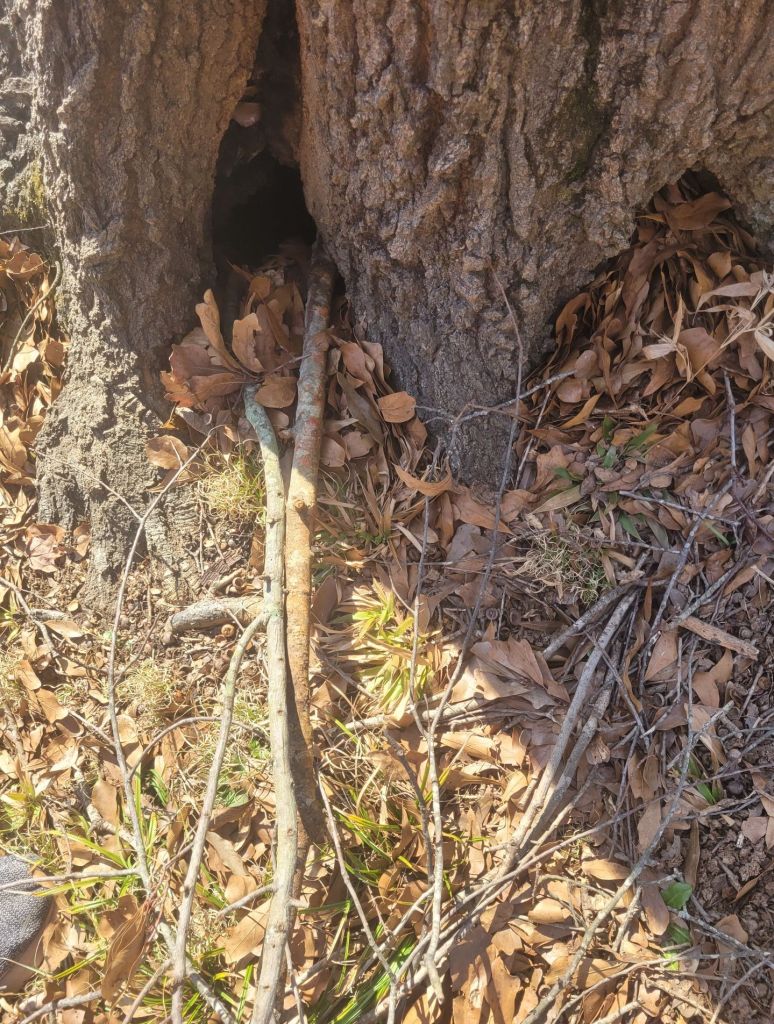
The final sign is a huge hole under the base. Long sticks can be pushed deep down in the earth.
When I removed these today, they were actually cold on a warm day.
I will miss this tree, but it seems to lean toward the neighbors pier. That liability was its death blow.
I hope I am here to record the Watt Tree Service team’s removal of this huge oak. Sad but absolutely necessary.
We have many old trees on our property. One of my chores is to pick up the fallen sticks. This isn’t as boring as it sounds. Sticks have many tenants on board as they die and fall back to earth.
Gravity alone does not purge trees of their dead branches. Other forces are also at work.
Dead wood is dead weight, but not usually heavy enough on its own to break off of the tree.
Fungal spores are airborne specks that land on everything. If there is enough moisture and nutrients, these spores sprout and grow to become mushrooms and bracket fungi.
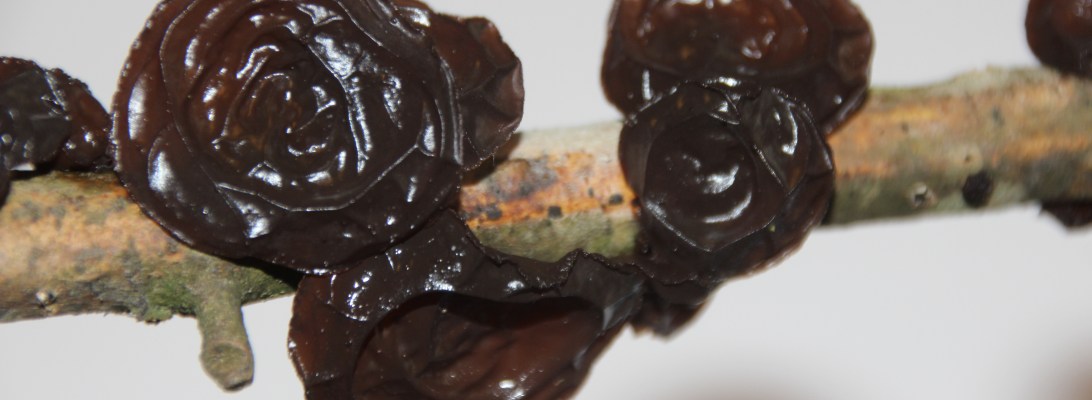
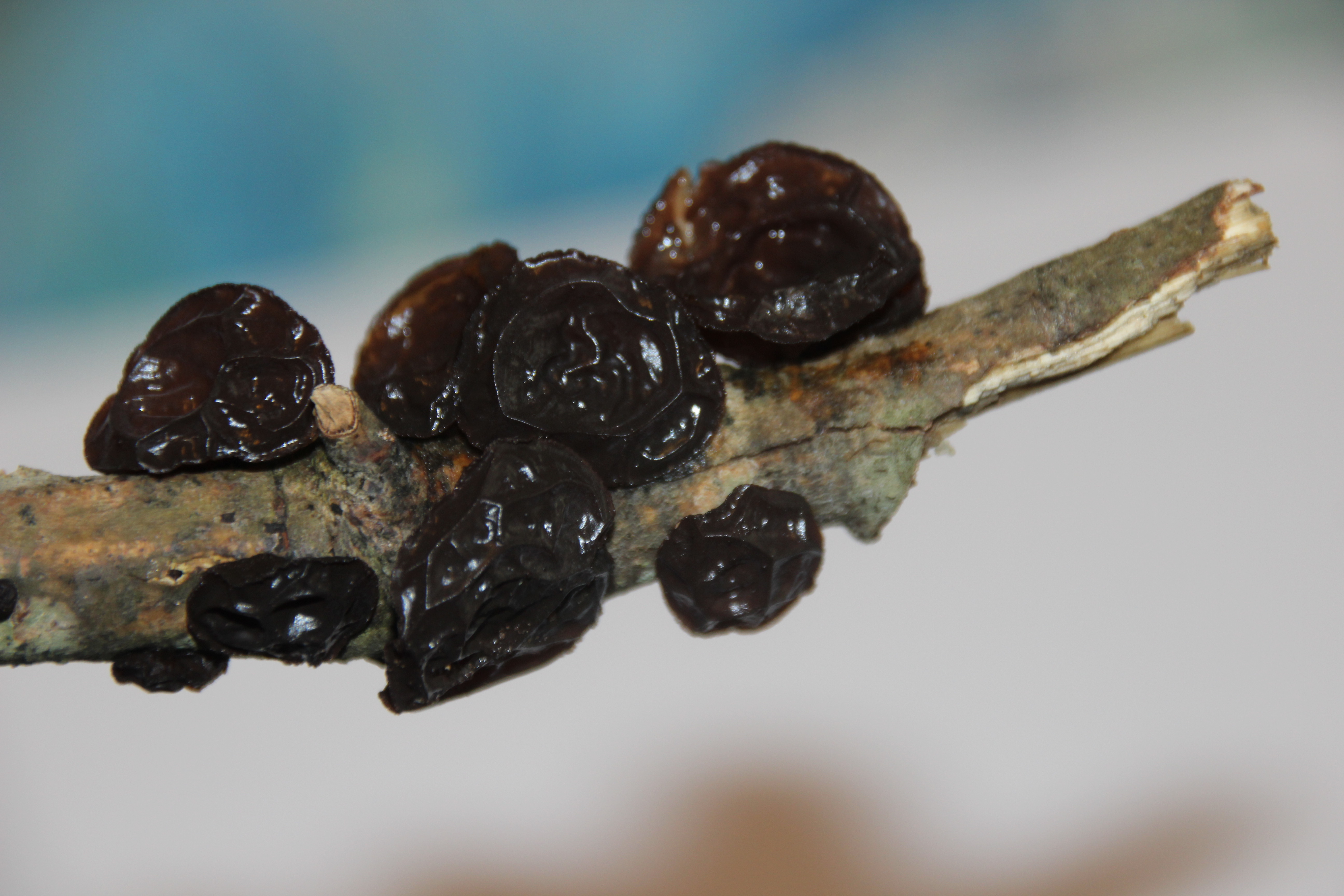
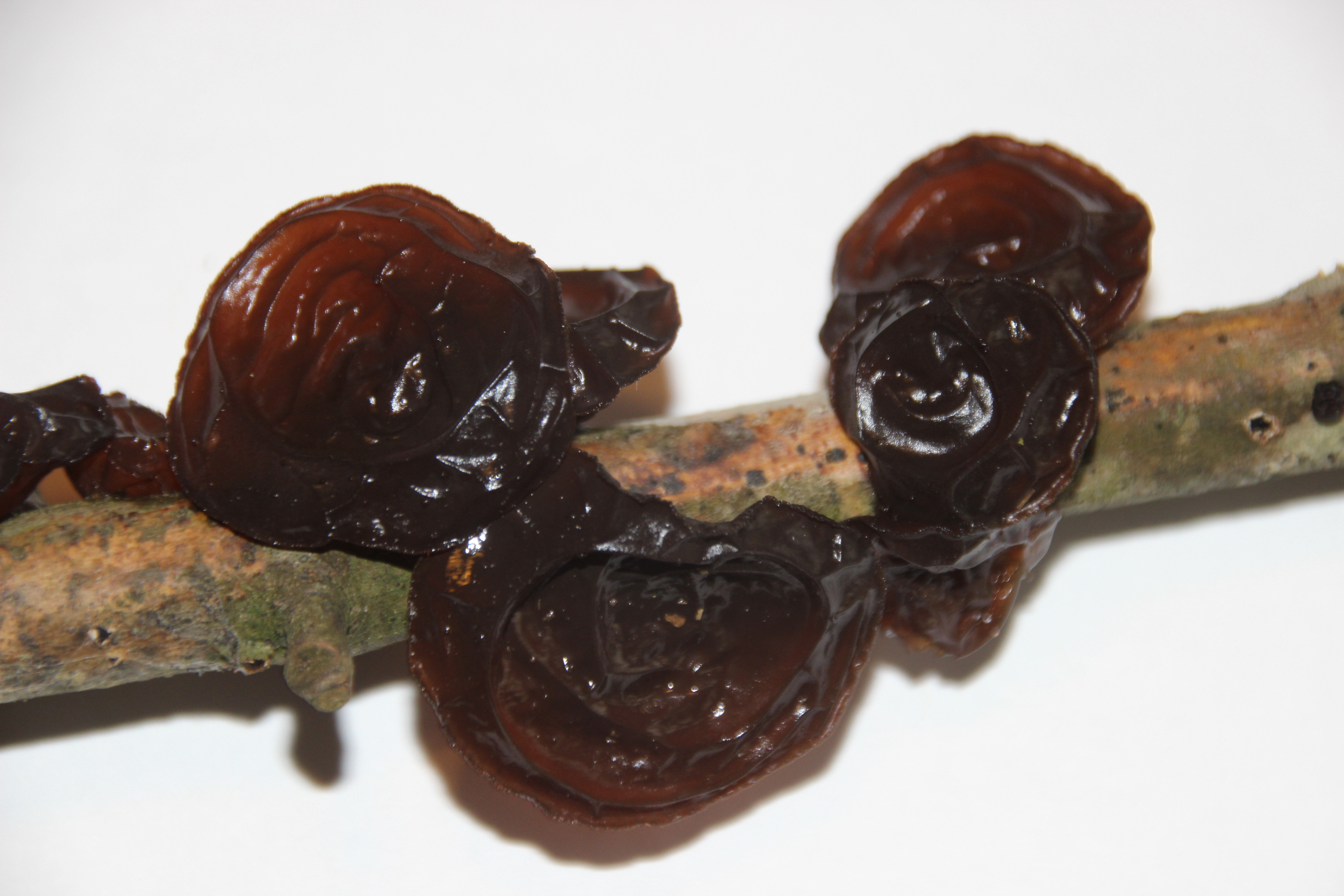
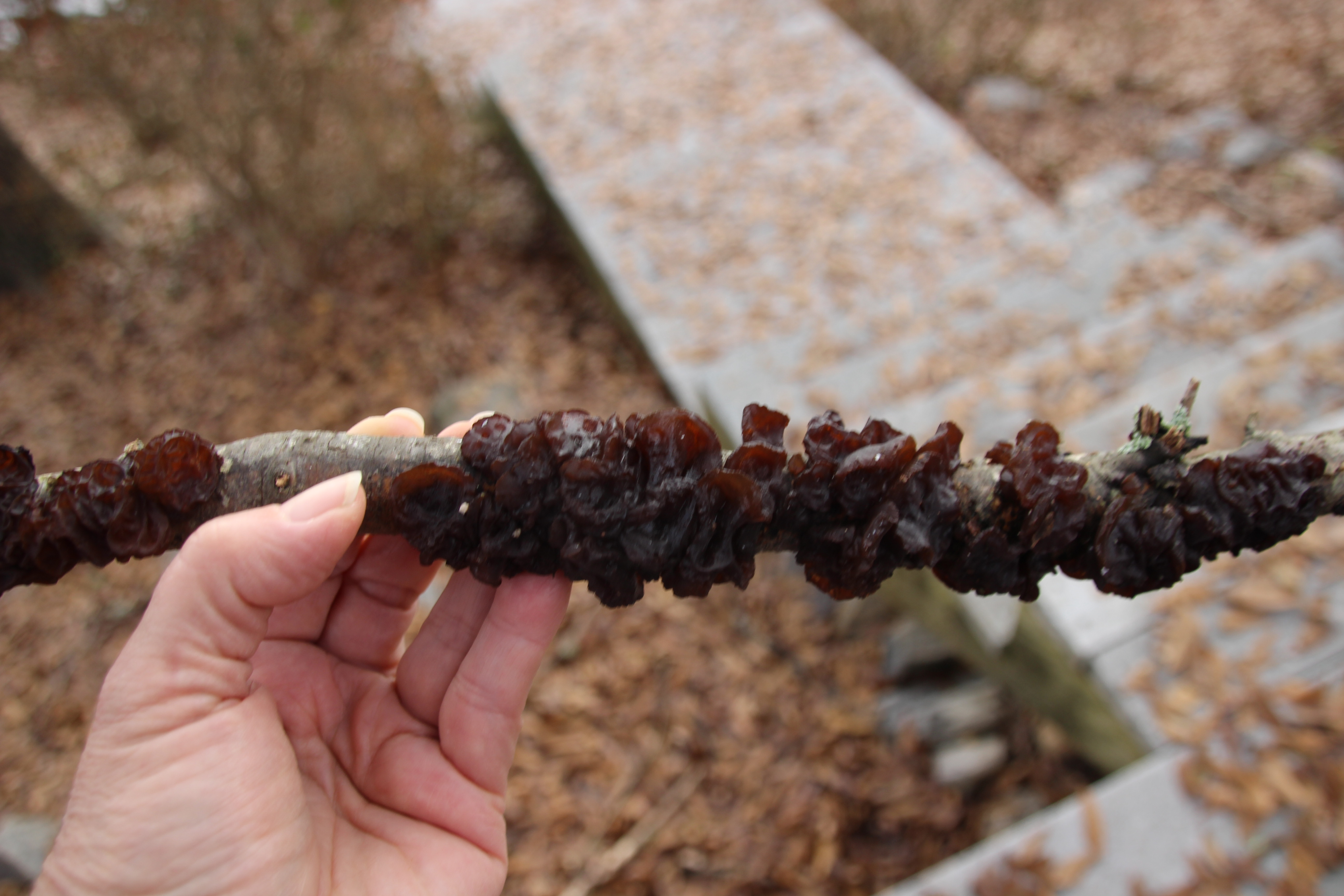
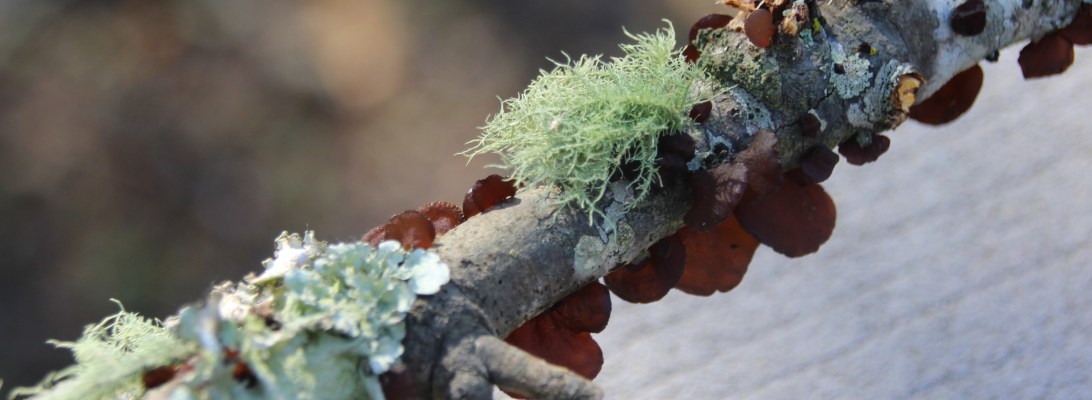
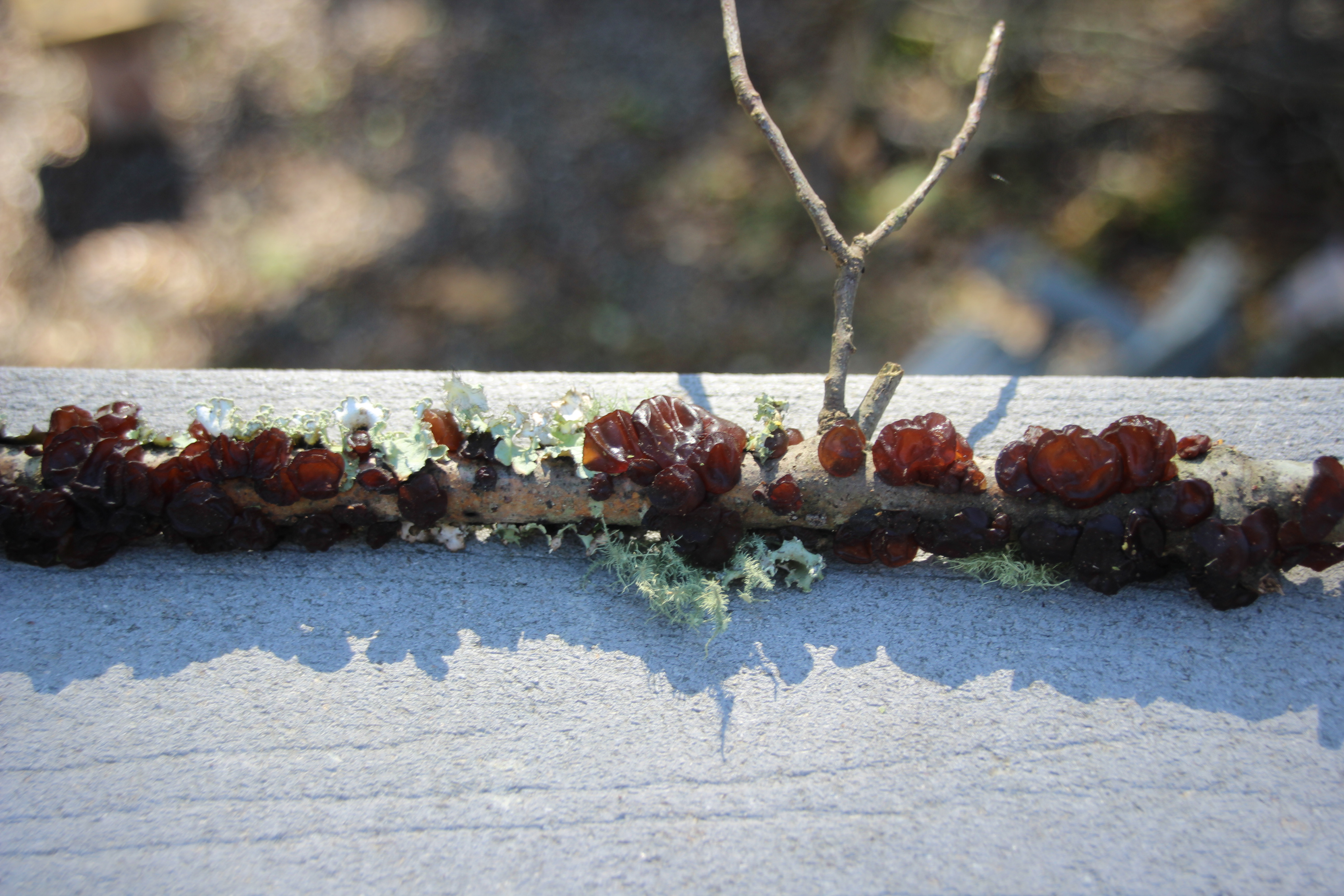
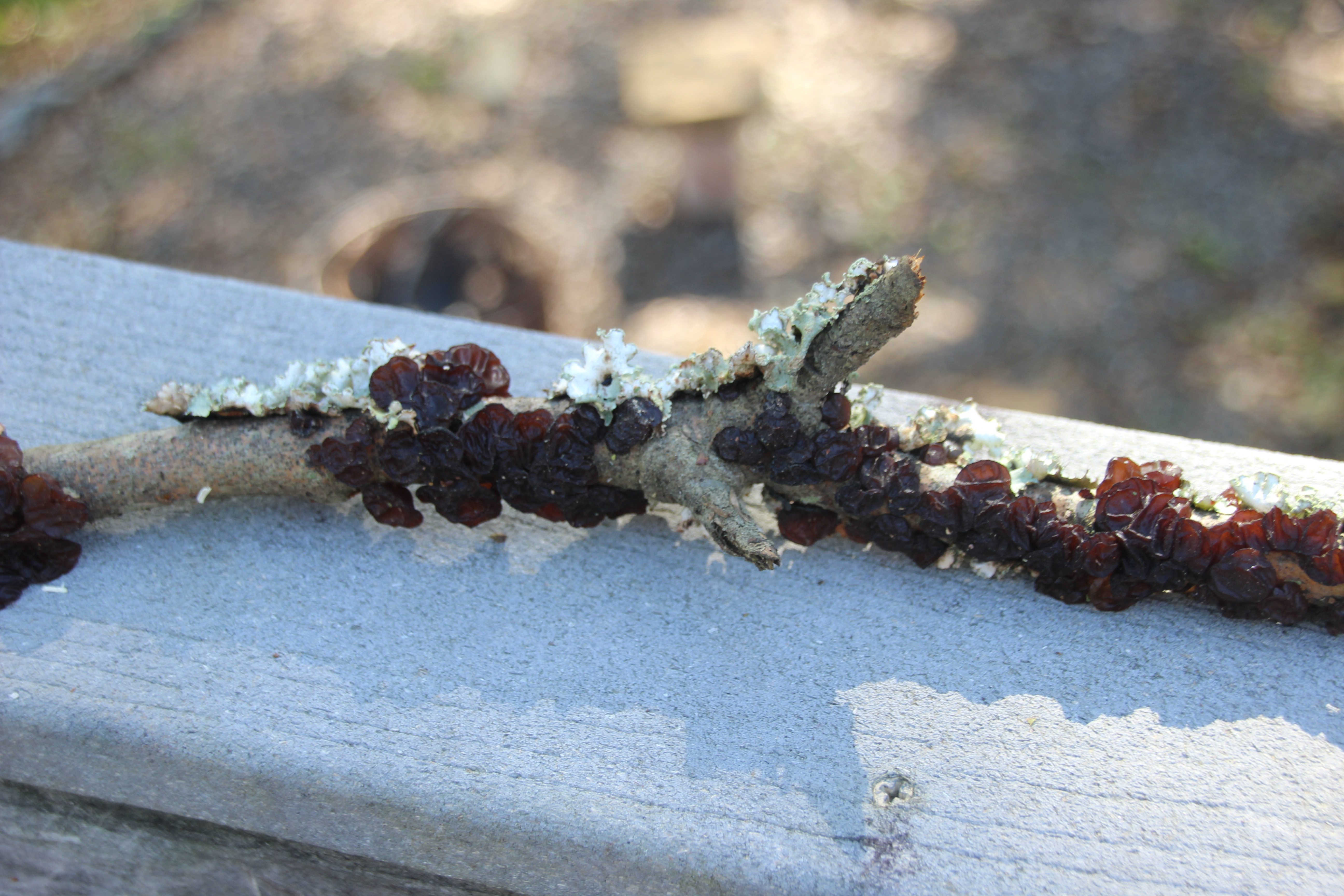
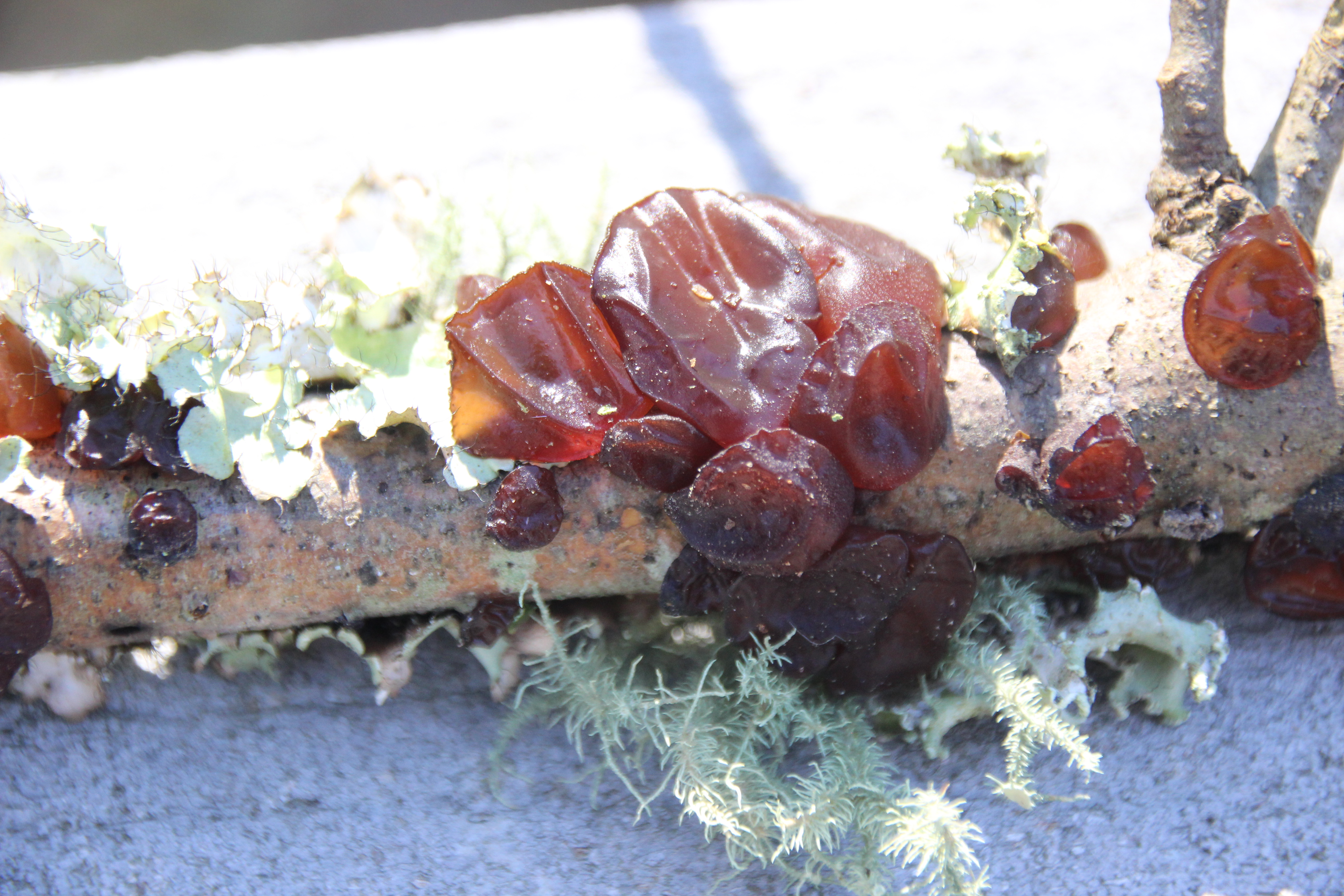
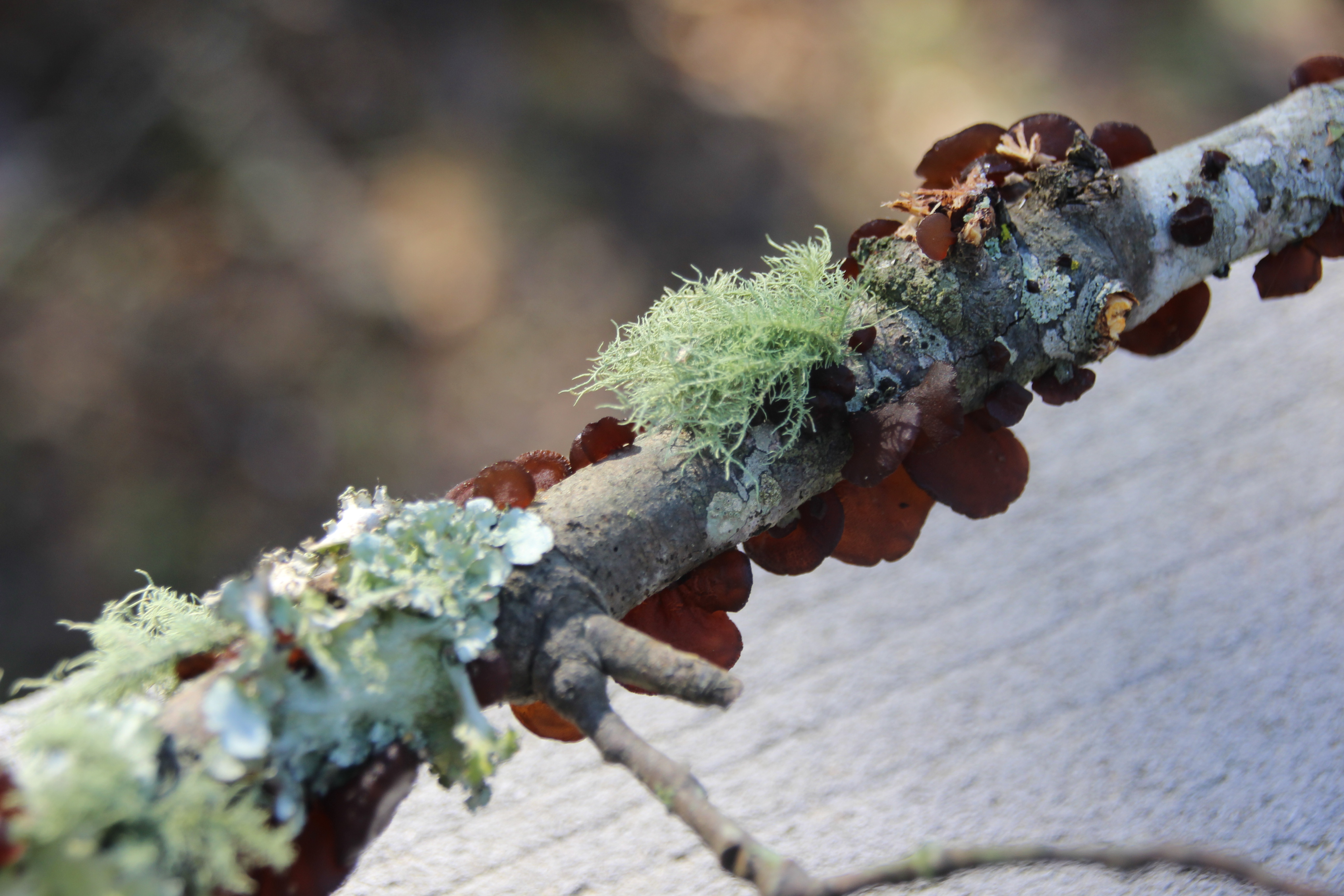
The most abundant passengers I find on the downed sticks during the winter months are jelly ears/ Auricularia auricula-judae.
Jelly Ear / Auricularia auricula-judae
These brown, ear-shaped forms are cold and rubbery on the outside and slimy on the inside. The top side acts like a cup to hold rain until it can be absorbed.
The ears grow in clusters and get large and heavy by winter from the fall rains.
I try to remember to wear gloves as I pick up sticks, so as not to get the jelly from an ear on my hands.
Bigger ears and more ears mean more weight. That is what brings the dead branches down.
Do not blame the ears. The jelly ears and gravity are just doing their jobs to bring down the wood to be recycled back into the soil.
These are edible, but eating an ear does not appeal to me. How about you?