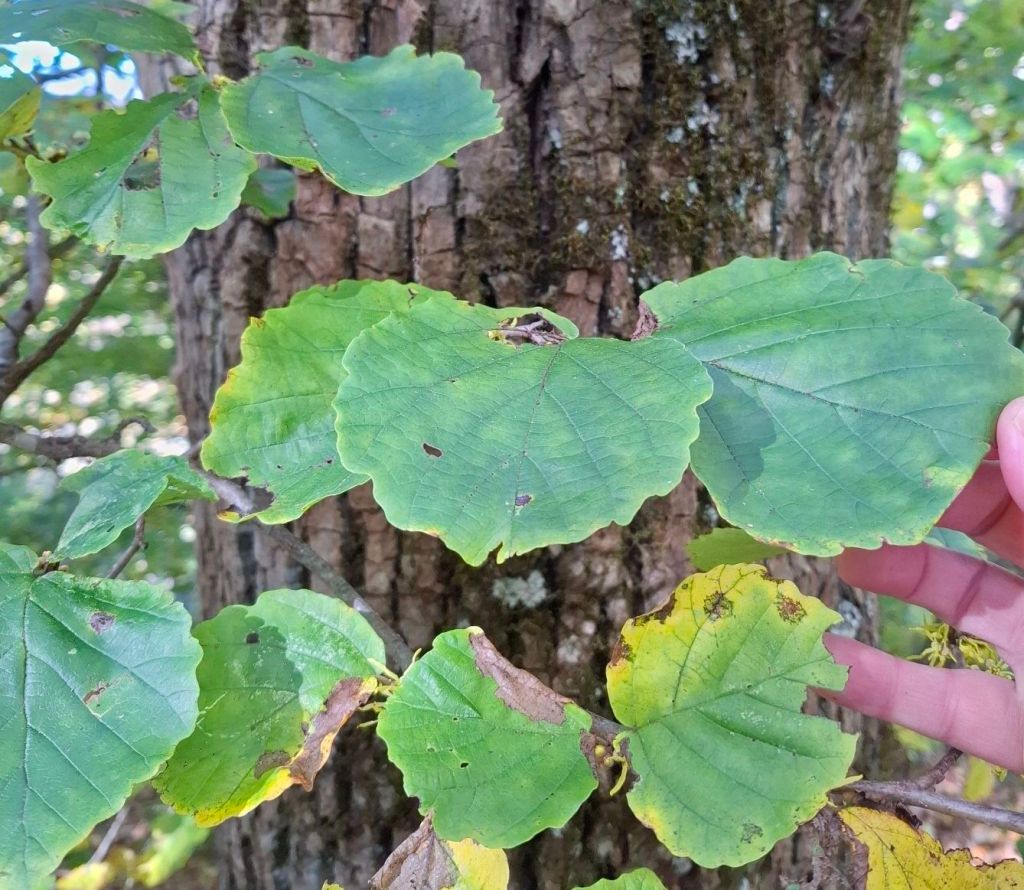
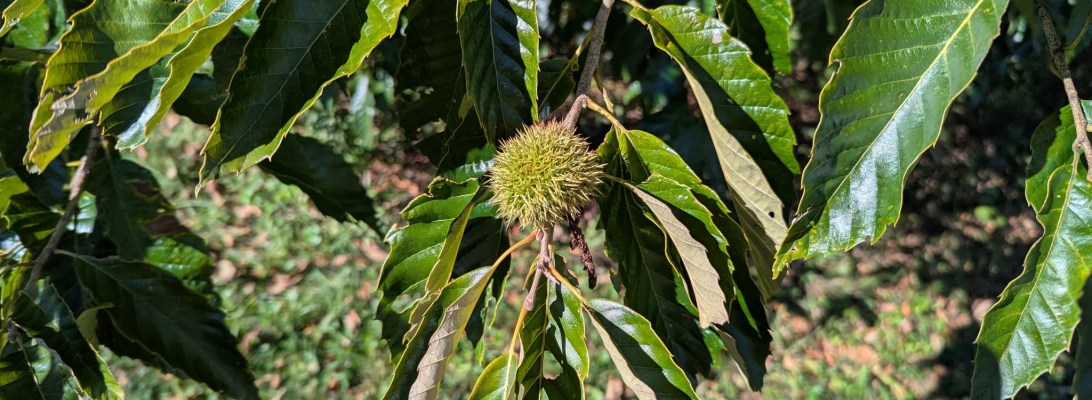
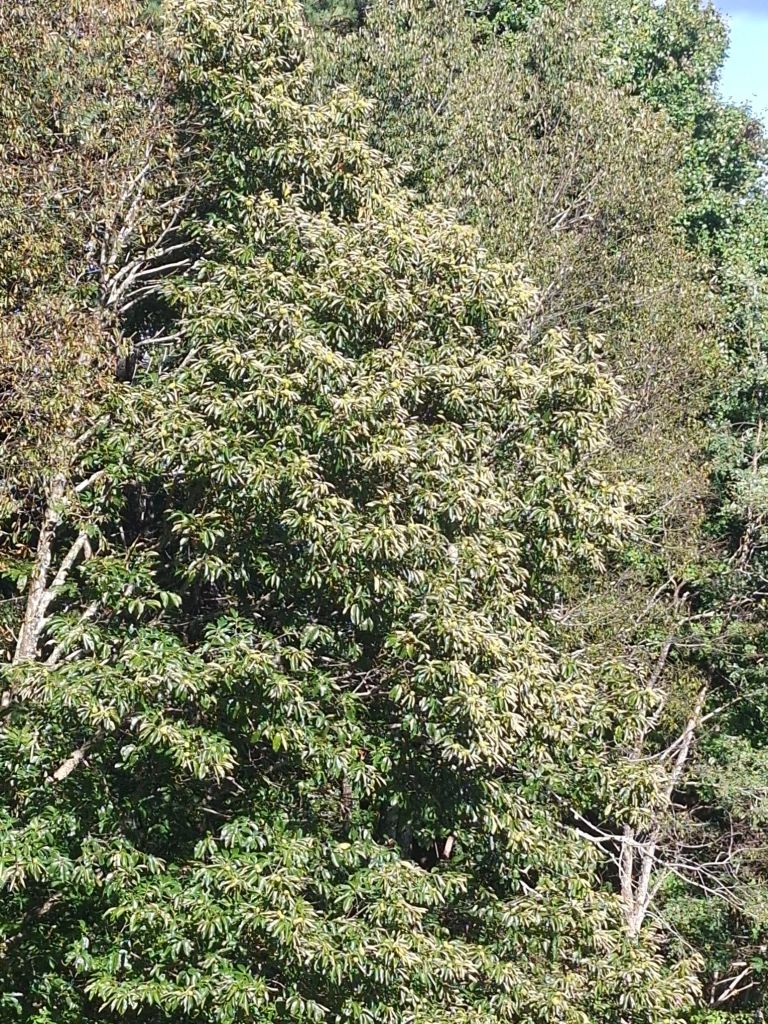
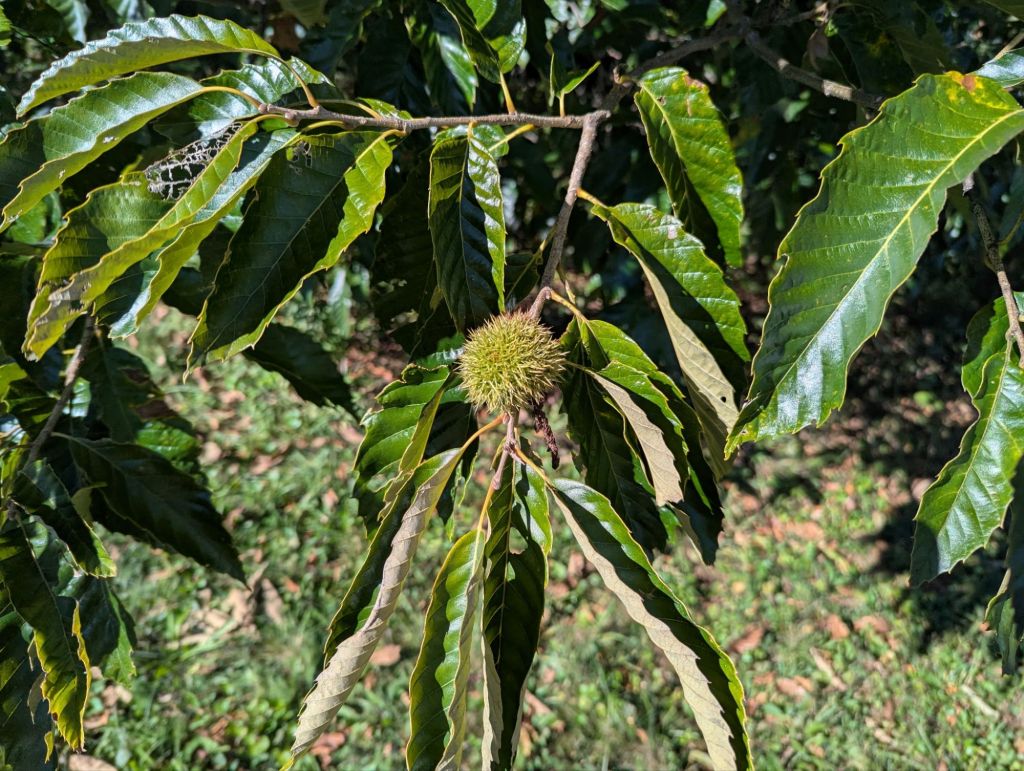
Mr. Flower and I had the good fortune of finding a full grown American Chestnut tree during our travels in the Appalachian Mountains yesterday. Finding one is rare due to the Chestnut blight which started around 1904 and wiped out billions of the Castanea dentata species. This tree was dominant in the Appalachian Mountains before the blight of the Asian Bark Fungus/Cryphonectriaparasitica arrived.
The fungal disease was believed to have been imported from Japan on some Japanese chestnut trees which are resistant. The American Chestnut’s demise affected atleast 60 different species of wildlife that counted on the American Chestnut trees for food.
American Chestnut
Various methods have been used to restore populations. Researchers have done intercrossing and backcrossing with with the trees that have survived. Some genetic modification has been tried using a gene from wheat.
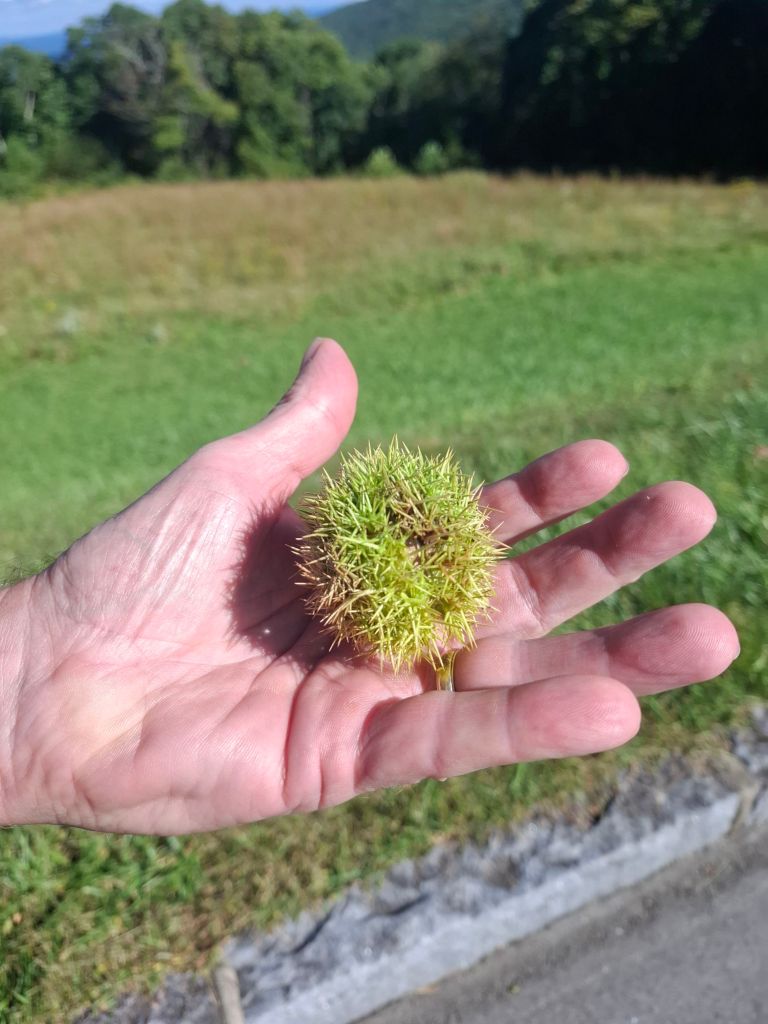
Burred fruit of American Chestnut
We were thrilled to find this tree and see its mean, green burred fruit with an enclosed nut.
I have always admired trees. Their shape and their shade are appreciated. There are some trees that I especially love. I remember these as important landmarks. I look for these old friends when I return to those places.
I went back to the picnic spot by the mountain stream yesterday. I took a bag of root chips, water and my camera. I meant to bring a book, but it was left in the kitchen. I go to this place to read. There is spotty phone service and no internet here, so it keeps me form scrolling the horrific events of war and politics. I make myself take breaks between calls and letter writing and posting and sharing…
I wandered around with my memories along the banks of the streams. There have been changes. I will share that later. I was looking for things that have not changed. I need some mooring right now. What could be more steadying than an old, familiar tree?
This was one of the sights I came for…The Tree in the Dale.
It stands in the middle of lovely sloping pastures. From the picnic site, only its crown is visible. It peeks over the hills. Seeing just its top was a comfort. I was not up for a hike to its shade.
I just wanted to put my eyes on this tree that I have loved through time. I keep returning to places of the past. Searching for echoes. Hoping for old threads to attach myself to.
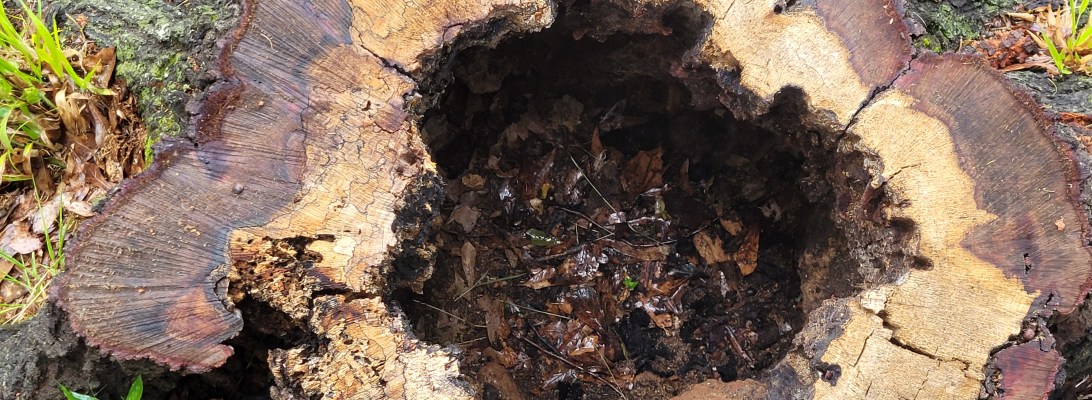
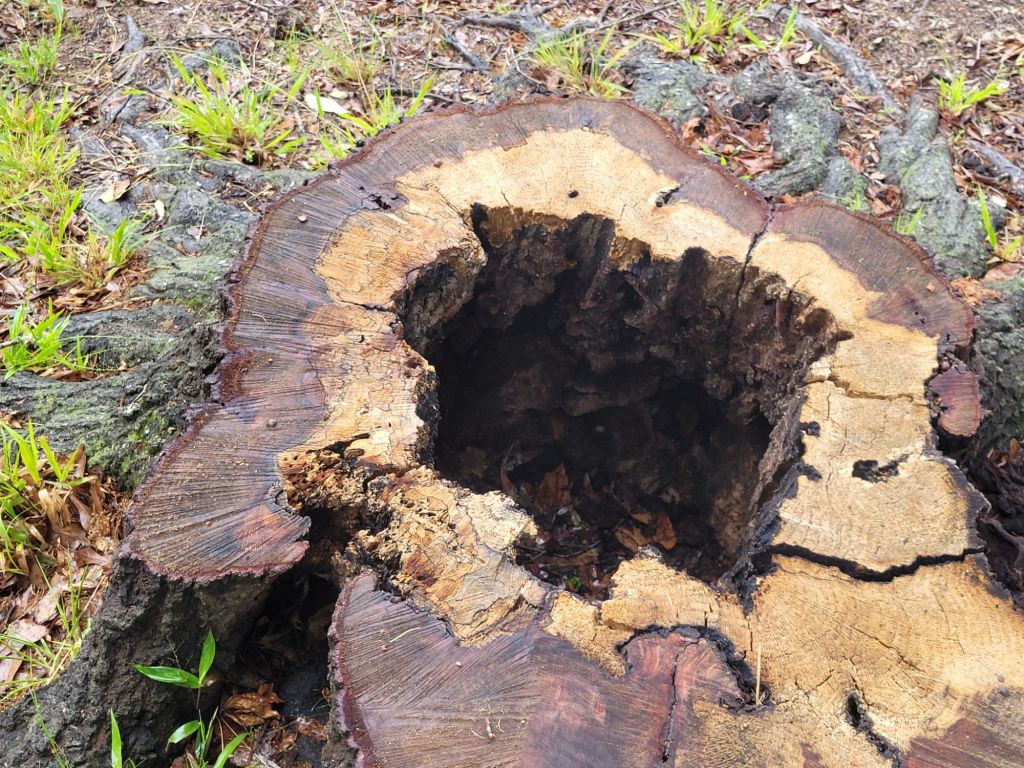
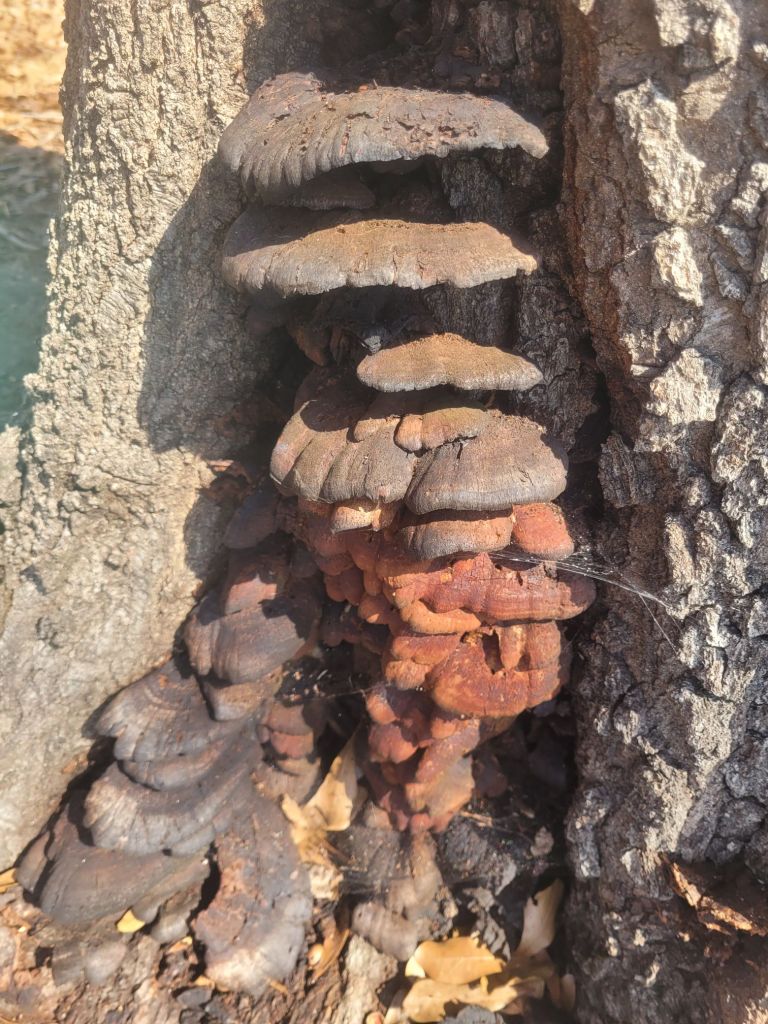
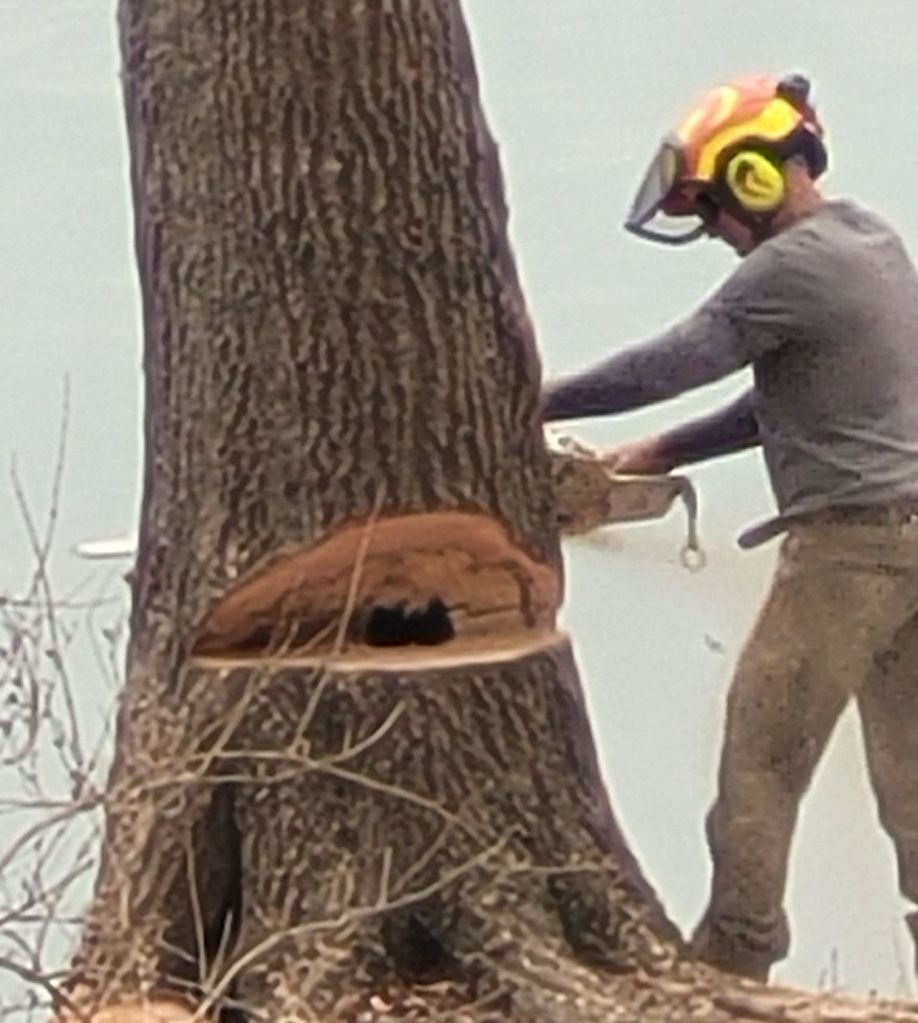
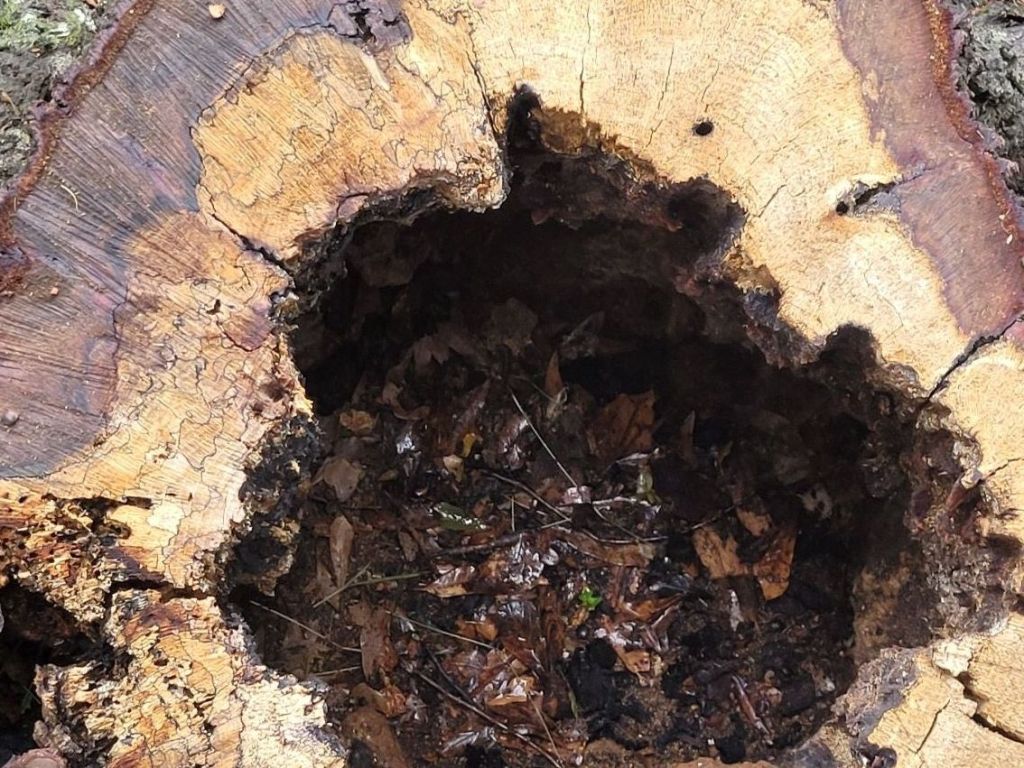
When oaks get messy it’s a sign of decline. There are symptoms that let you know when one needs to go. Conch fungi at the base should not be ignored.
The tree near the water had been showing signs by growing fungi at its base and a hole forming underneath.
The tree near the ramp had its roots in the septic lines and grew extremely fast. The death at its core was sort of a surprise.
The oak at the road was planted thirty years ago. This one was trimmed on one side due to power lines. That meant the side toward the house and downhill was fuller and thus heavier.
We hired a company we have used several times before, Watt Tree Service. They do excellent work and clean up as they work.
All equipment for cutting and cleaning up.
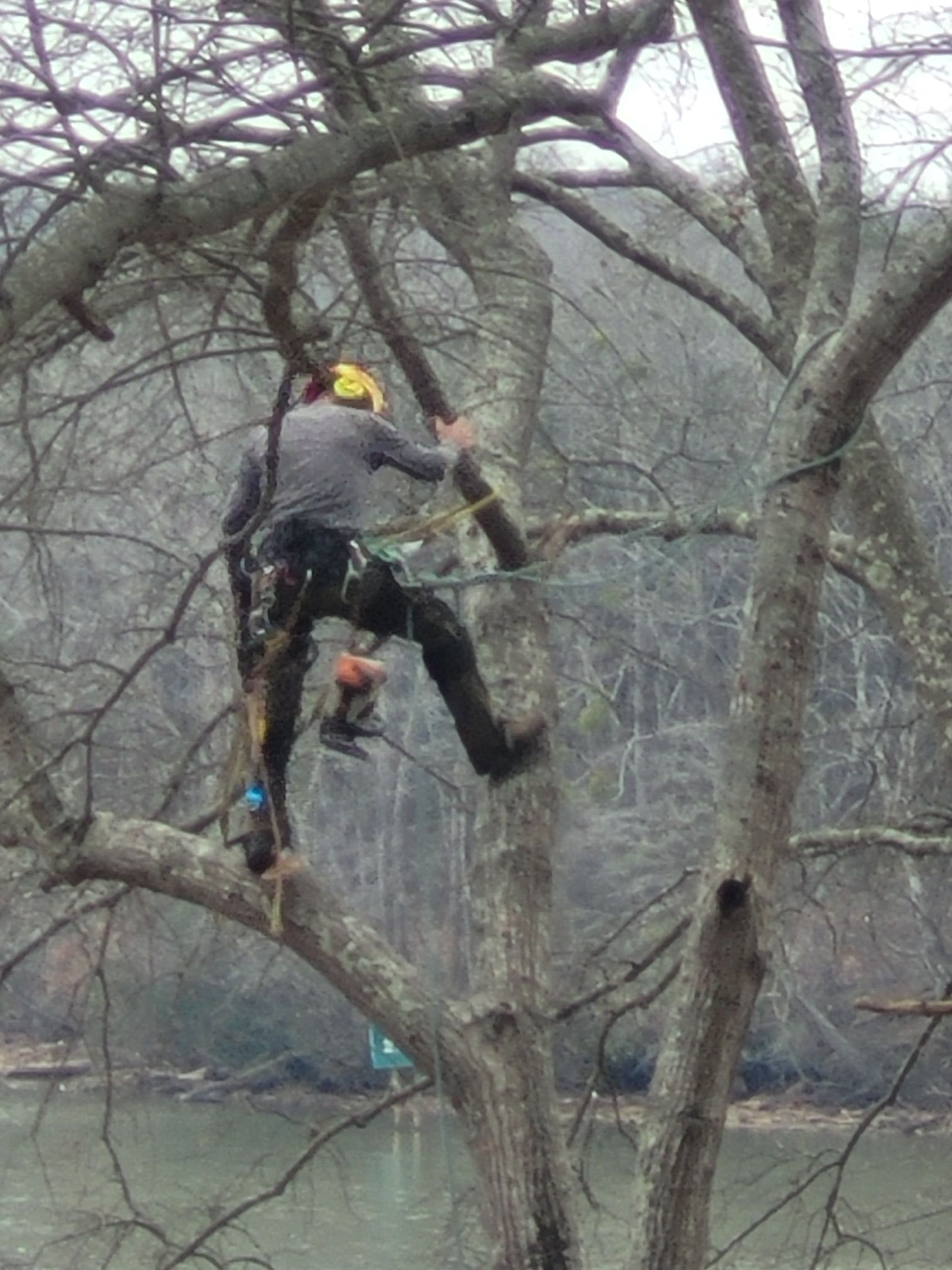
This experienced crew provided several hours of entertainment today. The climber is sixty-one years old and is a third-generation climber. His brother also climbs and was doing a different job today right across the river.
If you have trees, you need to keep an eye out for decline, disease and bad form. It is important to hire experts, so that your trees will not be trimmed like lollipops that will medusa out later and cause even more problems.
It is worth paying for experienced, skilled crews with the proper equipment. Tree problems just get worse if not addressed.