This Trail I Know

The trailhead is guarded by two tall wildflowers. To the left is Joe Pye weed with heads of flowers so big it bends low under their weight. Its flowers are covered in bees.

Joe Pye Weed

The sentinel to the right is Ironweed which grows high with purple blooms making a landing pad for butterflies.

IRONWEED

Under the bridge I know where to look for the Ghost pipes to see if they have set seed. Their bent necks have straitened. Their faces are up with dark pods in the center. The pipes are now gray and withering.

Ghost pipes with pods

I look for the broken tree full of holes in the bend. This would be the perfect place to spot a busy woodpecker, a resting owl or a mama raccoon.

Holey but alive.

I know where to peek through the leaves to see my neighbors’ houses on the cliffs across the gorge. They are white, tan,  brown and round.

Stone wall standing over the gorge.

I look for the crooked tree that has twisted limbs twirling toward the sky. It is one of the lucky ones not taken down or dead from Helene.

Slithering branches

I know where the ferns dance in the breeze under the leaning tree. The deer like it here as well.

Fern glade

Sometimes I meet horses here. I always step aside to greet them. This one’s name is Scout. He is sweet and beautiful. She made us guess his age. He is 26!

Scout and his loving mama from Temnessee.

I know this trail. I know it well. It makes my heart sing.

FLOW

Silver Under Glass

I took off the silver brooches from the pin collage display I made for my mom. They tarnished over time. (See link below)

Three sets and a turtle pin.

I did not want to just stick these in a drawer, so I purchased a display cabinet and put all the Native American pieces in it. That way we can wear them and return them easily.
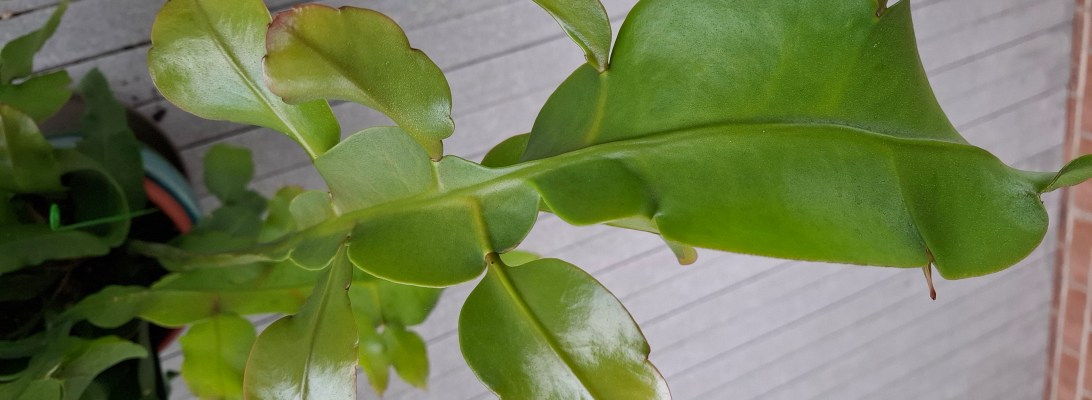
One display and out of the way.
Our Aunt Ethel was known for her interesting jewelry. I am glad that the family collection is where it can be seen.
Several of these pieces are signed. Most are just lovely and timeless.

Safe in Gran’s china cabinet.

FLOWER

Mama’s Pin Collage

Bass Beds Near Shore

Bass spawn later at higher elevations because of cooler water in spring. I took these photos in July.

Light circles near shore are two bass beds

 The female visits a bed to lay several thousand eggs and then she leaves.
The male guards the eggs and fans them to keep them clean and oxygenated.

Bass bed guarded by male

After the eggs hatch, the male protects the fry for another week or two.

Male bass still on duty

I look for these in my favorite lake every summer. Bass beds are a good sign.

Bass Lake

FLOW

Palmer and his Queen

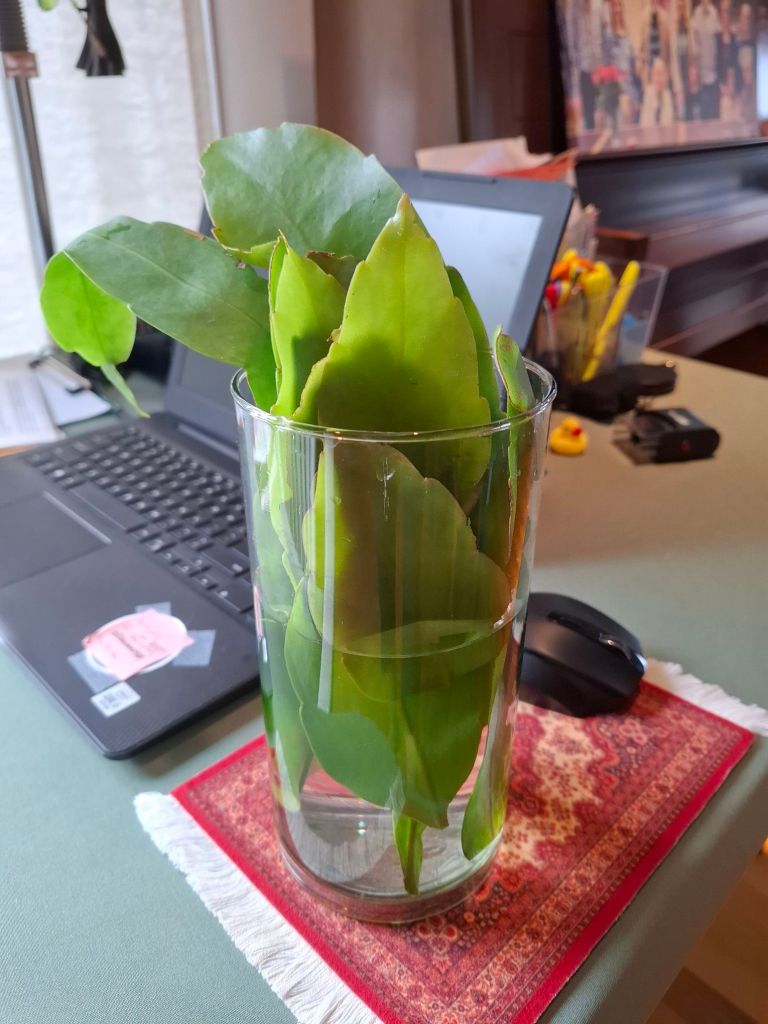
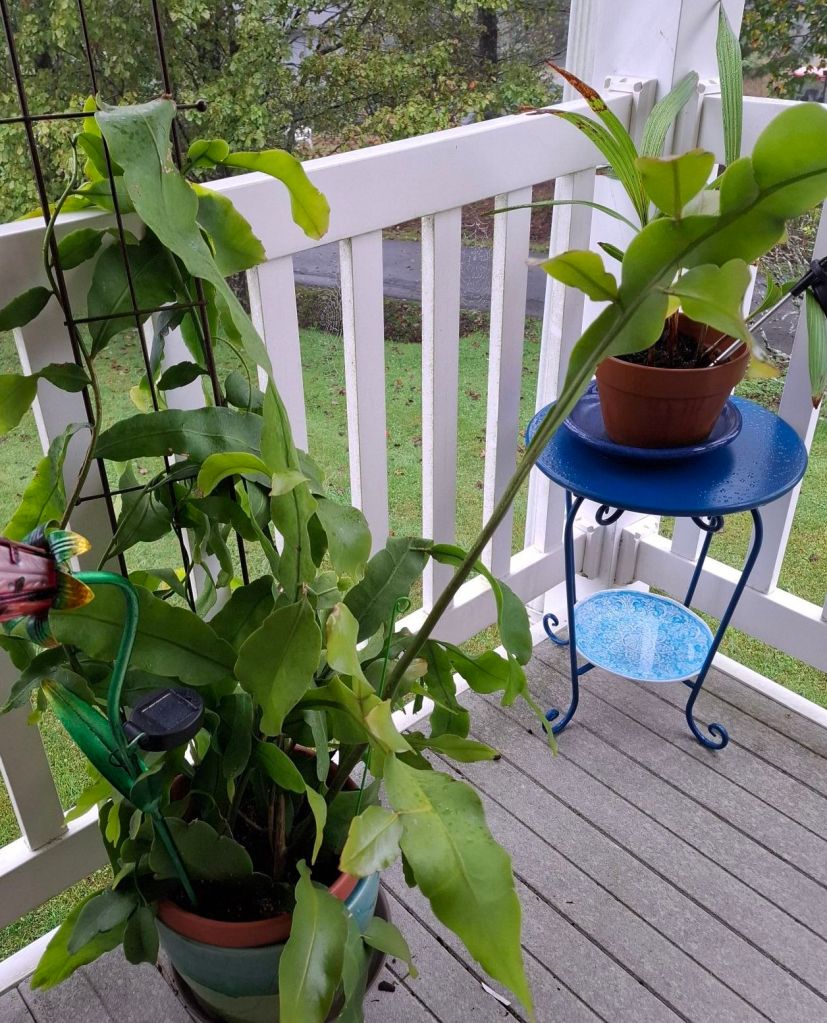
My friend Lucy’s husband is a plant whisperer. I gave Palmer a cutting from my Queen of the Night. His is now way bigger than mine and always has more blooms.

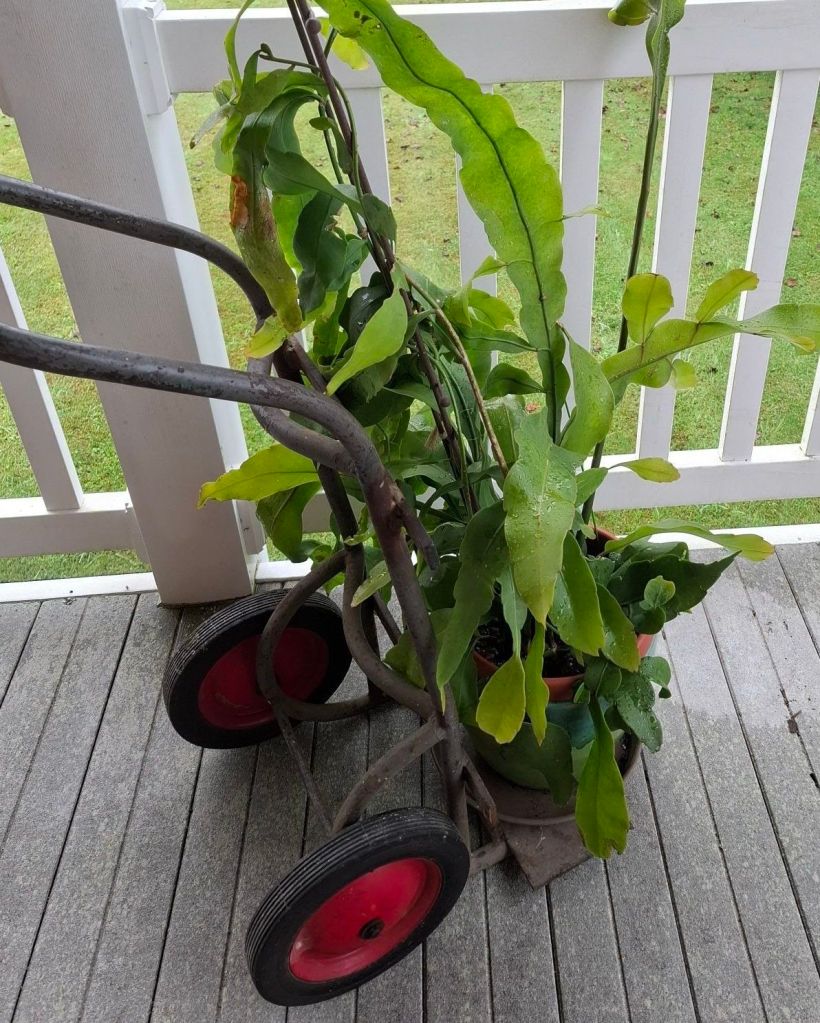
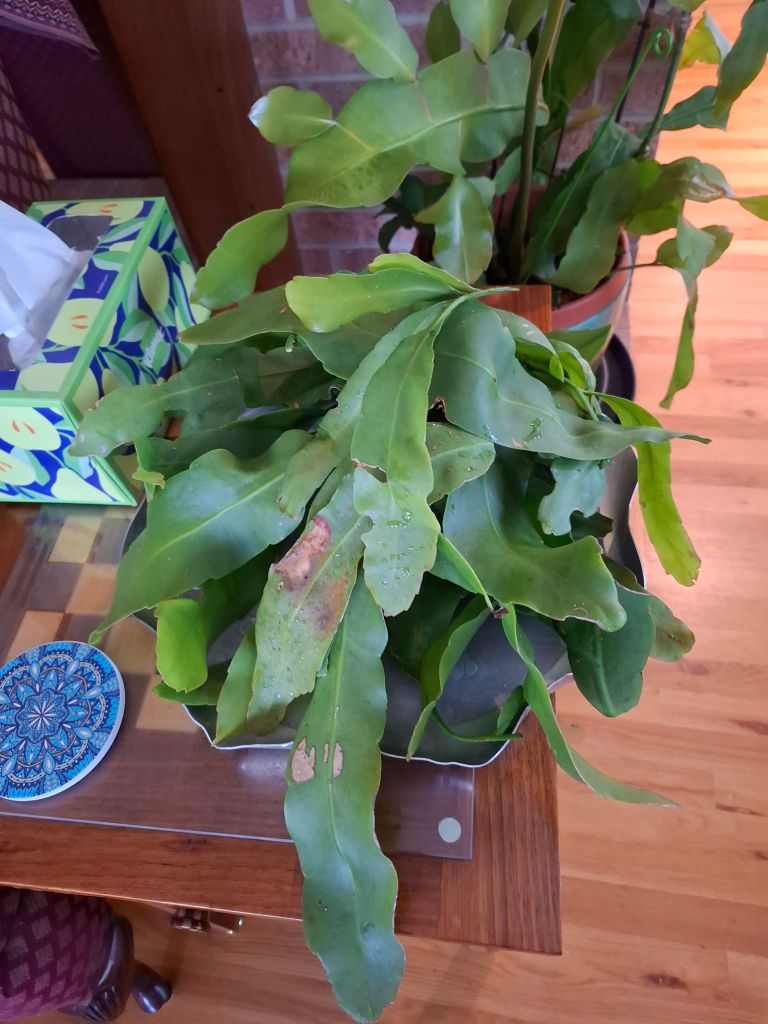
I am proud of my little Queen surviving up here on the mountain. It’s cooler here. There is more wind and rain.

I was thinking she was doing great until Palmer and Lucy sent me photos. I am trying not to be green with envy, but good grief. My Queen doesn’t even have buds yet.

Palmer and his Queen of the Night

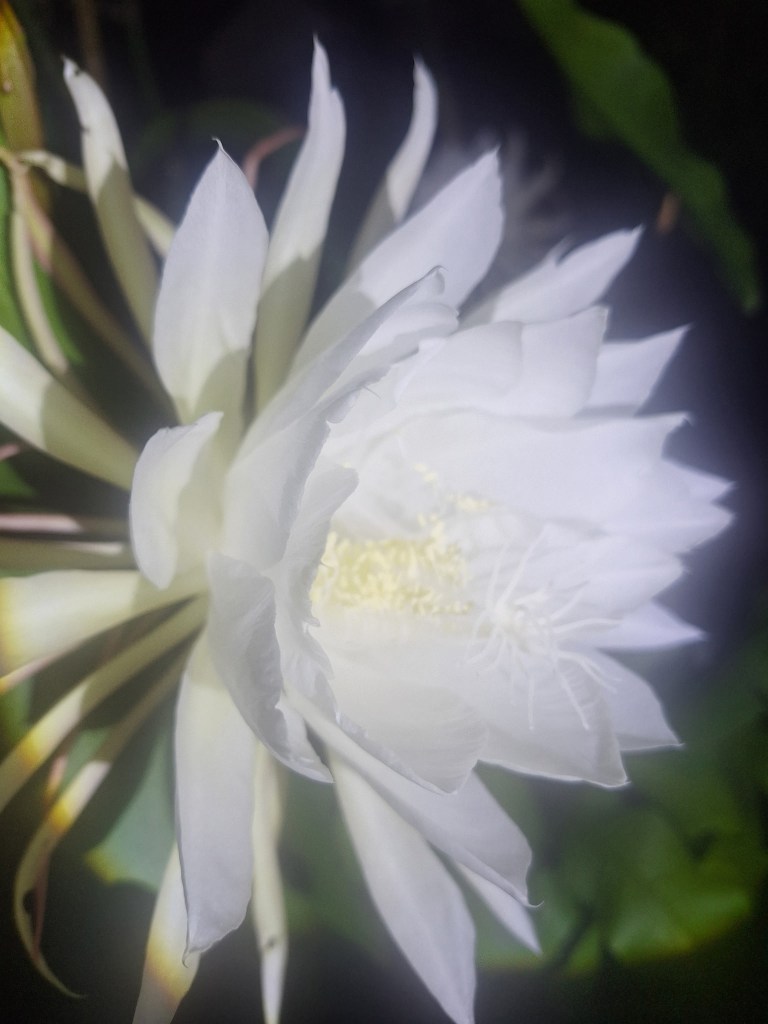
Here is Palmer beside his Queen. It has had three nights of blooming. Lucy stayed up and took photos for me. Wow could they be any whiter?

Cereus blooms
The Queens face

I will patiently await buds and blooms from my acclimating baby on the mountain. Until then, enjoy these crazy beautiful blooms from my flatlander friends.

Cereus bloom

FLOWERLESS

Judy of Automatic Gardener asked what fertilizer he uses. Here is a photo.

Palmer says he uses Flower Fuel the most.

Northern Tooth Fungus

I always look for stands of Northern Tooth Fungus on this tree in late summer. This tree is beside a trail I walk frequently. I was happy to spot two sections of Climacodon septentrionalis this week.

Northern Tooth Fungus

Their presence is not a good sign for the health of the tree. It has had a wide gash in its trunk for many years. There have been years when the fungus lived entirely inside the wound.

Climacodon septentionalis

These section are growing at the bottom of one gash and the top of another. They layer over top of each other like stacked fans. The teeth on the lower side increase the surface area for spore production.

Teeth

I tried out several new mushroom identification apps to see how well each identified it. Neither app got it right. When I switched magnification of the same photo one gave three different answers.

Northern Tooth Fungus

I have never foraged for mushrooms. It is too easy to be wrong. I take only photos in the wild.

FLOWER

American Indian Ghost Pipes

I was thrilled to find this stand of Monotropa uniflora on a hike this morning. The great find was that this sgroup still had the brown seed pods from last year behind it.

Fresh stand of flowers with old seed pods behind.

This group is freshly emerged so its flowers are still bowed. As the flower matures and gets pollinated its face turns upward. I plan to check these again in a week or so.

Indian Ghost Pipe flowers

Indian Ghost Pipes are non-photosynthetic plants that partner with a fungus to take food from surrounding tree roots. These relationships make it both symbiotic and parasitic second-handedly.

Monotropa uniflora

The entire plant looks waxy and translucent. This dappled light was perfect to show its opalescence. The blooms have normal flower parts; petals, stamen and a pistil. These are hard to distinguish because they are small and all the same color.

Lovely find in the forest.

FLOWER

Rose Mallows in Bloom

I spent some time at the New River Greenway today. This is part of a park complex in Boone, NC.

This park runs along the river which floods occasionally. Having designated areas as wetlands is win:win. The extra water has somewhere to go.

There is a trail around my favorite wetland. It has many aquatic plants that are of interest year-round.

Rose Mallows

The rose mallows were blooming today.  These are native perennials, Hibiscus moscheutos. There were many variations of pink and some gorgeous white flowers blooming for pollinators to visit. Hummingbirds and butterflies like these blooms.

Wetlands are important habitats. It’s a great place to look and listen for wildlife.

I heard an Indigo Bunting today, but never saw it.

FLOW

Ravenel’s Red Stinkhorn

I spotted something bright pink and red among  brown woodchips. The shape screamed stinkhorn. I did not care to take a whiff to confirm my suspicion.
I have seen phallus fungi before. All types of fungi show up on the mountain when it rains. This one is named  Mutinus ravenelii.

Mutinous ravenelii

It was named for a South Carolina biologist, Henry William Ravenel. He lived in the eighteen hundreds. I am not sure naming this tiny fungus a Latin term meaning Ravanel’s penis was an honor. It is rather small.

Stand of stinkhorns

They white orbs are “eggs” from which new little stinkhorns will emerge and elongate. I had been monitoring this stand of stinkhorns, so that I could have record of the process.

Stinkhorn eggs

My hopes were smashed when my yardman drove over the little, pink stinkhorns.  They were no match for the riding mower. Poor little pinkies.

Ouch

FLOW

My Deal with the Thicket

Our thicket is neither pretty nor tidy. If those were requirements for survival, I would have been purged as a child.
It is not the appearance of the thicket that matters, it is its function.  What it does makes it of value.

The thicket on the corner.

Things live in the thicket, eat in the thicket and hide in the thicket. Those things matter to me, you see.

Jewelweed grows around the margin.

A pair of rabbits lives in the protection of the thicket. These two come out in the evenings to graze on grass or eat pieces of Daddy’s apples that have been dropped by careless crows.

A bunny and two crows under the apple tree.

I often encounter insects in the thicket. Today, I disturbed a butterfly. This dragonfly was undeterred by my trimming around it.

Dragonfly posing

Birds nest in the thicket. If I spot a nest, I leave that part messy until the season changes. Birds also shelter in it during bad weather.

Once a tiny fawn hid in the thicket while it’s mother wandered elsewhere to feed. The branches of the rhododendrons twist together to make the middle safe from large predators.

Under the thicket.

Food grows within the thicket. I trim the outer blackberry stalks back, but leave some for foragers. There are pokeberries, too.  The brown thrashers love them. They also love thrashing about in debris under the thicket to find insects.

Pokeberries

There is a tiny world inside that thicket. I have pledged to leave it undisturbed in the middle. I just keep the exposed surfaces tidy to placate any picky neighbors. That’s my deal. I plan to keep it.

Giving the thicket a trim.

Yes, the thicket is a bit ugly. But ugly can be useful. Just as pretty can be useless.

FLOW