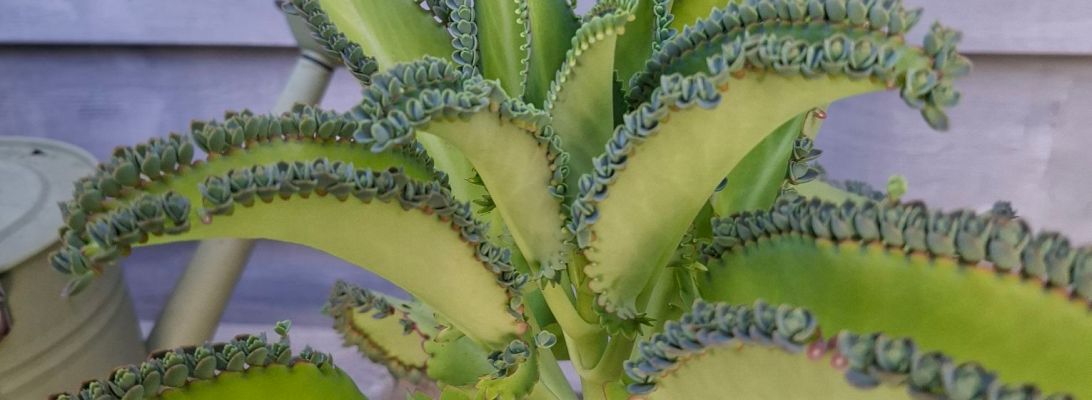
Mama Recovers from Bites

No, I am not referring to myself! It’s my succulent that is poisonous and was eaten anyway.

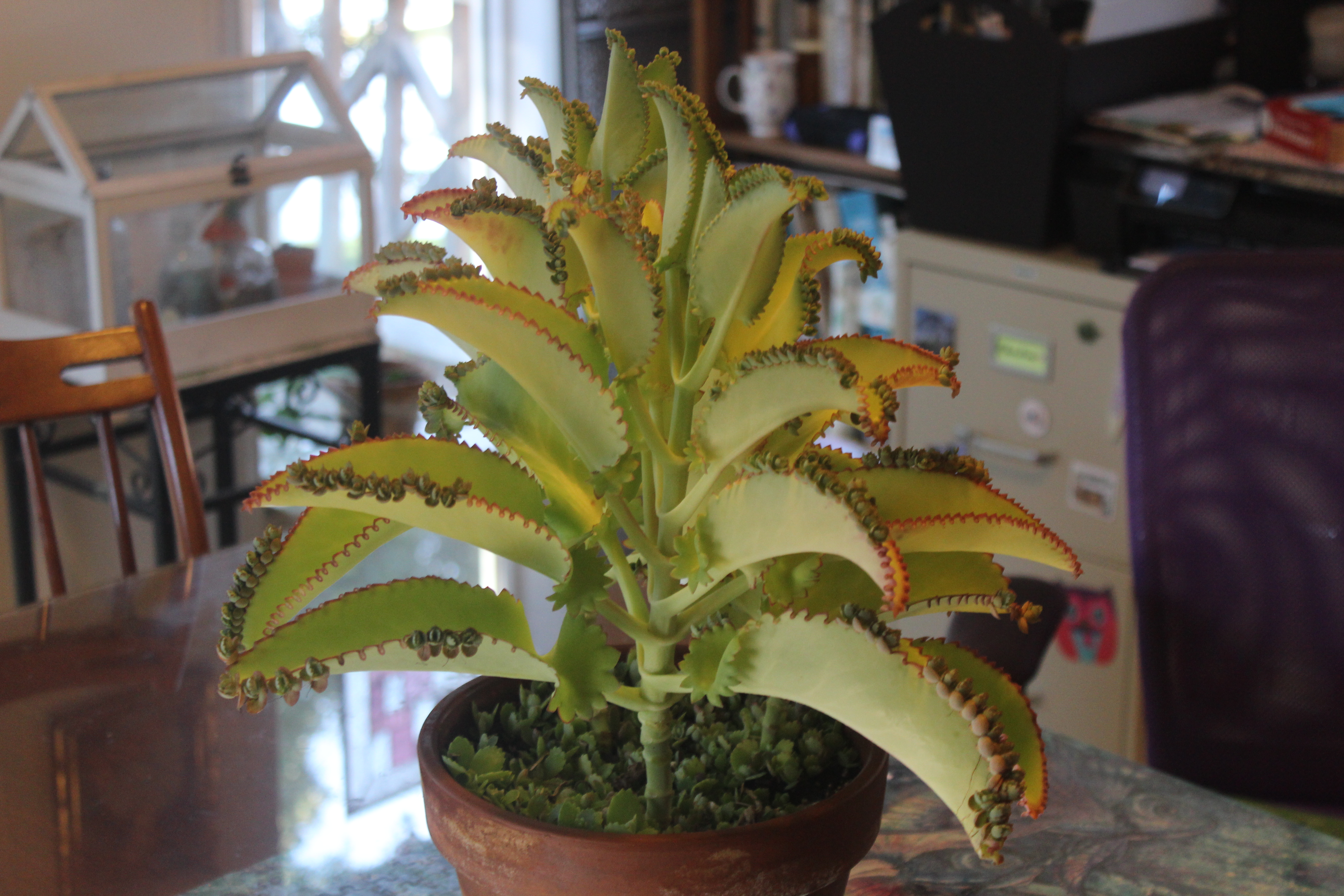
The deer demolished this entire pot of Mother-of-Thousands succulent that was on our bridge to the front door. This plant is supposed to be toxic! Daylilies are too but they eat those as well.
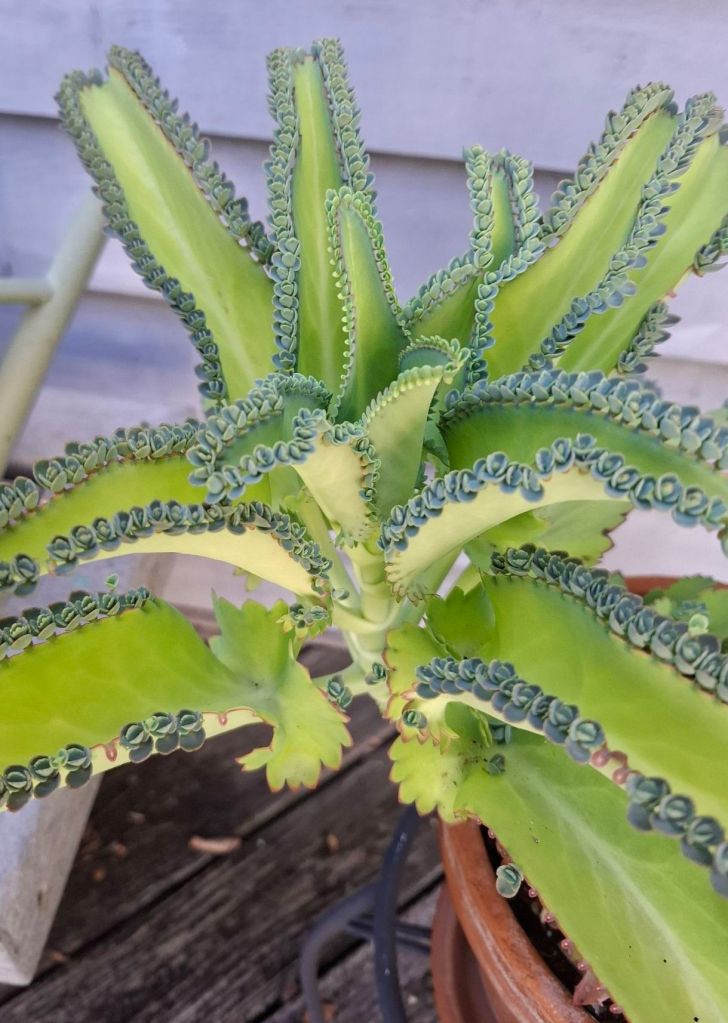
Kolanchoe laetivirens

I think its latin name is Kolanchoe laetirvirens. The internet tends to mix up this ‘Mexican Hat’ plant and Mother-of-Millions/’Alligator’ plant (purple spots). They do not look the alike except they both have plantlets on the margins. My plant books are at Wildwood, so this is my memory talking.
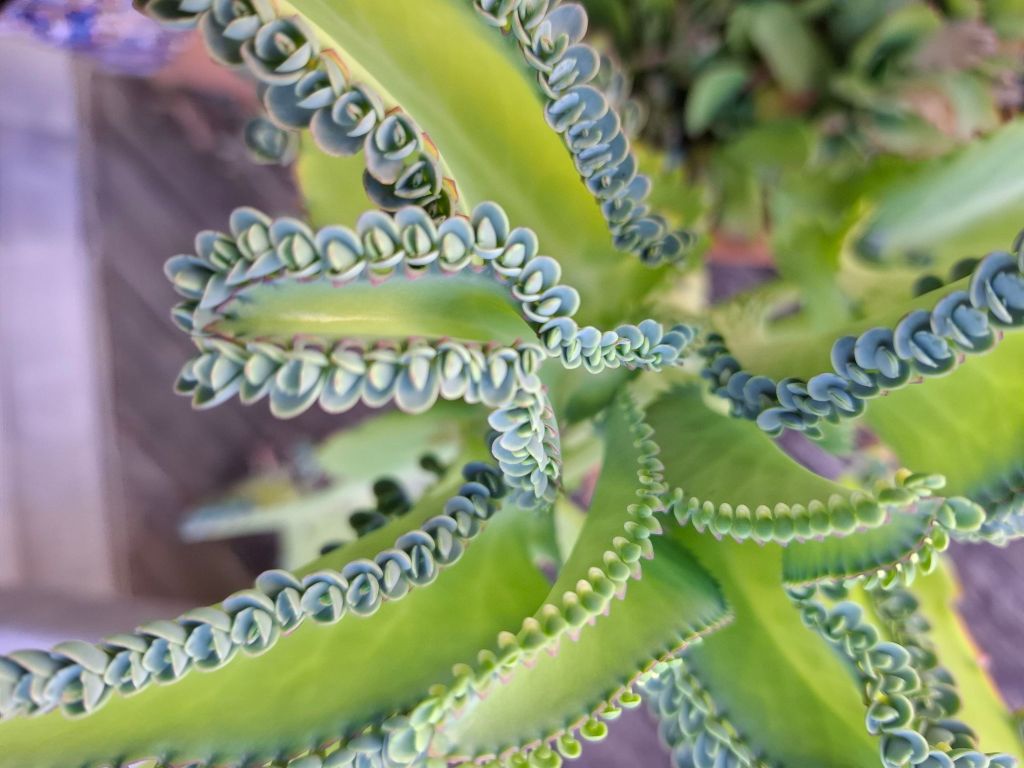
Mecican Hat plant

I moved what was left of the eaten plant onto the deck in June. It has recovered nicely. I hope the deer revovered as well. Kolanchoes thrive on neglect.
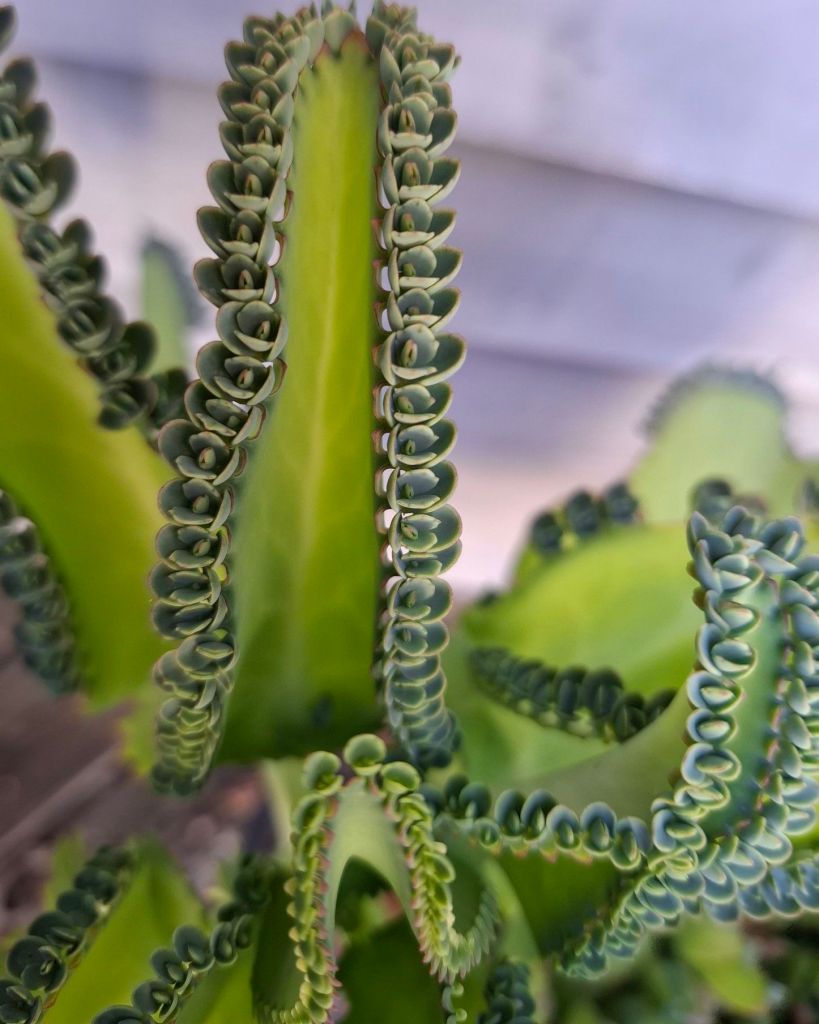
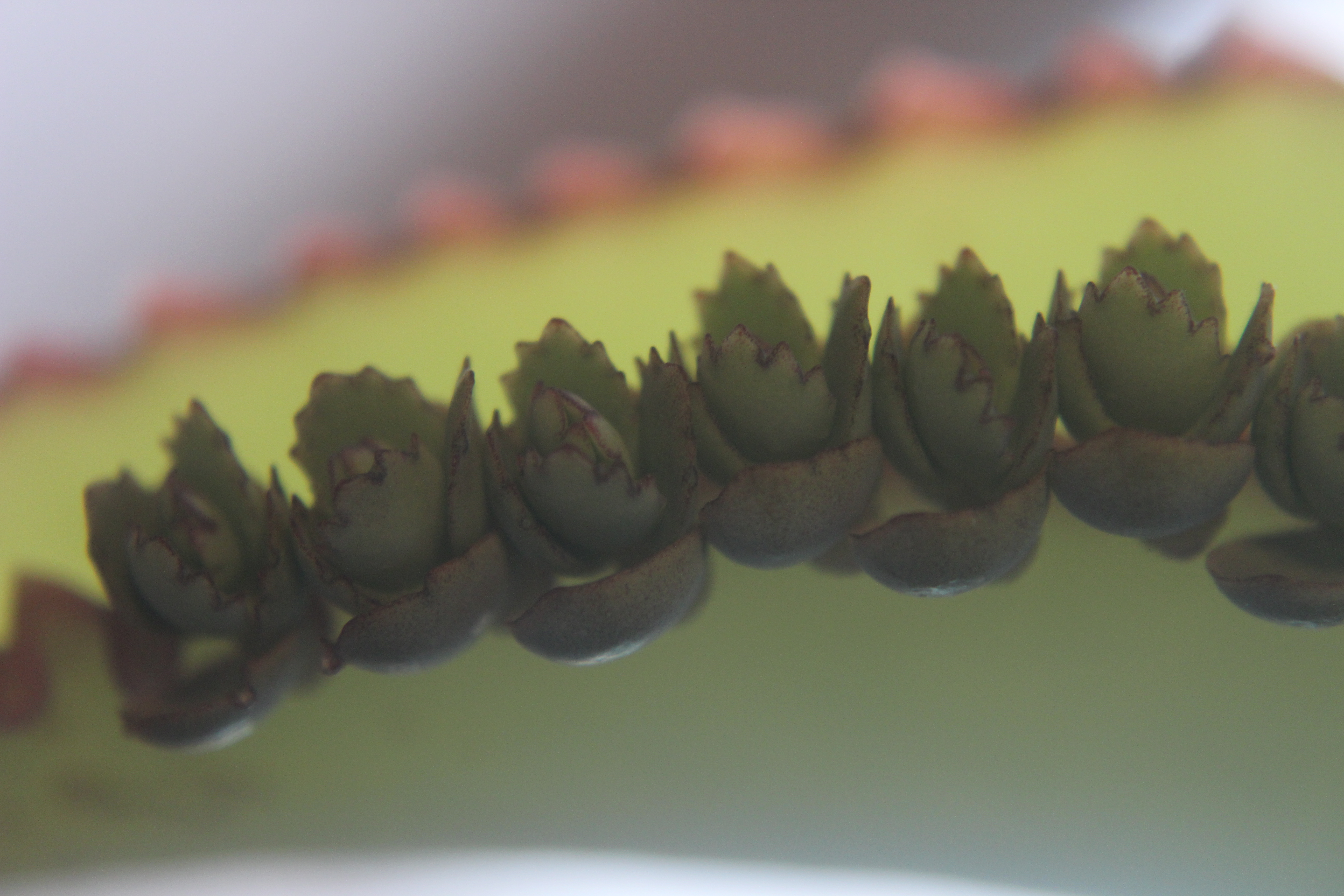
Plantlets

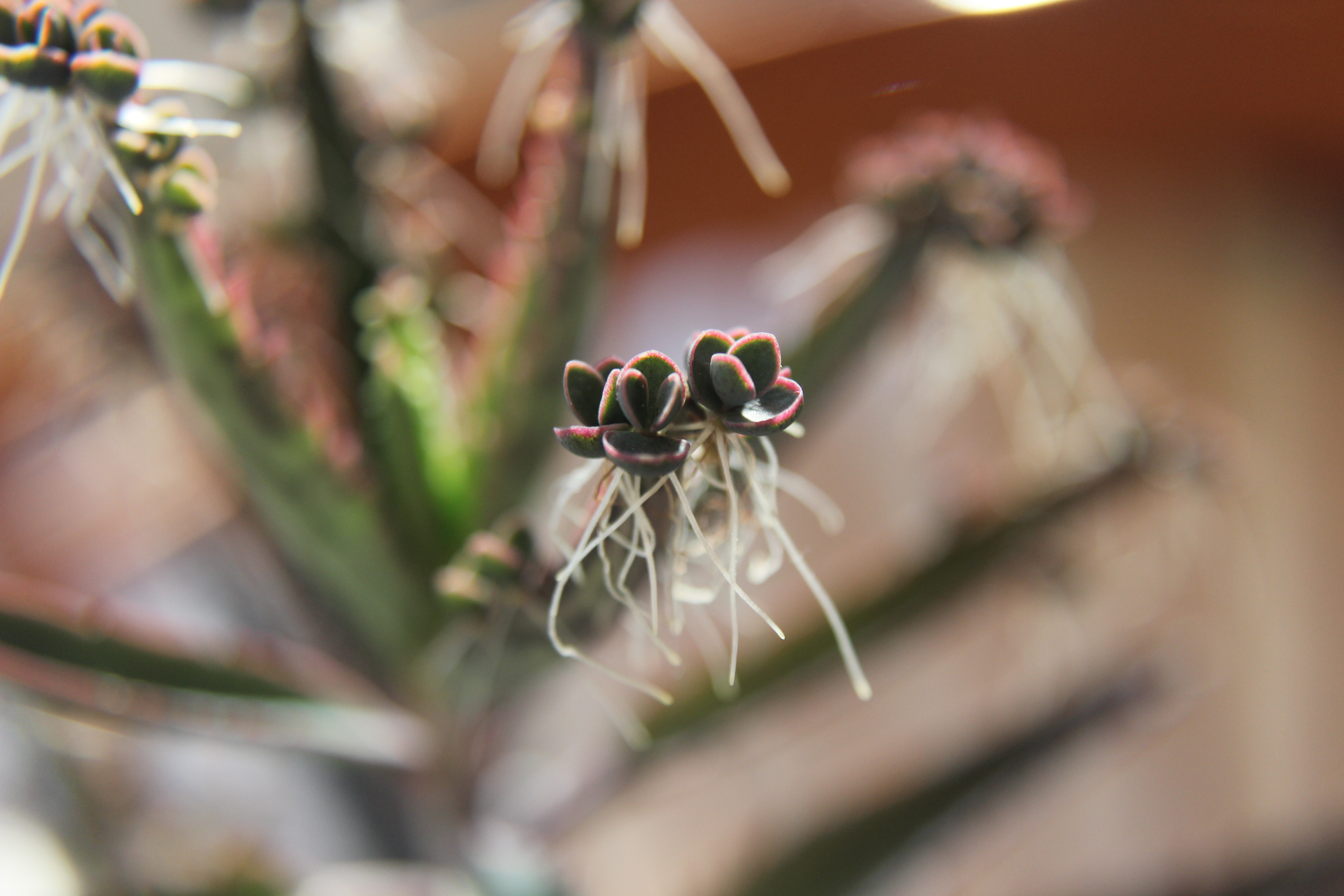
The plantlets along the leaf margins are perfect rows of clones. They look like tiny green roses.

I will bring in this pot in as my “stock plant” for the winter.  I also toss some of plantlets onto a fresh pot of soil to root and grow.

Even small plants form babies along their margins.
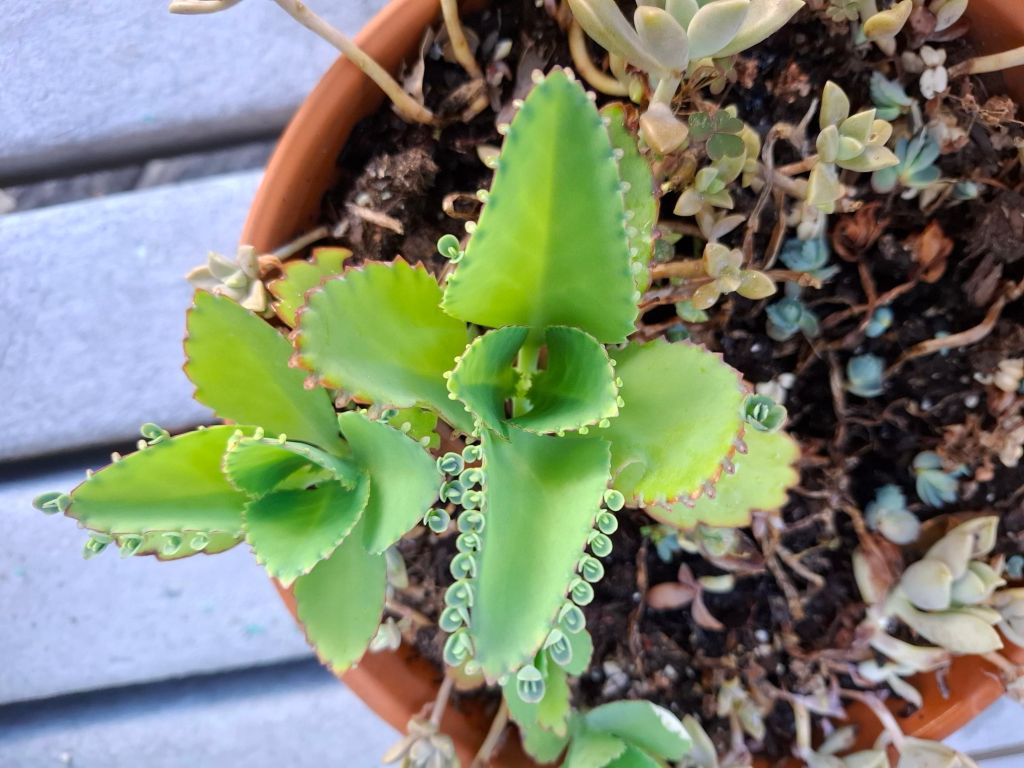
Baby with babies

If you have pets or children that taste plants, you may not want this one in your house. Especially since it drops plantlets that could be eaten, even if the pot is out of reach.

FLOW

Another Mother

I have posted on another Mother-of-Thousands,

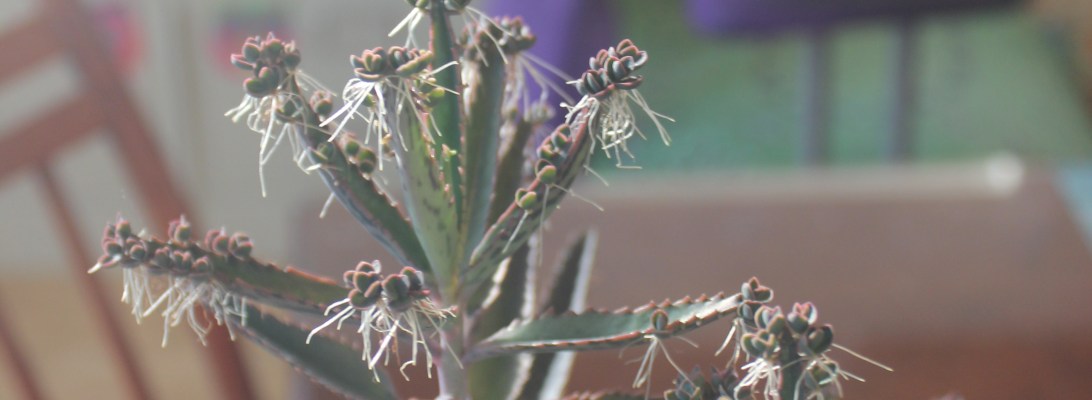
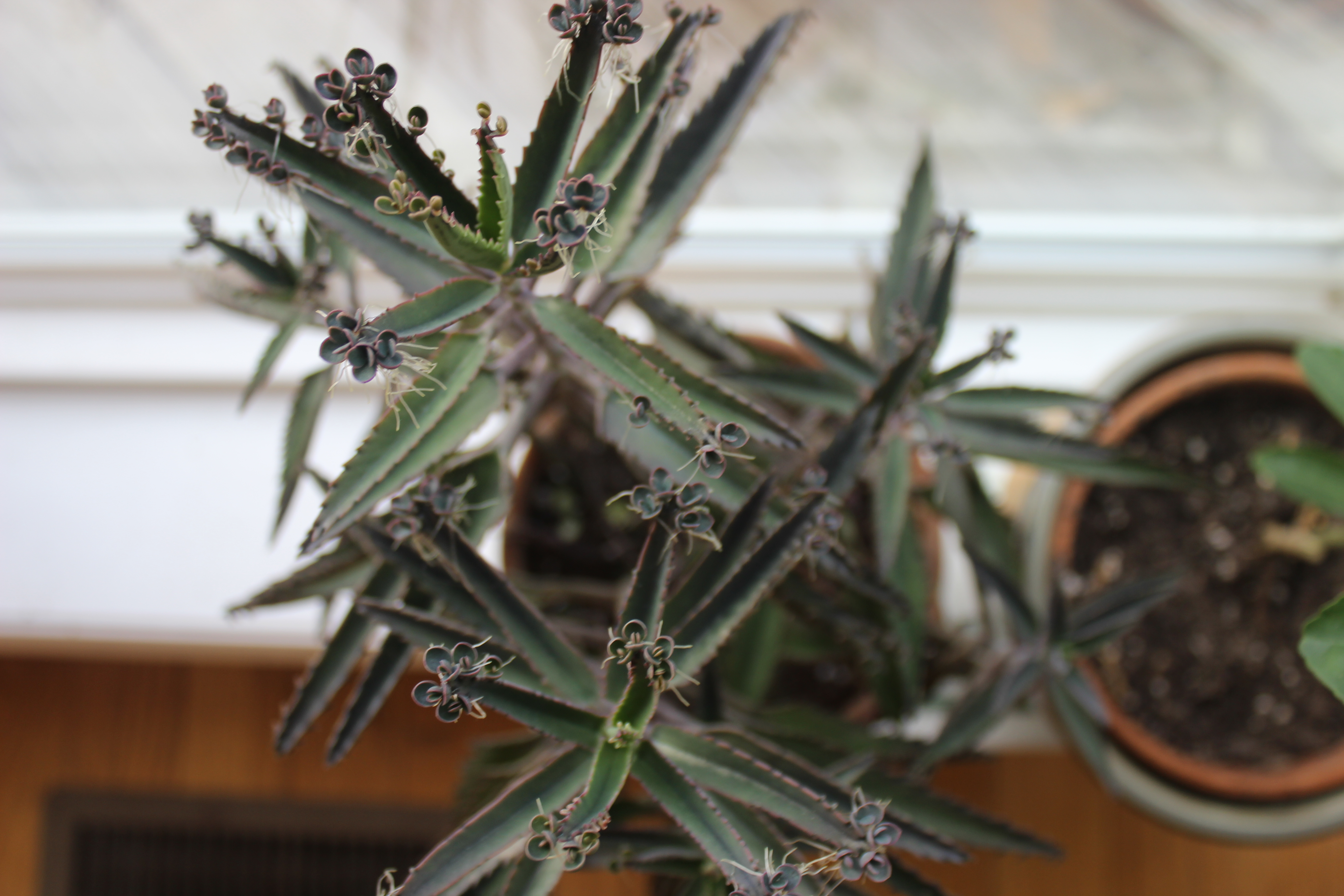
This one is also called Mother-of-Millions, Alligator Plant and Mexican Hat Plant.

img_4899

It also goes by several scientific/genus names; Bryophyllum, Crassulaceae or Kolanchoe.

Even the species/specific epithet may change from daigremontiana to pinnata.

No wonder it had no label when I purchased it from a greenhouse.

img_4890

The leaflets on the mama leaves are held by tiny pink “spoons” along the edges.

img_4900

Some grow roots before they drop off, but most do not.

img_4881

They do not get far from the mama plant.

img_4880

Cute, but crowded.

FLOWER

Mother-of-Thousands? Not this Mama!

I am so glad that I am NOT a Kalanchoe daigremontiana.

This plant reproduces both sexually, by flowers, and asexually.

The ends of its leaves are covered with tiny “plantlets” with needy, draping roots.

IMG_7485

Can you imagine trying to live with little”adultlets” hanging off of your arms?

Mother of thousands?  Two progeny has about done me in.

The Kalanchoe babies do eventually drop off, but to where?

The same pot, that’s where.

IMG_7755

So now,  Mama Kalanchoe has to share her soil and water with all those “independent” plantlets.

Talk about “Not far from the tree.”

Next time you are feeling overwhelmed by motherhood, consider yourself lucky not to be a Kalanchoe daigremontiana.

Think how it would be to drop little clones of yourself all around your house and yard.

Now, there’s my next nightmare!

IMG_7762

The “Old Woman in the Shoe” had it way easier than this mama.

Plantlets available…by the thousands.

IMG_7751


Orange Kalanchoe

I need bright colors when the weather is dark and dull.

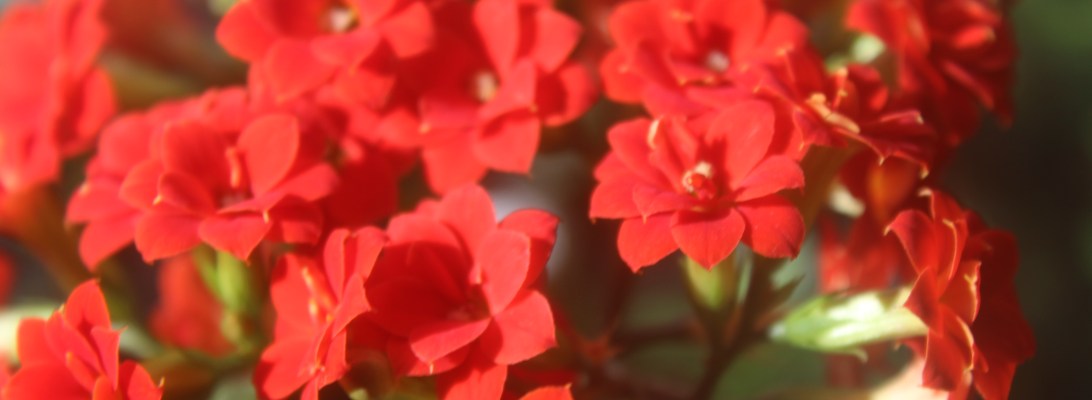
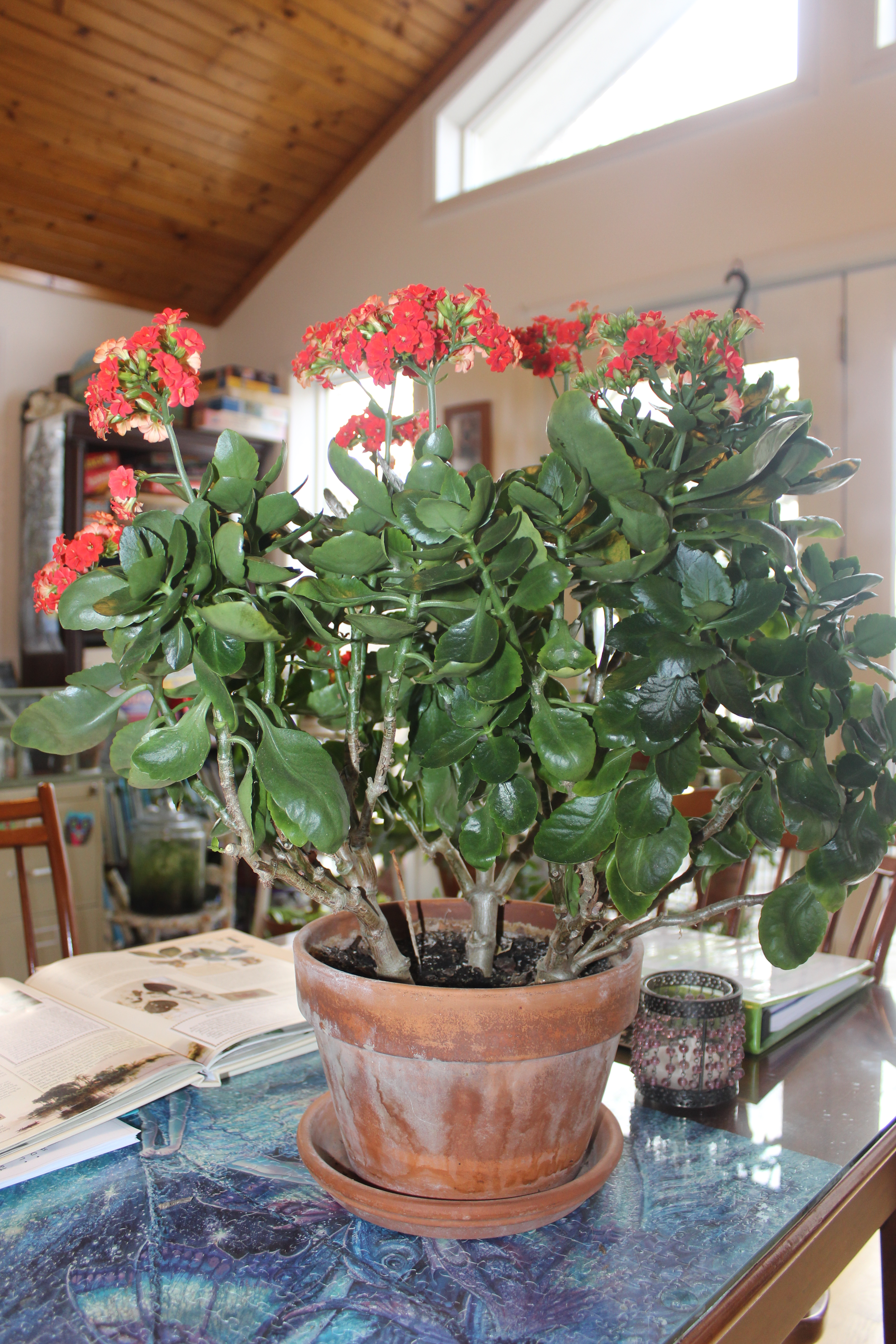
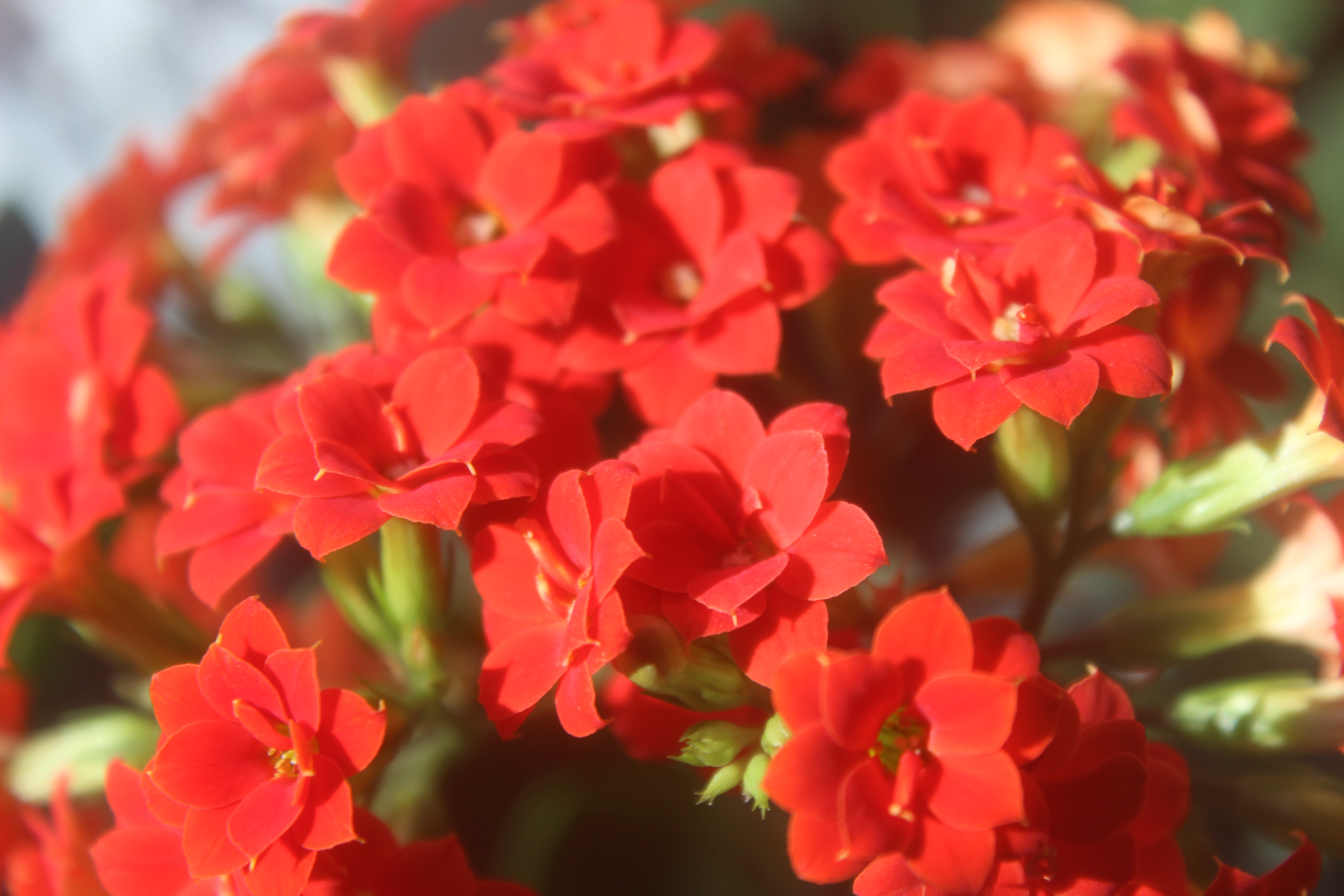
What can be brighter than this Kalanchoe blossfeldiana?

Cultivars may also have flower colors of pink, yellow and red.

IMG_7588

The deep orange bloom clusters just keep on coming for weeks in the winter.

Kalanchoes want sunshine. They need a window to sit in to get this happy.

Let them dry between waterings.

IMG_7632


This plant is a fireball of a bloomer.


IMG_7607