
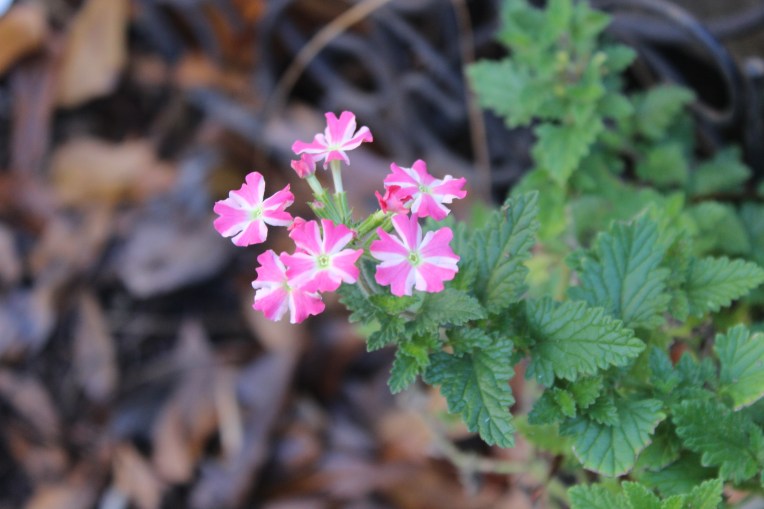
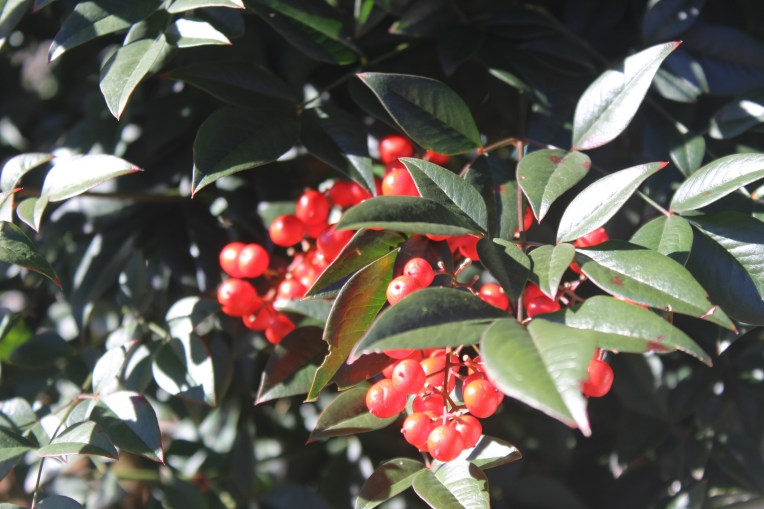
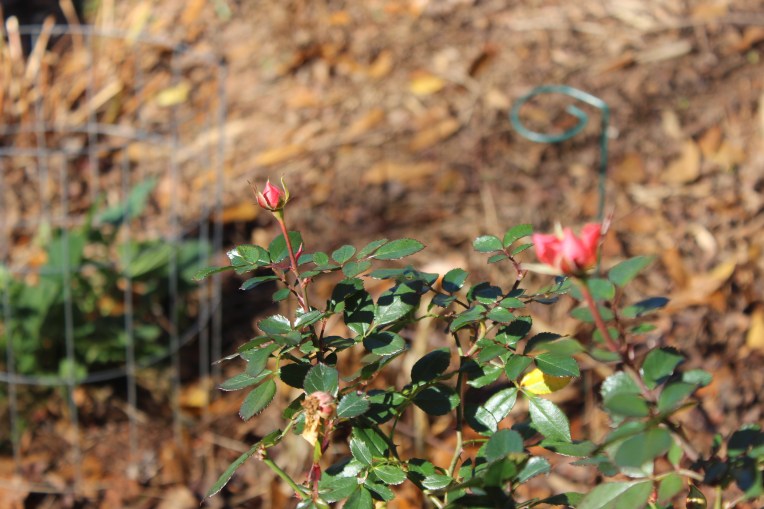
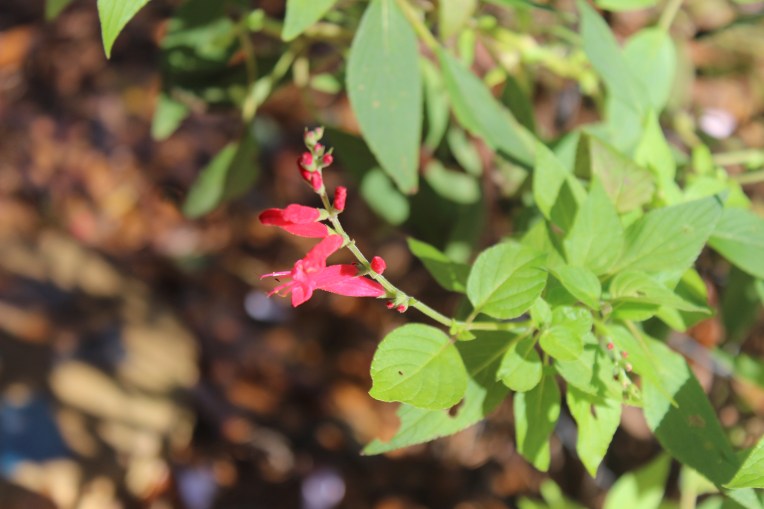
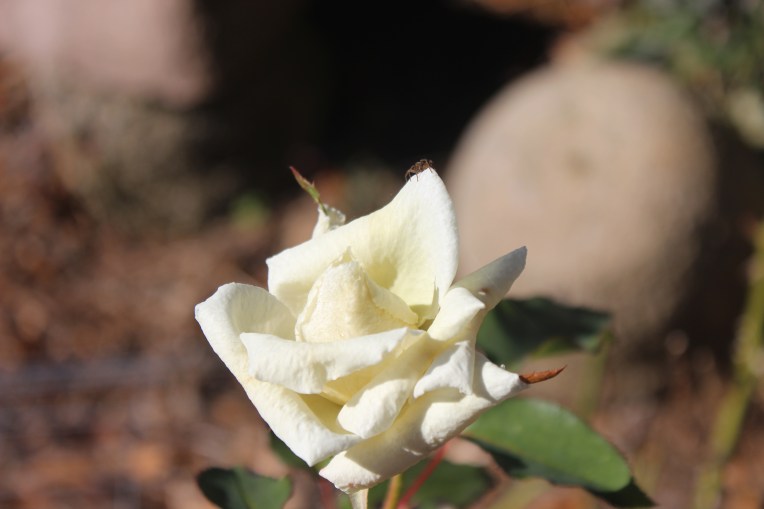
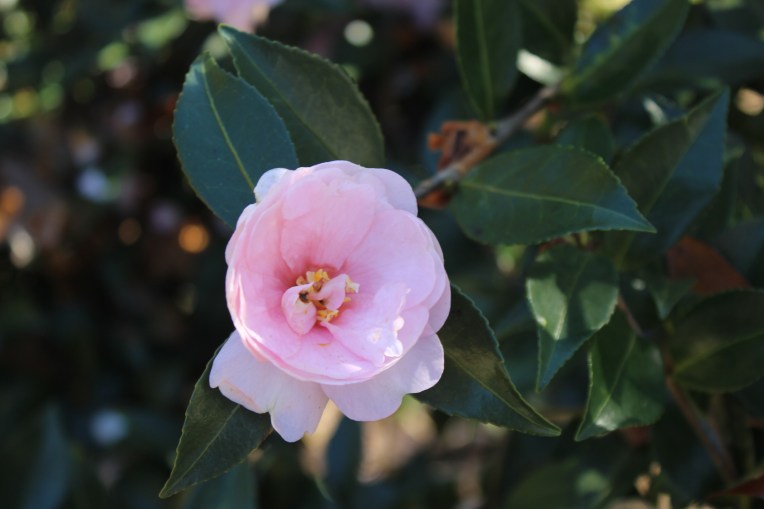
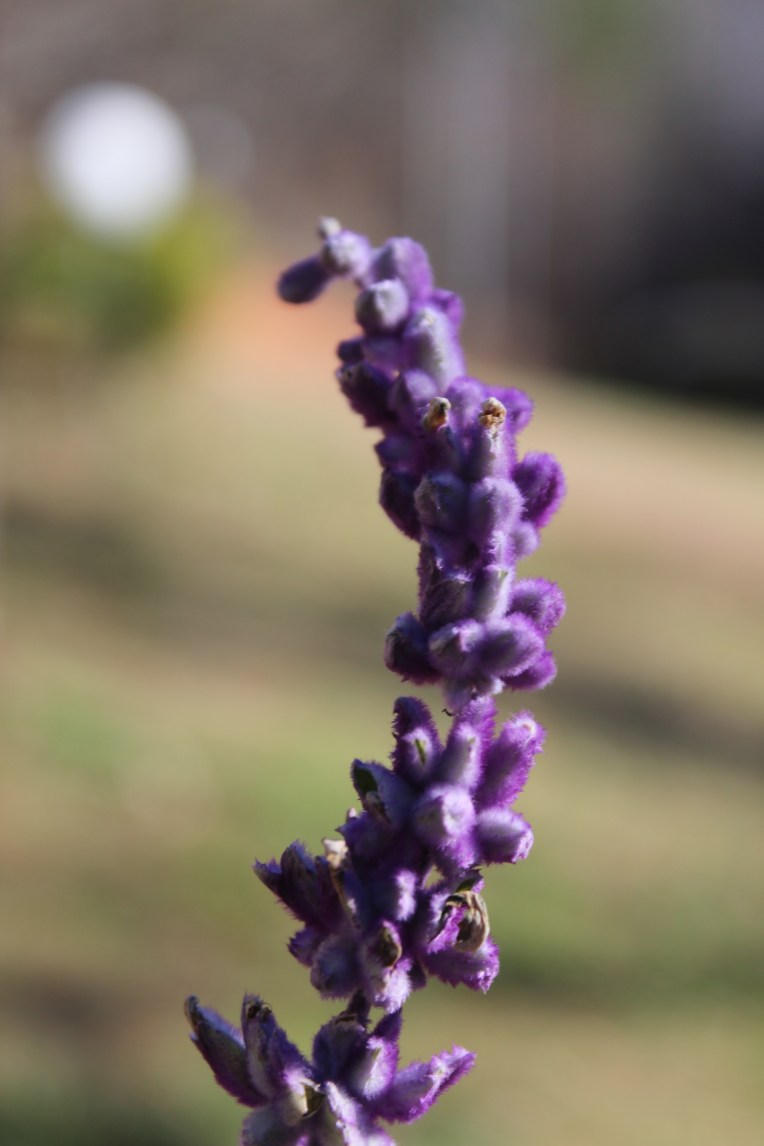
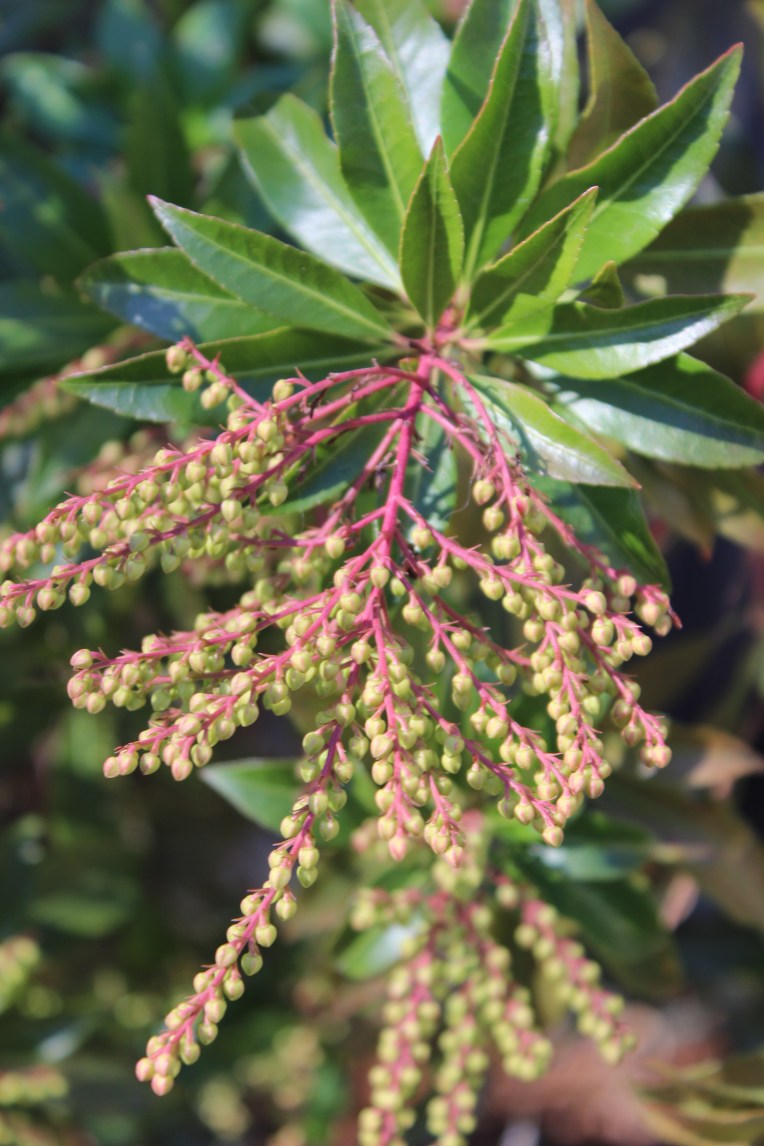
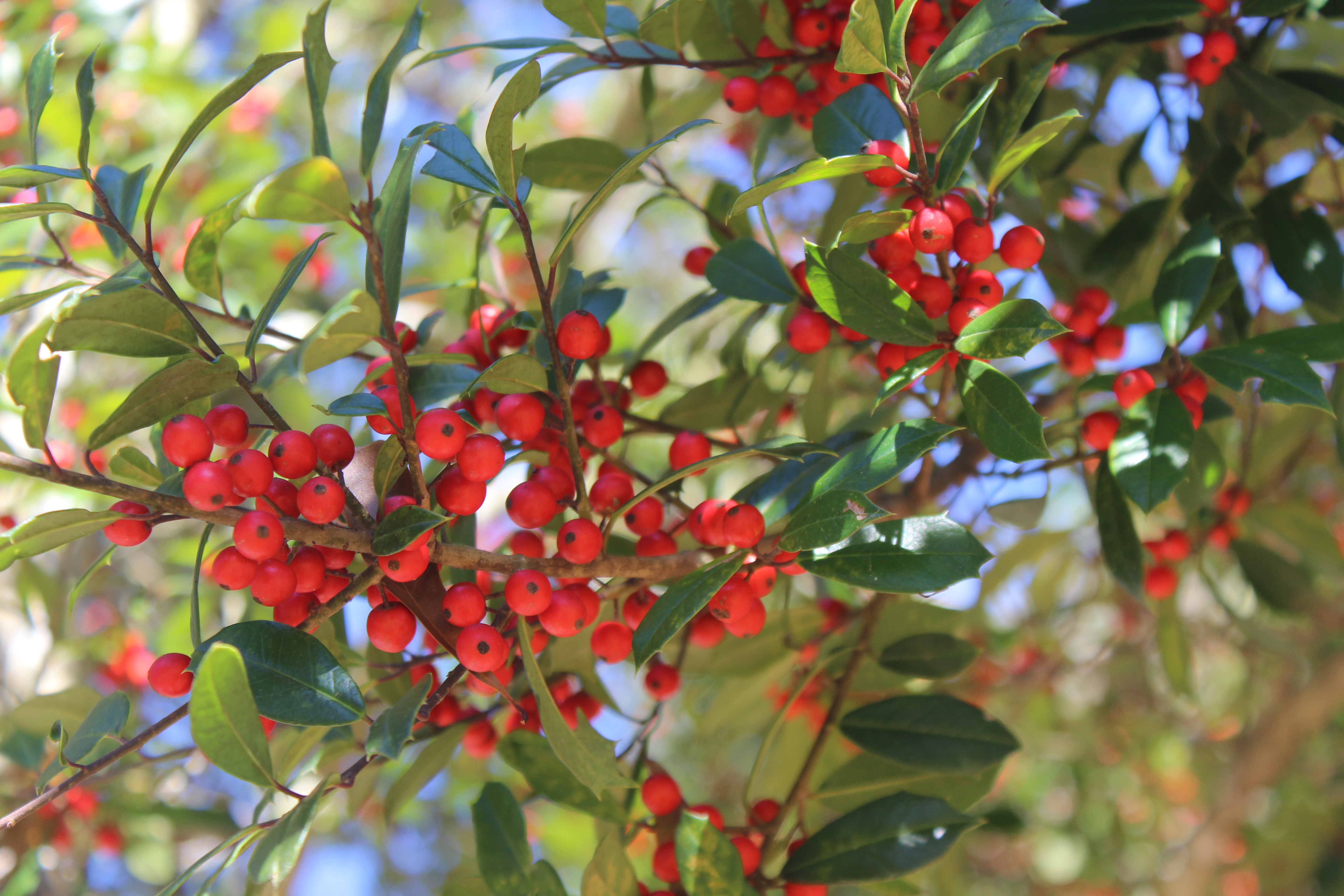
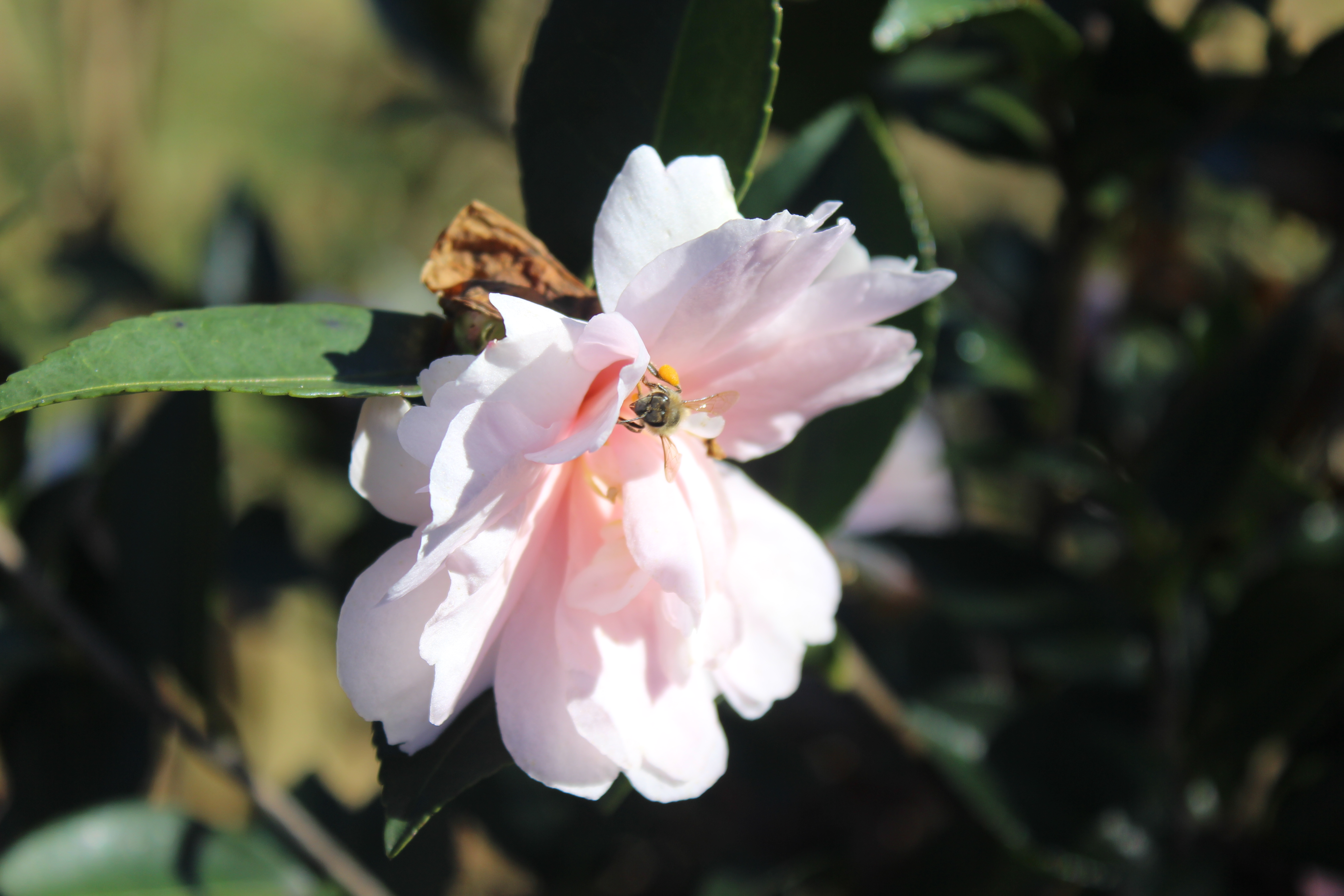
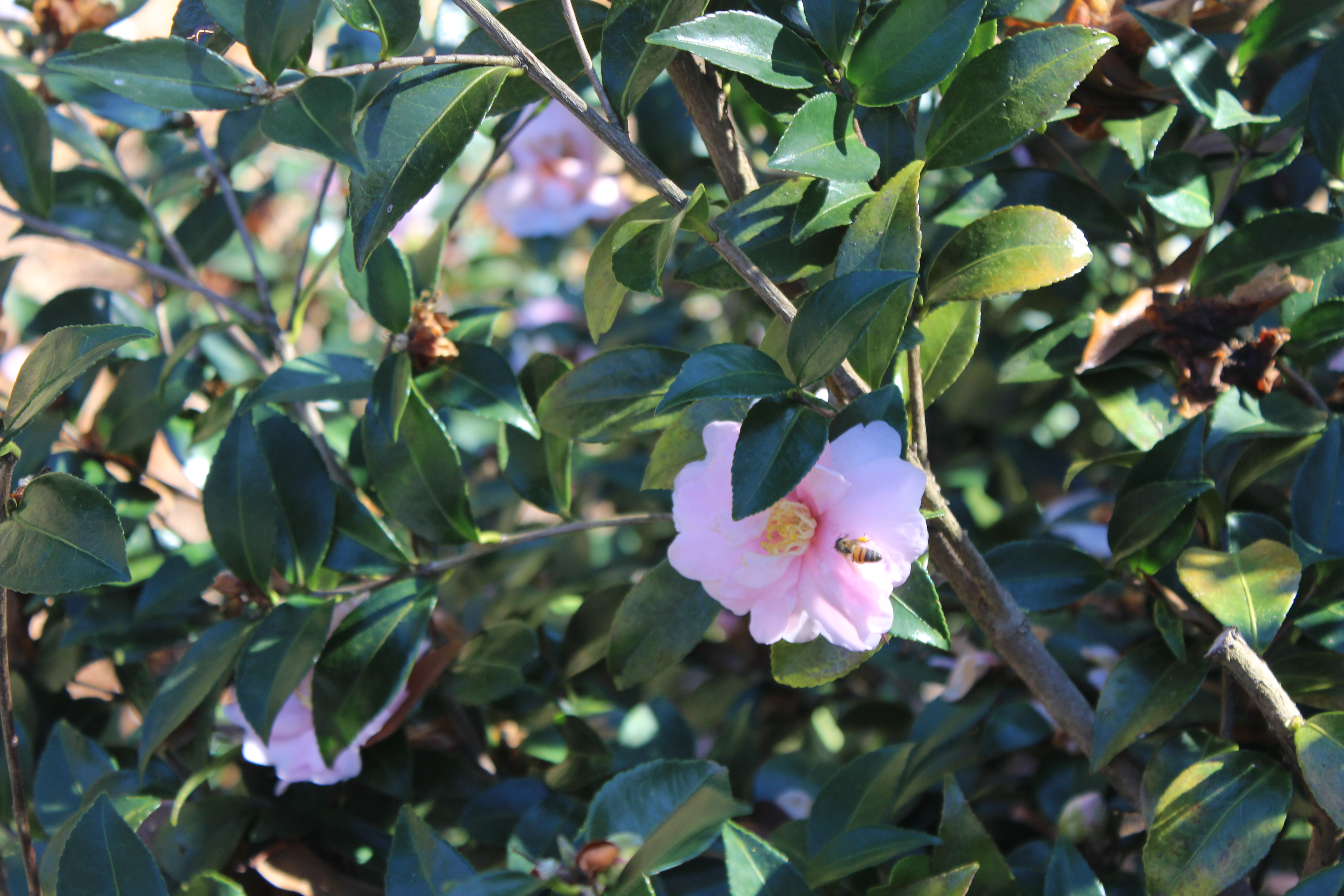
I did not expect to have blooms to share in December.
I am not the only garden blogger with surprises.
Visit maydreamsgardens.com to see late blooms from around the globe.
Follow the Flower
I did not expect to have blooms to share in December.
I am not the only garden blogger with surprises.
Visit maydreamsgardens.com to see late blooms from around the globe.
Follow the Flower
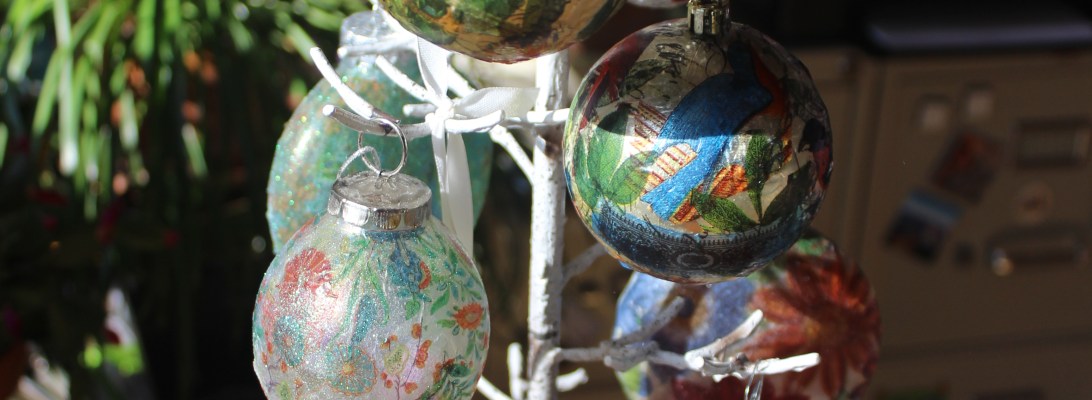
When all my real plants go dormant, I play with paper plants, flowers and birds.
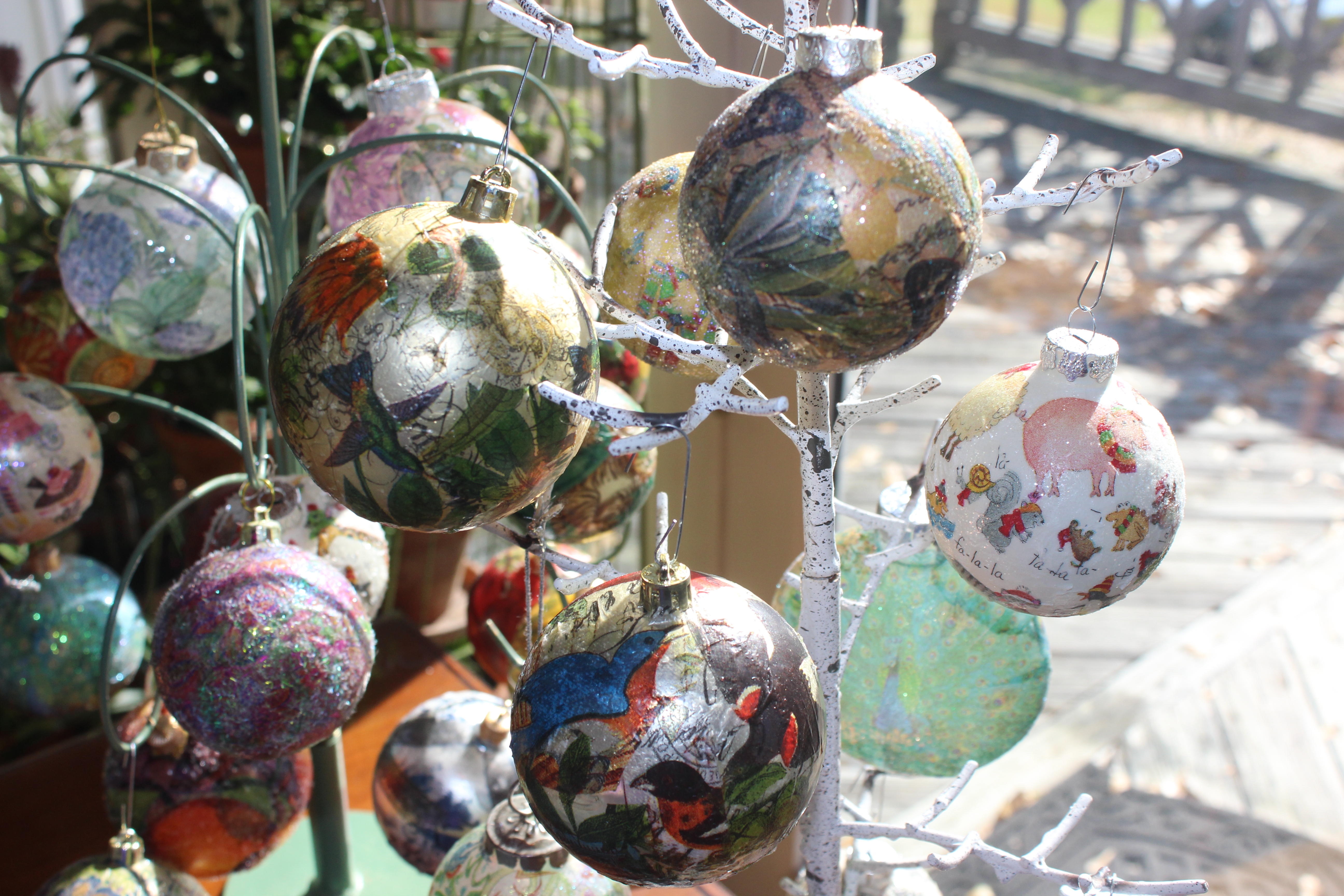
First I take the back two layers off of the napkin and cut it into pieces.
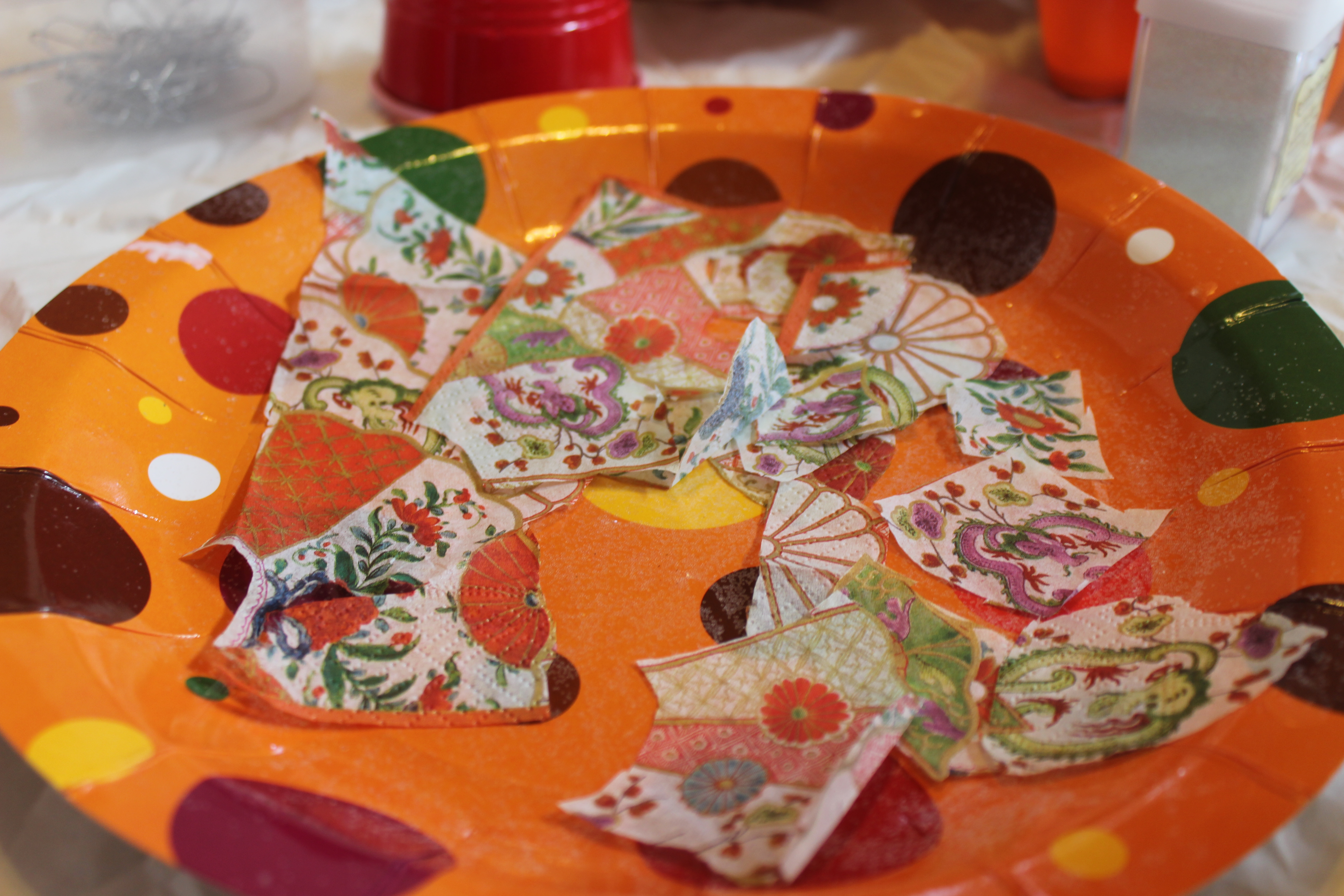
I paint spots on the object with Mod Podge glue using a sponge brush.

Once the whole object is covered with napkin pieces, I let it dry.
Then, I check for bald spots and paint the whole thing again with diluted glue.
This is when you can sprinkle it with glitter.
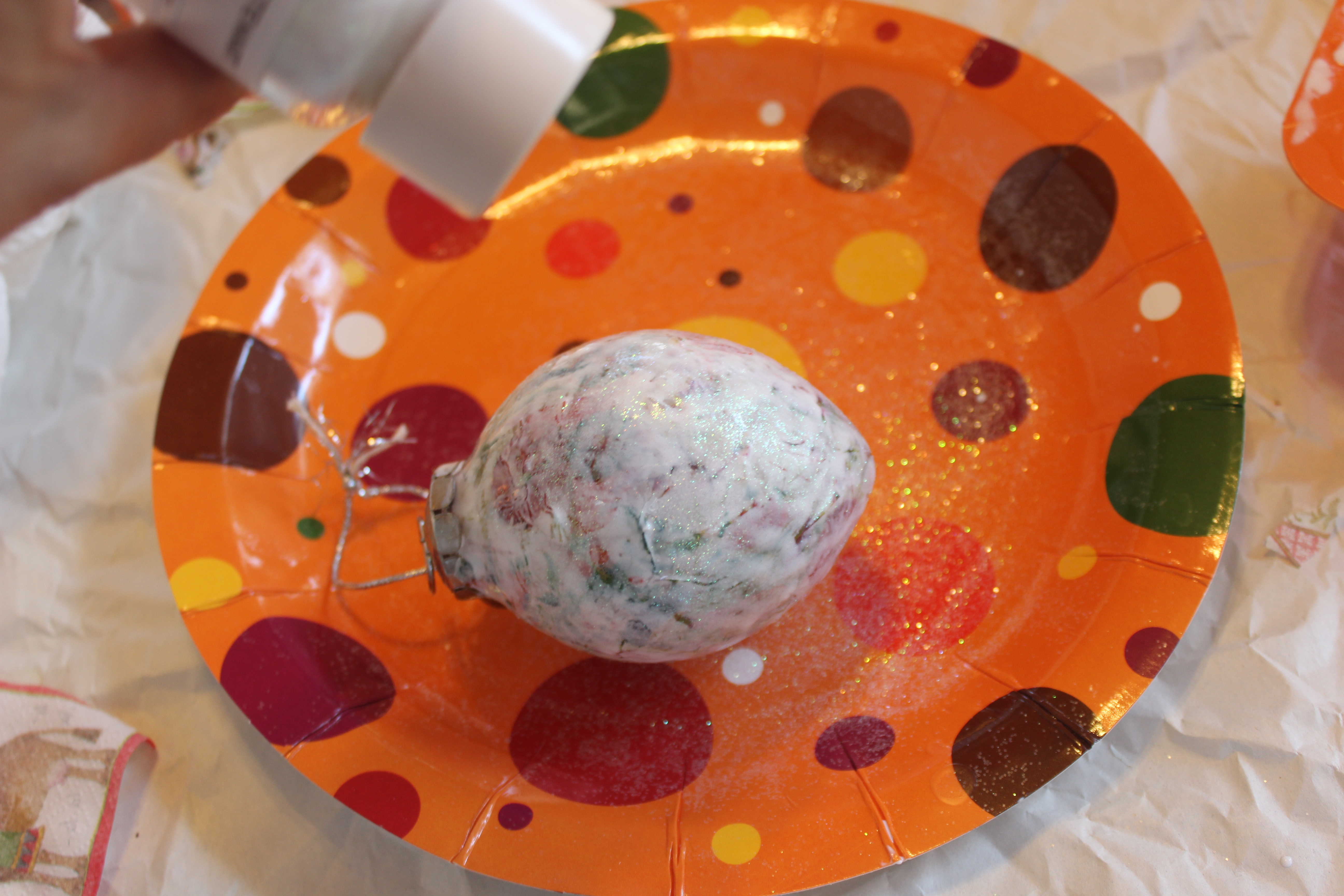
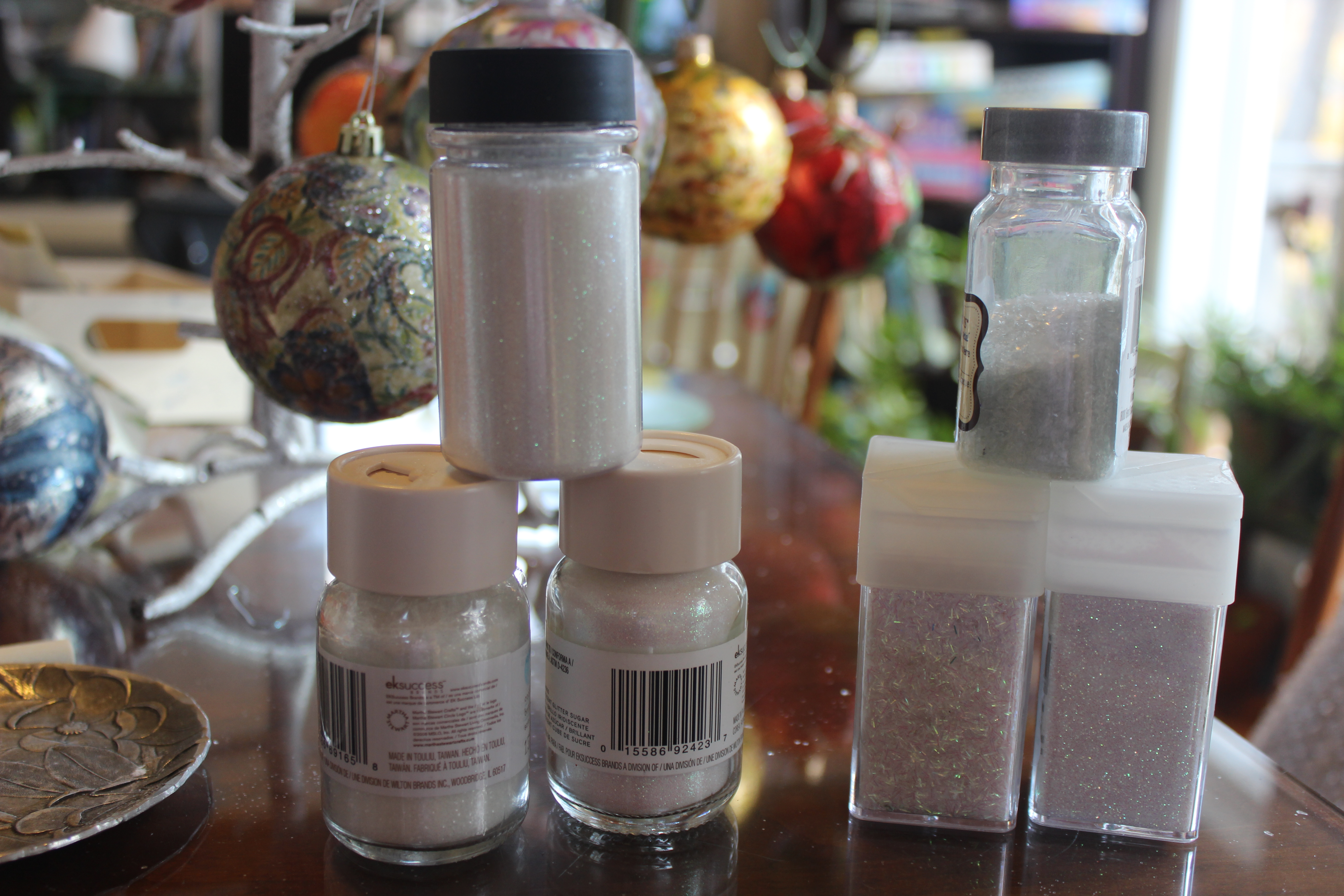
If you don’t add glitter, you may want to spray the balls with a clear acrylic spray to seal them.
It’s addictive this decaupage.
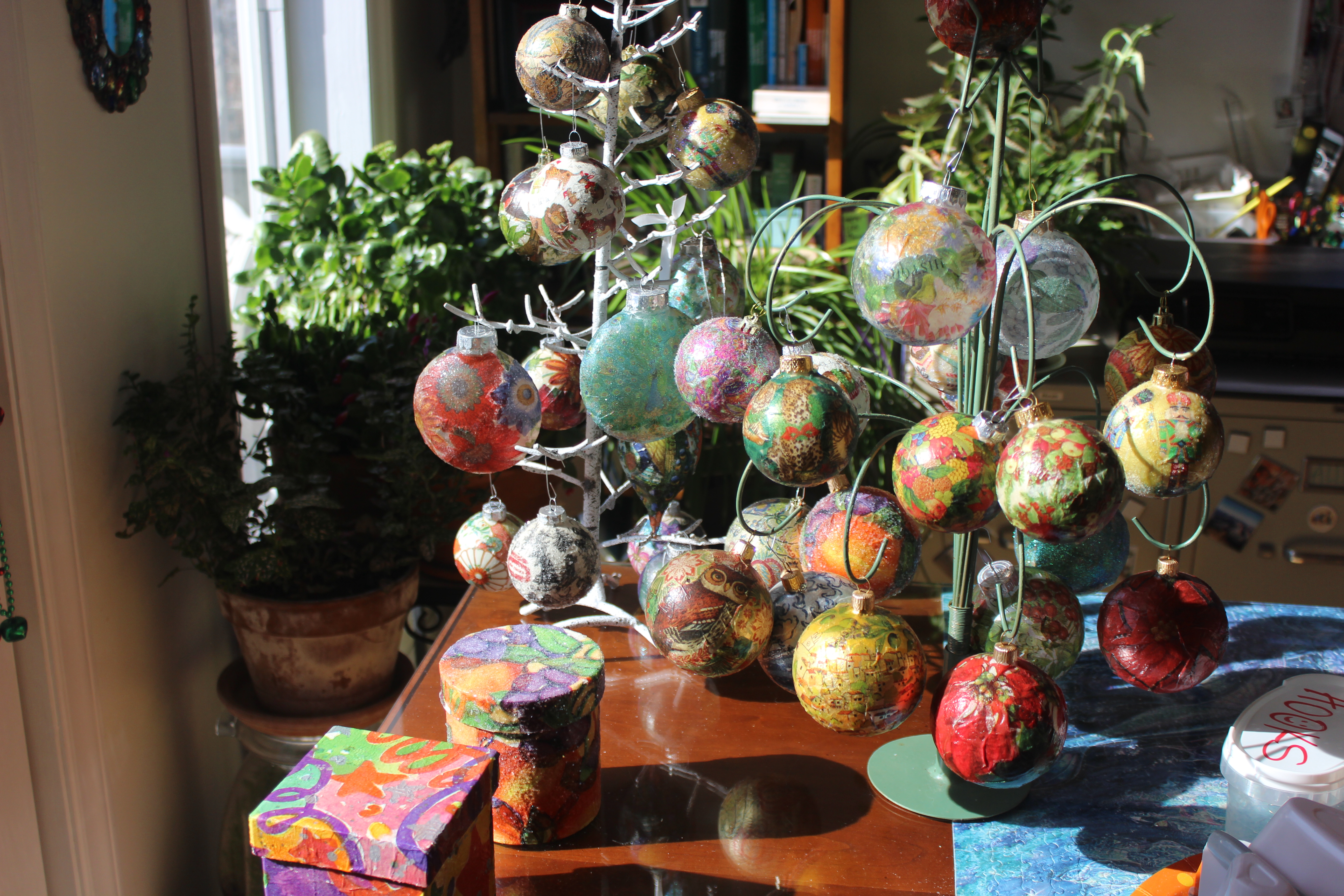
I actually have a napkin collection.
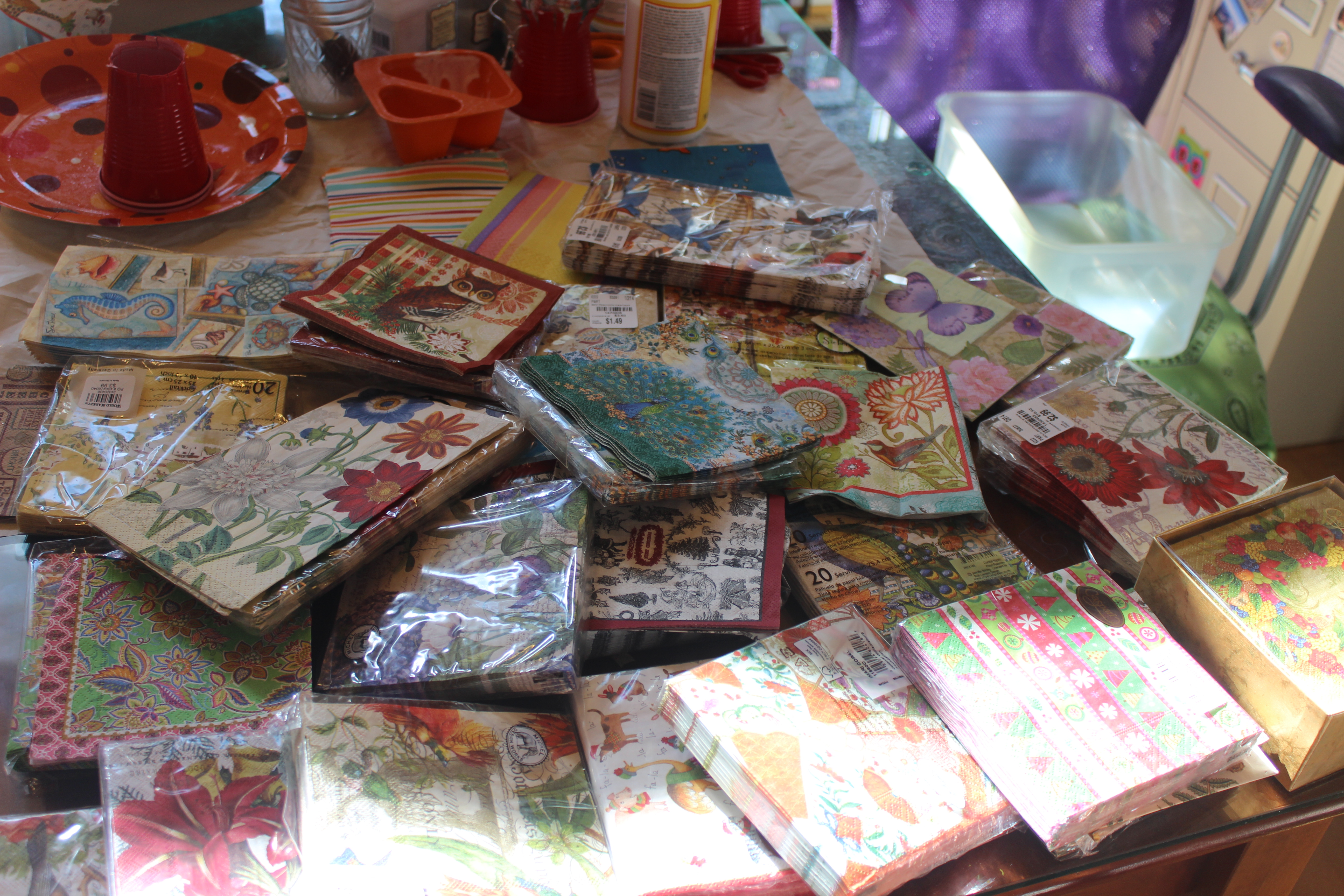
In the late fall, I decorate Christmas ornaments.
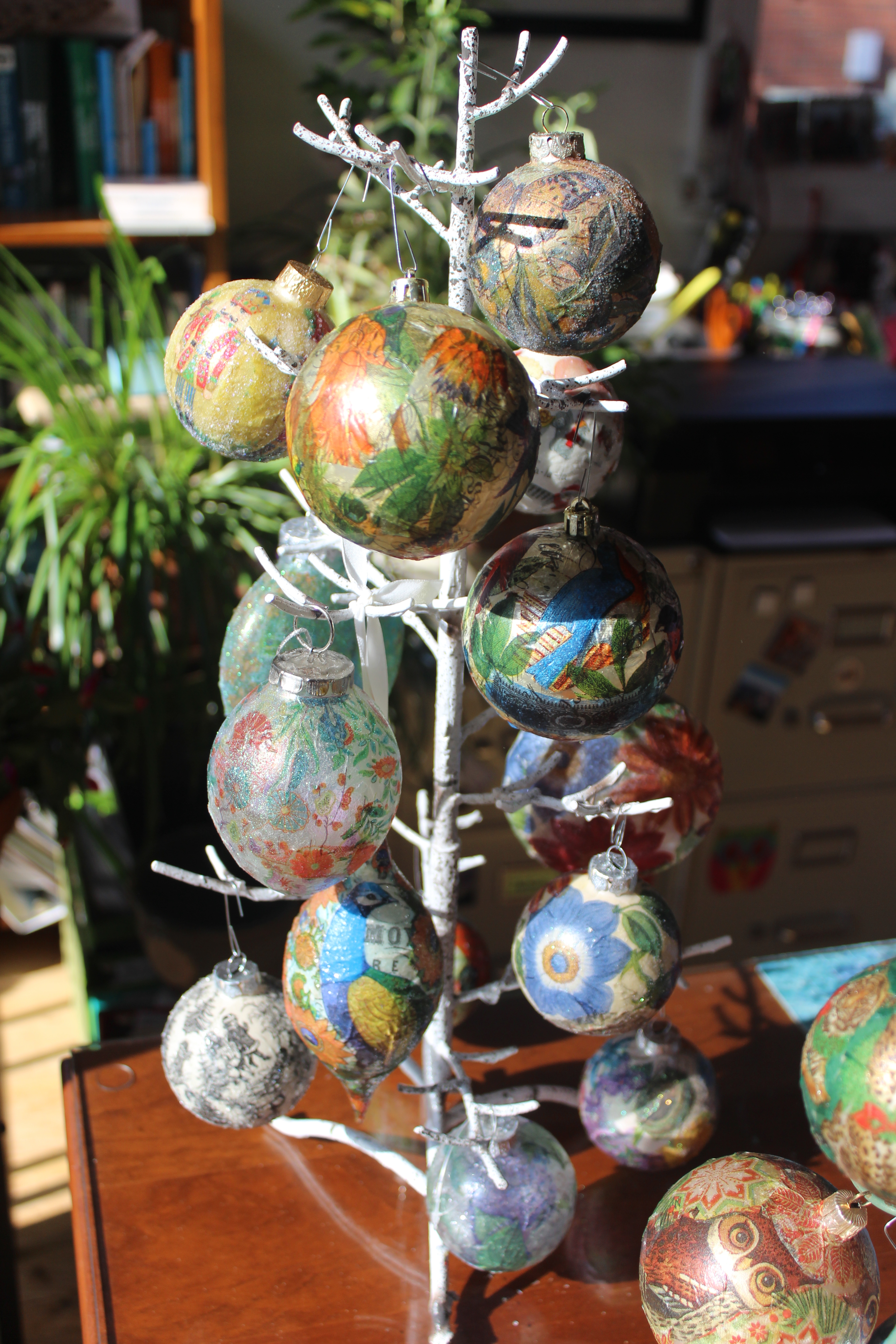
In the early spring, I switch over to Easter eggs.

I invite friends over to play with my napkins, glue and glitter.
It’s like being in kindergarten again.
Fun and messy.
Follow the Flower


My family gave me this vase/pin years ago. I have always been a flower, you see.
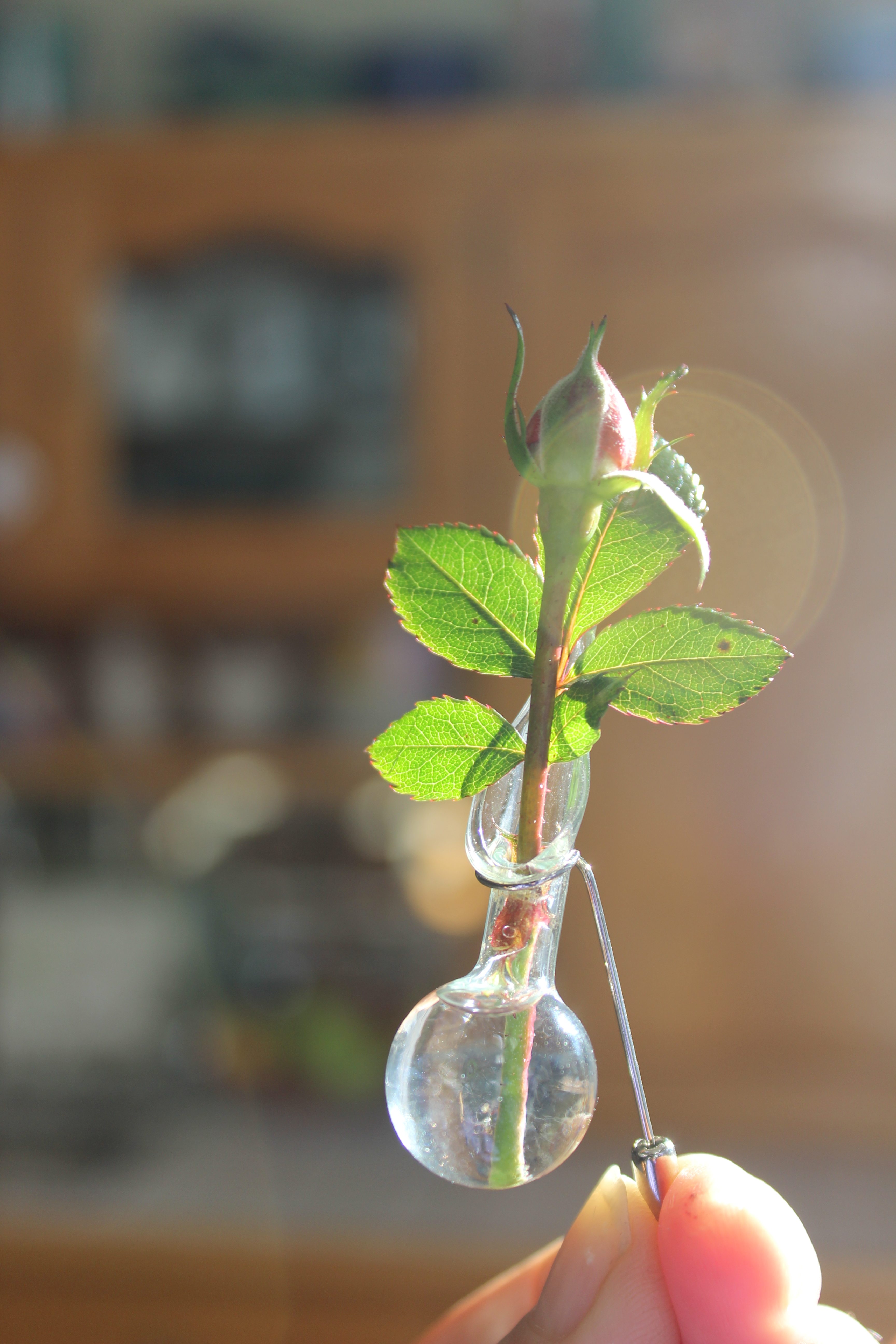
The long pin has a capped end.
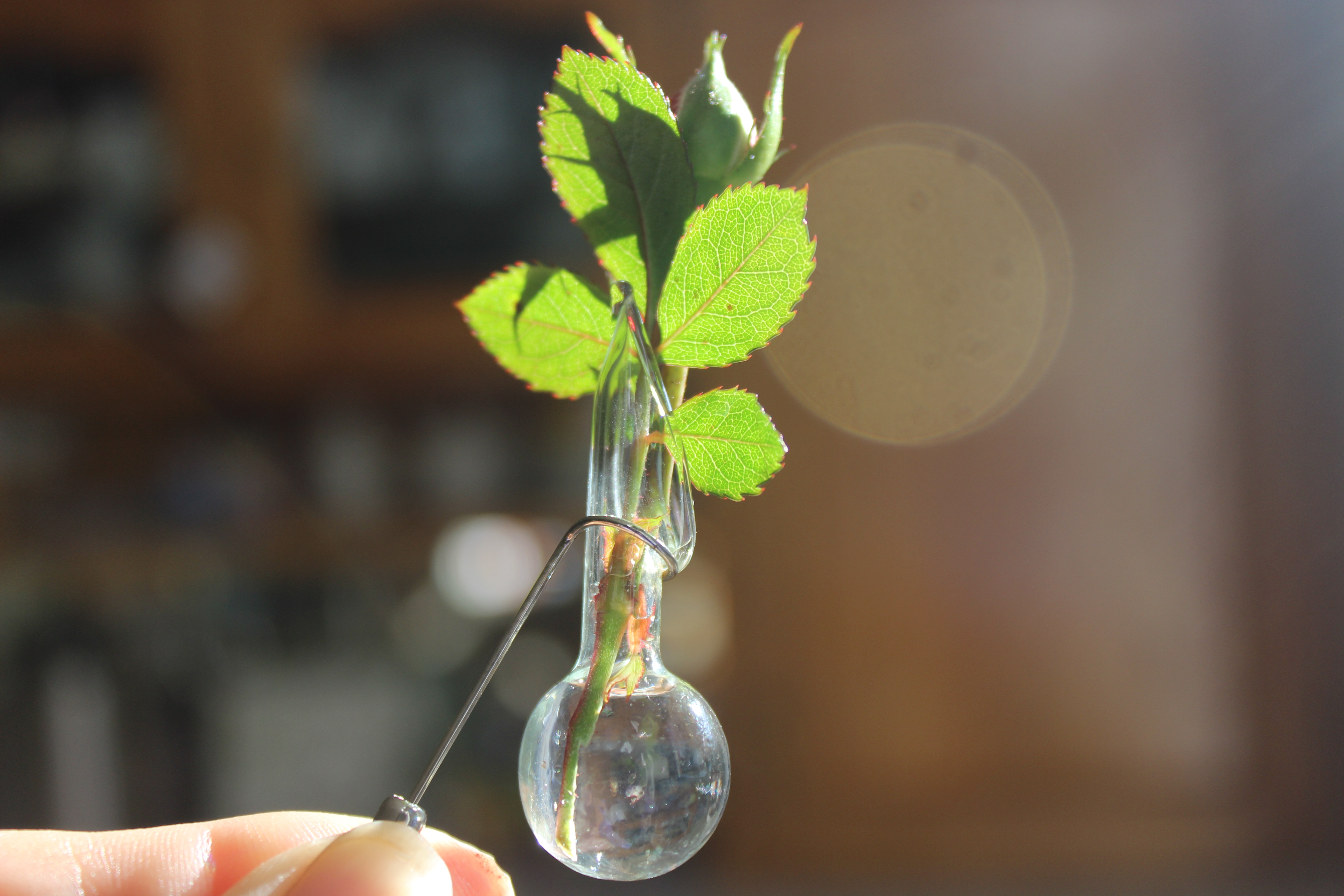
Water must be shot into the vase with a syringe.
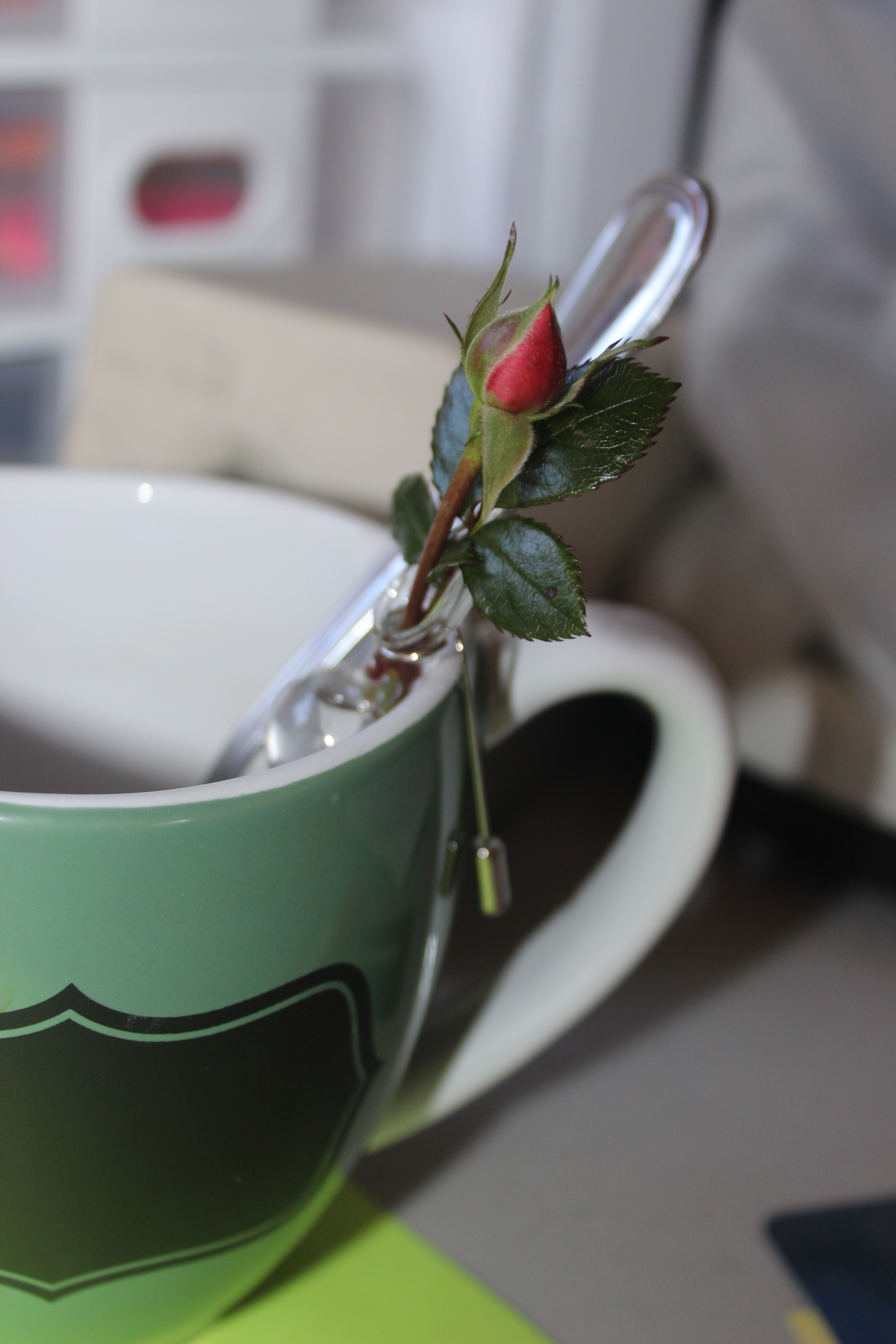
Go see more vases at ramblinginthegarden.wordpress.com
Cathy, Is there a prize for the smallest vase?
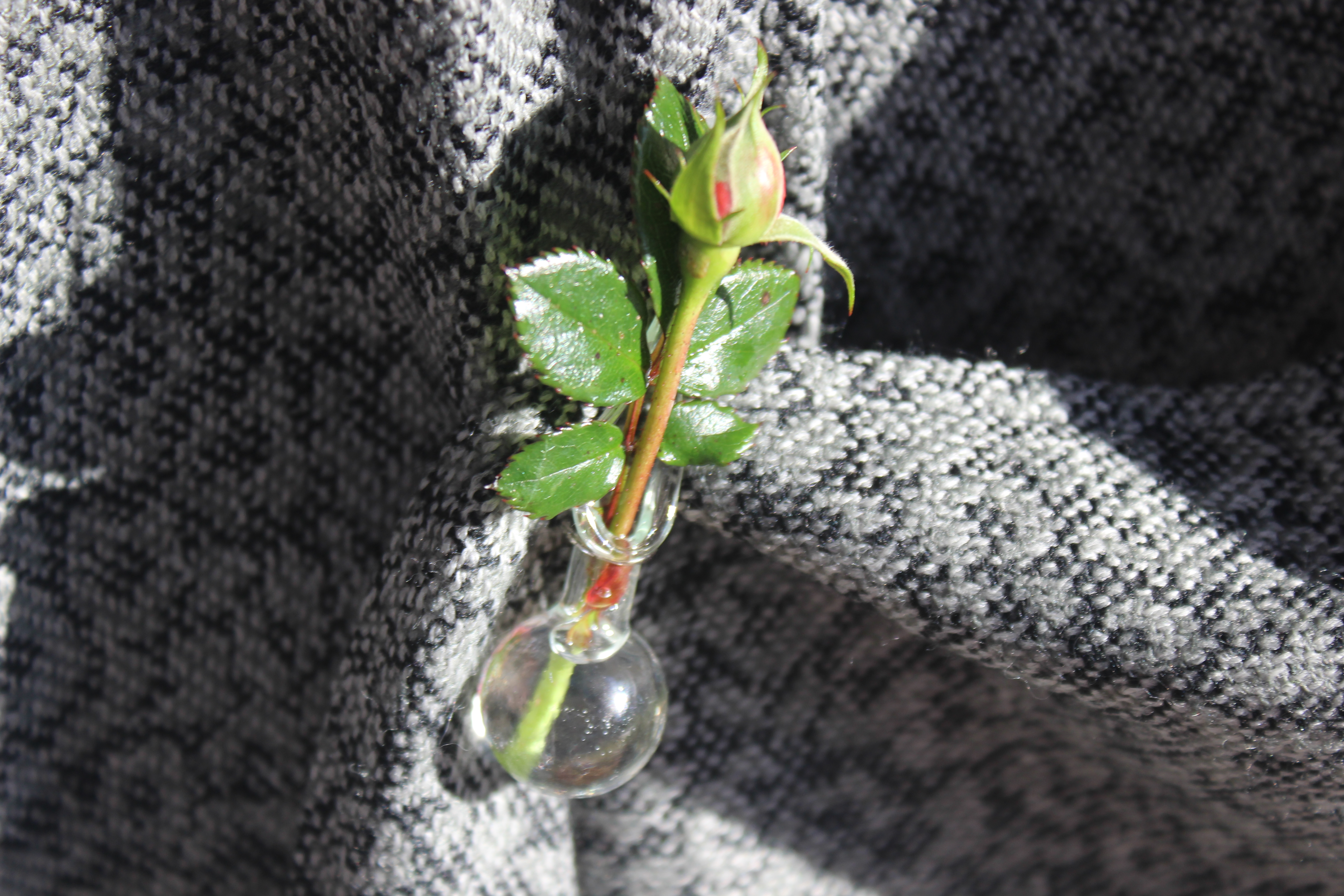
Follow the Flower.

I spent last night in one of my favorite places on Earth.

One of my “heavens” is Brookgreen Gardens in South Carolina.

It was especially blissful this weekend, because in addition to amazing sculpture and plants, they added MILLIONS of lights.

The event is called “Nights of a Thousand Candles.”

The thousands of burning candles were accompanied by millions of lights wrapped around shrubs, dangling from tree limbs and artfully highlighting the giant oaks and their mystical Spanish moss.

Candles were floating in glass orbs in the many water features.

Colorful glass sculptures were lit to make a magical glowing garden.

Just when I thought I had been dazzled to my heart’s content, I walked into the Brown Sculpture Court to be knocked over by the most lovely display of all.

The central canal contained Poinsettias surrounded by millions of floating cranberries. The color combination was magical.

My sister and I will be going back next year and taking our parents. This was a dream.

Not to mention the live music and tasty food. Did I mention model trains?

Now that folks, is how we celebrate in the south.

Follow the Flower.
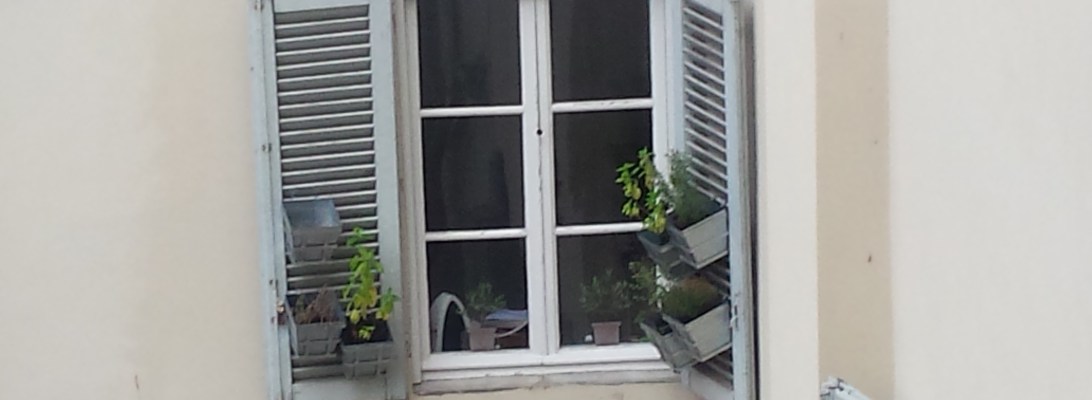
I must be surrounded by plants to be at home.
I am fortunate that I have a yard that I can fill up with green friends.
I saw a young lady through a window in Italy, that was a kindred spirit in an urban setting.
This is a photo of her kitchen window. I took it from the window of our apartment elevator.
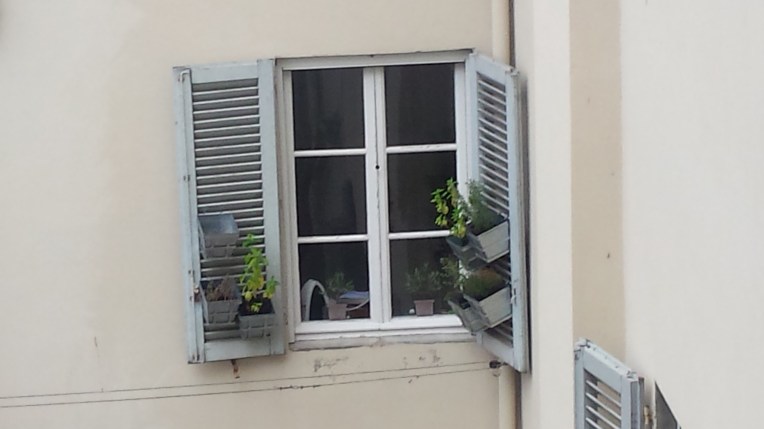 These are planters hanging on her window shutters.
We would see her through this window in the evenings. She would be cooking in her kitchen. Probably using herbs from her window boxes.
I never met her, but I love this little Italian cook.
FOLLOW the FLOWER.

I sat down beside an assassin on a bench in the sun.
I looked over and there she was, looking back at me like an unwanted intruder.
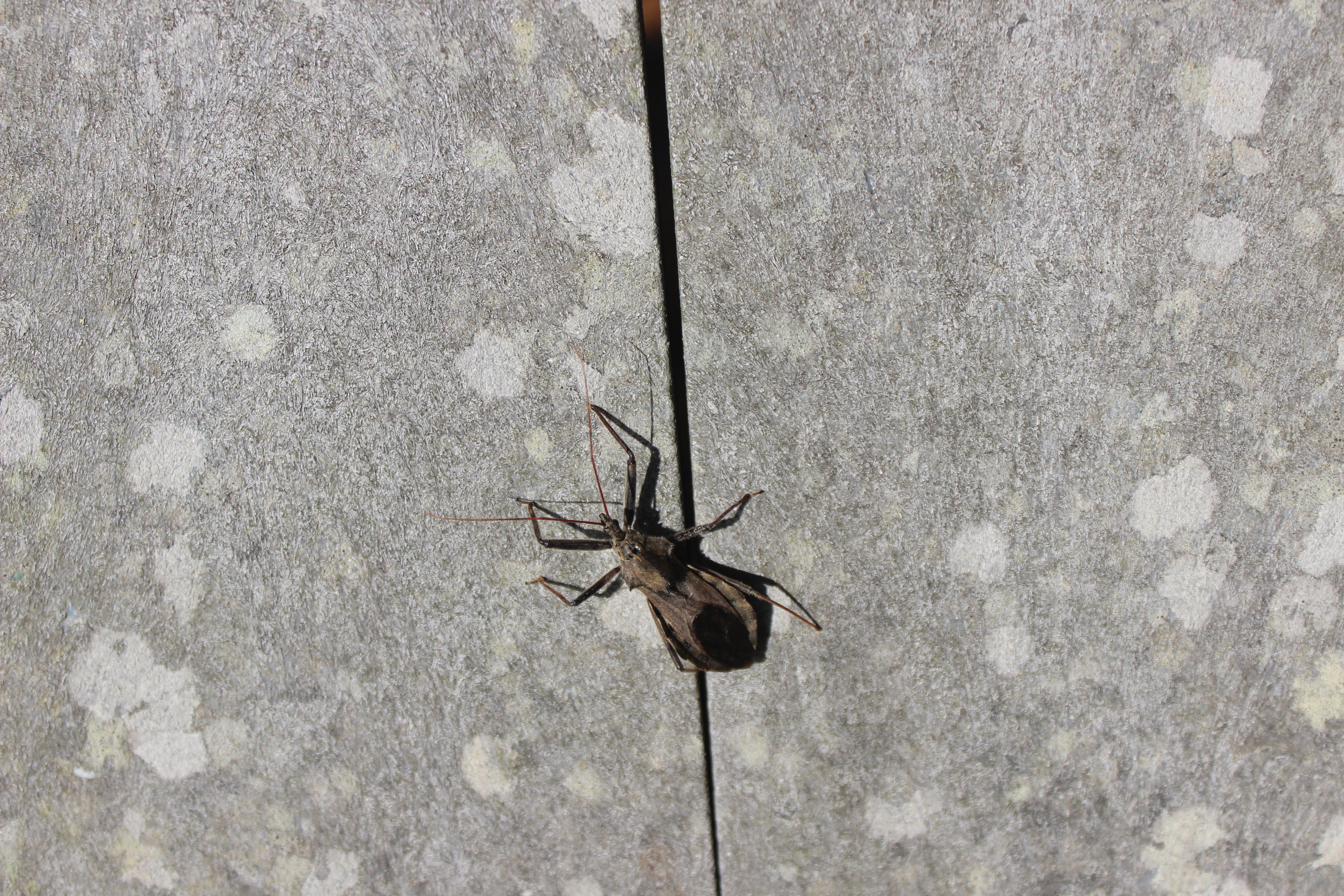
Our eyes met as we sized each other up.
I was clearly bigger, but she was armed and had on armor.

Was this bench in the sun worth fighting over?
My instincts told me to move away,
but I was fascinated by her fearlessness.

Her slow, deliberate movements were mesmerizing.
She kept her eyes on me as she stretched out her arms and tilted her head.
I knew she was part of the Reduviidae clan.
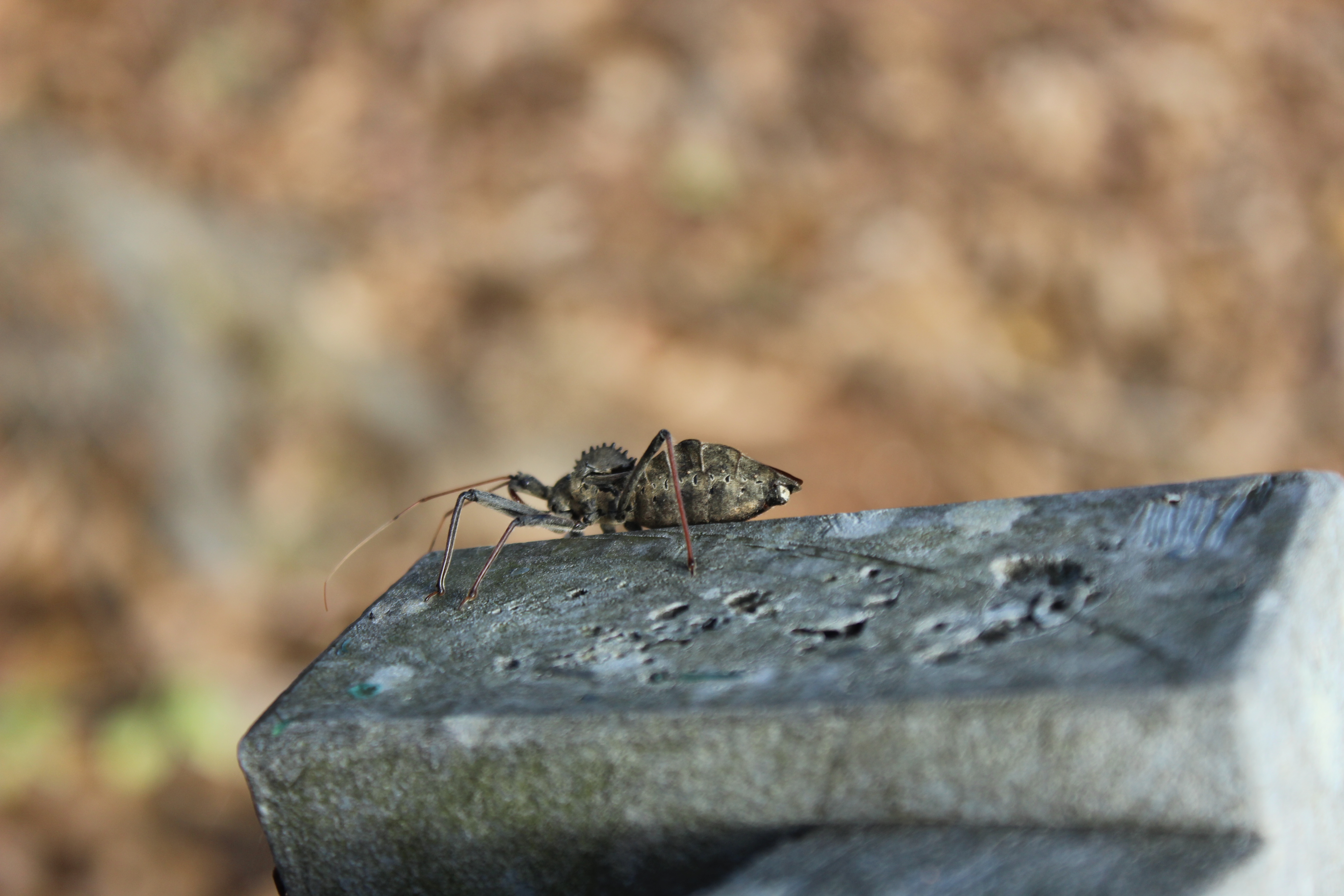
I recognized her weapon. I knew the harm it could do.
So why did I sit beside this assassin, Arilus Cristatus?
We both felt that the bench was ours.
We both wanted to pause in the sunshine.
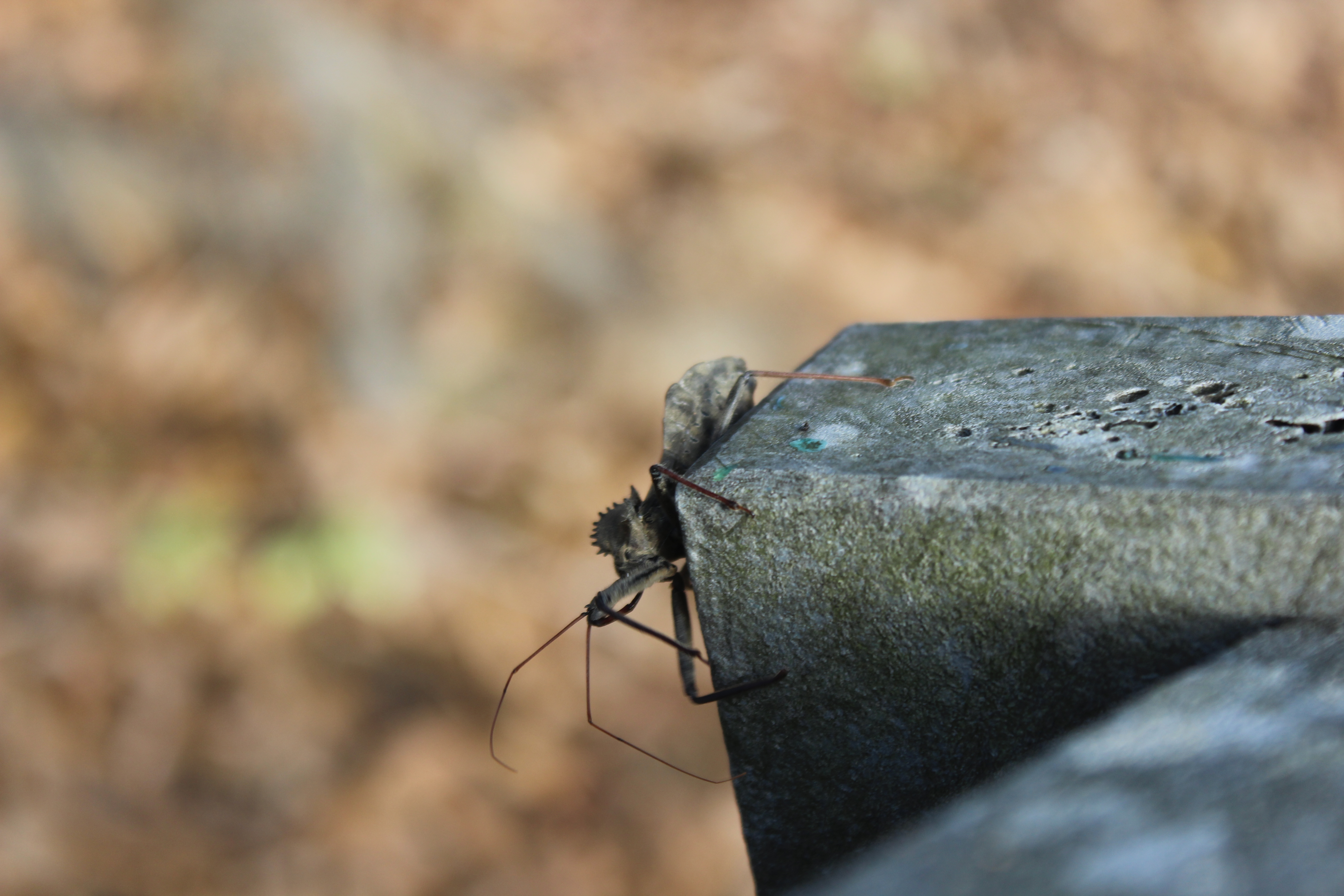
Neither of us chose to do battle.
Finally, she crawled over the back of the bench.
Feeling her way with her long arms.
Dragging her weapon beneath her.

Follow the fearless FLOWER.

My favorite type of fern is the Autumn Fern, also known as the Japanese Shield Fern.
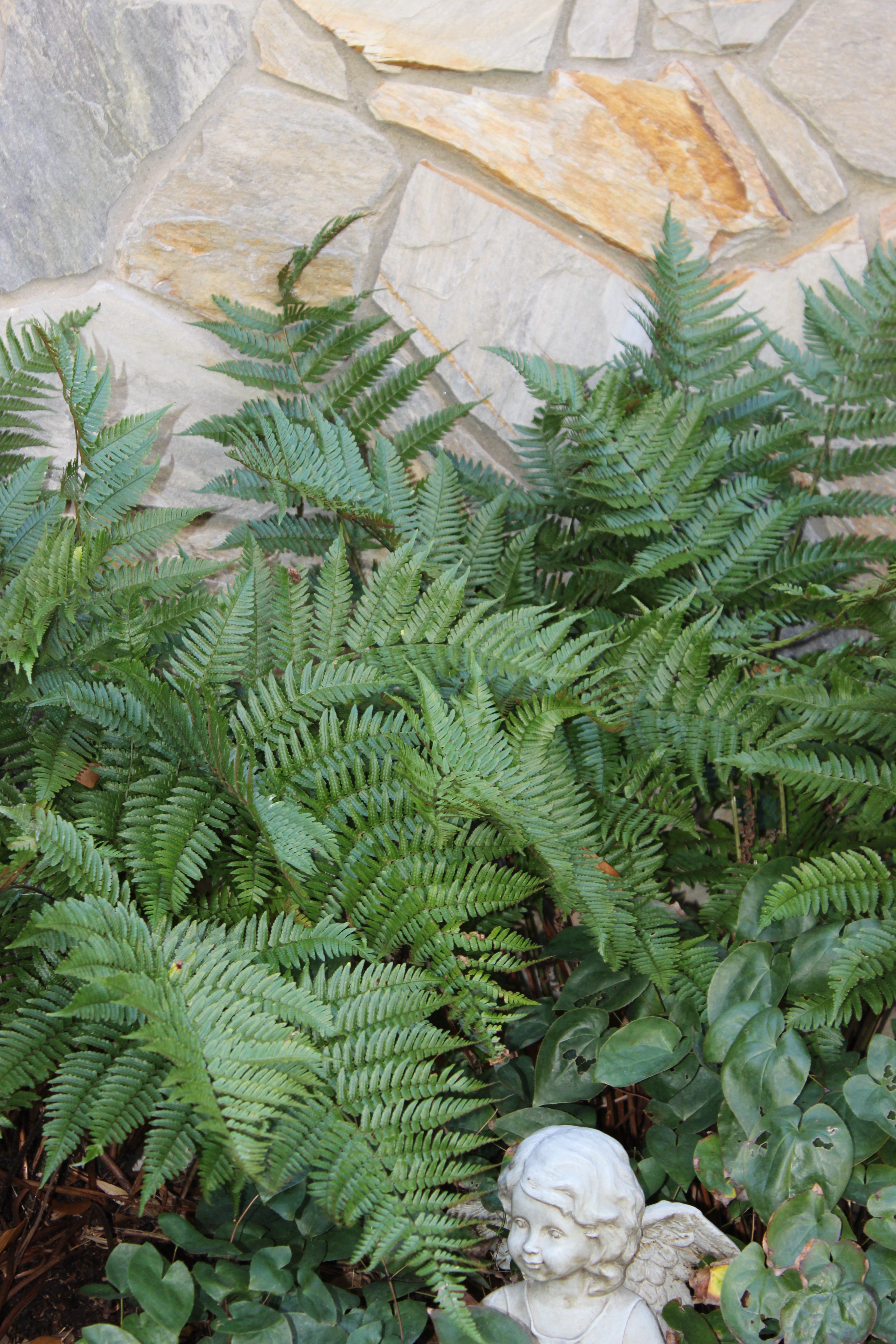
It is my favorite because it is lovely in fall and winter, when most of my other plants are dead or depressingly dormant. It loves shade and moisture. It needs protection from wind to get this big without damage.
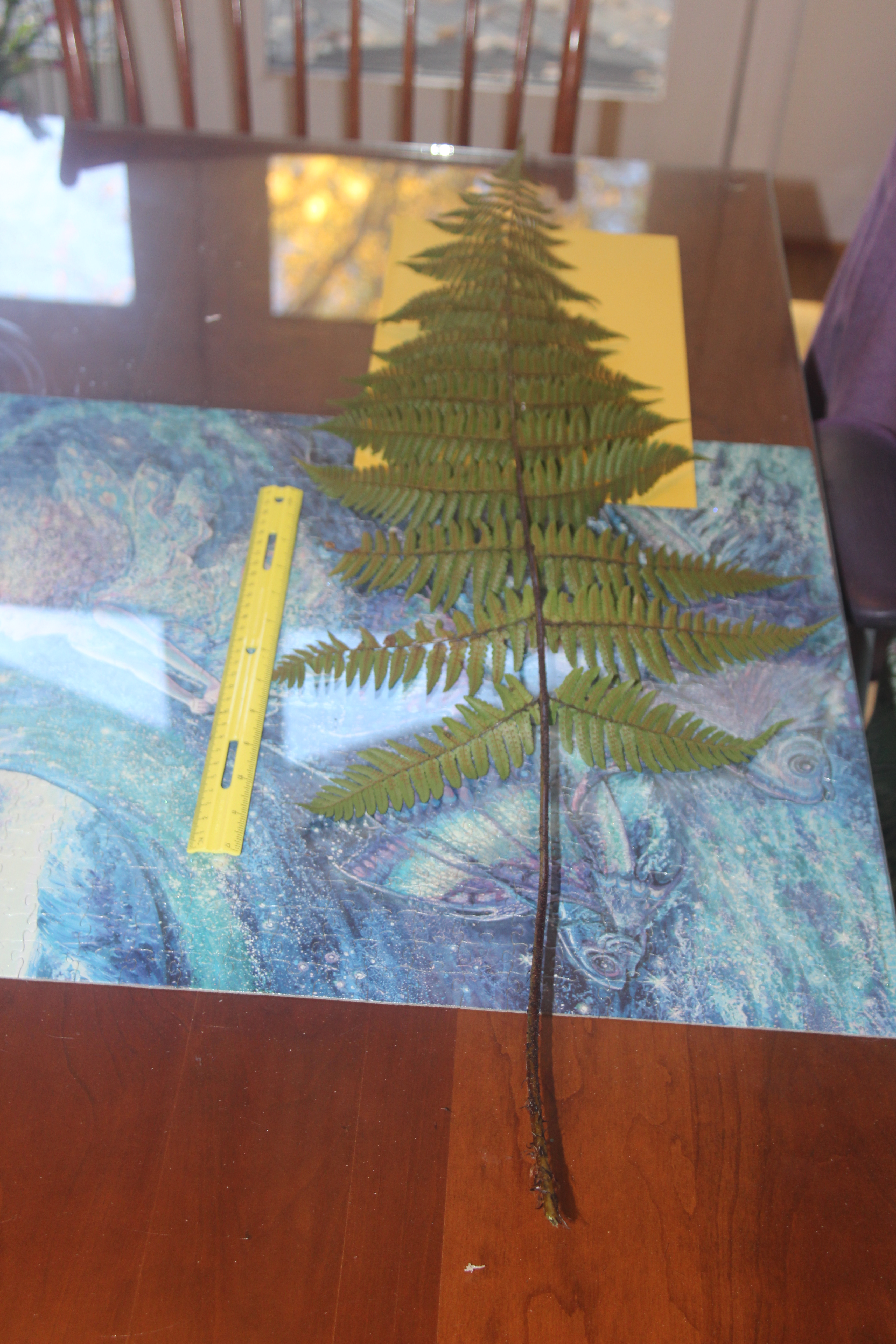
The fronds are bipinnate/twice-cut, which means there are two divisions of leaflets on the frond stem divisions. They are also triangular.

The sori are arranged in neat little rows along underside of the leaflets.

Its species name is Dryopteris erythrosora. In Latin that means tree/fern/red/sorus.
A sorus is a packet of spores that looks like a rust spot this time of year.
Here are three sori under a microscope. Each is a complicated system of catapults. The curled arms unfurl and sling the spores away from the parent plant.
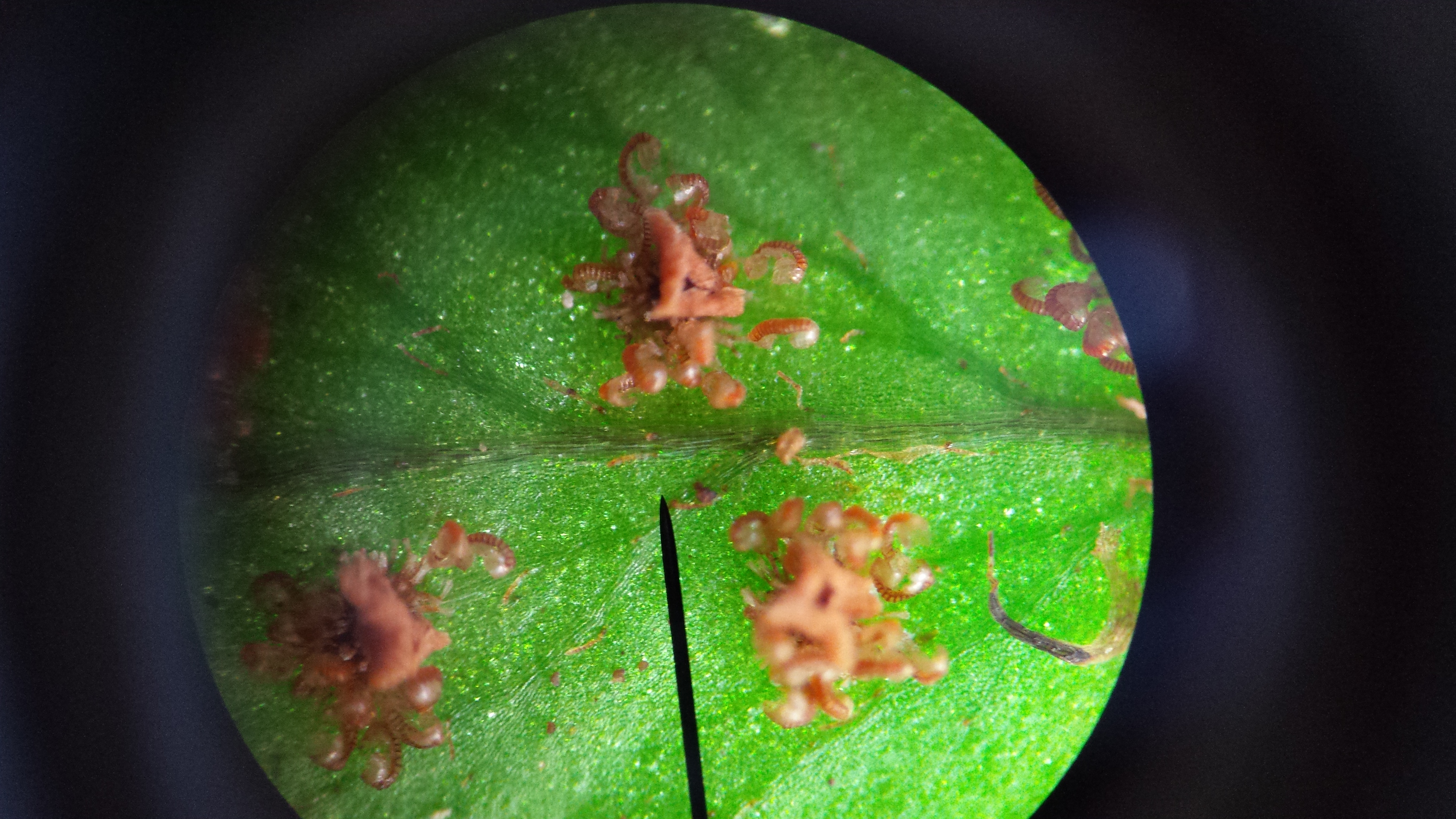
Fresh sori are light colored or transparent. These still contain spores.

Spores are not seeds. They only have half the genetic material of the fern. These germinate into tiny “boy and girl” gametophytes, which then get together and make the big “baby” sporophytes that we call ferns.
This ancient and strange life cycle is called “alternation of generations.”
I look at my ferns and feel a connection with prehistoric life.
Follow the FERN!

Uncle! Tio! Lo Zio!
You can stop twisting my arm.
I’ll tell you my Schlumbergera secrets.

First secret:
They bloom from the ends. So if you want more blooms…
You need more ends. Three to five divisions off the main branch is best.
This means purging and pruning the leggy limbs.
They will branch out and produce more ends,
which means more blooms.
Less is more. Too many branches per stem means some don’t bloom. It’s like having too many children. The poor mama branch can’t give them all what they need to bloom.
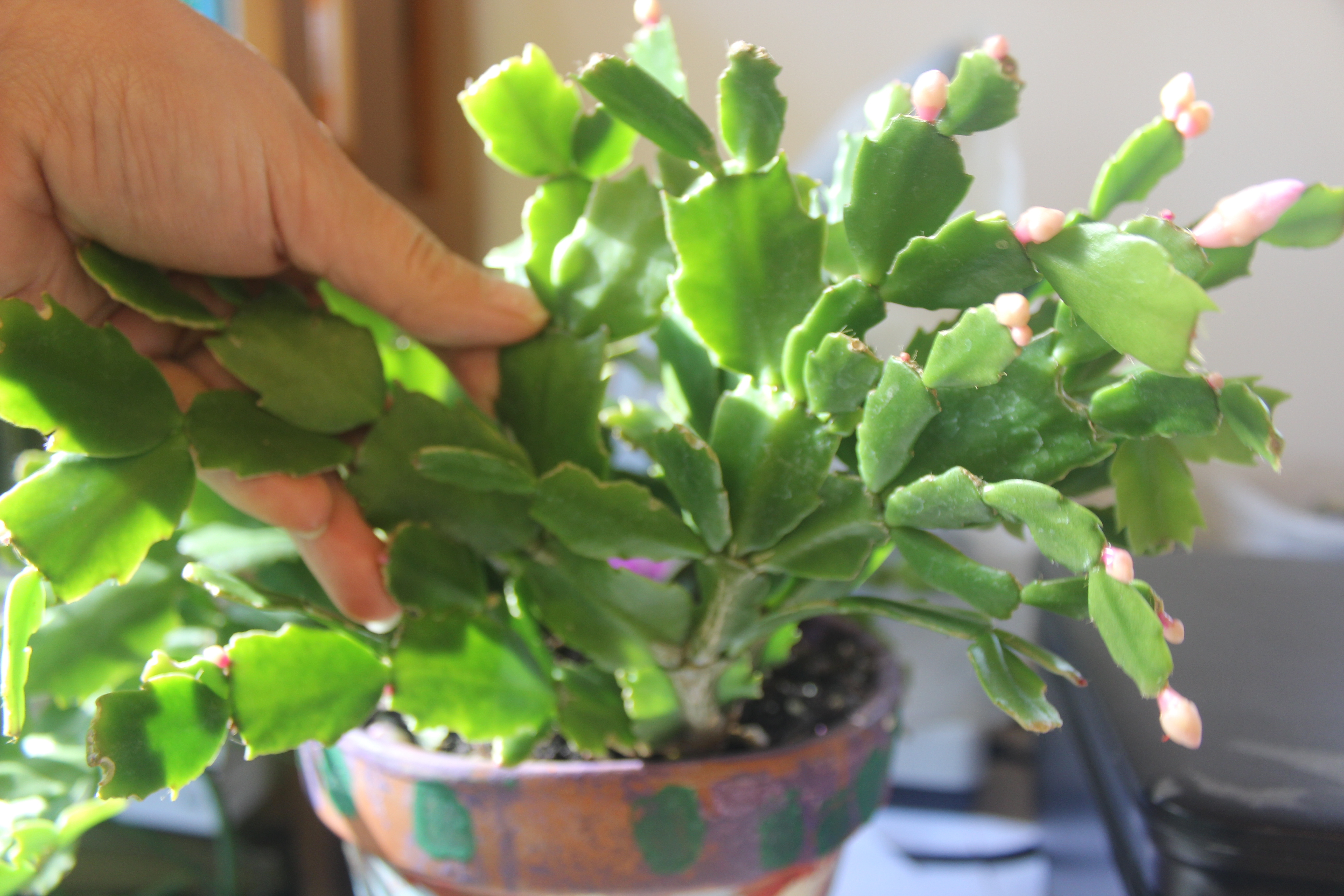
I try to limit my branches to from three to five divisions and total branch length to about twelve segments. Leggy is ugly on a Schlumbergera. Think of a long Christmas cactus as a tall elf. That’s just wrong! The branches can’t support the blooms, which hang low and are harder to see.
It’s best to do this after they bloom, but I do it for folks who see it now and want it now.


Second secret:
They need to be outside during the summer in indirect sunlight.
I put some in full sun this year.
They let me know this was a mistake by wrinkling up and turning red.
A green, smooth Schlumbergera is a happy Schlumbergera.

Third secret:
Feed them every few weeks with their water.
Do not over-water. They must be dry on top to get a drink.
But remember, this is a tropical plant not a desert plant.
The term “Cacti” is misleading.
That old saying about not watering them while they are blooming is nonsense.
Just don’t get carried away with water while they are blooming,
(Don’t argue. “Old wives tell lies”)
Not watering and feeding a blooming Schlumbergera is like not feeding a pregnant woman because she has gained weight …Don’t try that at home, men.
Fourth secret:
Give them indirect sunshine and warmth while blooming, but no air flow.
The buds and blooms drop off if they are near a vent or doorway.
It’s the shock of temperature changes.
Also, colors vary with temperatures. You may have two identical cacti in different temperatures and get different colors.

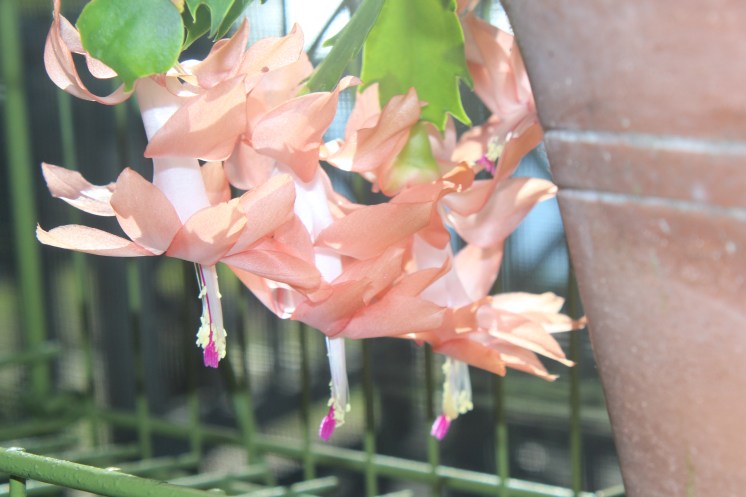
Surprise..There may also be two colors on one plant. I have peach and white coming off the same branch.

Fifth secret:
Turn, turn, turn…
They get uneven if you leave’um.
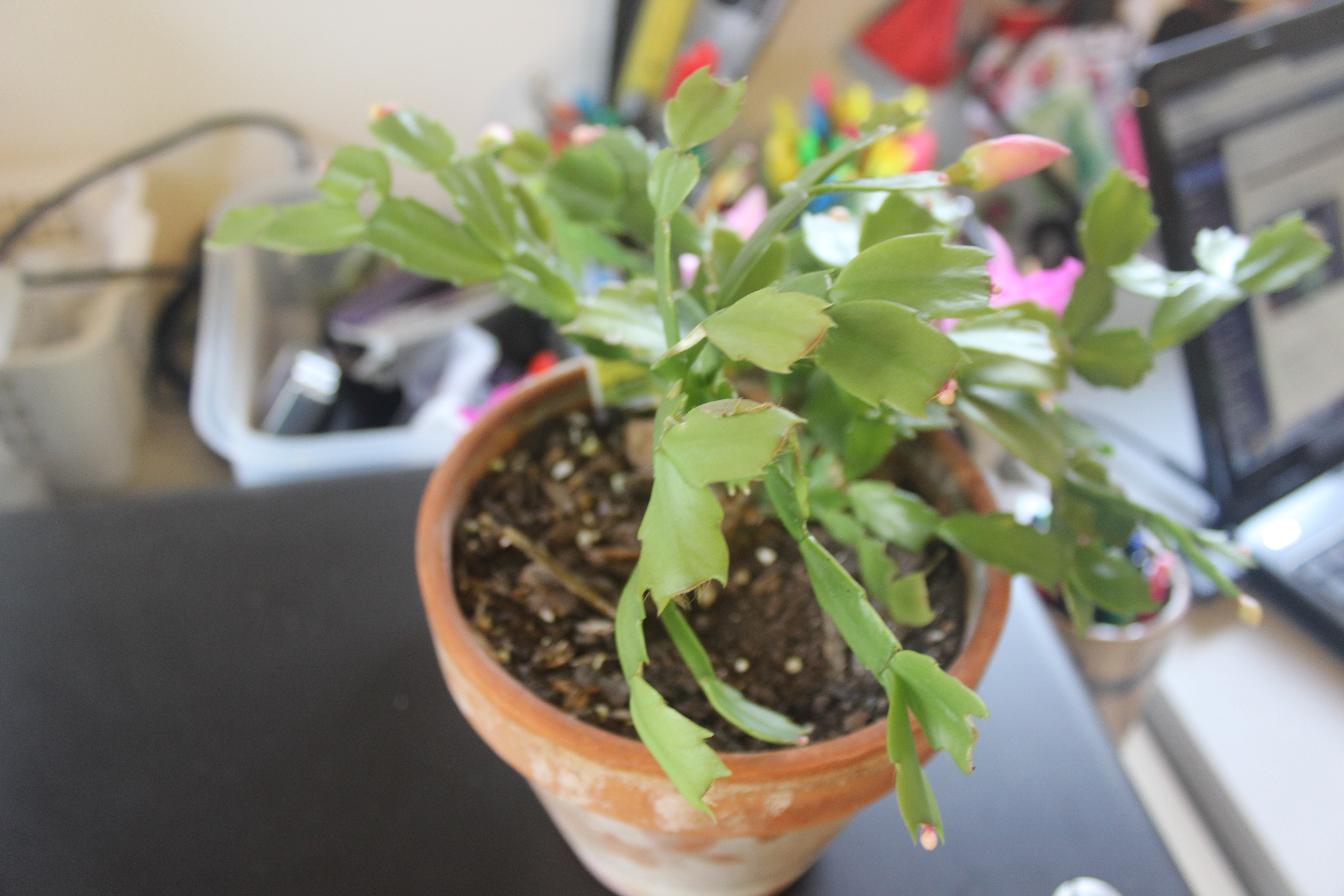
FINAL secret: Remove blooms as they wither, especially if there is a new bud beside them.


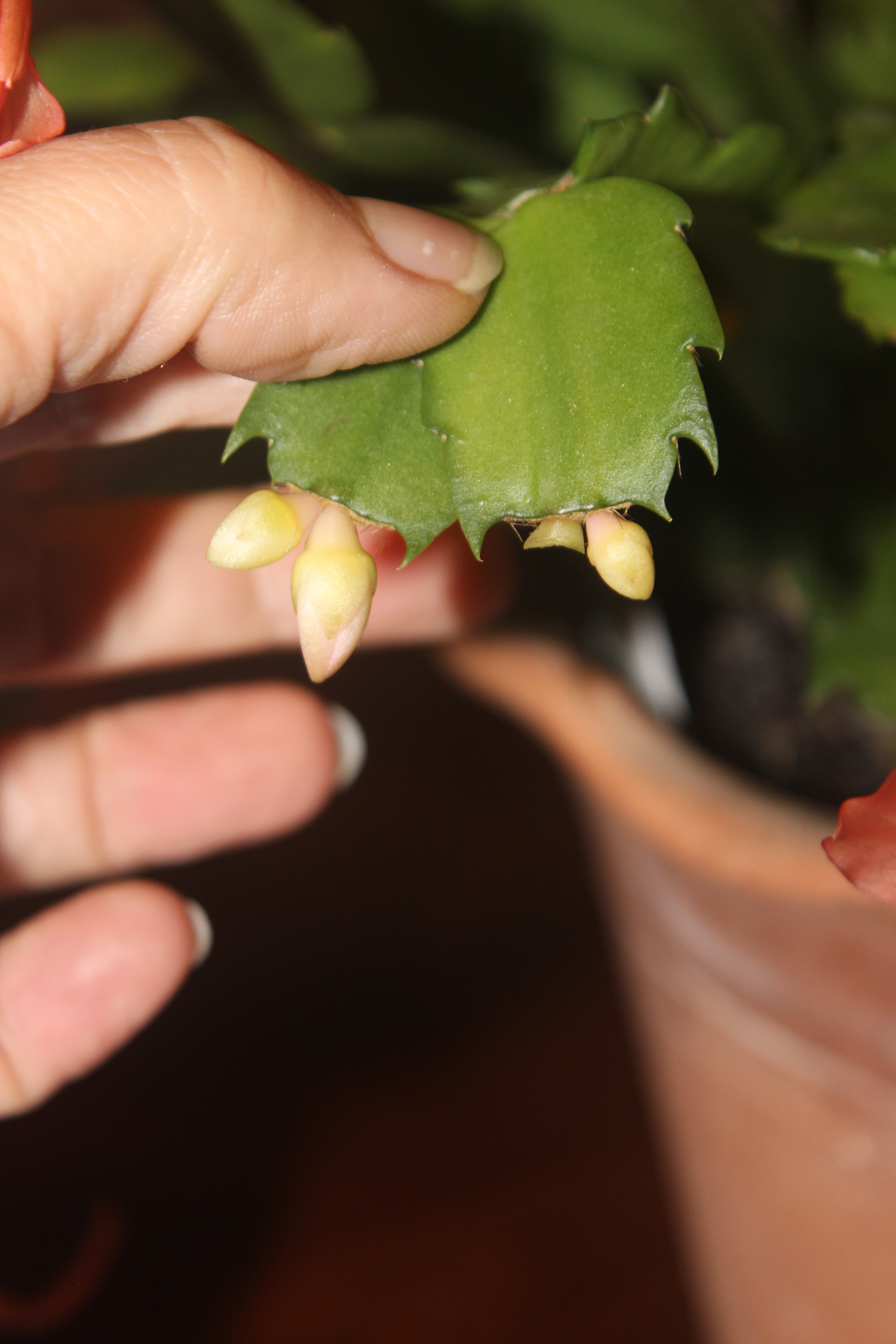
P.S. Singing to them doesn’t hurt.
Follow the FLOWER!

Schlumbergera, Schlumbergera,
How lovely are your flowers? (Sing chorus twice)

You’re boring green, while others bloom.
When winter comes, you light the room.
Schlumbergera, Schlumbergera,
Schlumbergera truncata. (Hold the ….ah…tah…)
SECOND VERSE:
Schlumbergera, Schlumbergera,
You are the cacti favorite. (Sing twice)
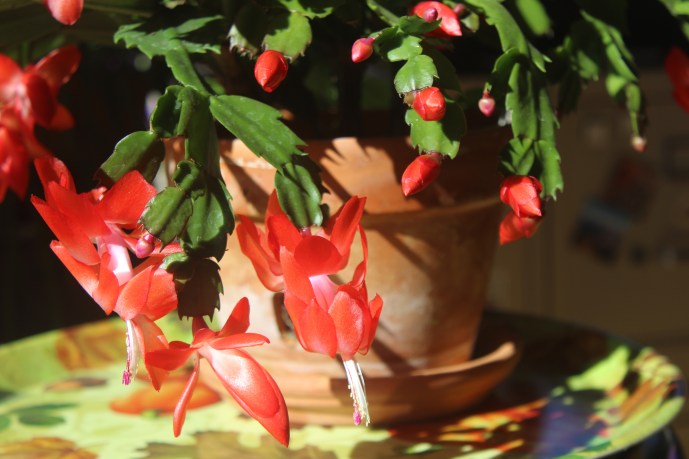
In summer we, your care forget.
In fall we smile and savor it.
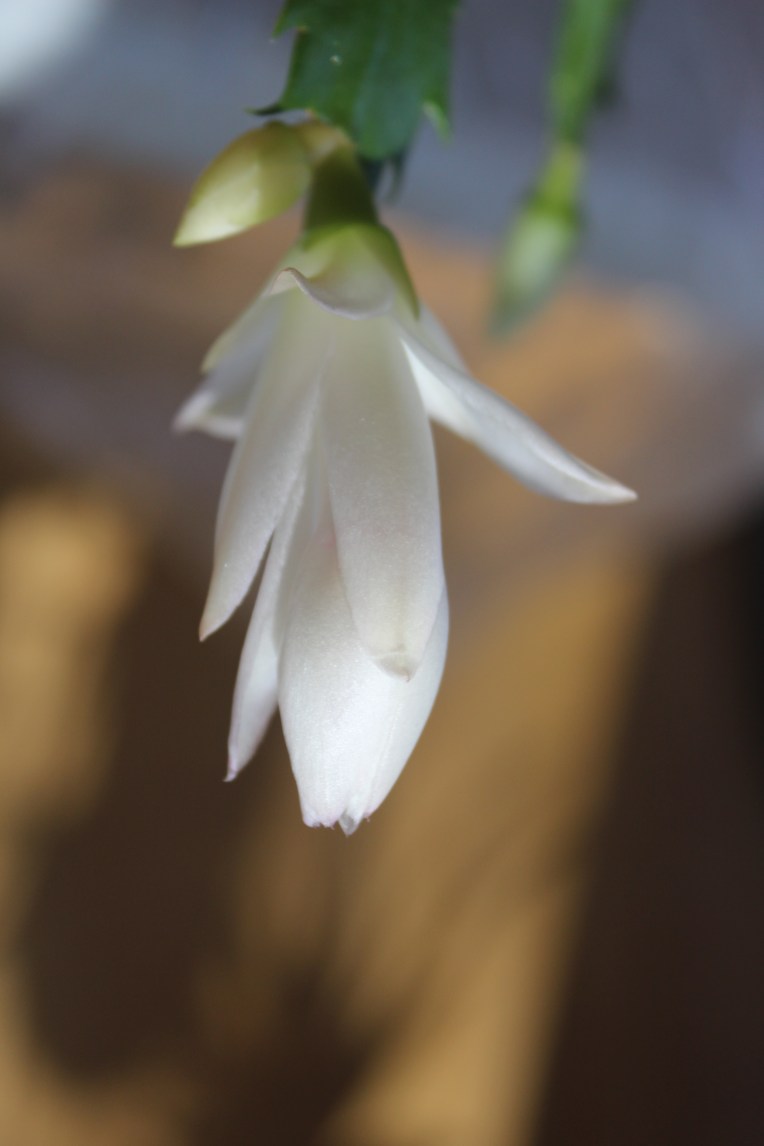
Schlumbergera, Schlumbergera,
Schlumbergera truncata. ( Draw out ah….tah….)
THIRD VERSE:
Schlumbergera, Schlumbergera,
You are the star of winter. (Sing twice)
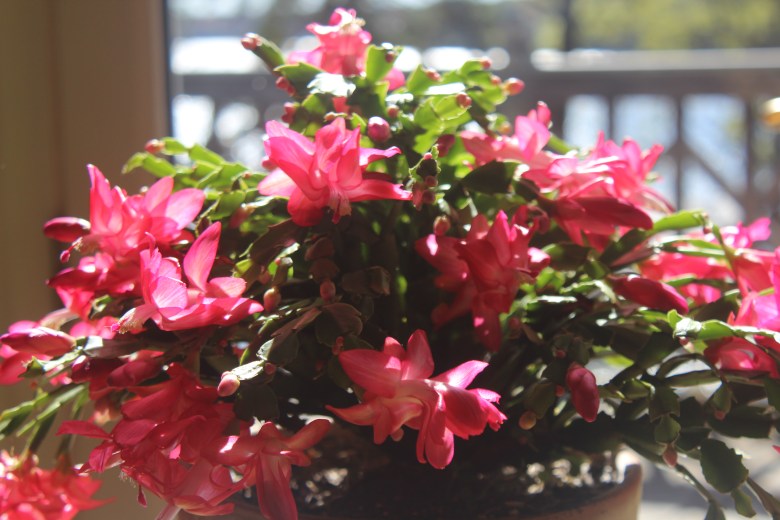
Your colors glow and brighten us,
When winter temp’ tures frighten us.

Schlumbergera, Schlumbergera,
Schlumbergera truncata…
FOURTH VERSE:
Schlumbergera, Schlumbergera,
How varied are your colors?(Sing twice)

There’s Golden Charm and and pinks and white,
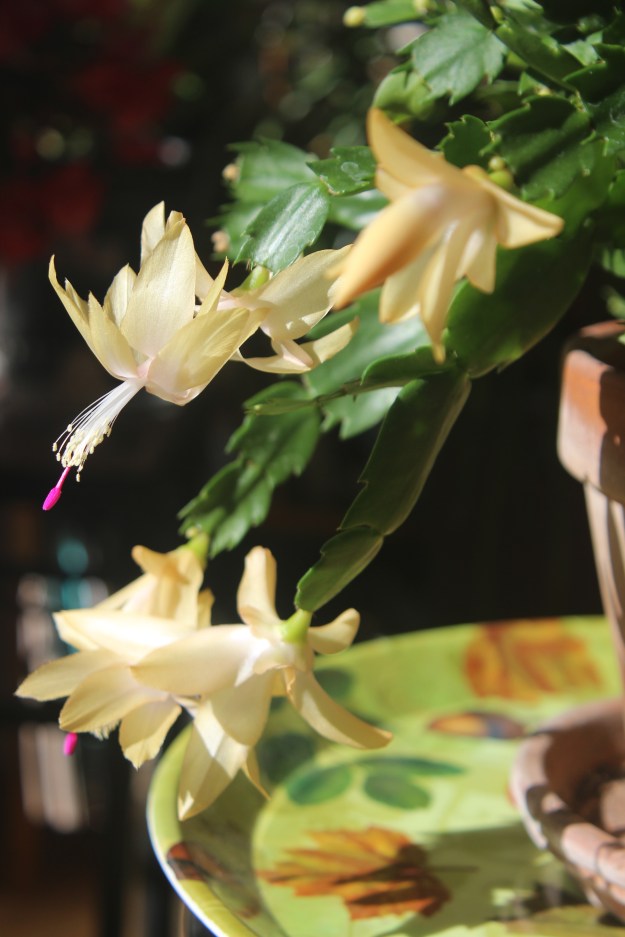
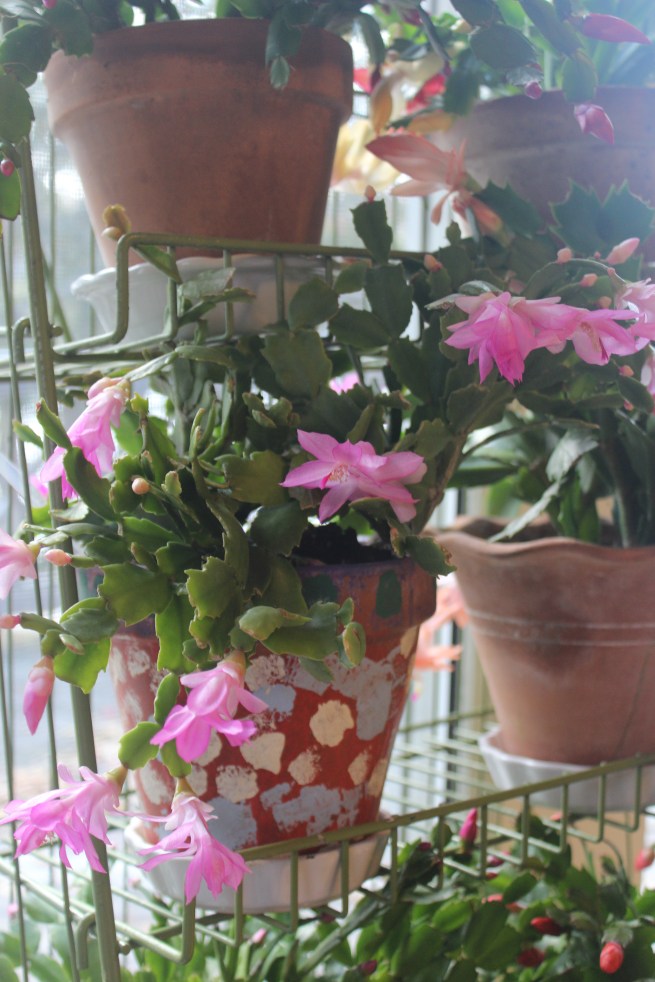
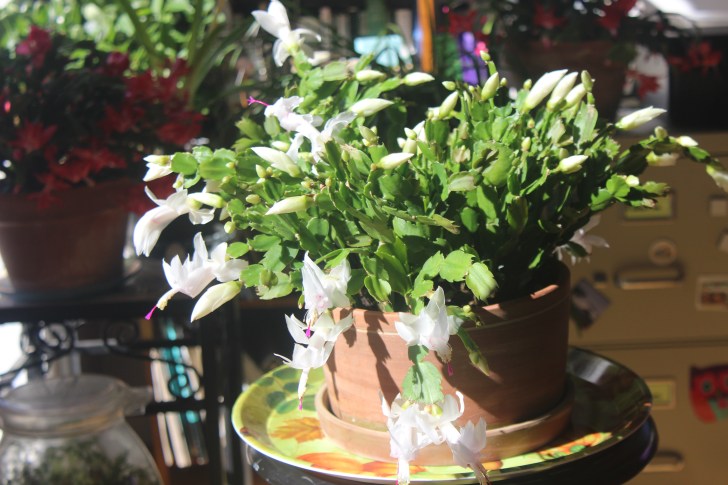
and reds and peach. Oh, what a sight!
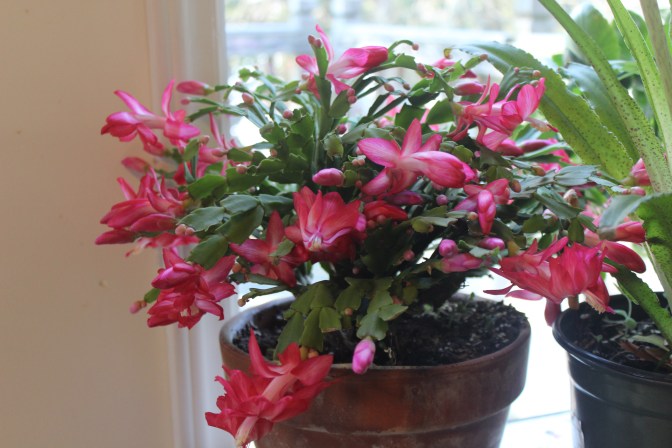

Schlumbergera, Schlumbergera,
Schlumbergera truncata… (HOLD “ah” loudly and spread arms apart, while looking at them lovingly.)
This is my secret to getting them to bloom like this.
Sing with the FLOWER!

