I have always dreamed of having a farm, so I love visiting them.
I envy the space and the history that goes along with a family farm.
Jimmy’s family has been on this farm for generations.
Joyce and Jimmy now grow hay and daylilies and keep a number of animals.
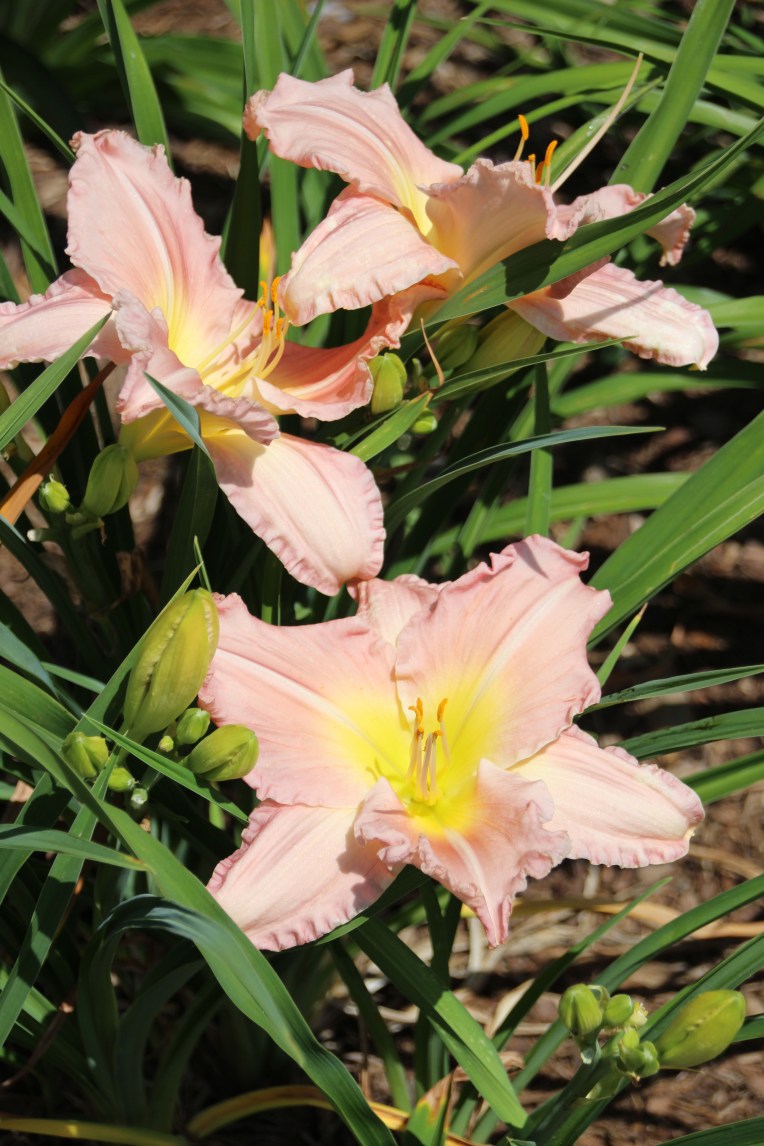
I love visiting anytime, but June is the most beautiful month for daylilies.
They have over 300 varieties. They no longer sell them. They are trying to get their numbers down to a manageable amount.
If you have daylilies, you know that many need dividing to keep blooming. I can’t imagine the work involved in keeping this many.
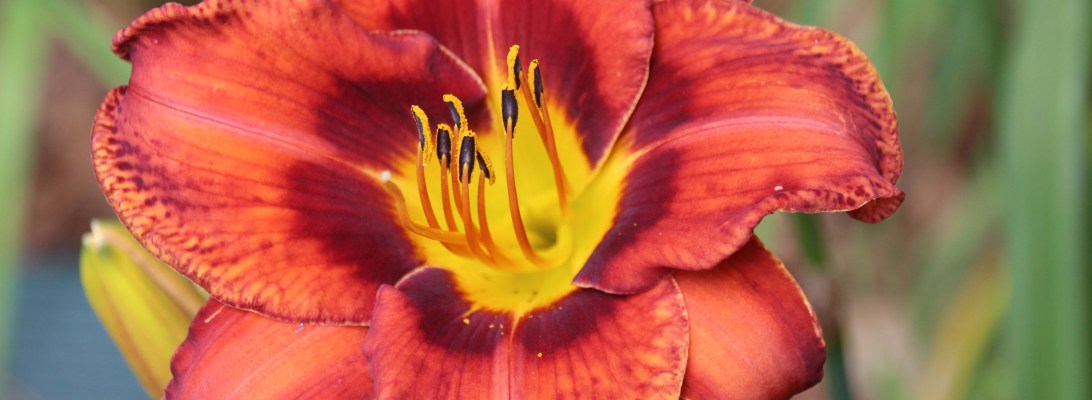
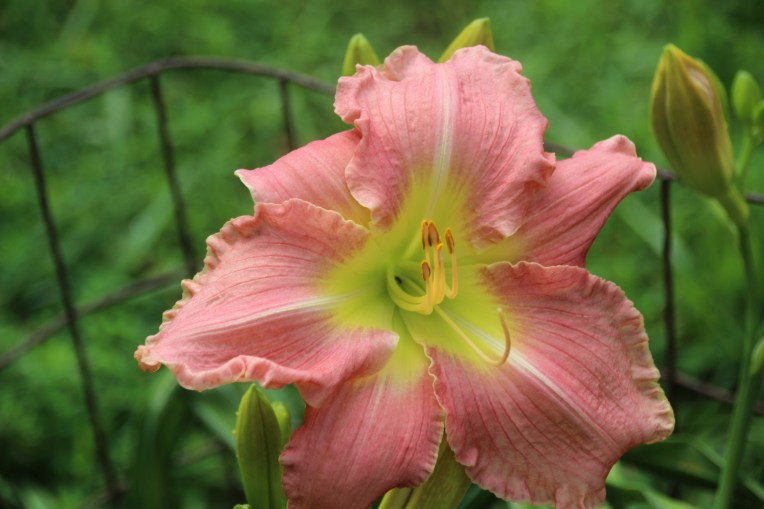
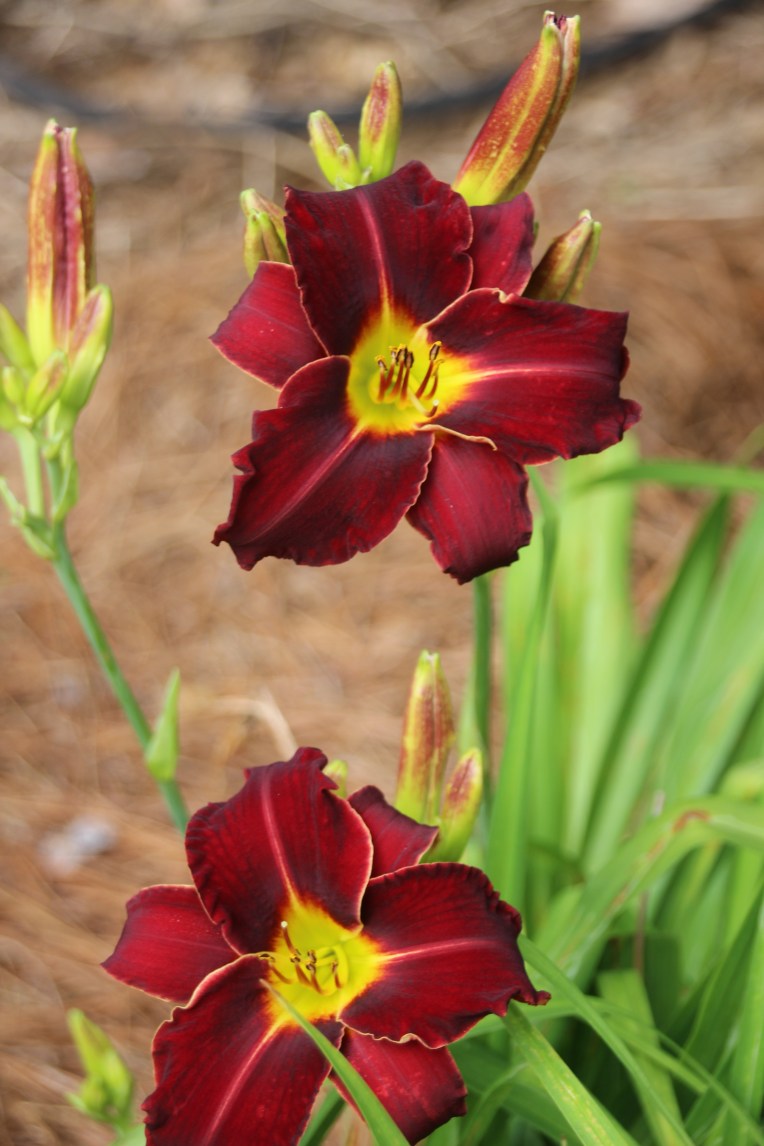
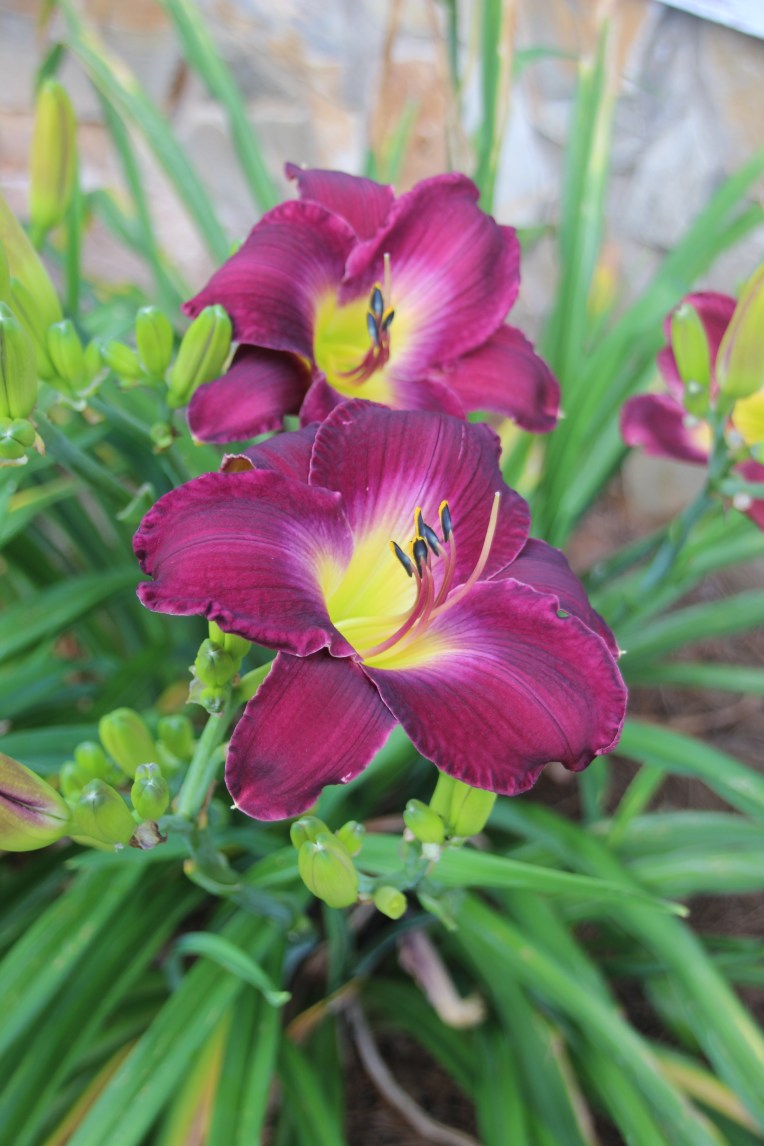
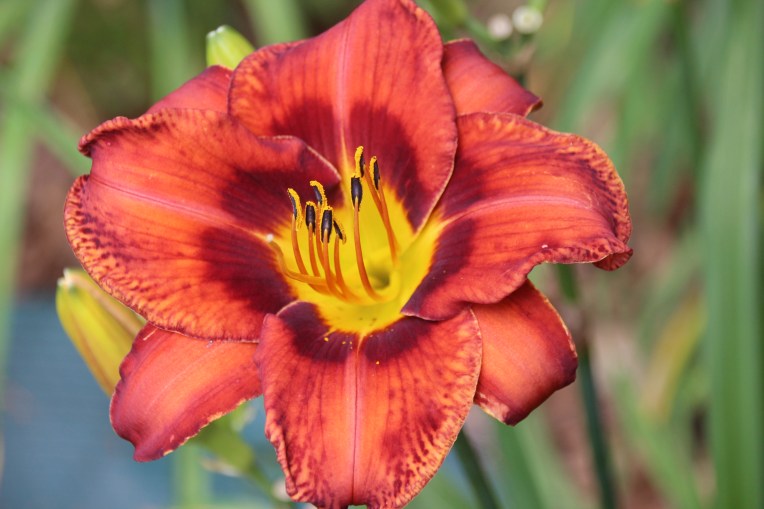
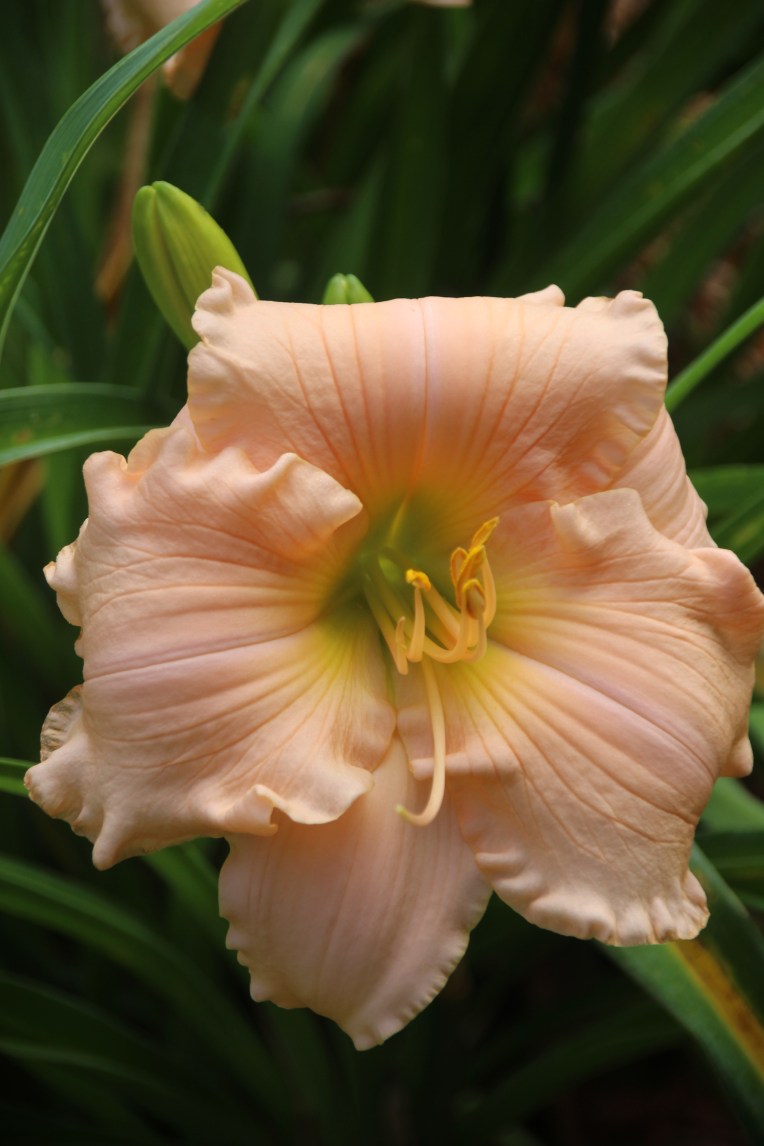
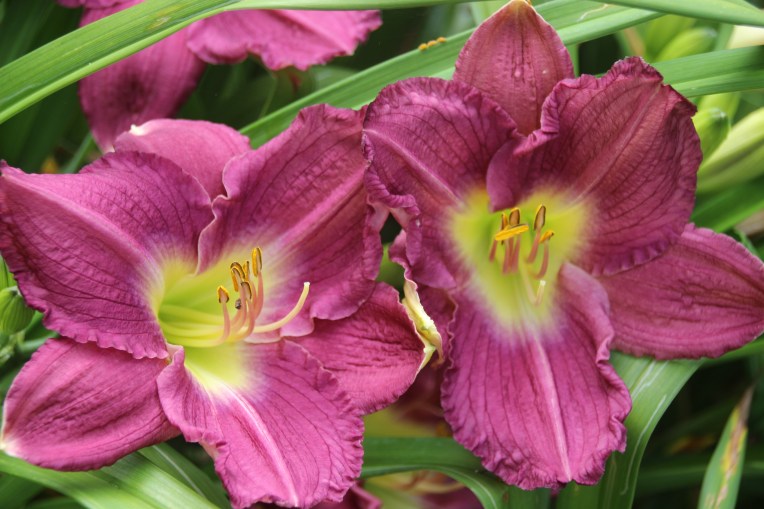
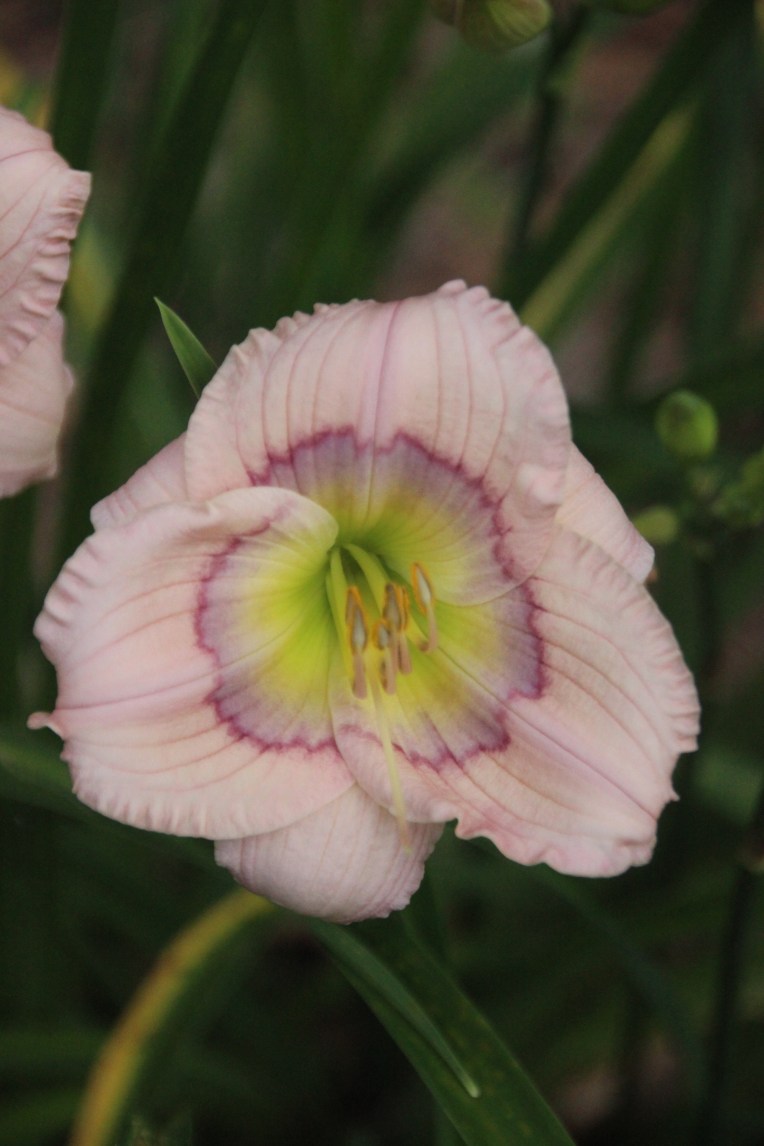
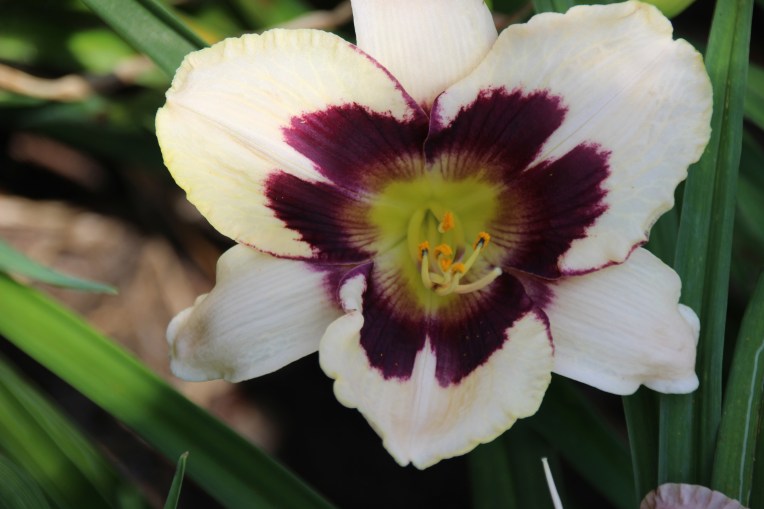
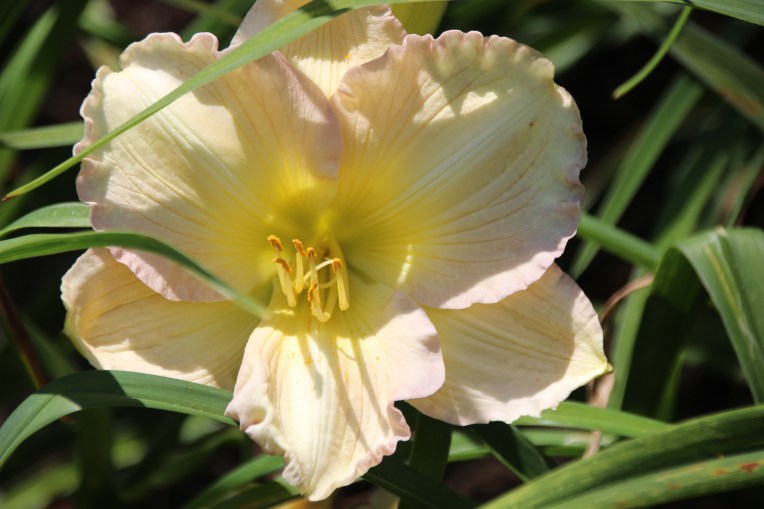
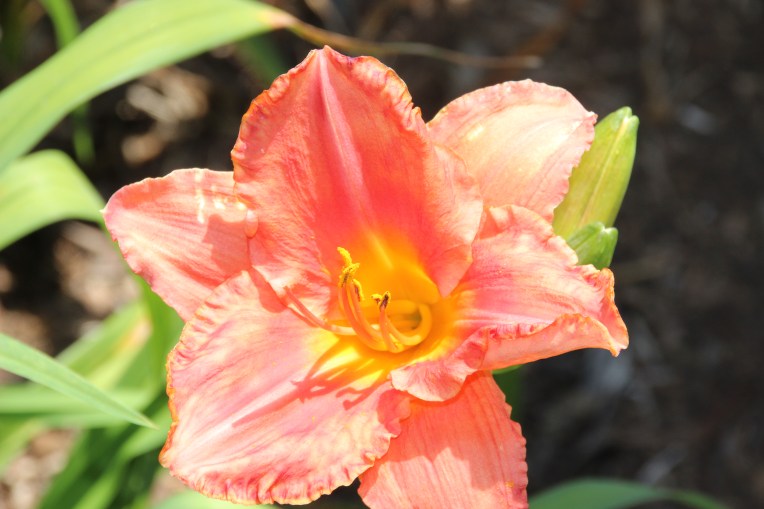
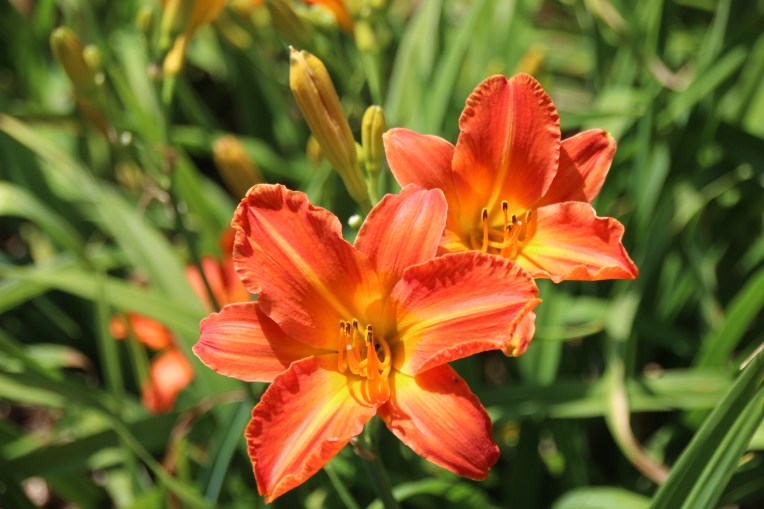
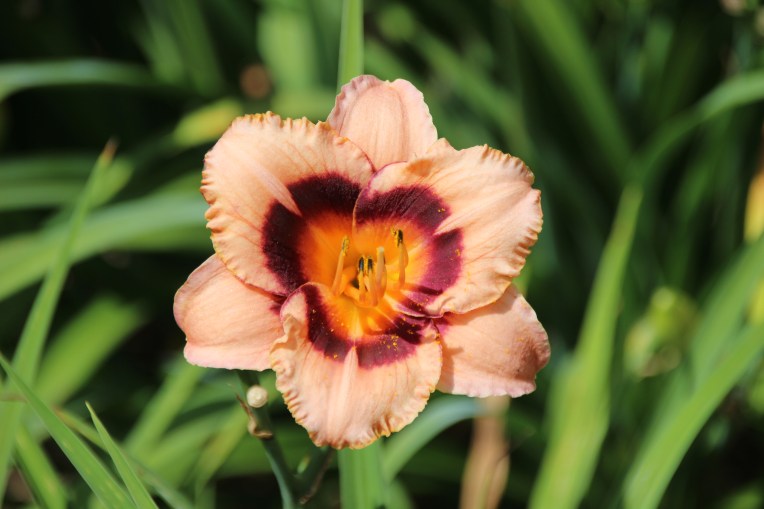
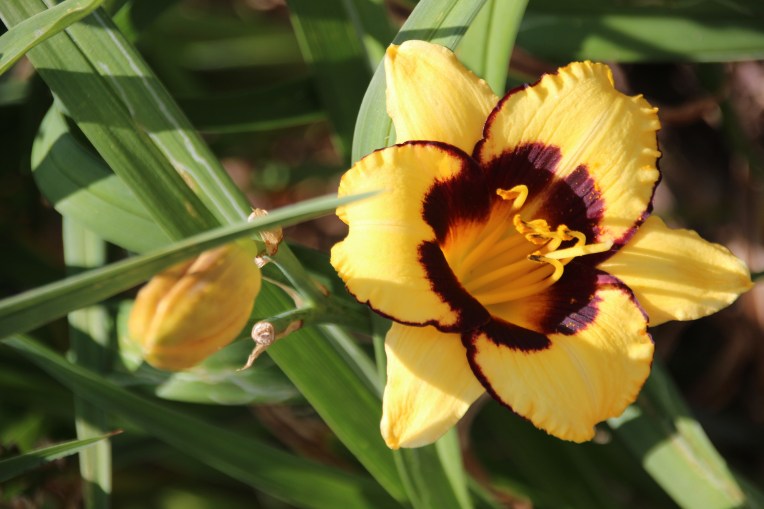
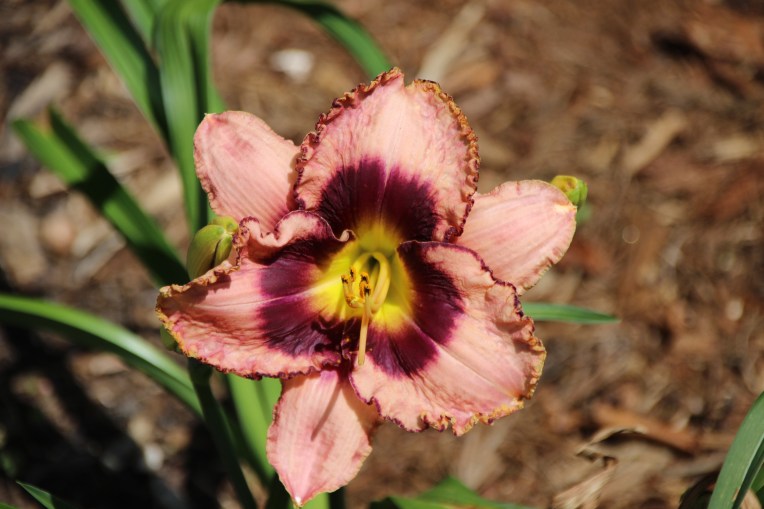
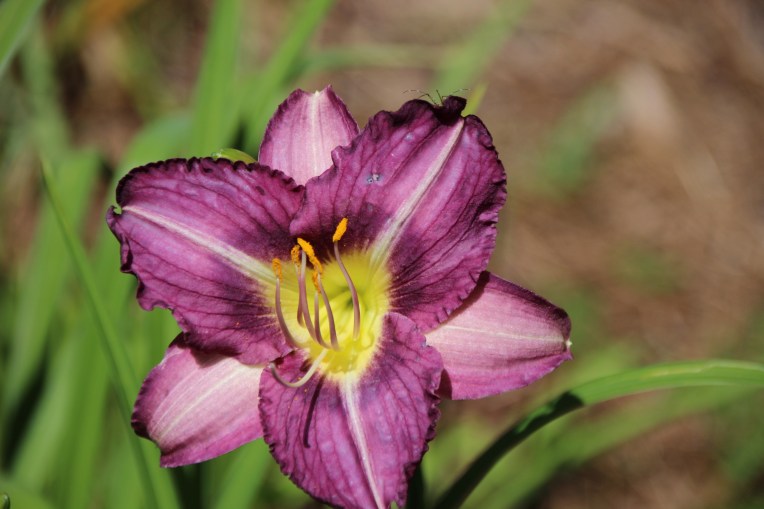
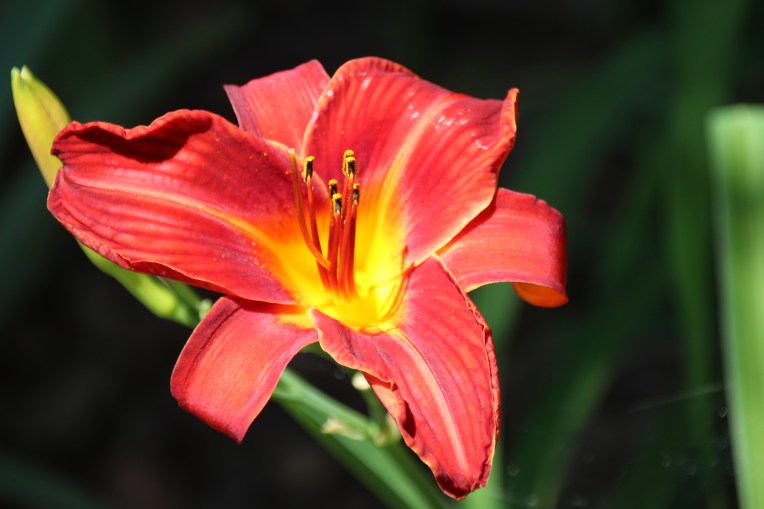
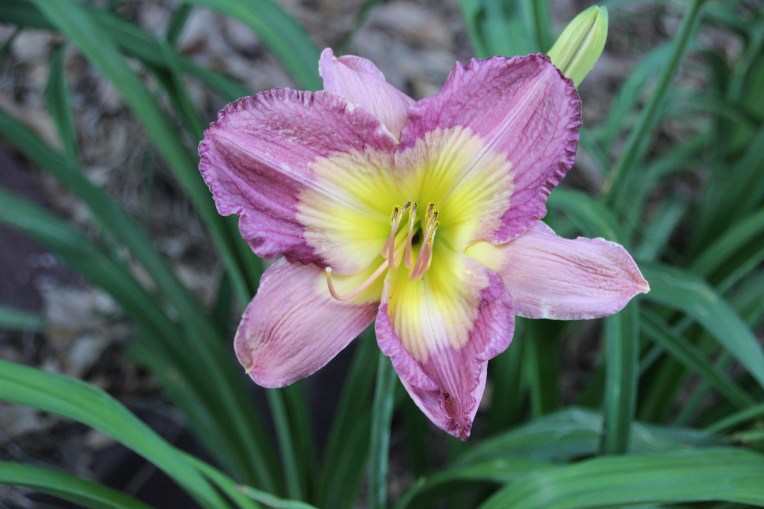
I walked through rainbows of color last week. Here are just a few of the flowers.
Helen ShooterMoonlit MasqueradeFamaSouth SeasElijahNutmeg SpiceDixie BoyDaring Deception
I must include some of the animals. Their horses were running too fast for photos because they were being chased by Tank, the donkey who likes to bite their backsides.
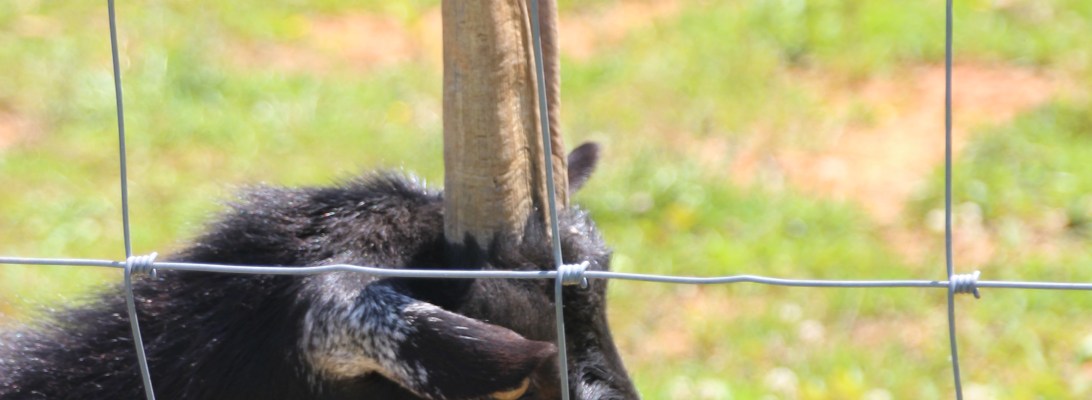
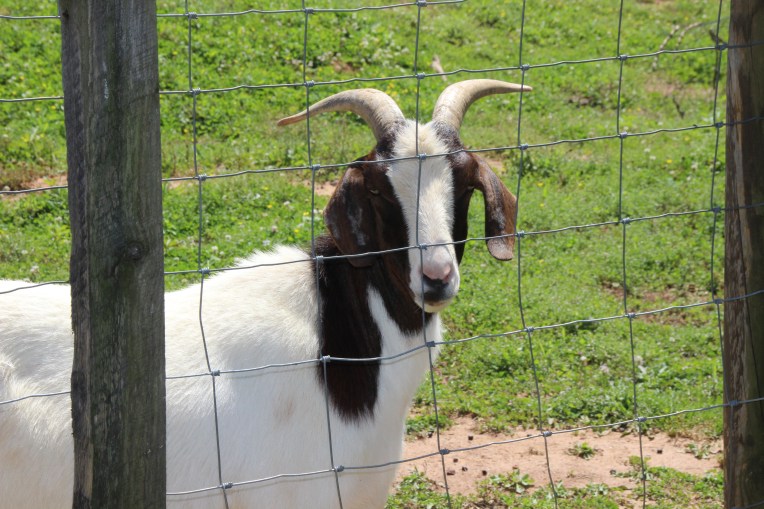
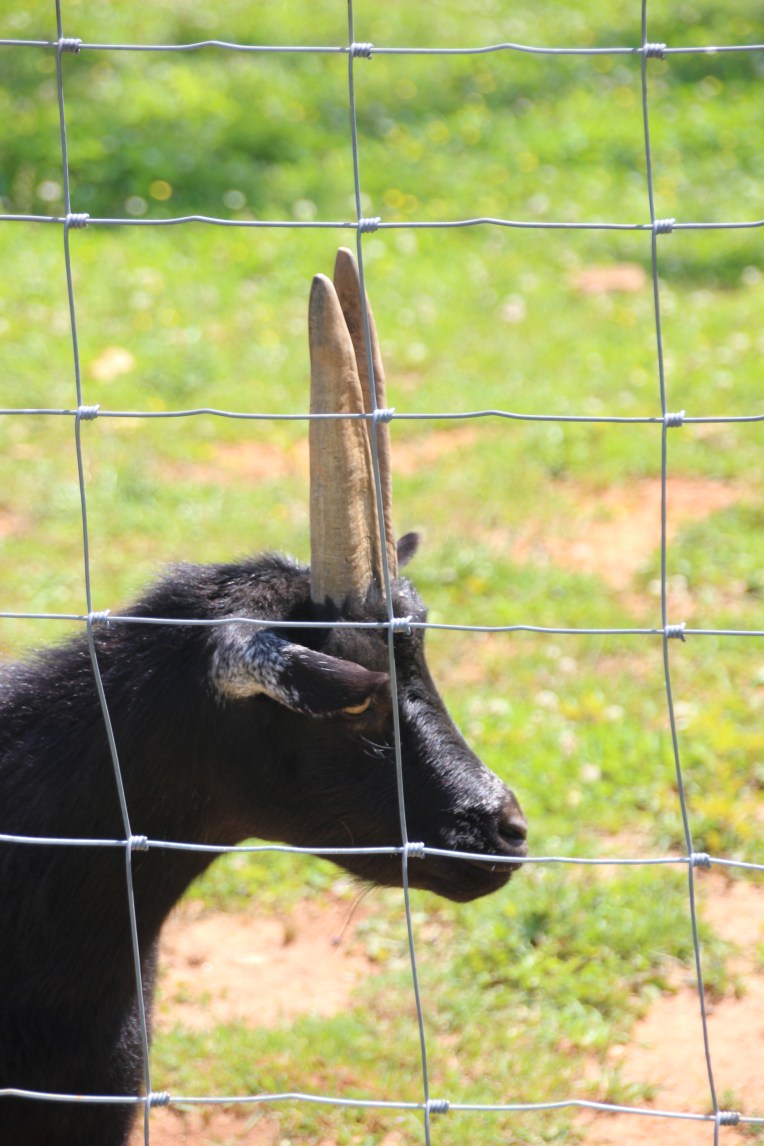
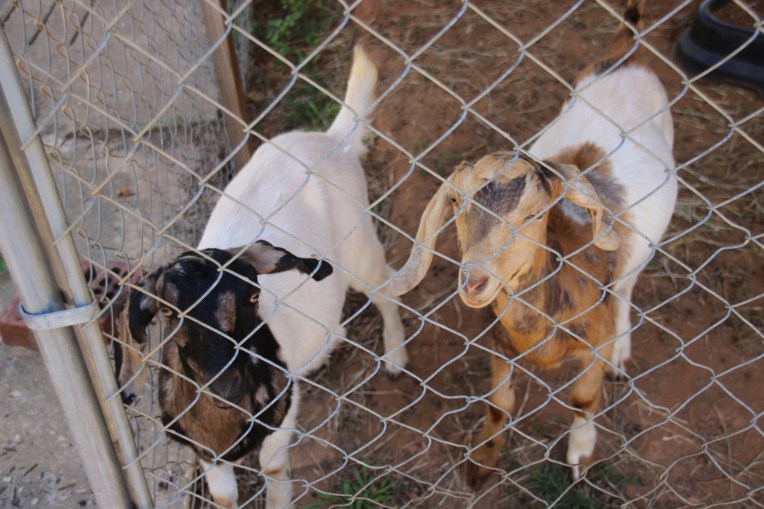
I did get to pet the goats.
Woody
BuzzJune and Johnny
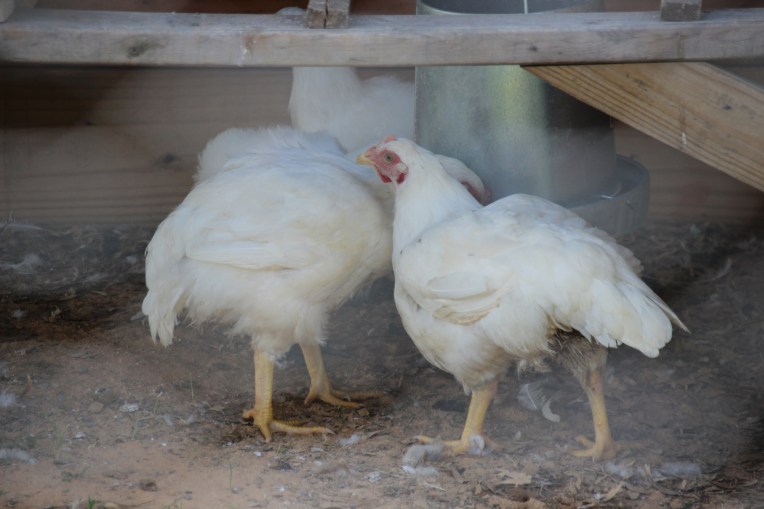
I love chicken noises. These are young ones.
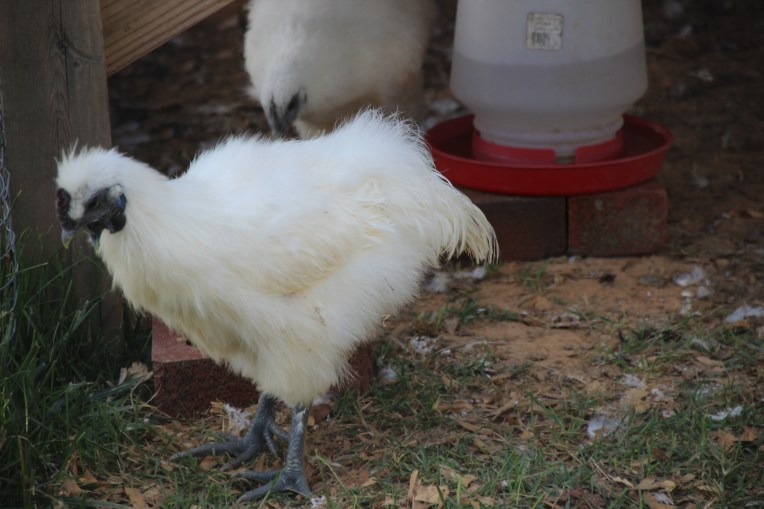
Juvenile Rooster
This little rooster was trying to crow. No noise came out. It was so cute!
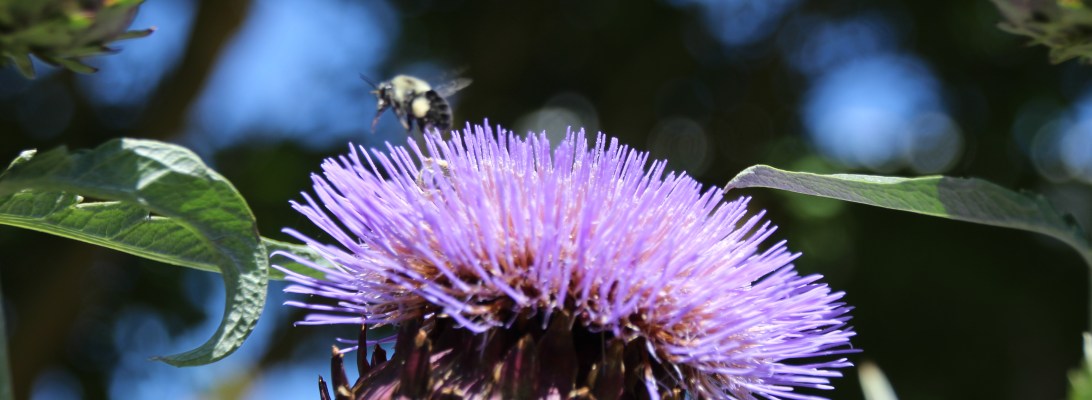
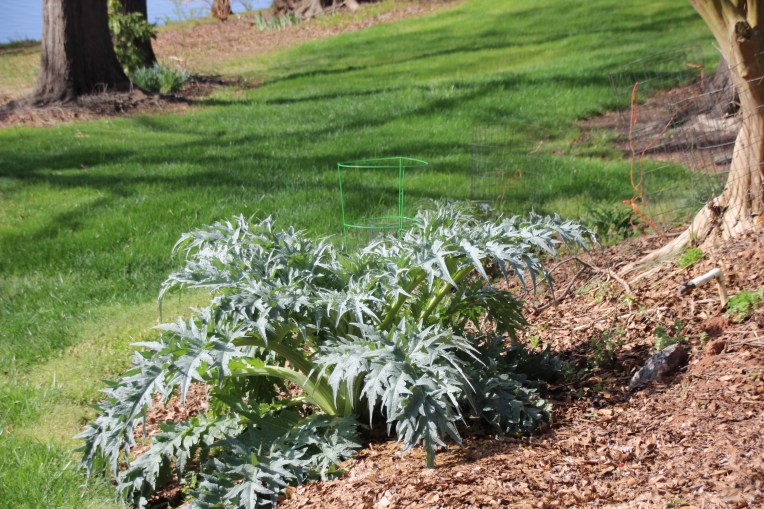
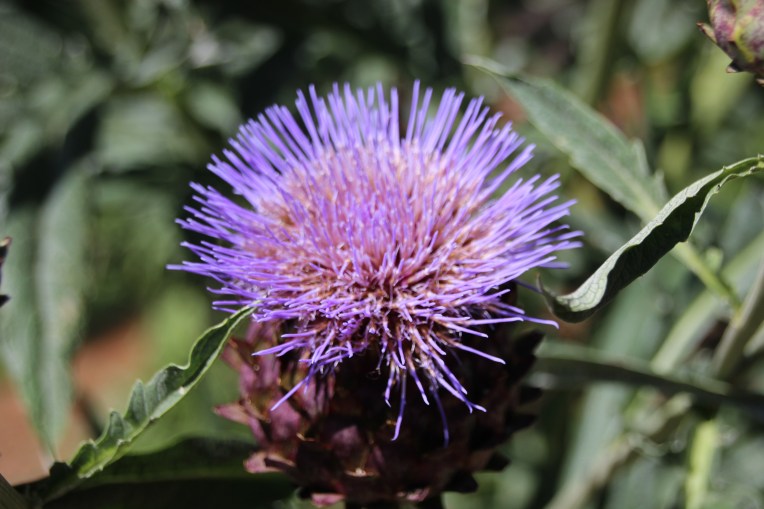
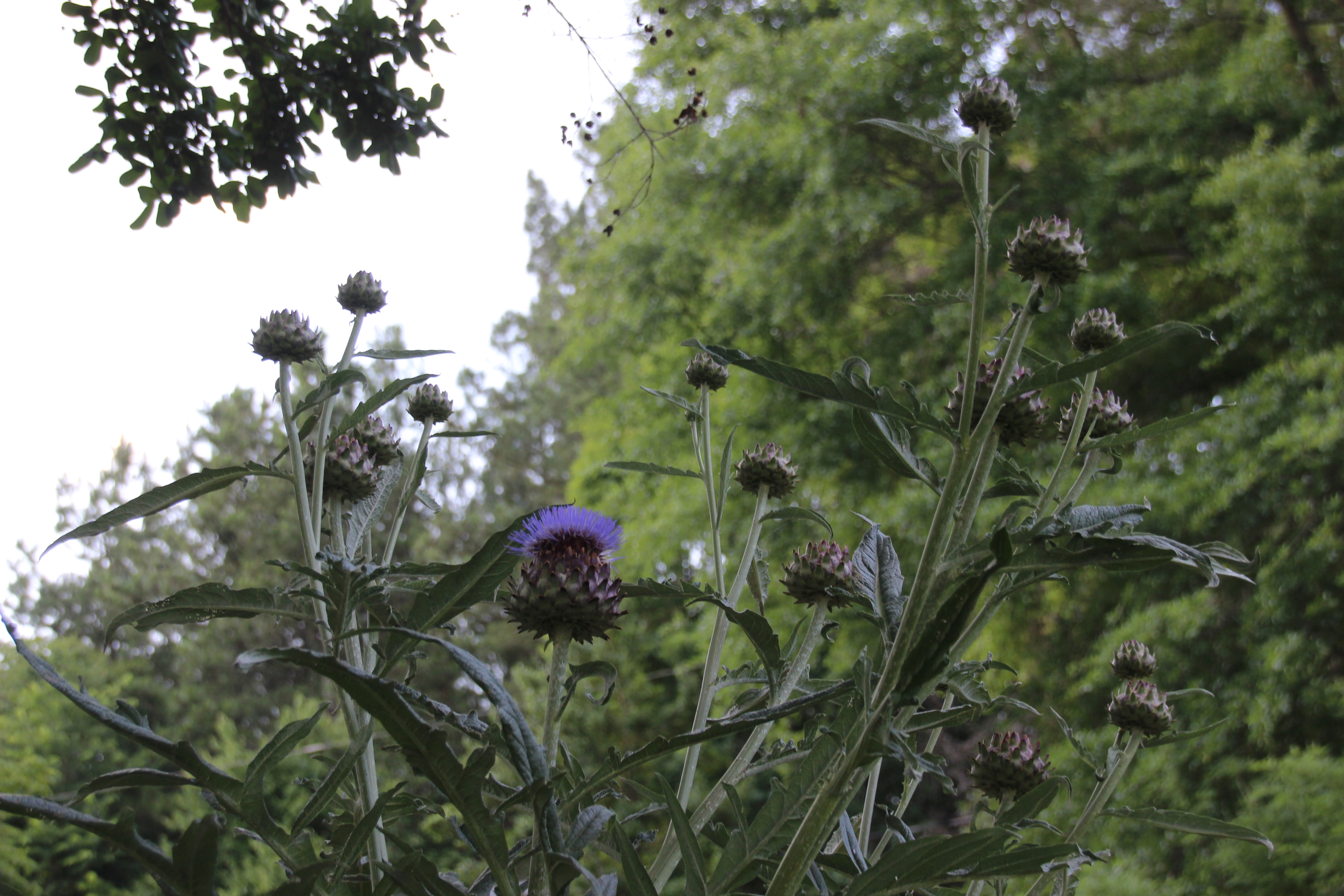
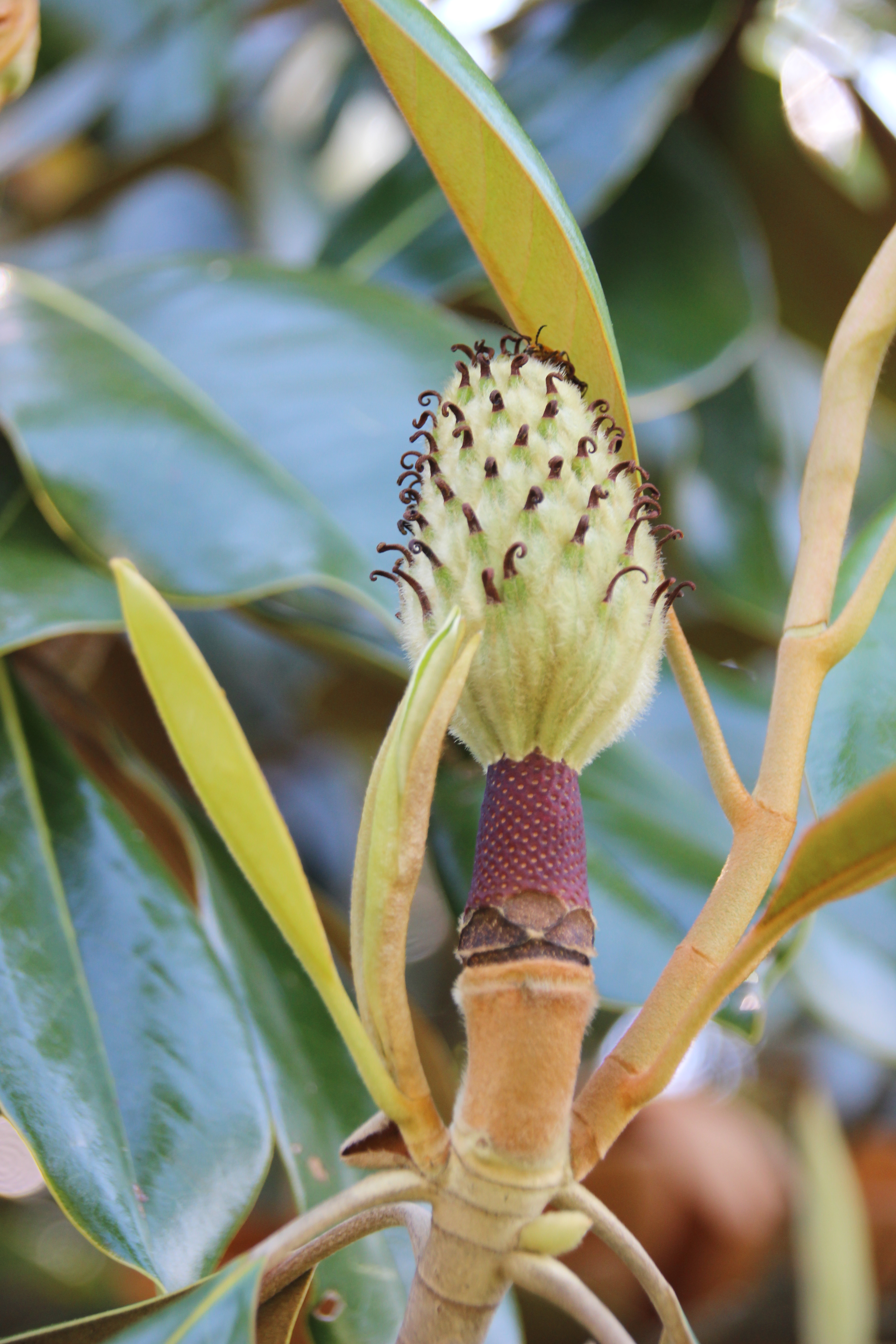
I have hovered over this plant for months. It is an Artichoke thistle or Cardoon. Its scientific name is Cynara cardunculus. It may be a pest in some locations, so it is best not to let it set seed.
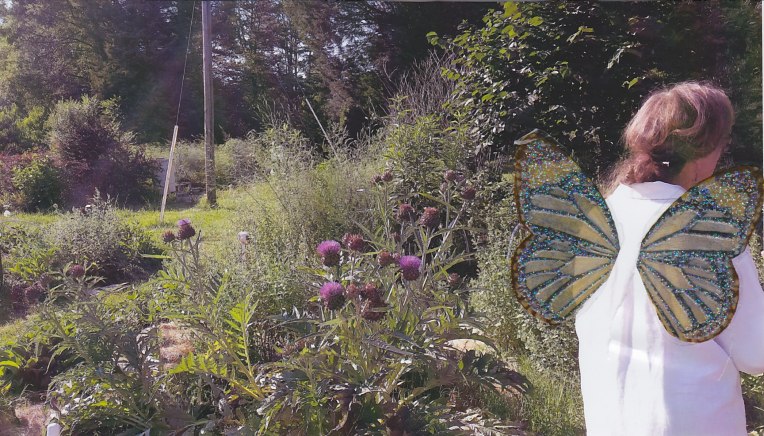
I got it from my friend the fairy.
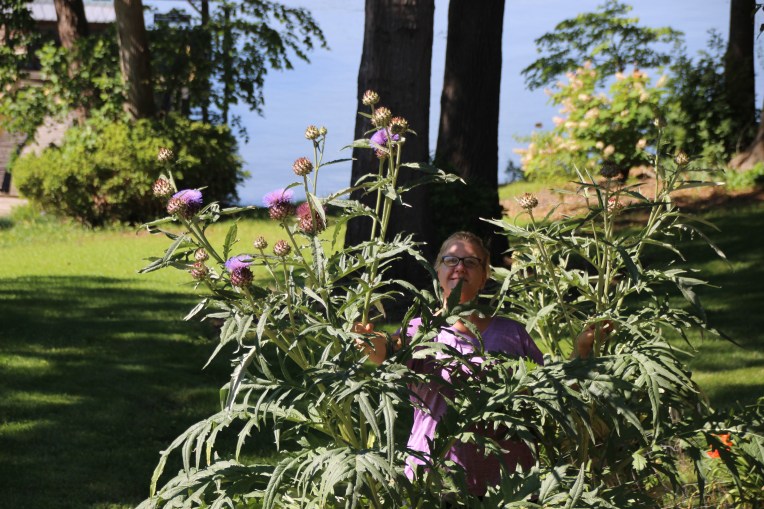
It started out last fall in a three inch pot. It has spread out and reached up until it is taller than I am.
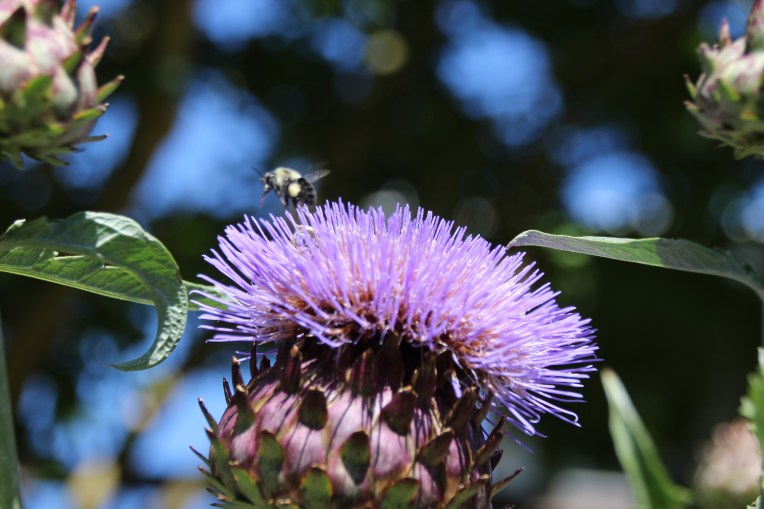
Now its artichoke-like blooms have sent up their purple tufts.
The bees love the blooms as much as I do.
The buds may be eaten like an artichoke.
The stems may be eaten like celery after braising and/or steaming. Even the root can be boiled and eaten. I prefer to just feast on it with my eyes.
Here are six more dayliles that just started blooming in the past week.
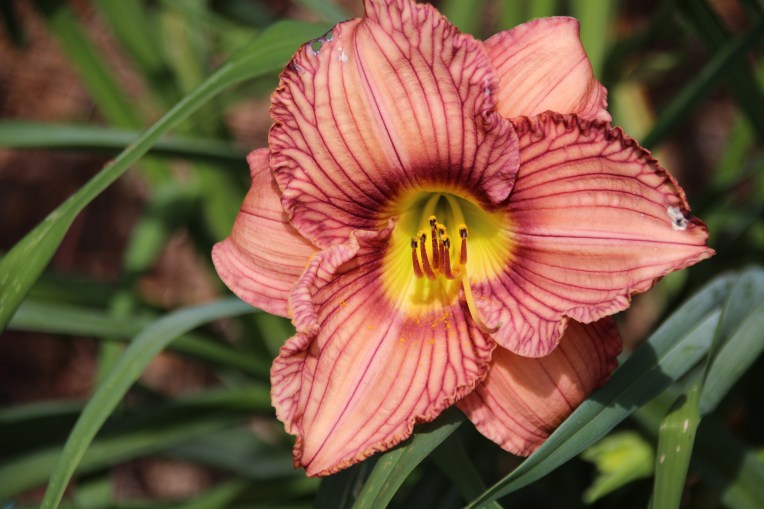
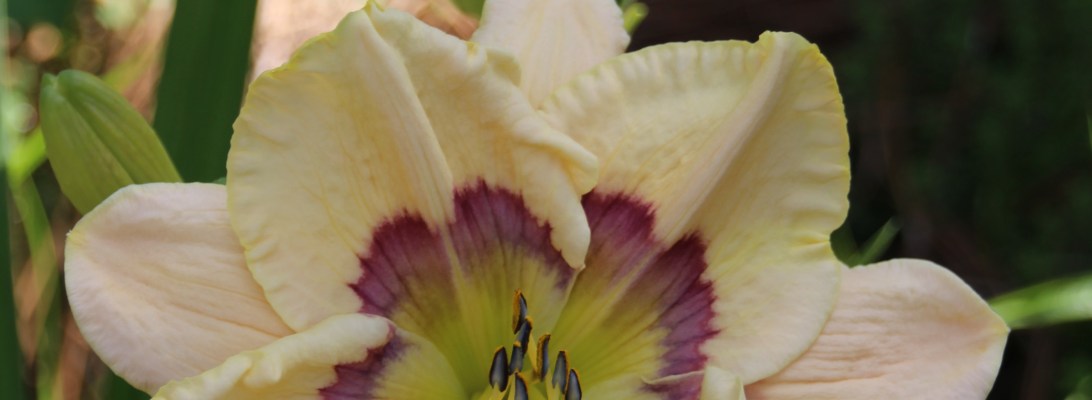
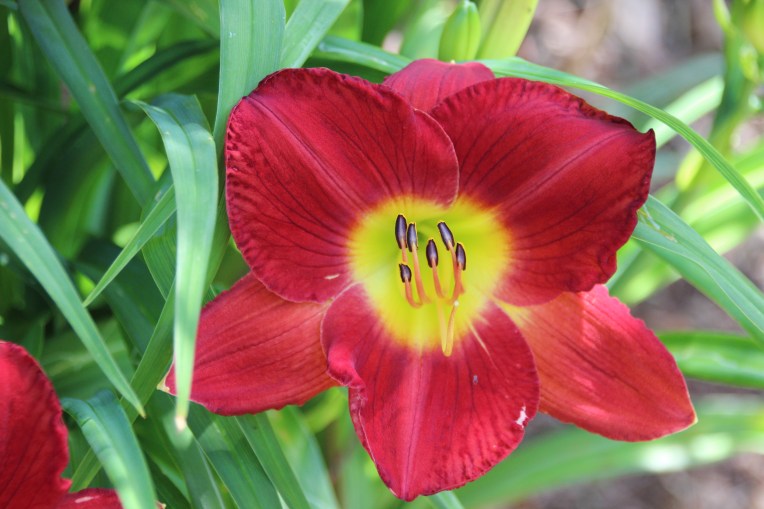
Purple PinwheelMac the KnifeNowhere To Hide
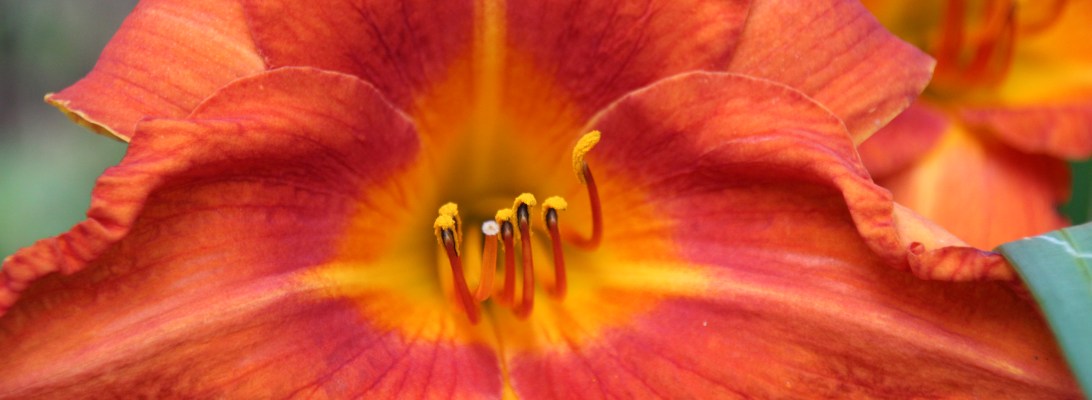
I must admit that Nowhere to Hide is one of my favorites. Its color with dark veins and ruffled-edged petals make it unique. It was given to me by my friends Joyce and Jimmy.
I love each of these six. Each has its own attributes. I am fascinated by the subtle variations.
Emperor’s Butterfly
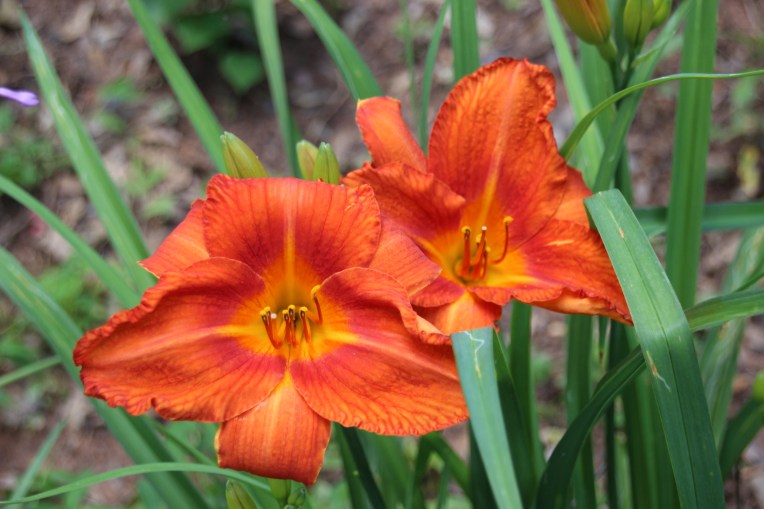
‘Sound and Fury’ really stands out with its rusty orange blooms. It has been moved and abused numerous times, so I was glad to see it blooming today.
Sound and Fury
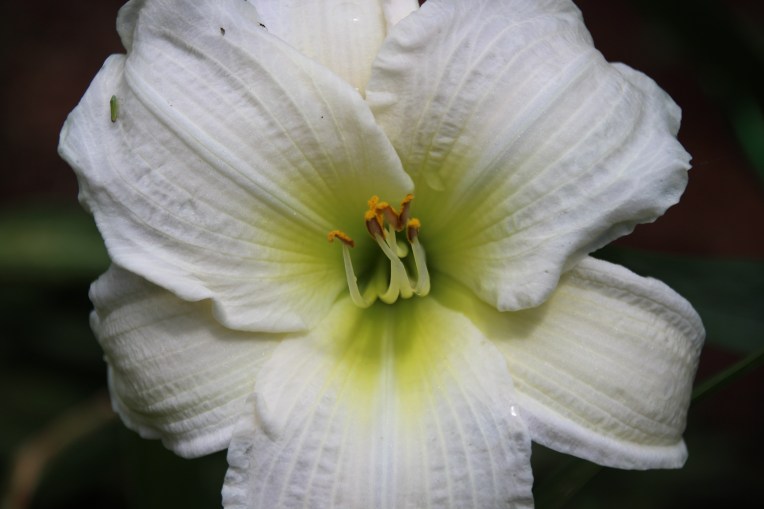
‘Gentle Shepherd’ is really that white. It was given to me by my sister-in-law, Dana.
Gentle Shepherd
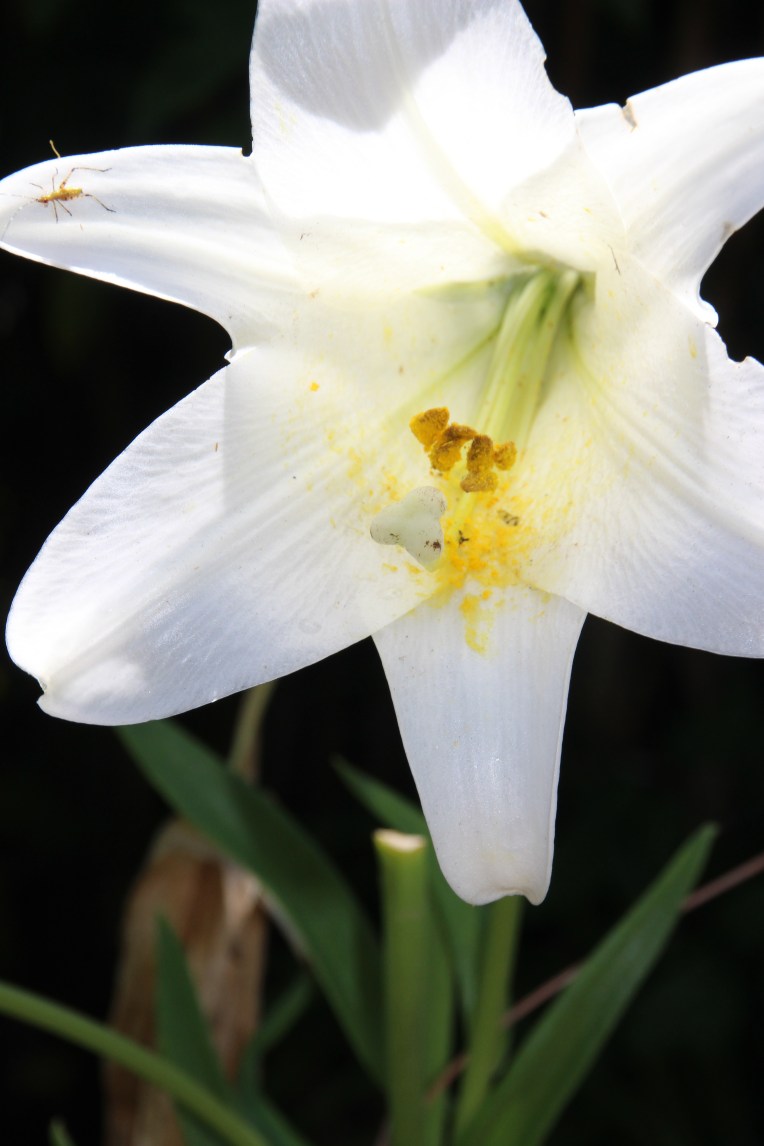
My Easter Lily is also blooming this week. The two look similar, don’t they?
Easter Lily
Gentle Shepherd is a slow grower. I divided it four years ago and it still has not recovered.
Something unusual usually happens in June. (Knock on wood)
I am going to try to remain calm and carry on.
If you stop hearing from me, somebody better come check on us.
It is hard to keep up with a garden during June here in North Carolina.
The wetness and warmness make every plant go through a growth spurt,
including the weeds.
To keep me from going through a daylily/Hemerocallis frenzy on-line,
I will share them in phases.
The first five are in bloom.
Whooperee
Whooperee bloomed first this year. It has big, juicy buds that were gobbled up by the deer last year. The spent blooms are heavy and bleed red on your hands. The deer know how to pick the most succulent blooms.
Little Lila
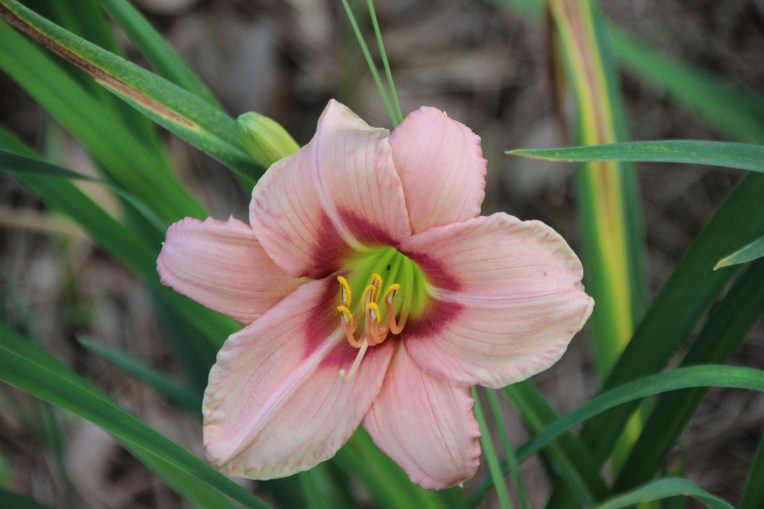
Little Lila is a sweet smaller daylily that fits nicely in a mixed border. The lime green throat is nice contrast to the magenta eye and delicate pink petals and sepals.
Lavender Rainbow
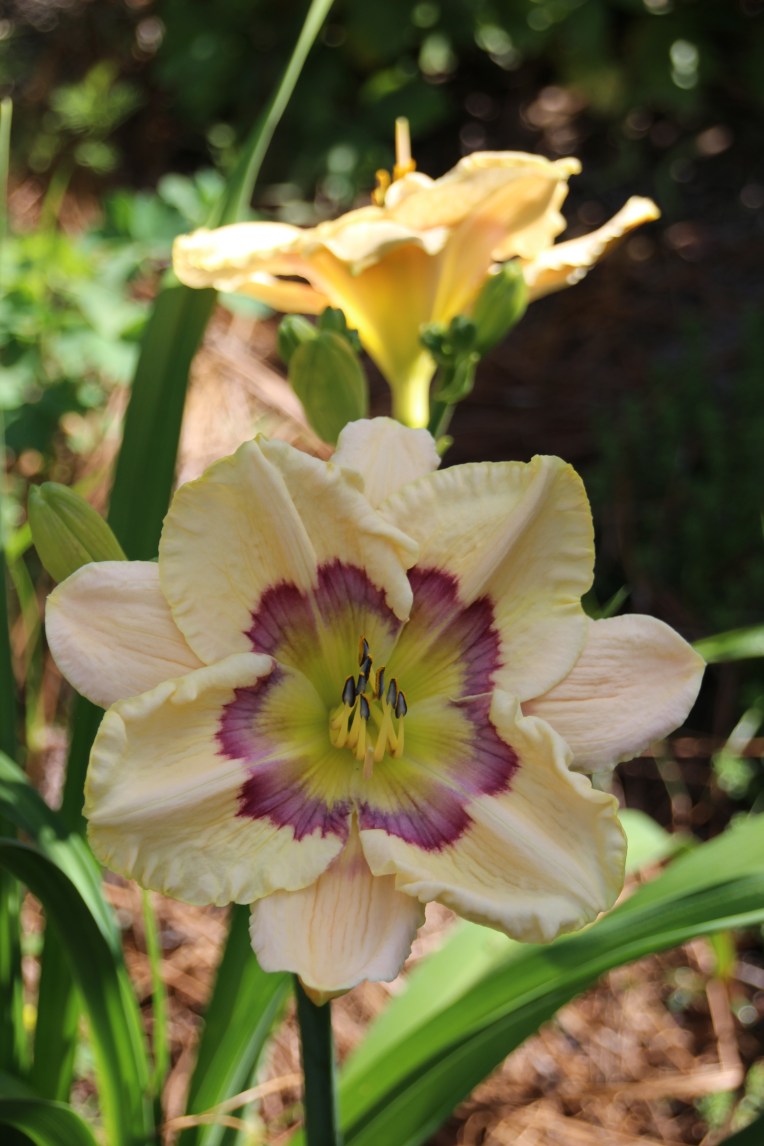
Lavender Rainbow shines yellow in sun. In shade it appears more creamy. I so love its blotchy lavender eye. It has slightly frilled margins which dresses is up. Fancy!
Smoky Mountain Autumn
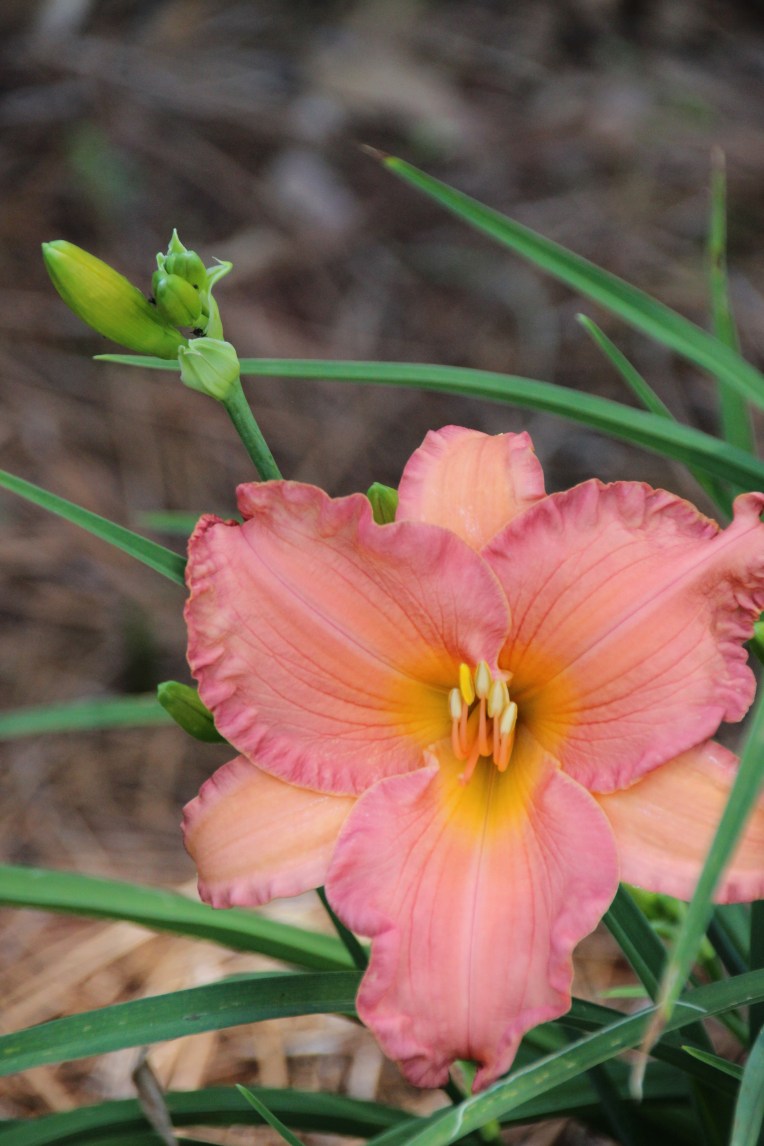
Smoky Mountain Autumn is my favorite color of pinkish salmon. I love how its petals are darker and wider than its sepals and I love that bright yellow eye.
Breed Apart
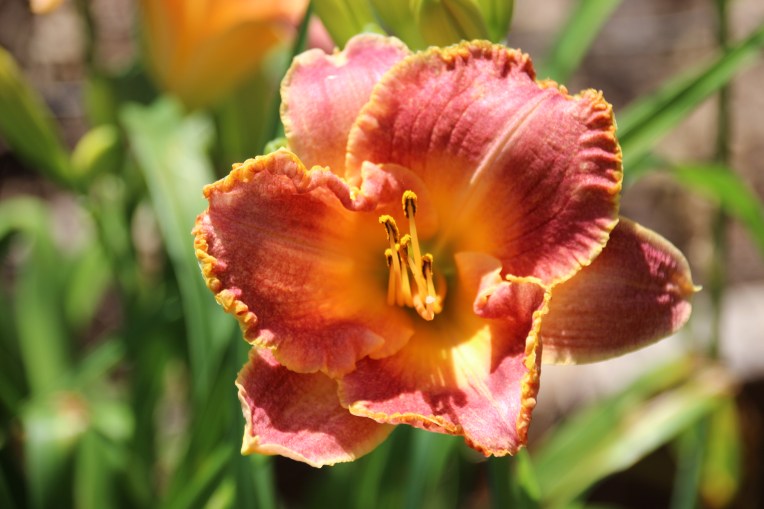
Breed Apart is nicely detailed with a golden frilly margin to match its golden throat and pollen. Its coloration is webbed instead of solid which reminds me of Amaryllis coloration.
It is hard to pick a favorite daylily. So, I just pick a favorite for each day. There will be some more coming into bloom from now until August. I think of the daylilies as variations on a theme. I mix them in my borders, so that there are flowers blooming before them and after them.
Keep your fingers crossed for me during June. Let’s hope all goes well THIS year.
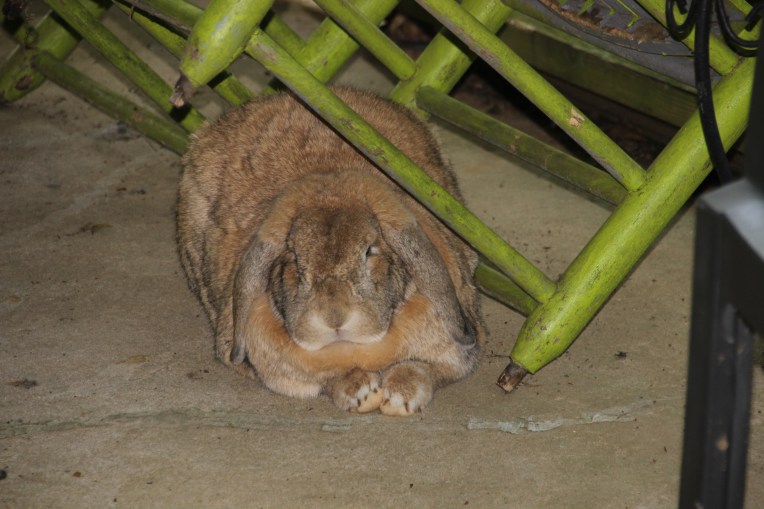
At least I have eight rabbits’ feet to improve my luck. Attached to my bunnies, of course.
Oh, oh, the habits of a hare. Oh, oh sitting ‘neath a chair. Sitting ‘neath a chair.