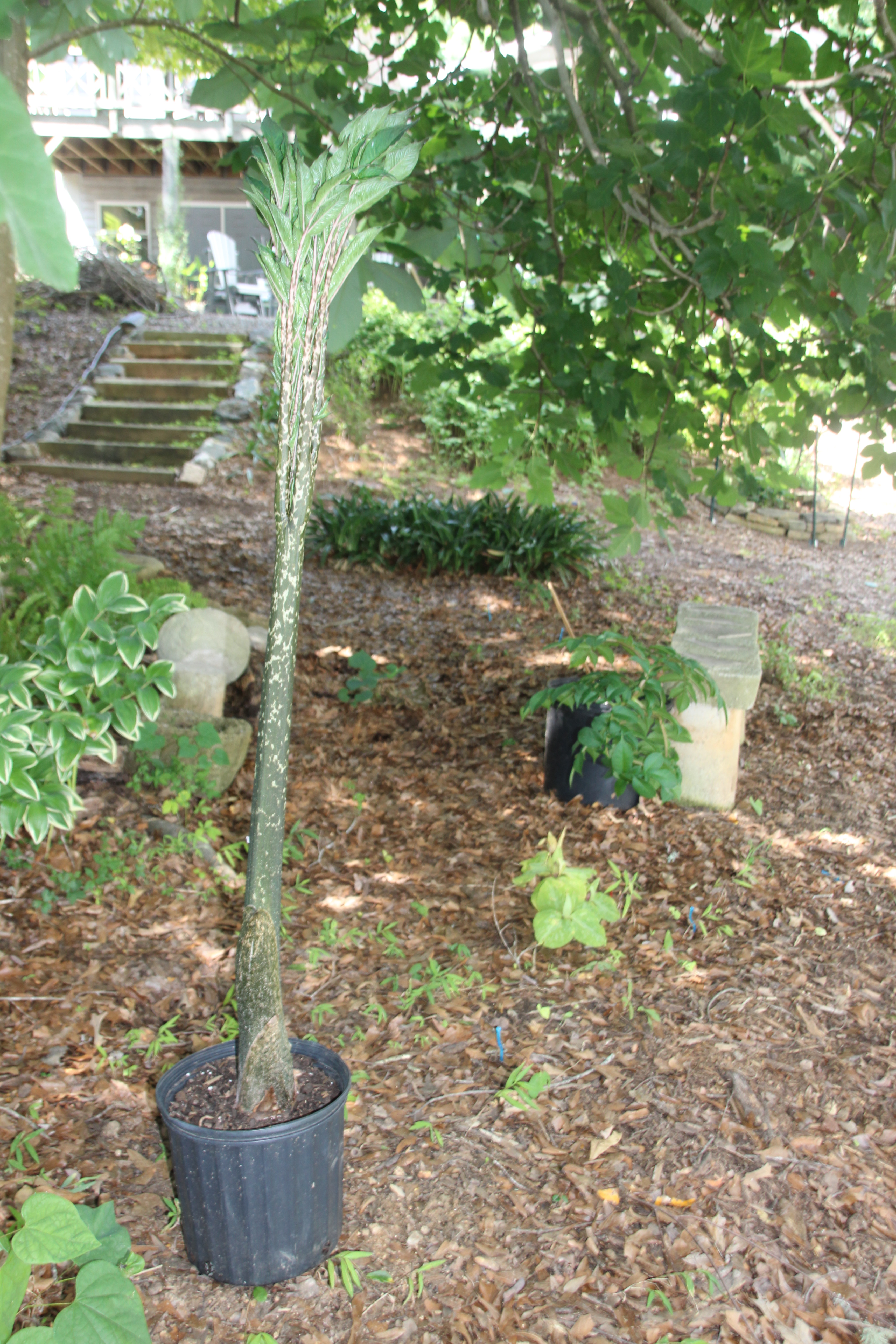
I hate to admit that it has taken me this long to select a suitable site and plant the three Devil’s Tongue plants that were gifted to me by my friends, the Popes.
I have moved them around in their pots to try out various locations. They seemed the most at home under the fig and beside a clump of Japanese Sacred Lilies.
I hope they will thrive in their new home.
Leaves emerging from Amorphophalus konjac stalk
Are wondering what configuration they are planted in? I bet you could guess. A triangle of course!
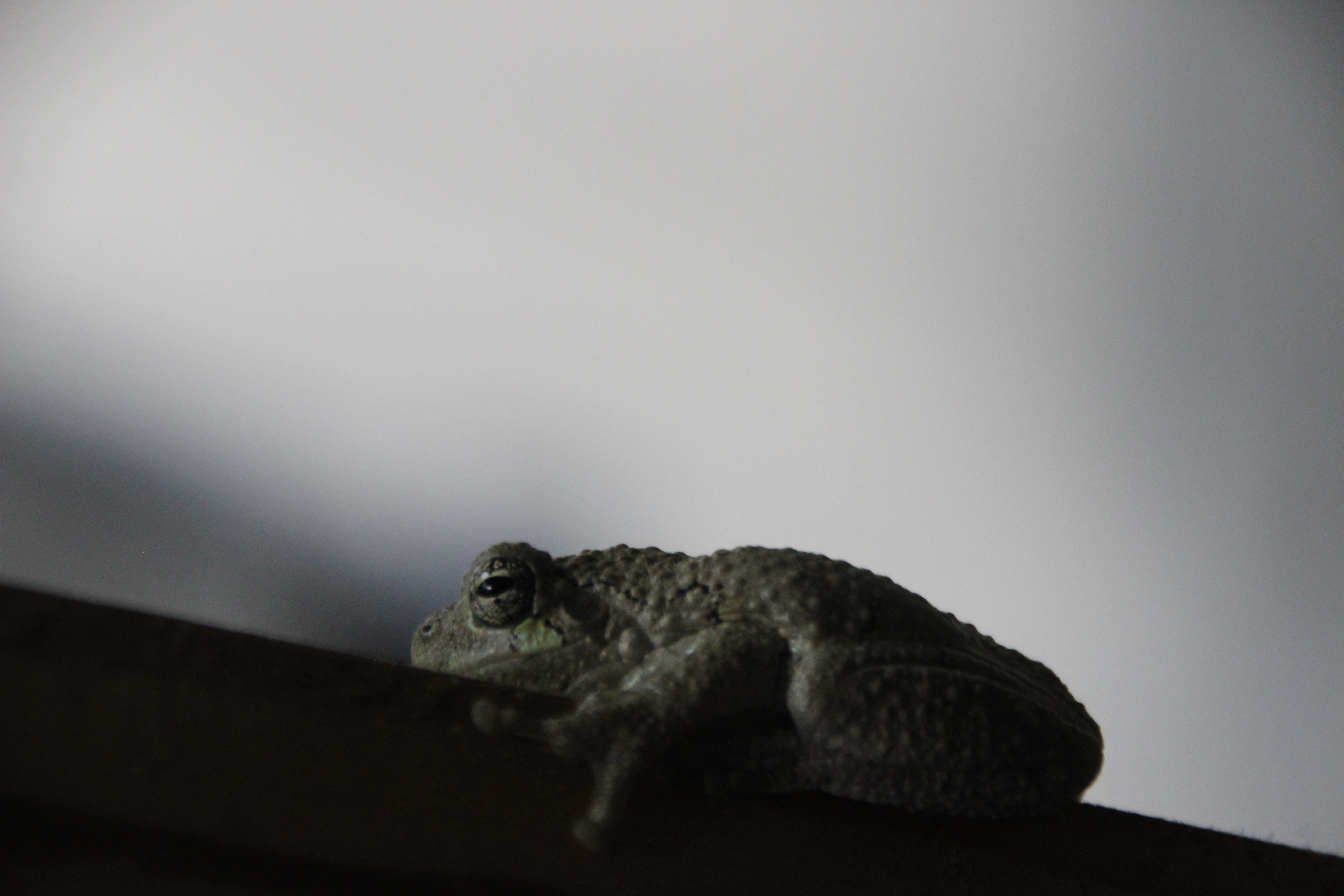
We have had several good rains these past few days. The storm two nights ago was particularly long and drenching. It was also loud. No not the thunder…the local frogs and toads.
The cacophony of mating calls was constant and deafening. At one point an amphibian attached itself to the screen of my bedroom window(closed of course) which magnified his vocals. I laughed out loud.
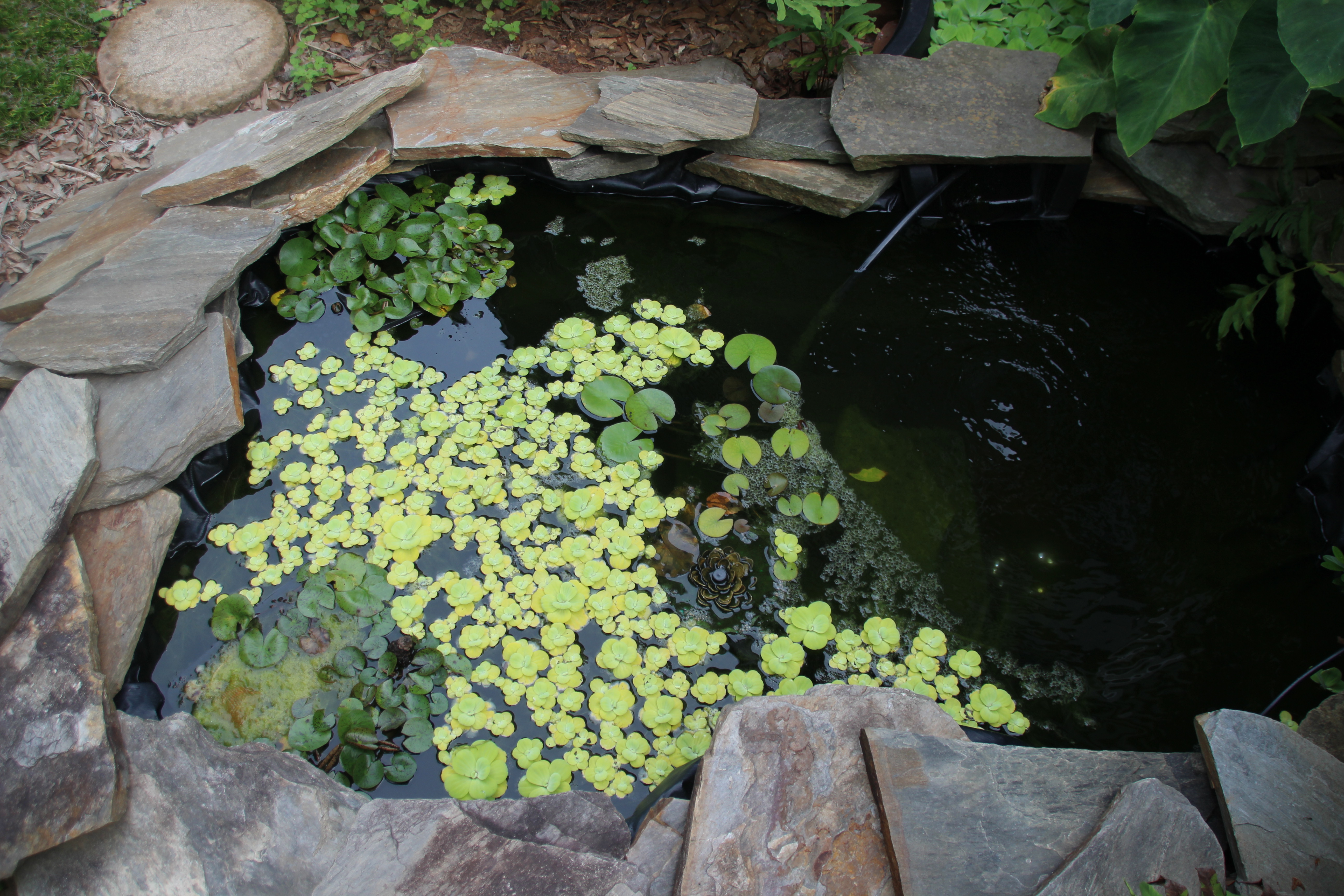
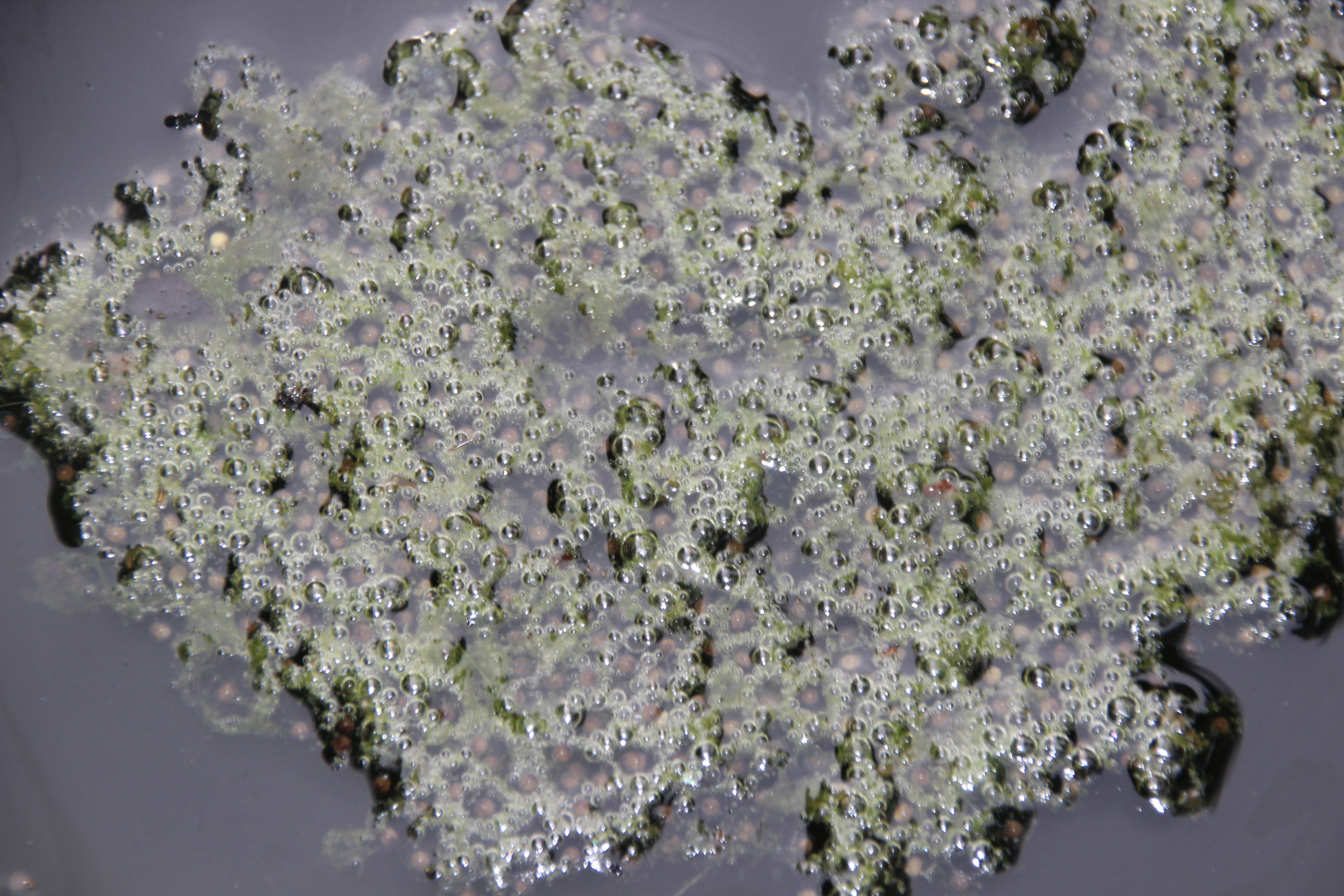
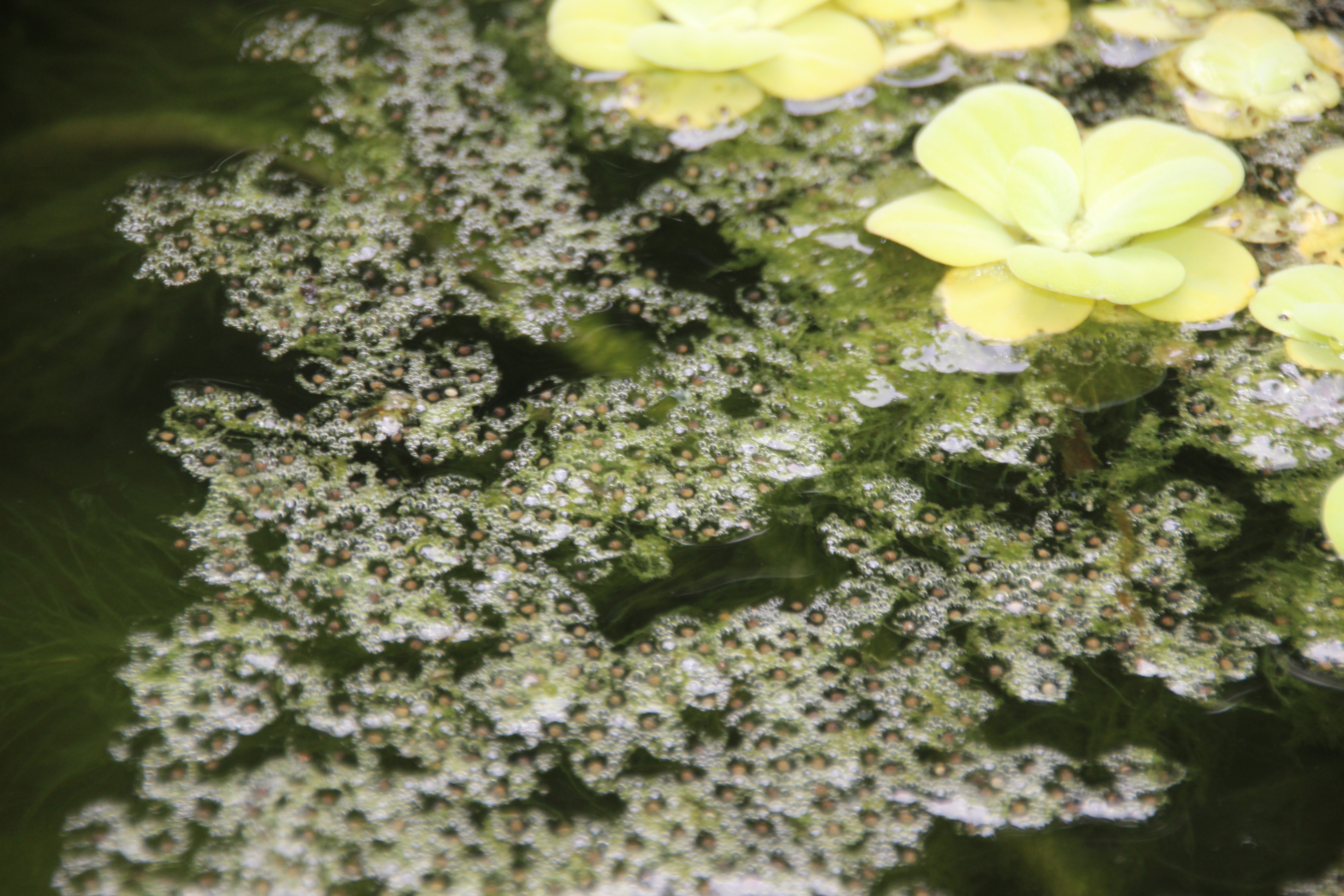
Last night the chorus was totally silent. I guess the party had petered out. They did leave evidence of their activity in the koi pond.
I try to keep the fish well fed, so maybe a few eggs will be spared.
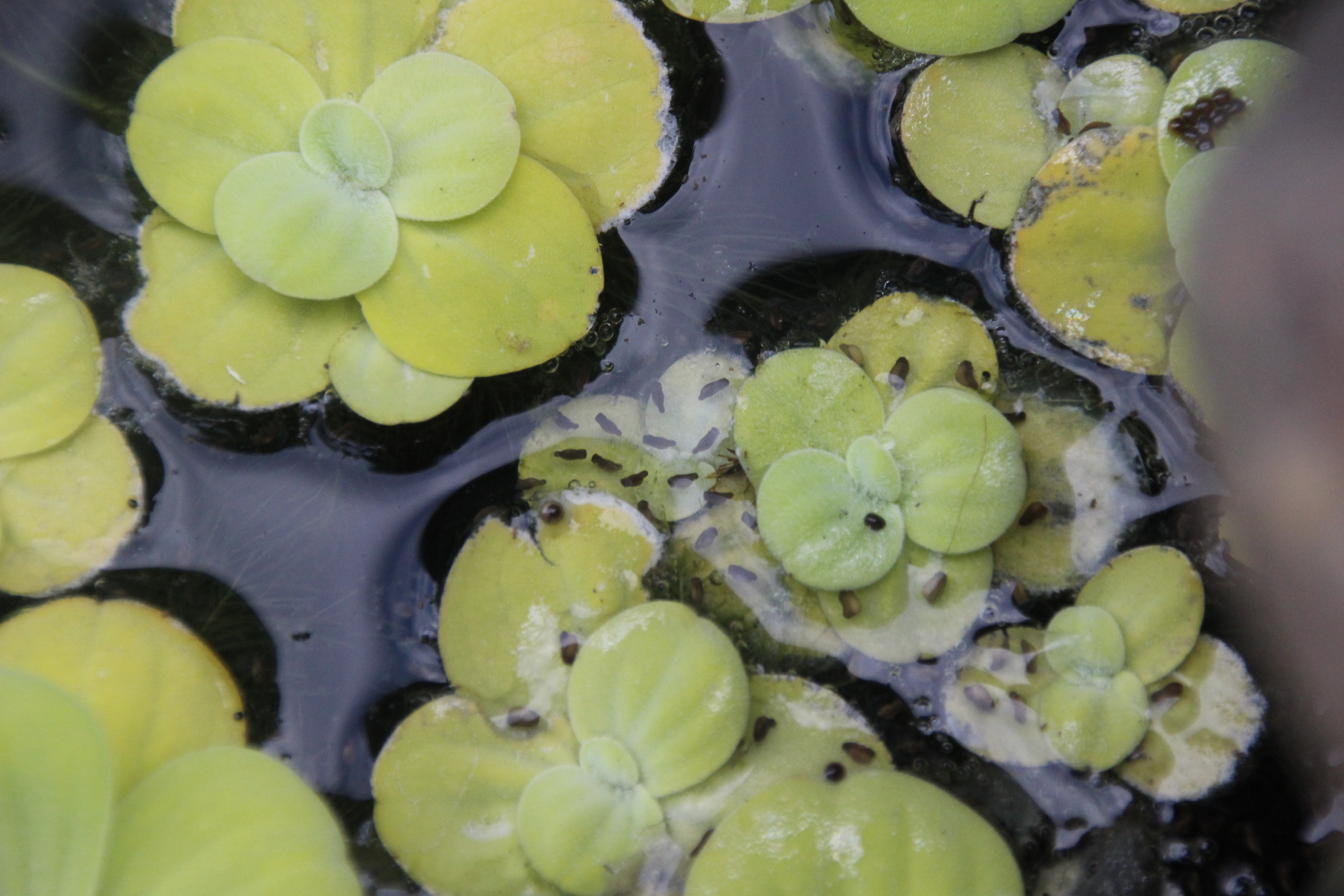
Some of the eggs have started to elongate.
A restless night is worth it to watch these develop into tadpoles…hopefully.
Amphibians love the rainy nights, but Mr. Flower does not.
Fluted Bird’s Nest fungi look like the nests of teeny tiny birds, but these ‘eggs’ are really spore cases called periodoles. The ‘nests’ are actually splash cups called a sporocarps.
The scientific name for these tiny, wondrous fungi is Cyathus striatus.
The immature nests are a lighter color and have a thin skin on top, so that the ‘eggs’ will not get launched out by a raindrop before they are ready.
Fluted Bird’s Nest / Cyathus striatus
The mature nests are darker brown with gray ‘eggs’ ready for takeoff during the next rain.
This last shot shows a mix of mature and immature nests. Nature is beautiful and magical.
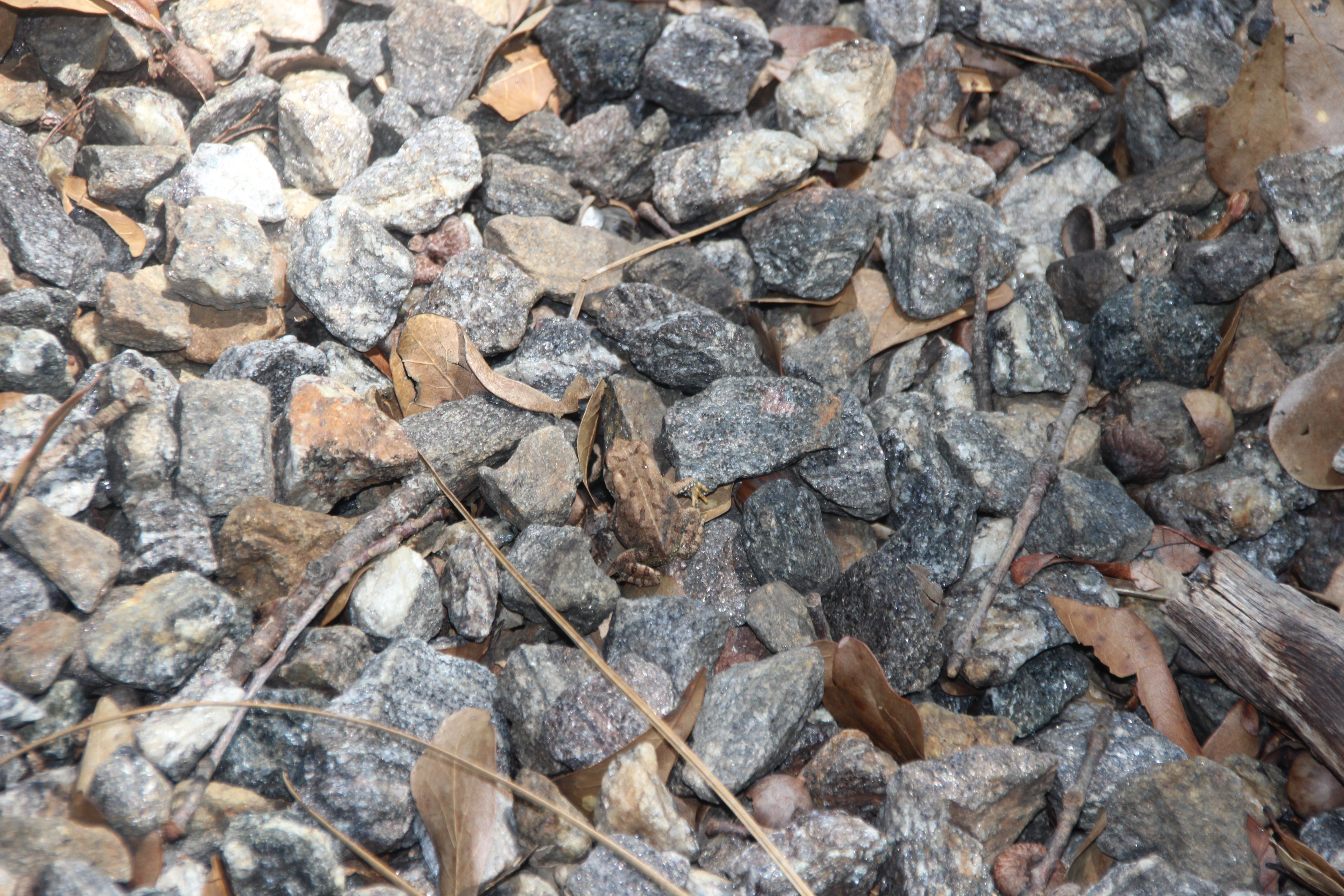
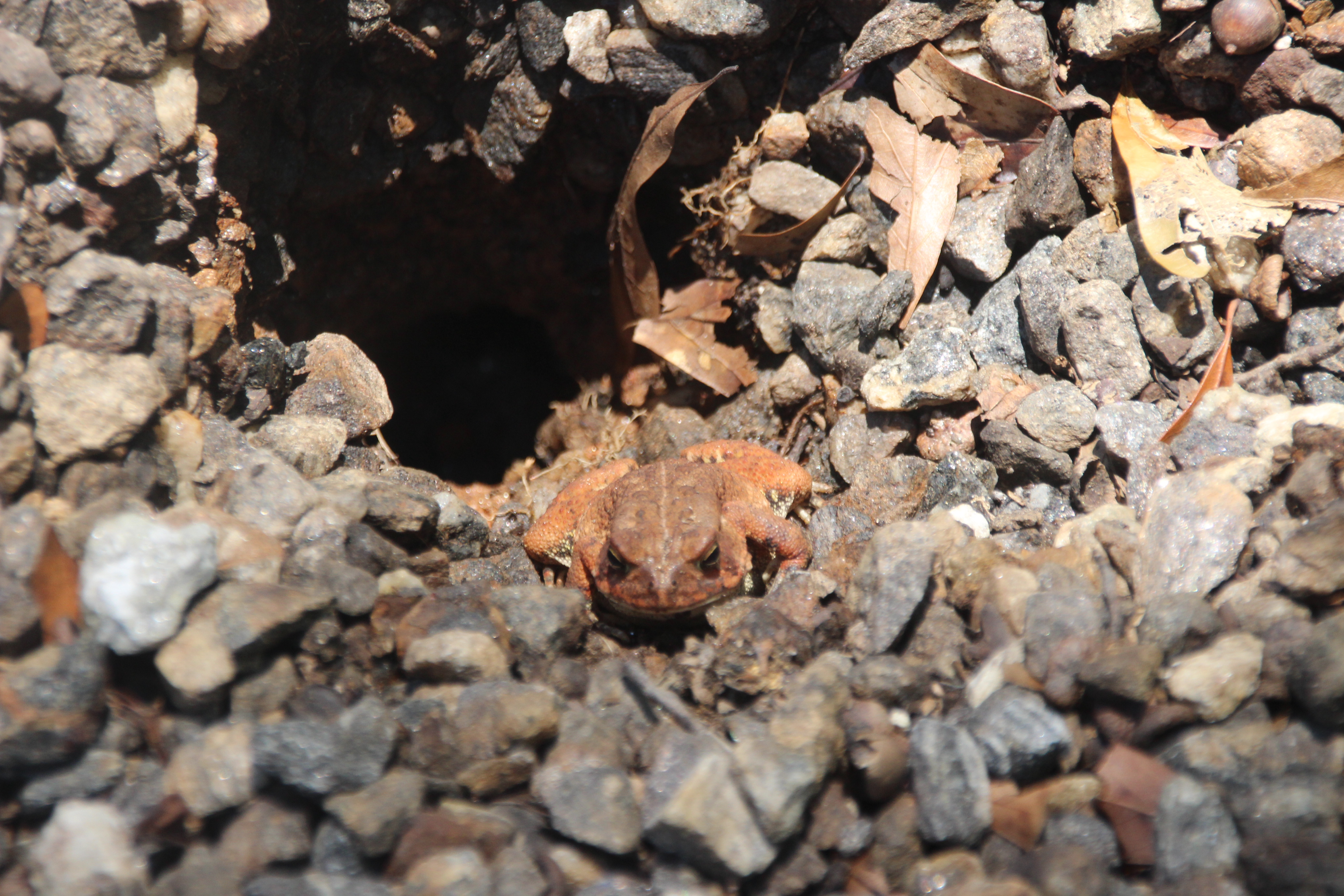
I must move carefully in the garden. There are friends underfoot everywhere.
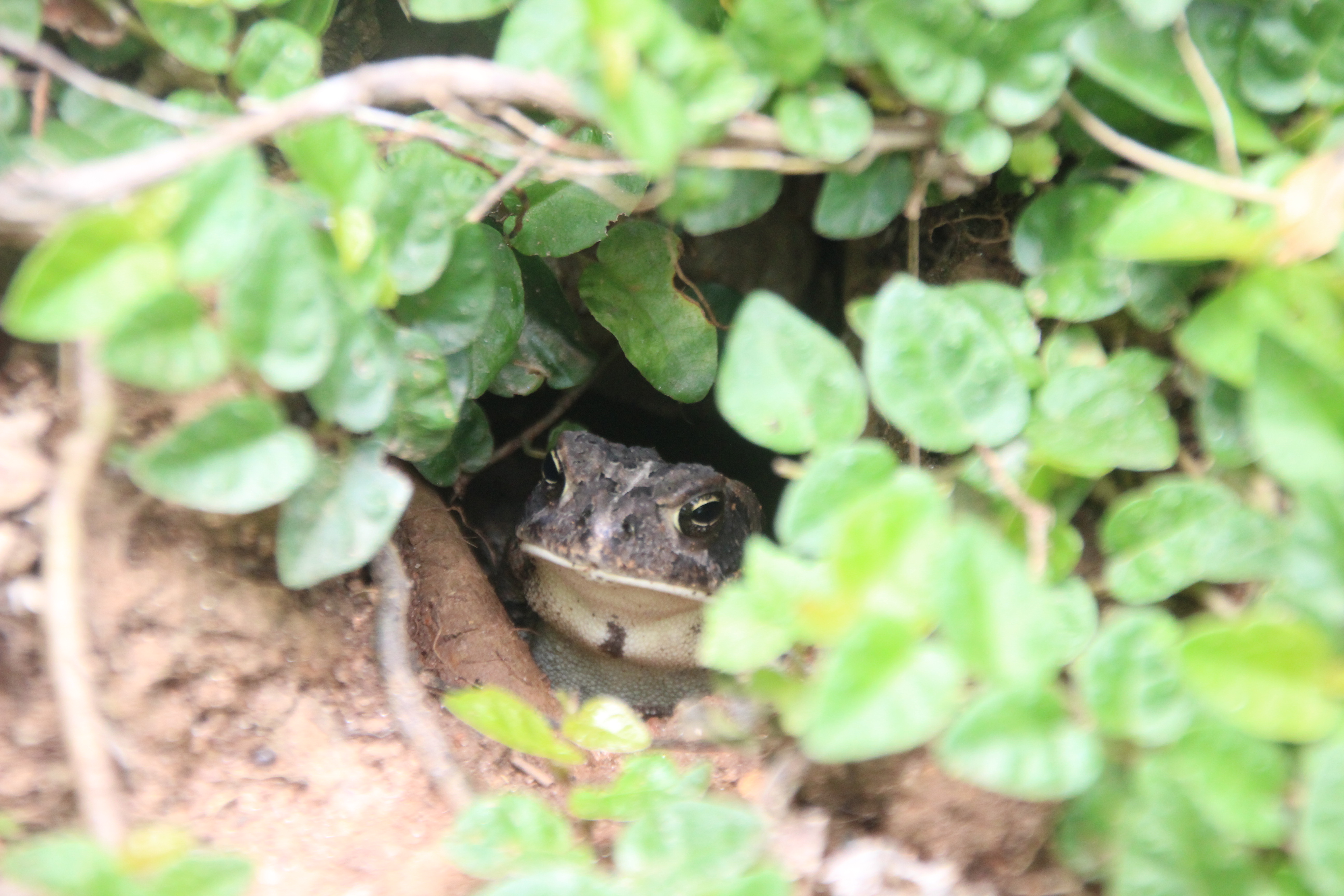
Do you see it?
One of my most vivid memories as a young child is the murdering of a toad found in the sandbox at Mrs. Blythe’s nursery school. An older boy found the toad, tortured it and smashed it with a rock. He should have been sent straight to Jackson’s Training School or jail.
My sister and I took toad deaths very seriously. We had a graveyard in the woods where we buried the smashed flat, dried toads we found in the road. We would hold solemn funerals for the deceased. We also gave guided tours of our facilities to the neighbors, who I am sure were thoroughly amused.
So with this bit of childhood baggage, I fear the accidental death of one of my amphibious friends.
They are in every hole and hopping across every walkway.
When I burned weeds with my torch last night, I was on the lookout so as not to bar-b-que a little neighbor.
It’s hard to walk and work without worry when you have little friends underfoot.
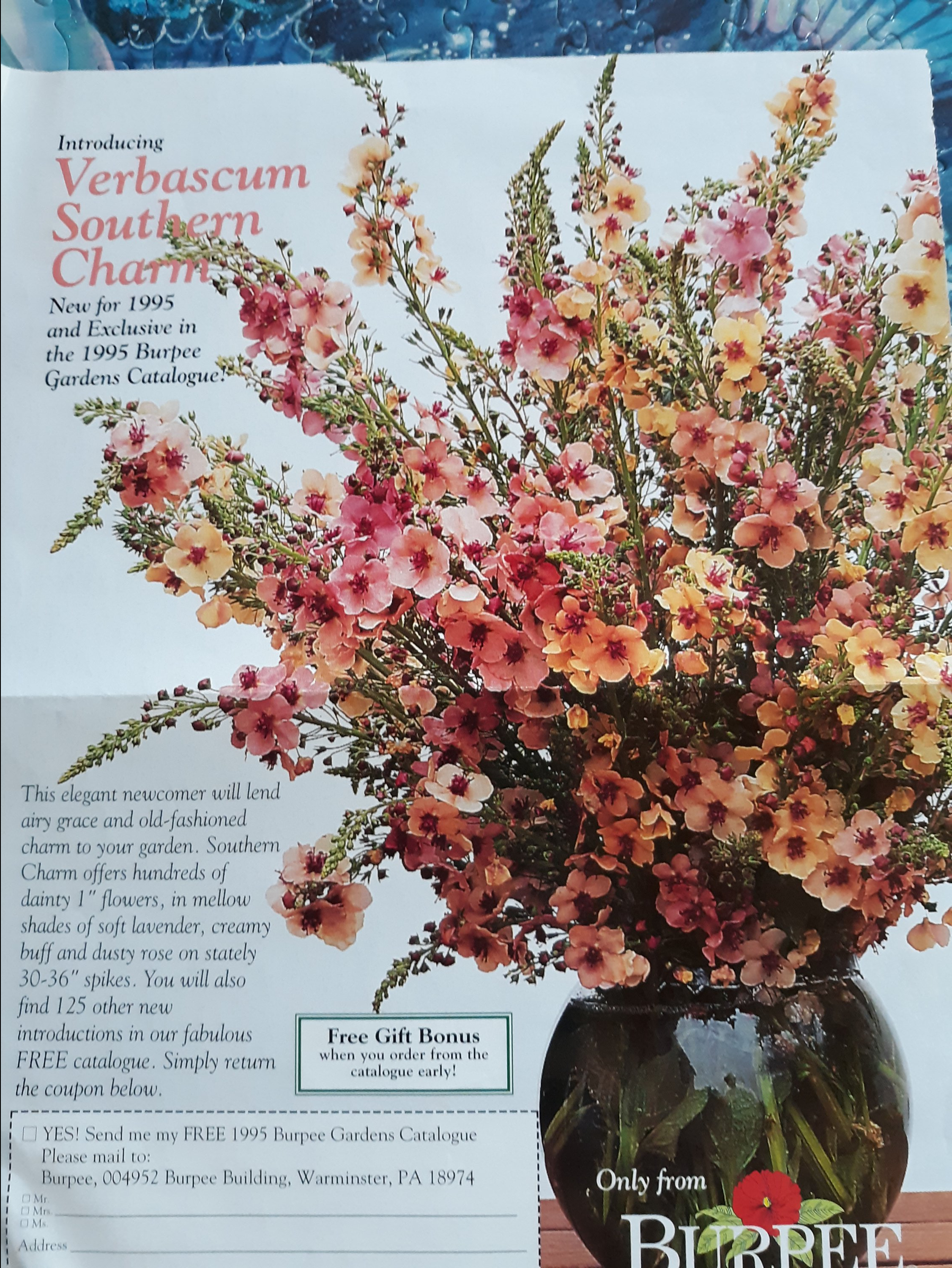
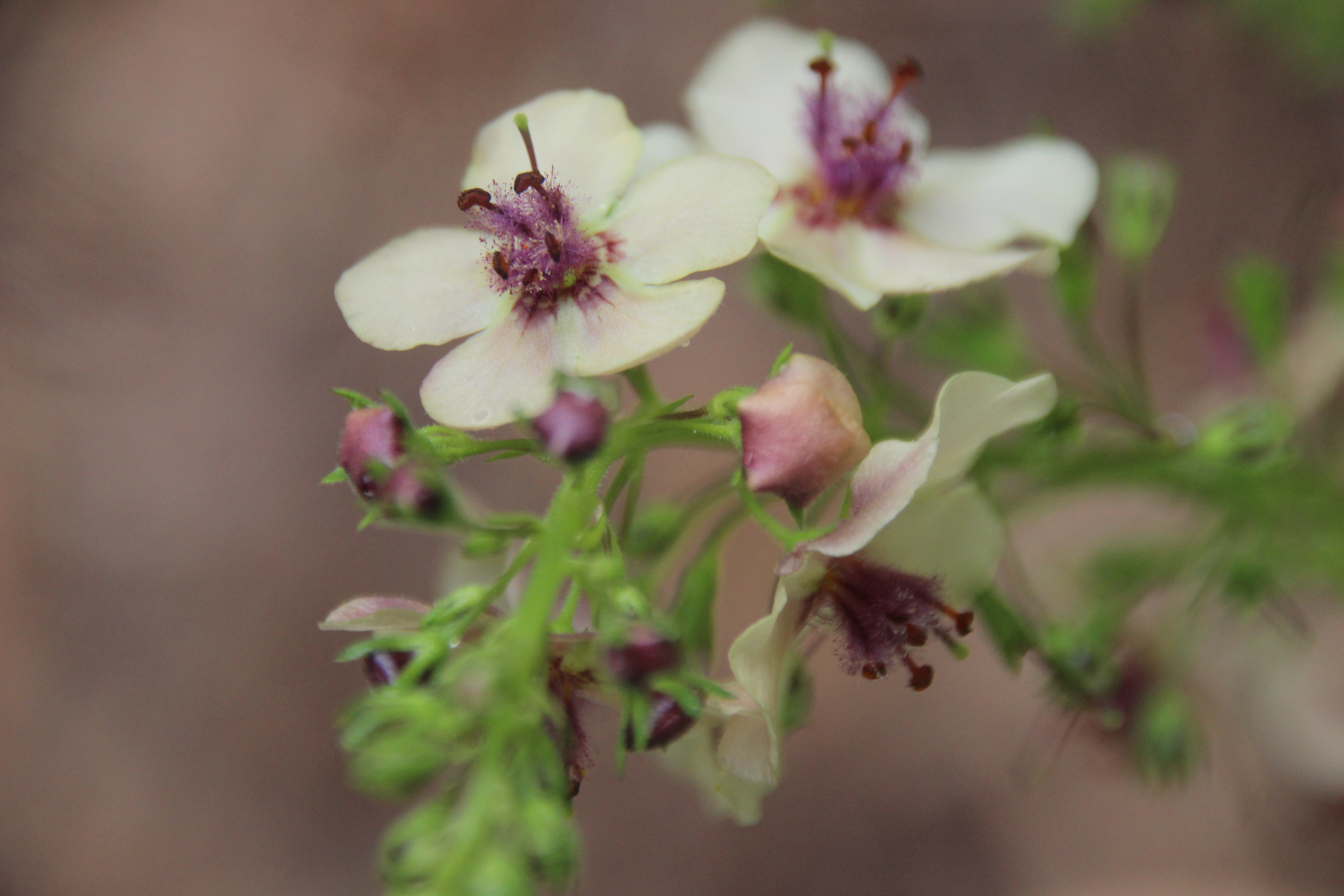
I cut an advertisement out of a magazine for Burpee’s Southern Charm Verbascum in 1995. It has been in my files since then. I finally found one in 2020. This Flower plays the long game.
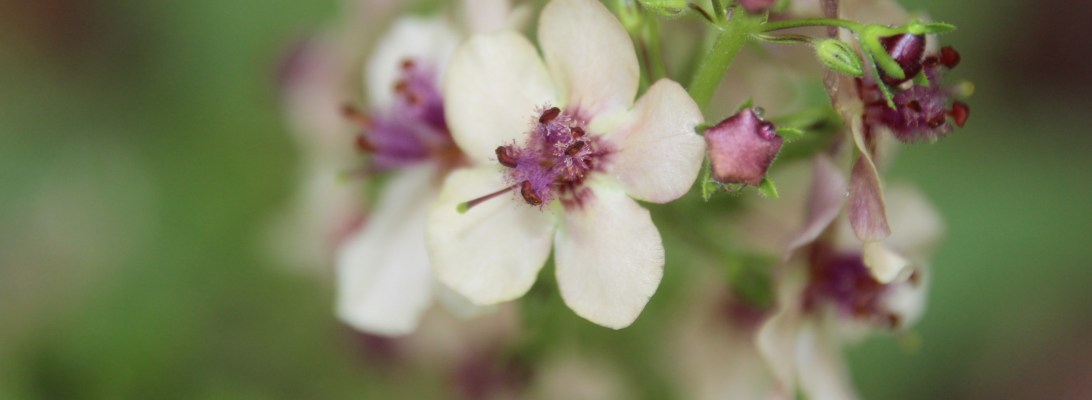
This Verbascum/Mullein has not been happy here. I have moved it… I thought. Now a struggling plant is in the old spot and another in the new location. I will keep moving it until it is happy.
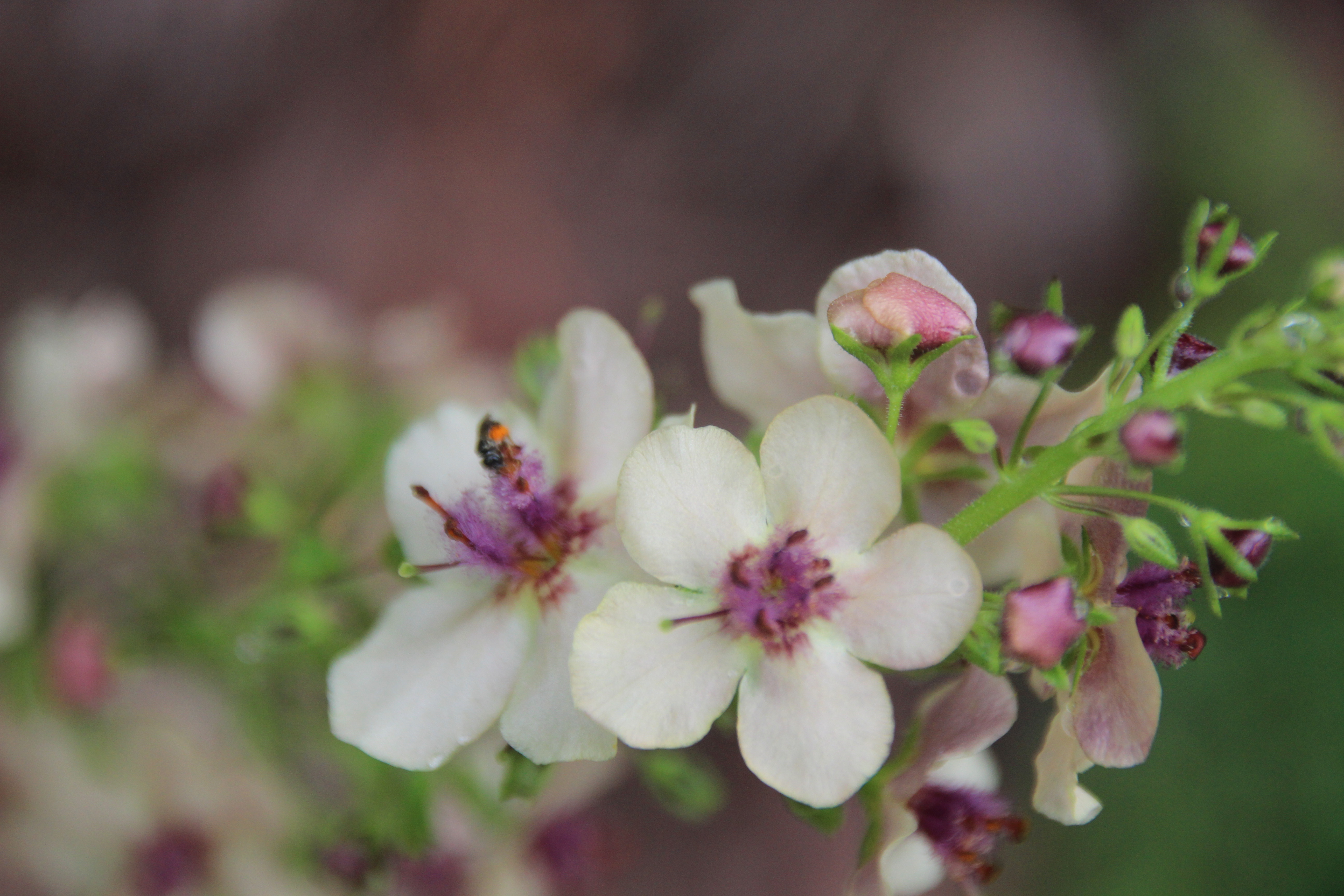
Southern Charm Verbascum and tiny bee(right)
In the mean time, I will enjoy its scraggly spikes with the color combo that I love and the tiny bees that fascinate me.
The anatomy of this bloom is not the usual centered symmetry of stamen and pistil. The stamen look like purple pipe cleaners.
It struggles along but survives. I know how it feels.









 floweralley