Anything edible must be protected from the deer herd. I even dug and divided my collection and gave many away.
Autumn Joy was beheaded before the fencing
I am not sad about this. I love sharing plants. I do not love feeding wildlife. I am a biologist first and gardener second. Feeding wild creatures makes them lazy and dependent. They will keep coming back for more.
Pot out of reach of hungry mouthes.
I only break that rule during weather anomalies like droughts and extreme cold. Even then the assistance is sporadic and in different locations.
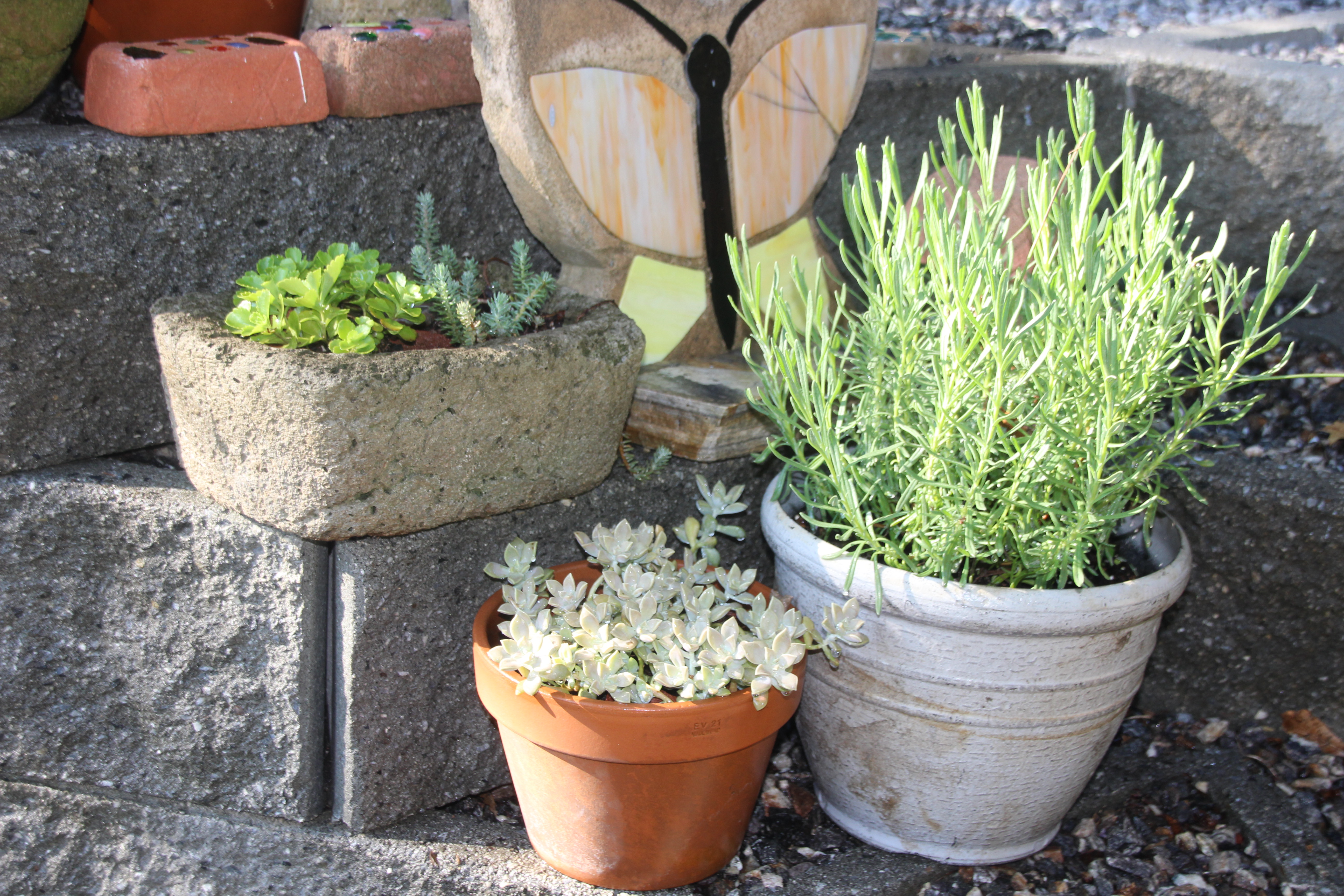
Sedum on the steps.
So the sedums you see here are isolated in strategicallylocated pots or inside fences. There is plenty of wild vegetation around for them to eat.
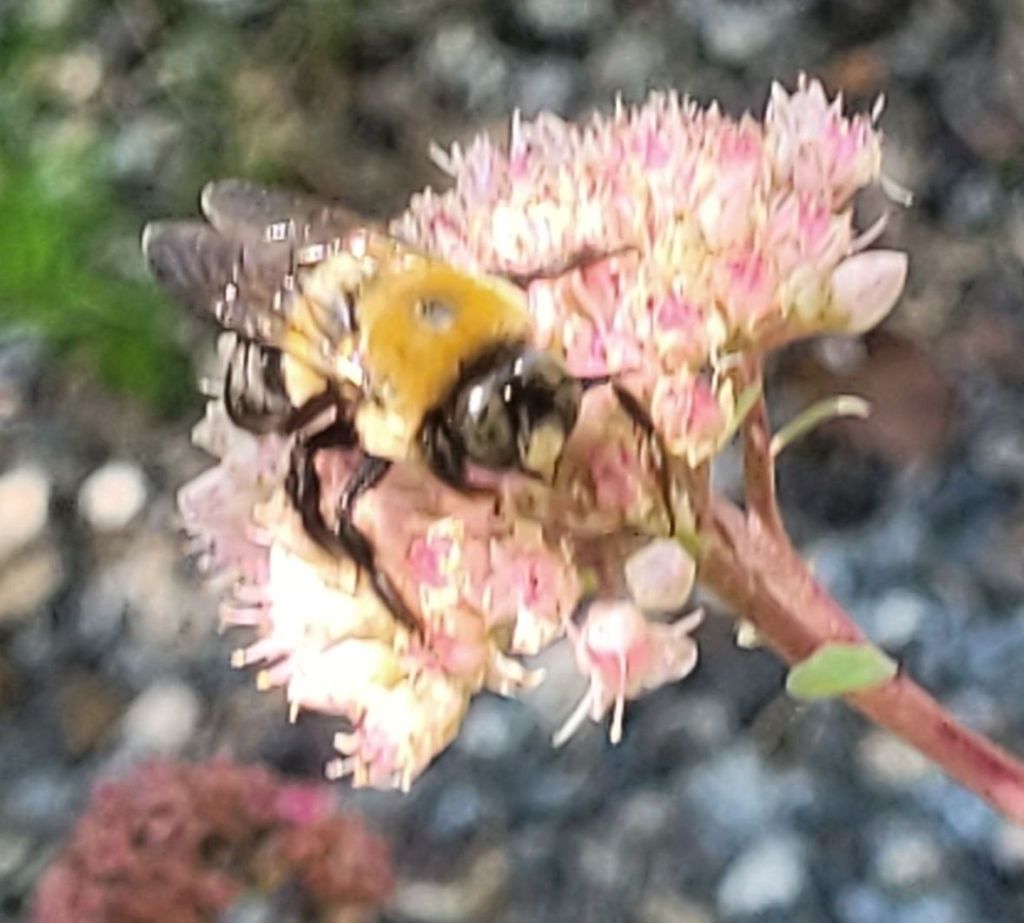
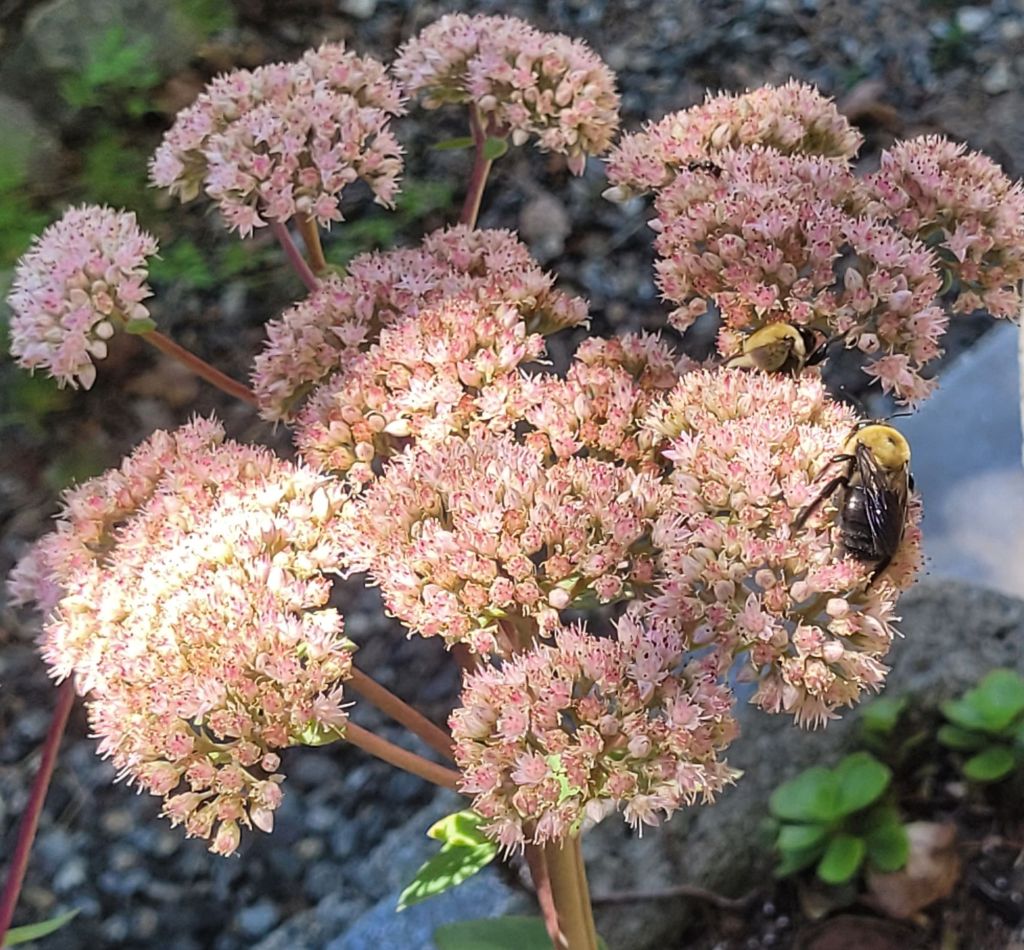
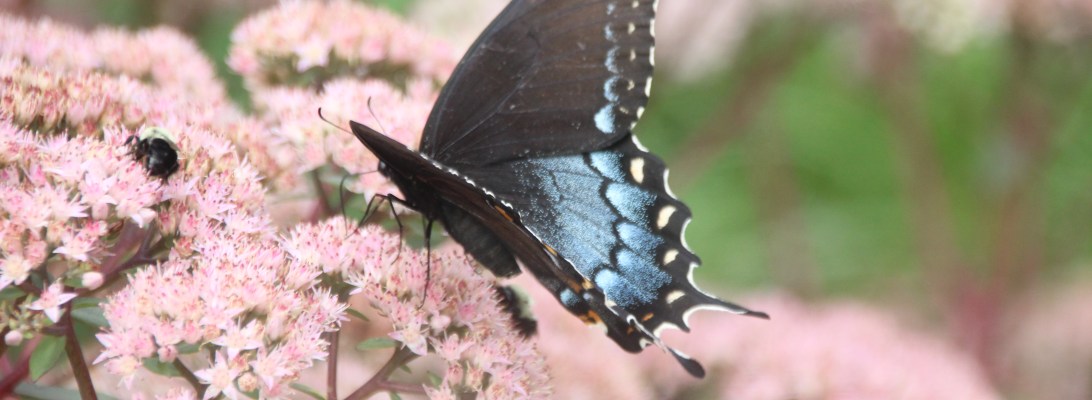
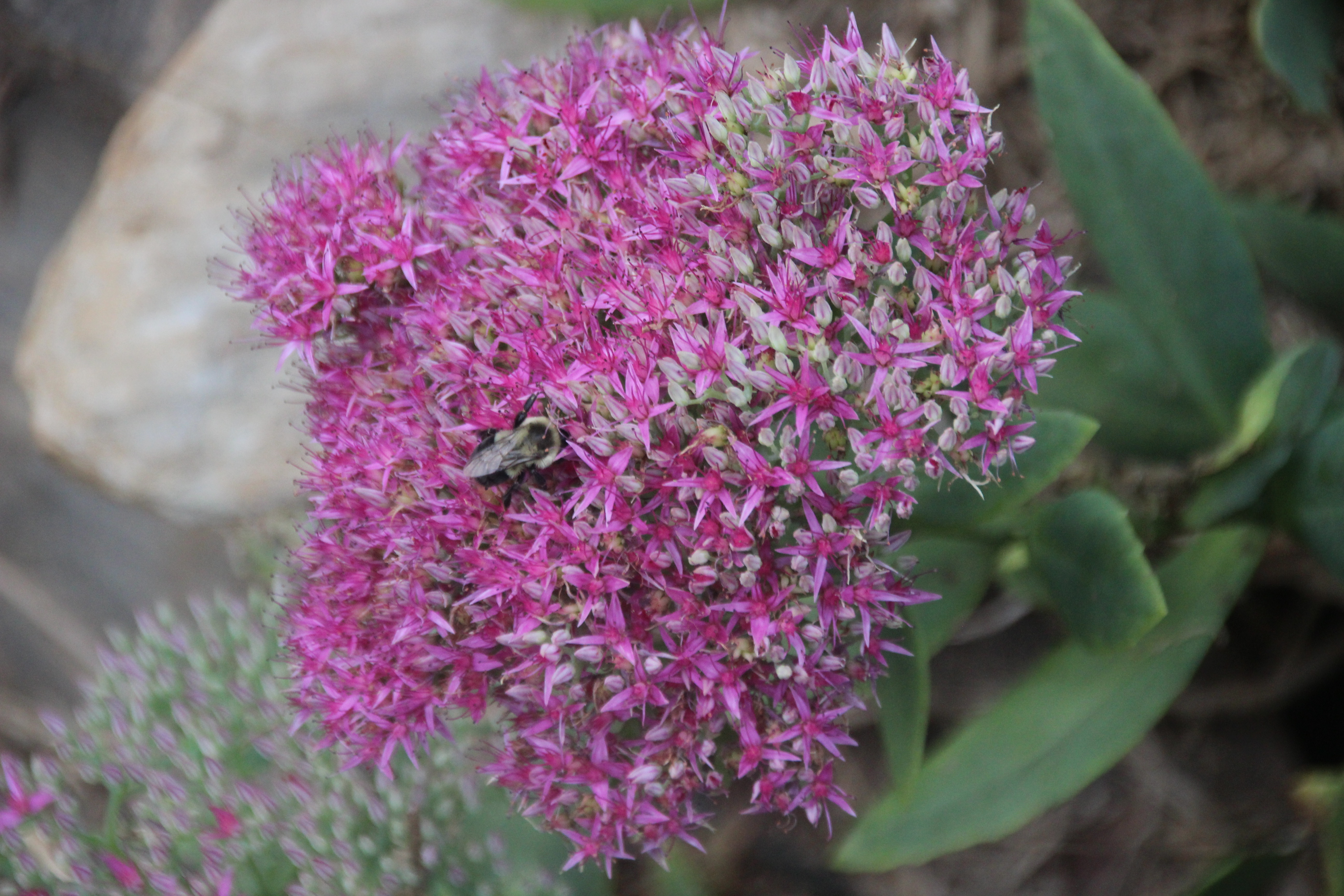
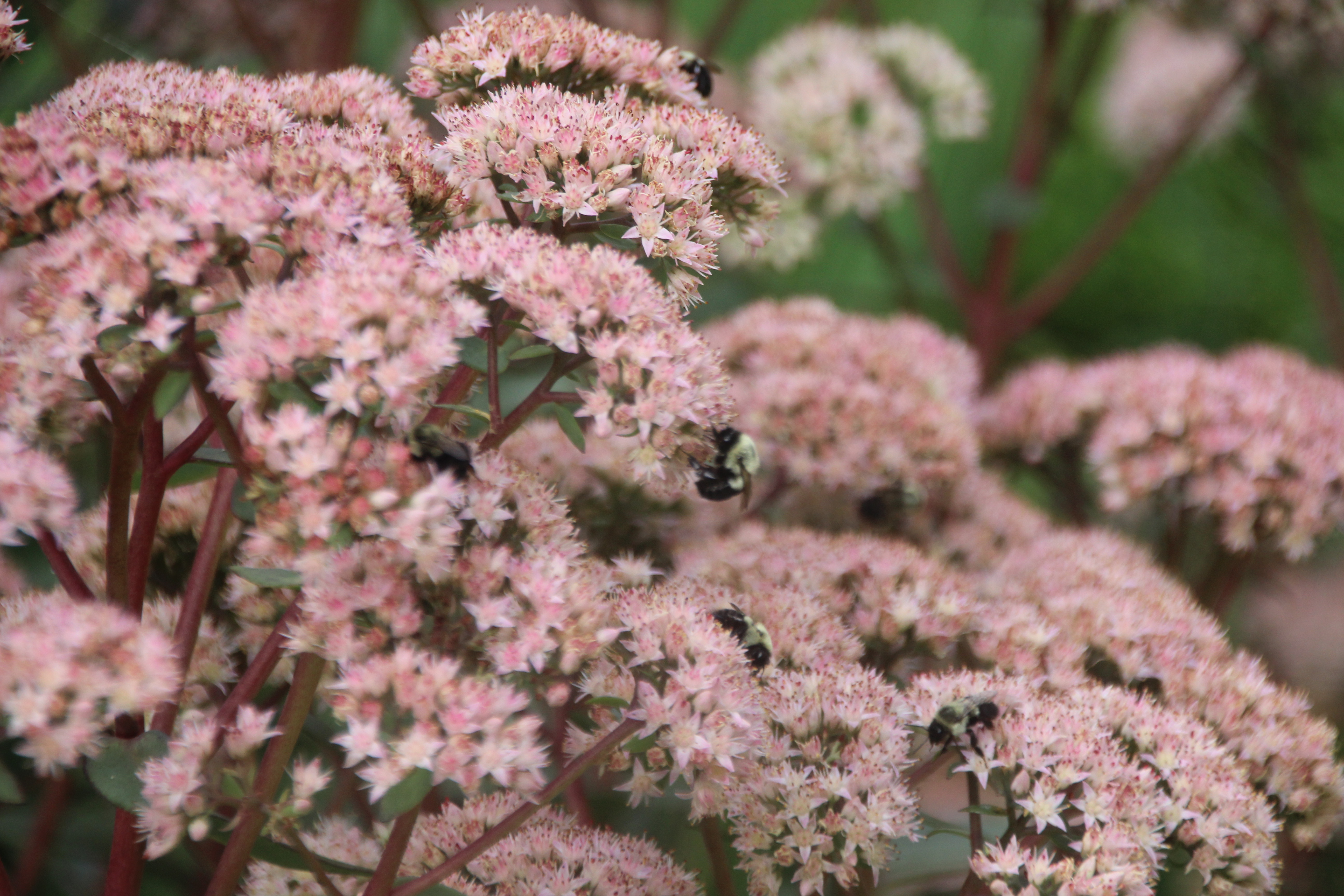
Bees love sedums.
I have keep wild spots in and around my yards. This encourages nature to stay in balance.
Bees even sleep on the blooms.
The bees love my sedums but love my weeds equally well. Nature should win. It’s been growing things a lot longer than we have.
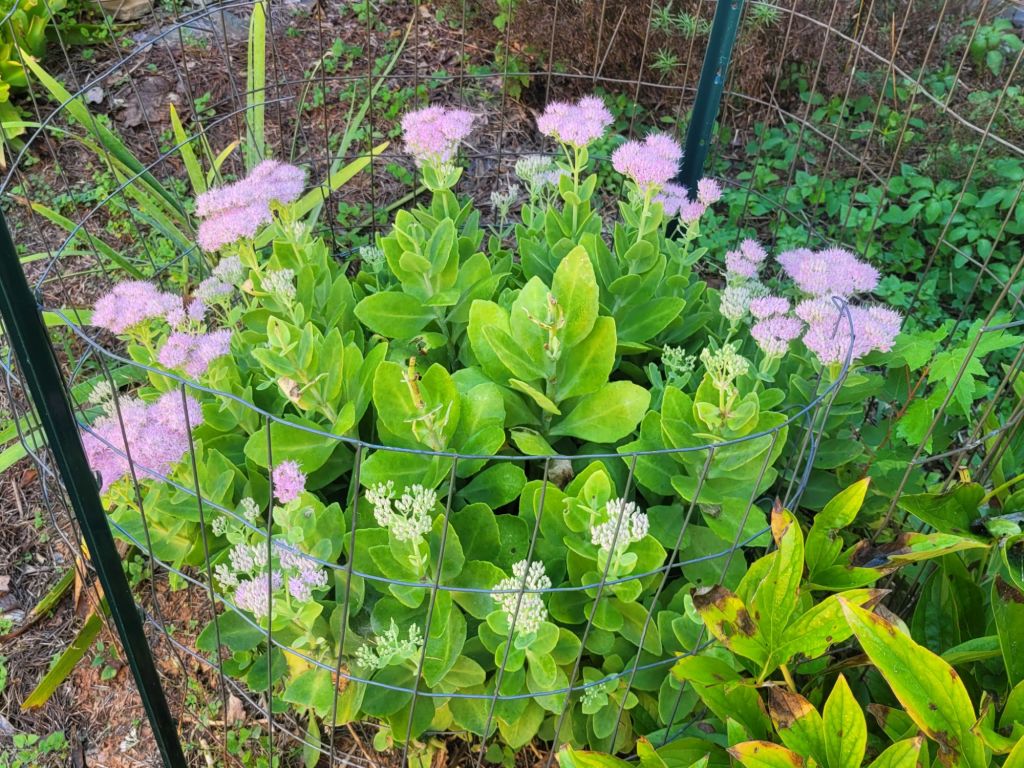
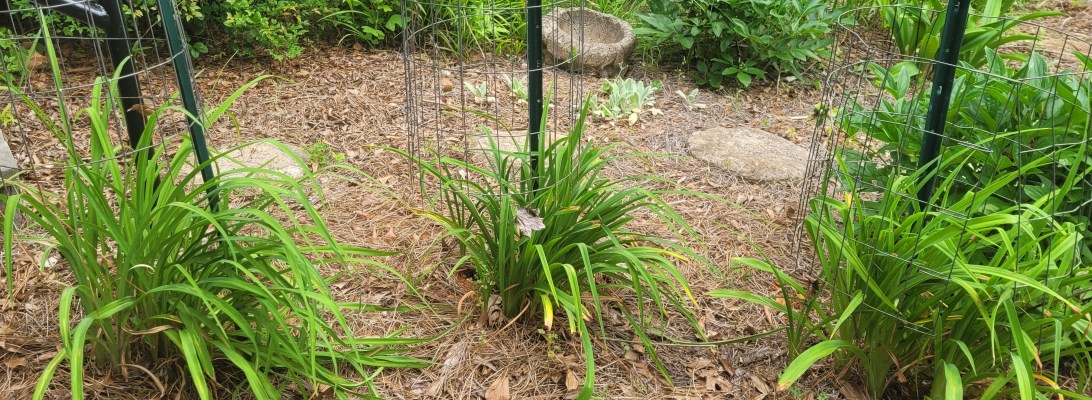
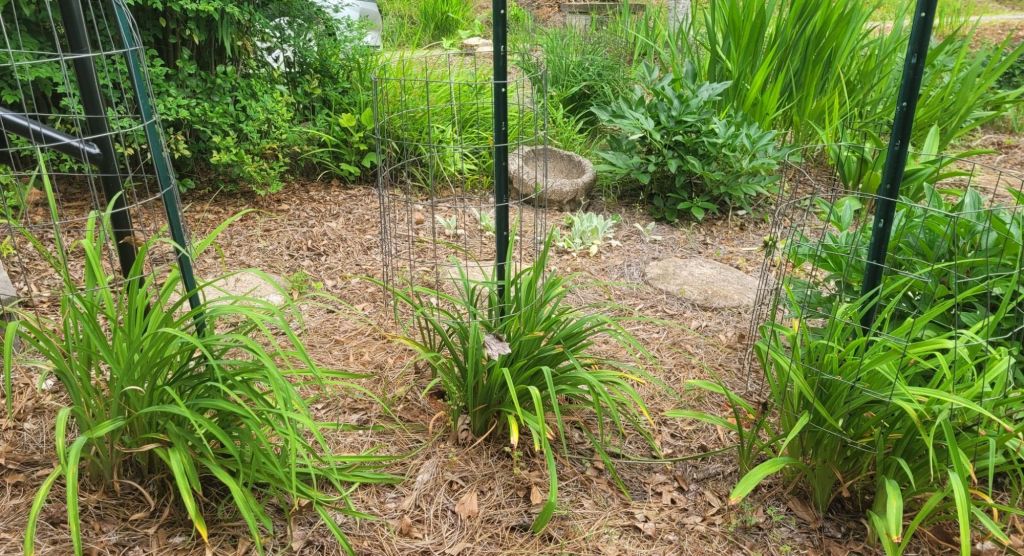
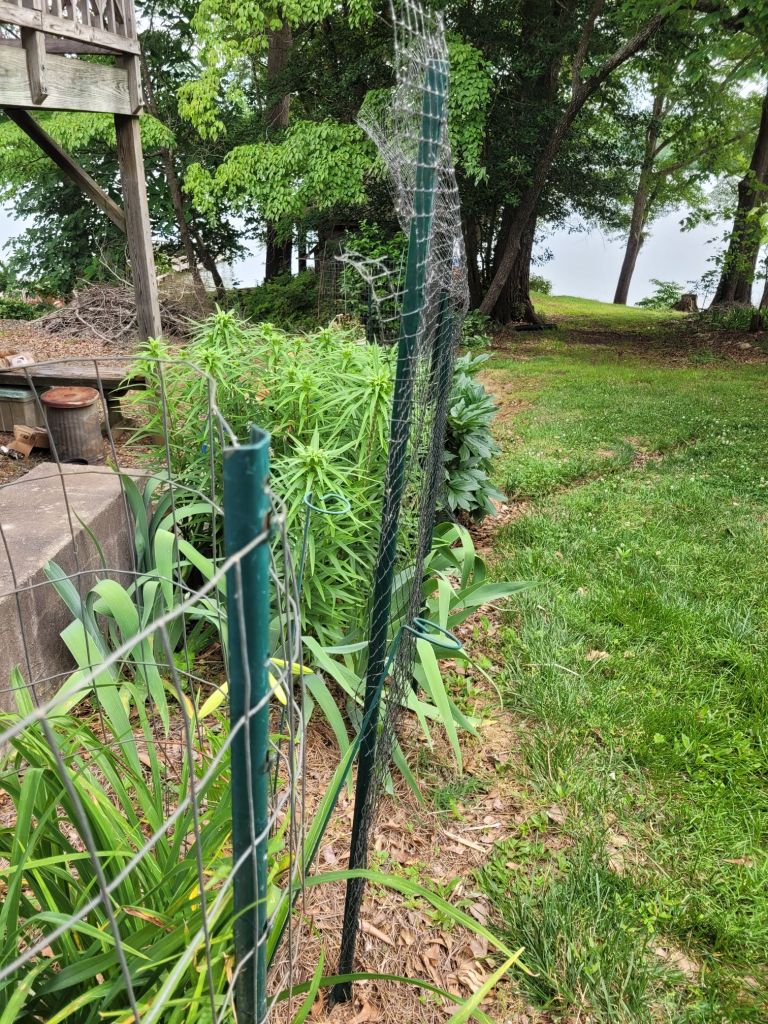
I may be a weakened and injured warrior, but I still have a fighting heart for my green babies. It is past time for Deer Protection Phase II. That means that fence rings were put around all deer delicacies to protect the emerging foliage, but no stakes were in place to hang the rings.
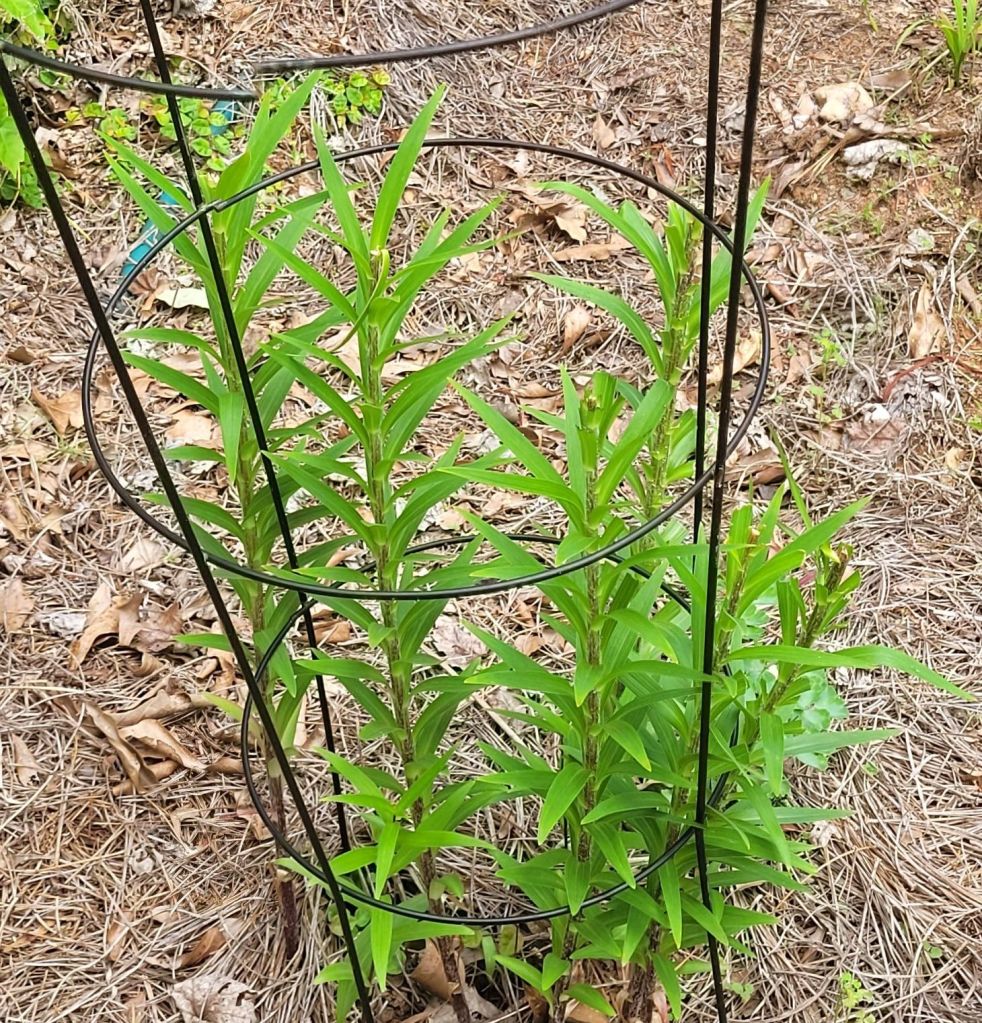
Three rings ready for bloom stalks to rise.
My family tried to intervene with deer deterants, but the herd is so big now, they were undeterred. When we moved here there were no deer or squirrels and very few people. Things have changed drastically in the past decade.
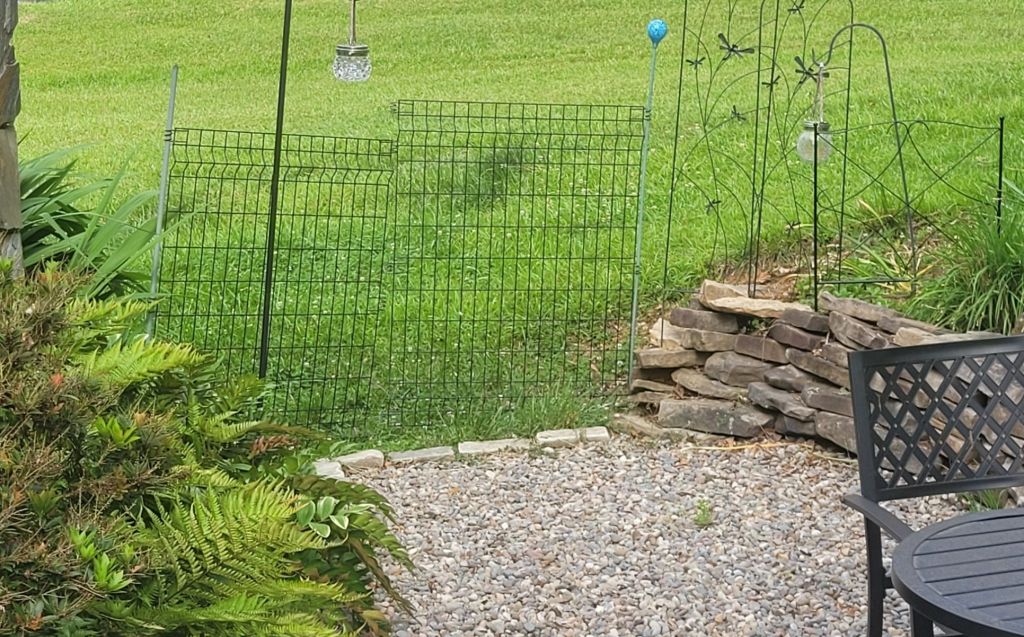
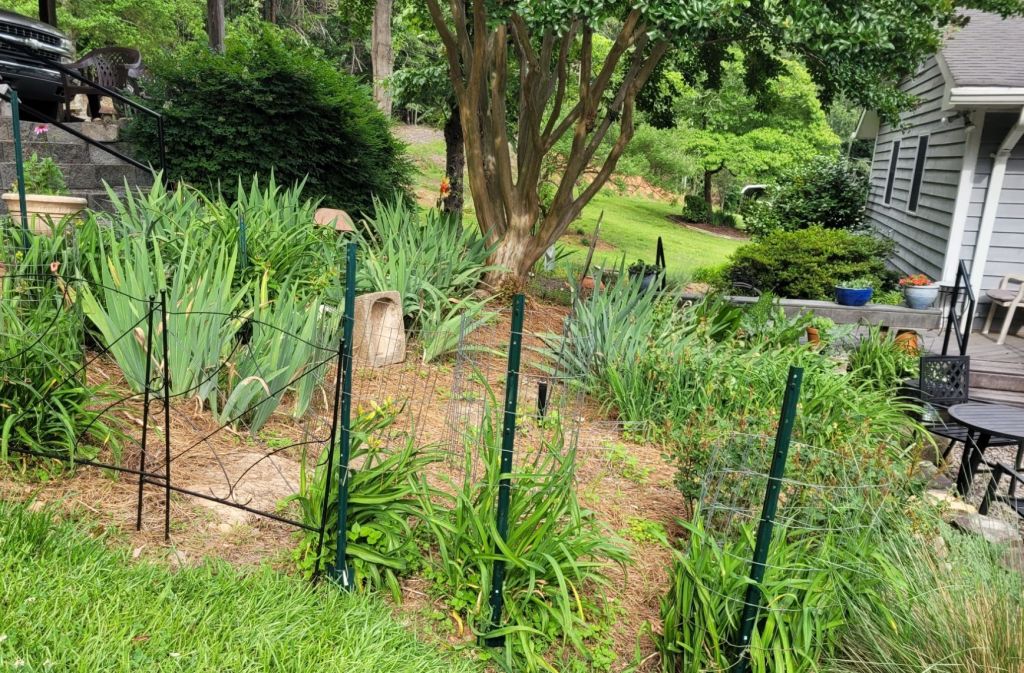
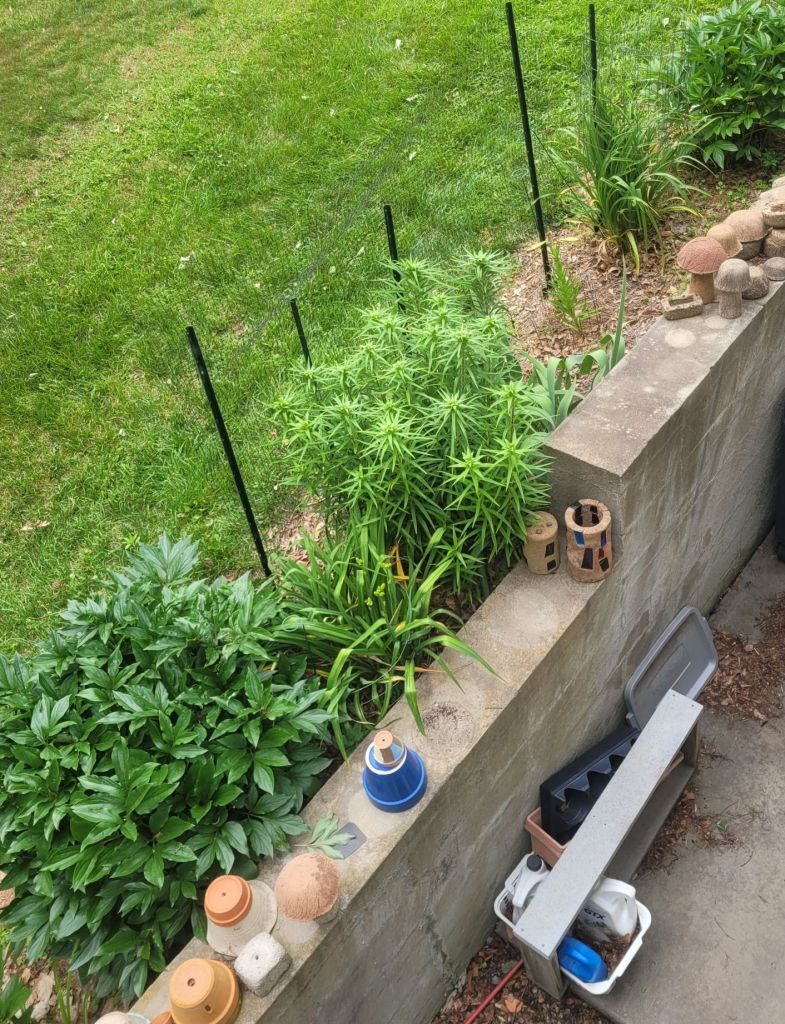
Any fence or stake is put in the defense.Rings hanging and fences blocking walkways
I have been hiking and hauling up and down the hills for hours. Stakes were placed for Mr. Flower to hammer in, since I should not stomp them in as usual. My body is now too expensive to be used as a gardening tool.
I must admit that I automatically stomped several in before I caught myself. I was pleased to get away with this move without an ambulance ride following. I hope my two PT people, Rick and Jeff, do not read this.
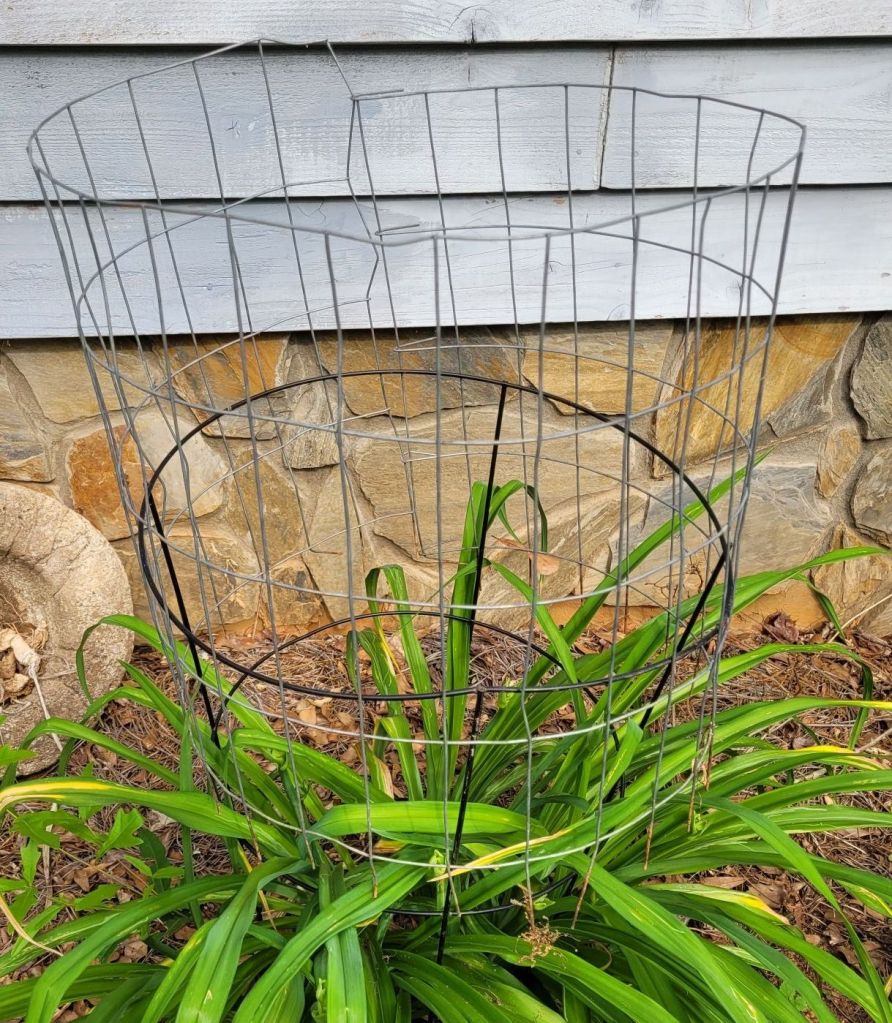
I also use tomato cages and a hanging fence ring. Things start looking a bit messy this time of year, due to my using any old thing on hand to inconvenience our hungry herd.
HEAVY Tomato cage and fence ring
They eat daylily and Asiatic lily buds before they open. They behead all sedums be it new foliage or blooms. This year I was shocked to find an entire Tiger lily topped off. They usually leave the tigers alone.
Beheaded Tiger lilies. Bummer
I am pleased that my hips, knees and shoulder allowed me to work all day. I am sure they will not allow me to sleep tonight as punishment.
I hope all this will save my blooms. I am too old to battle a big herd of hungry deer, but I am not out of the fight yet!
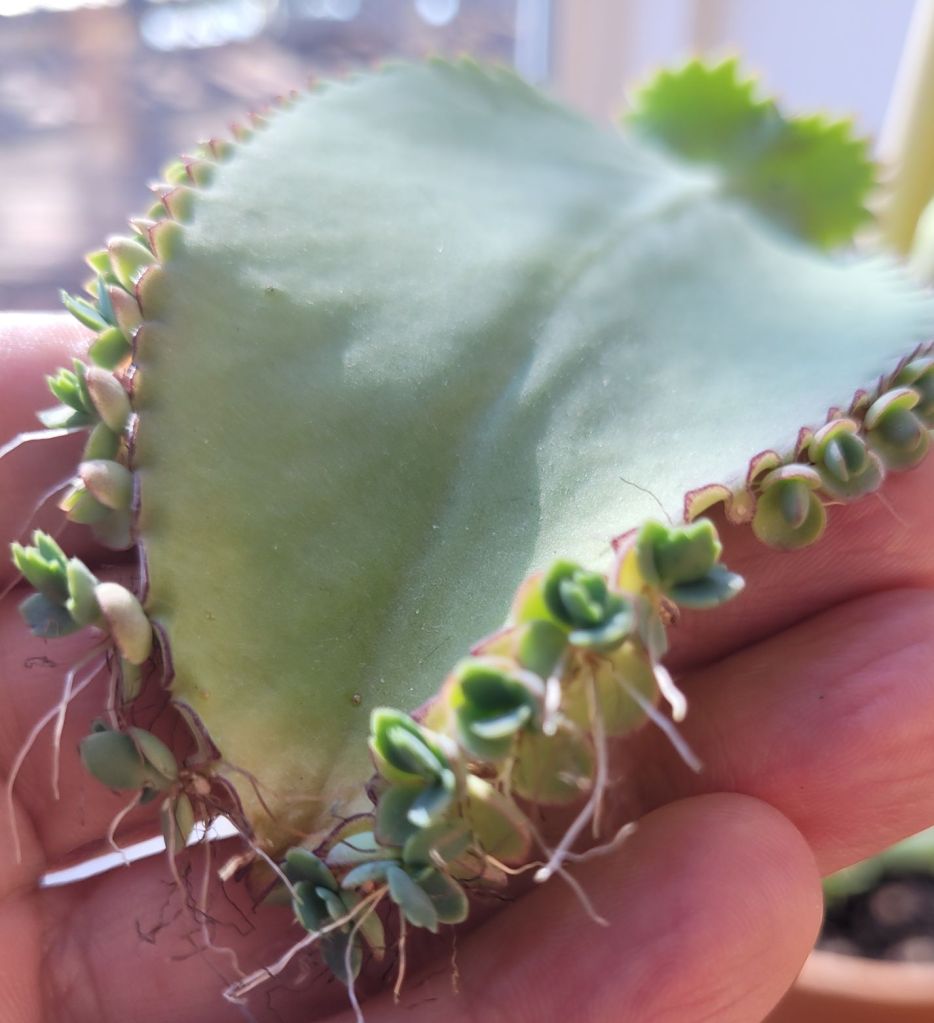
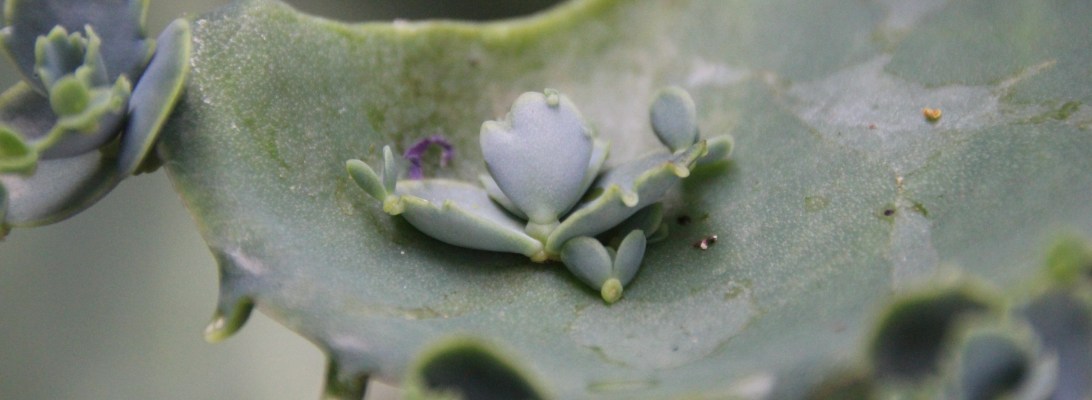
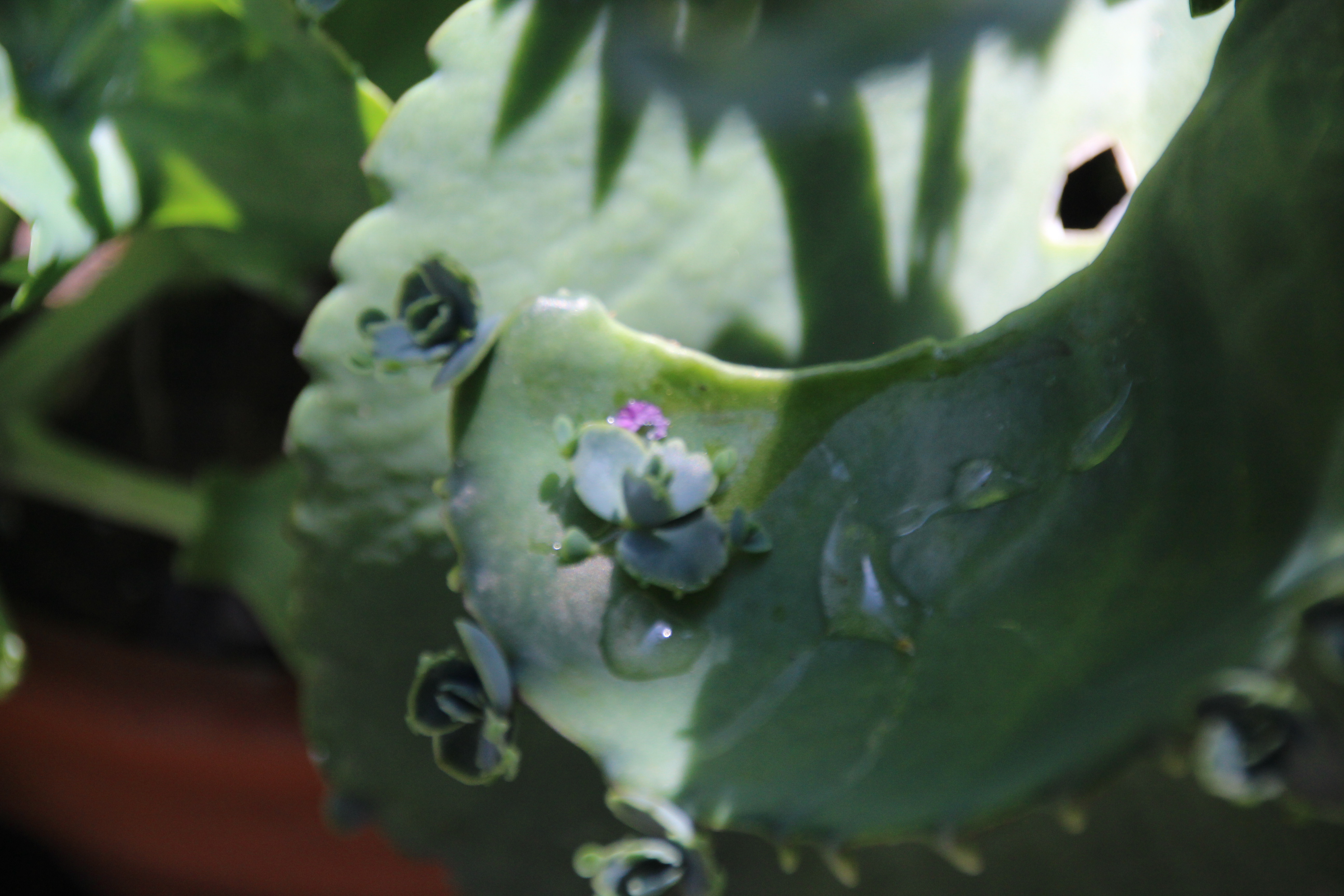
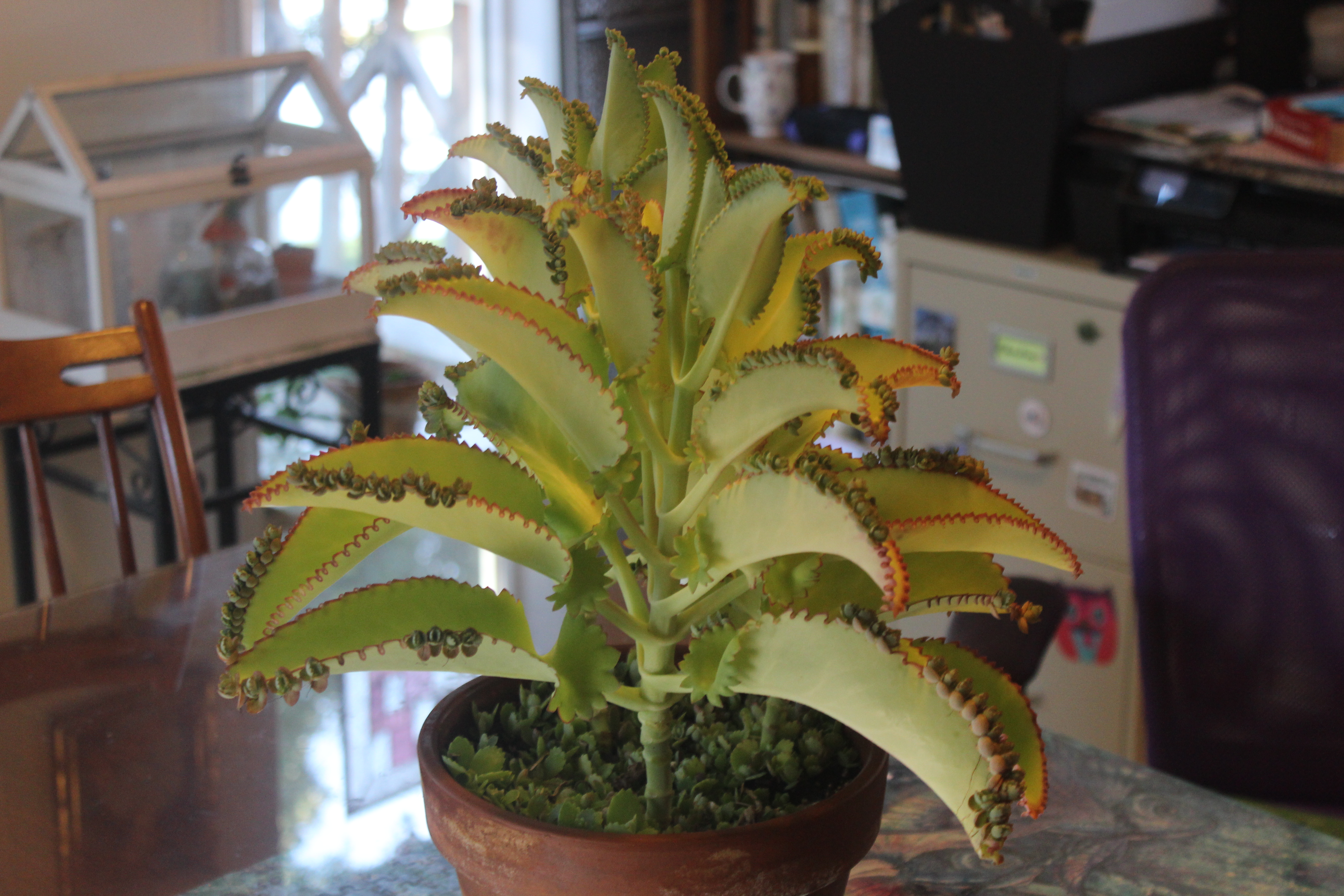
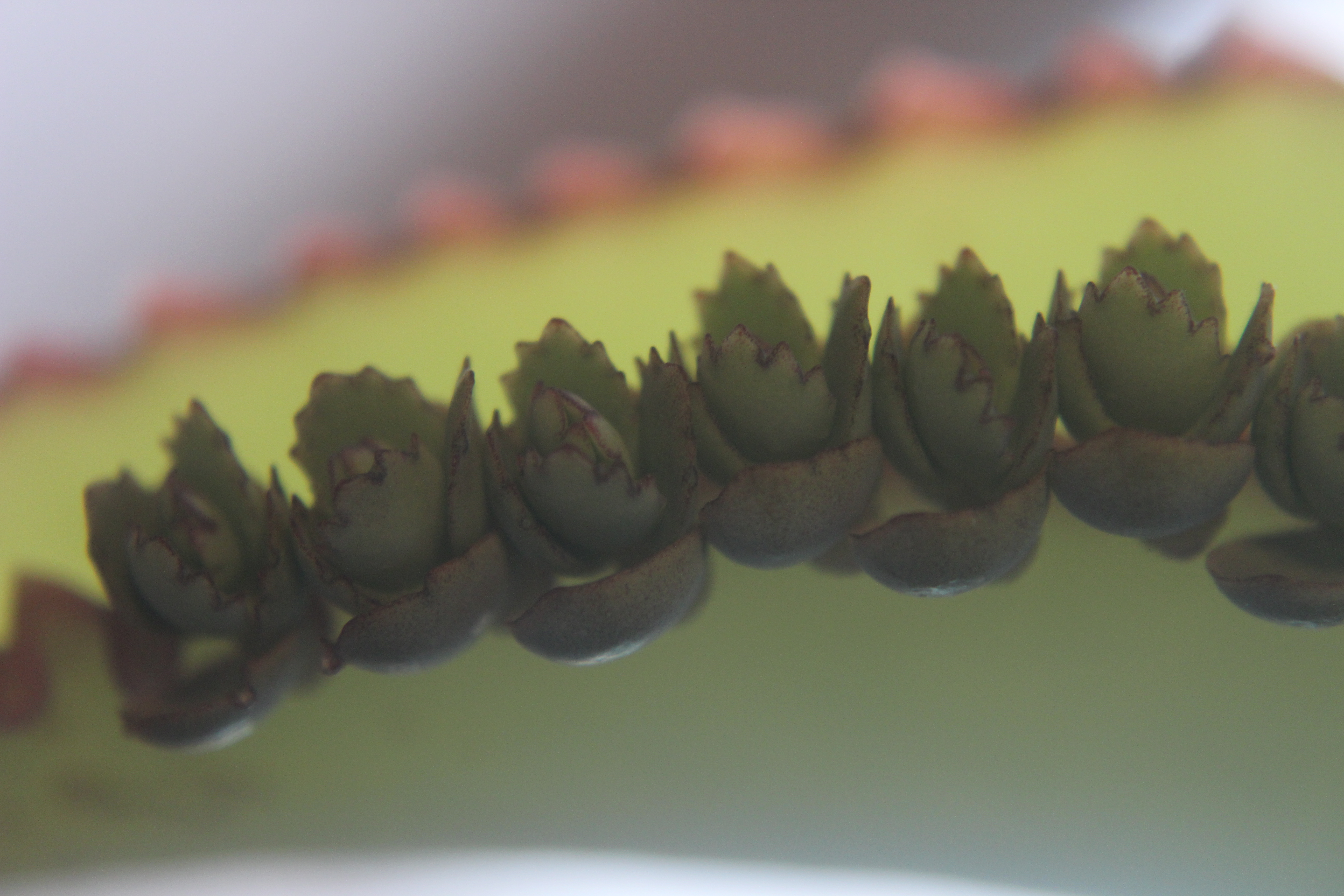
I grow both types of Mother-of-Thousands for their big, showy foliage and sweet, little leaflets along the leaf margins.
I do not bring all the parent plants inside for the winter. It is much easier to pull off leaflets to grow for next spring.
I just toss these in pots with other plants that I do haul inside. THE tiny plantlets get bigger over the winter. Then I repot the best ones in spring.
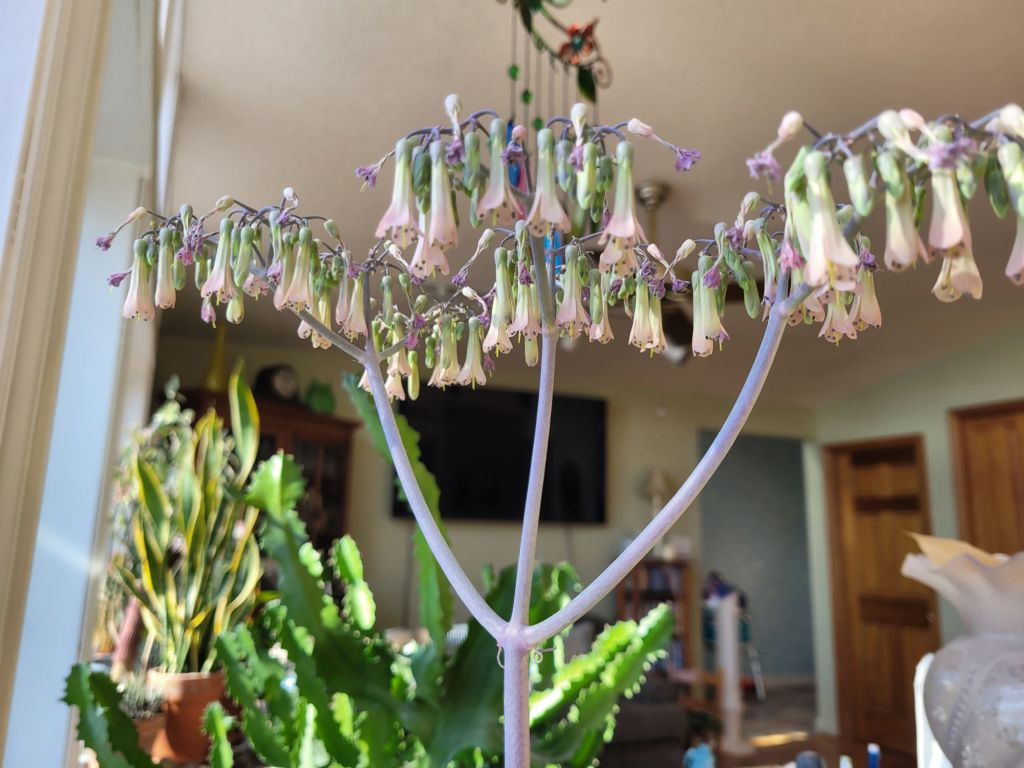
Sometimes I bring in a parent plant or two to watch it bloom. This is Kolanchoe laetivirens. It has grayish orange, bell-shaped blooms hanging down to form its lovely candelabra.
Kolanchoe laetivirens
Please note the leaves may be toxic to pets and children. Also, if you live where there are few freezes it can be invasive.
It is August in the south. That means that most plants constantly scream for water. Even though we have had many rains here, it is not enough for the pots. I cannot ignore a wilting plant. It would be like ignoring the cries of a hungry baby.
There is a lot of screaming going from my potted plants now. I will be sharing the ones that are not needy in this post. That would be the sedums. They grow without fuss and bloom when all other plants are closing down.
One of my favorites is Burrow’s Tail/ Sedum morganianum. It has a pleasing gray-blue color that contrasts beautifully with terra cotta or hypertufa pots.
I also appreciate the lack of neediness of herbs in August. They also thrive in dry heat. I group these together in full sun.
Why wilt yourself outside in August, when you can have plants that thrive in sun and heat without your constant attention?
I appreciate plants that survive and thrive on there own. Sedums do that.
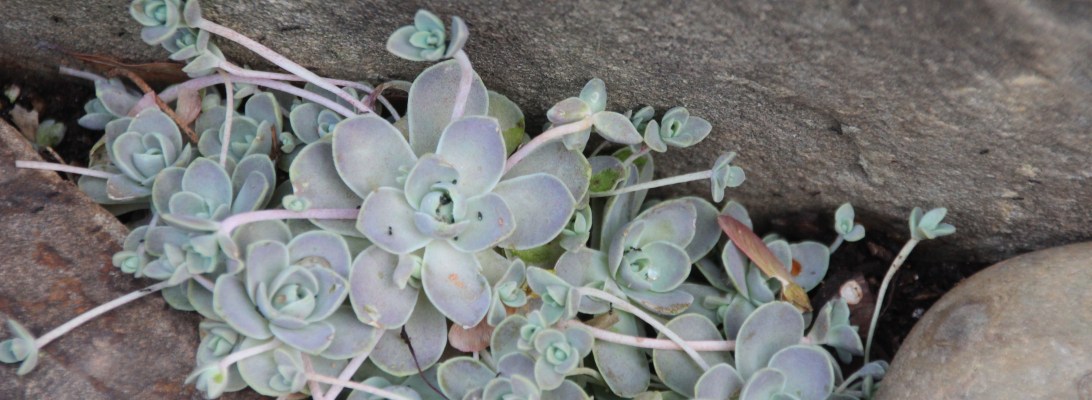
Chinese Dunce Caps
I have them growing in gravel and between rocks where they were dropped during moving and transplanting.
They have lovely, various shades of green, intricate blooms and unusual shapes.
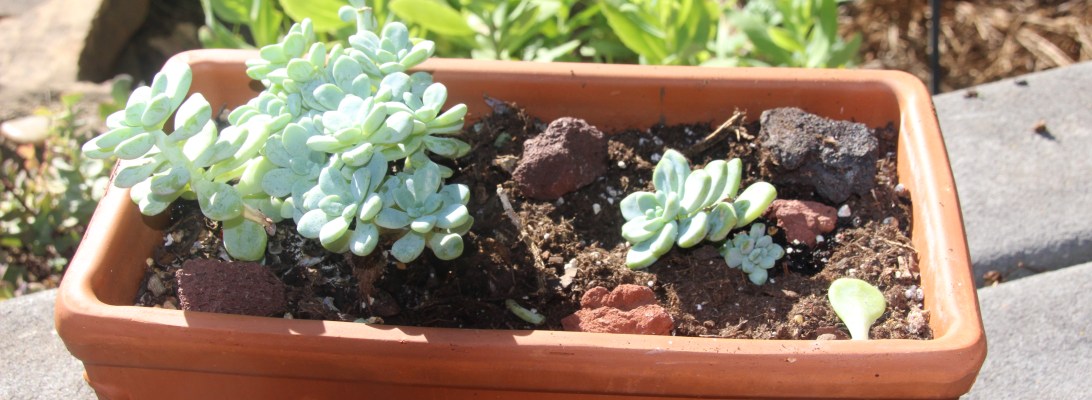
Blue Spruce sedum
If you have little time and/or energy but still want a garden, I suggest a small collection of sedums.
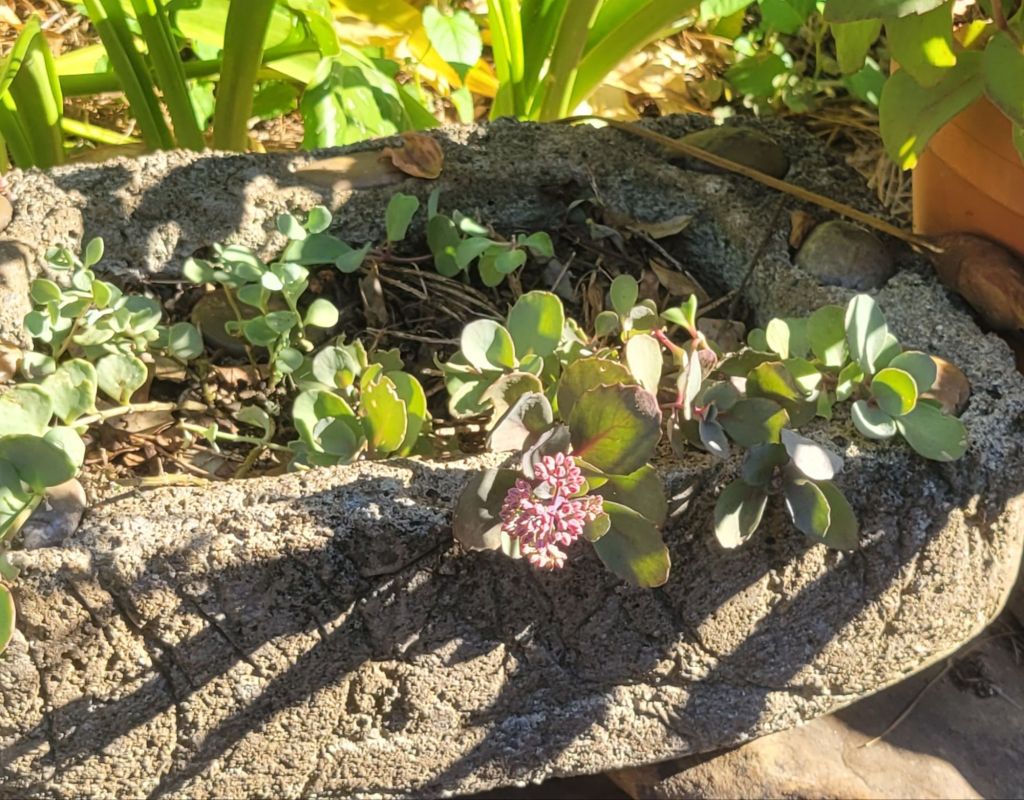
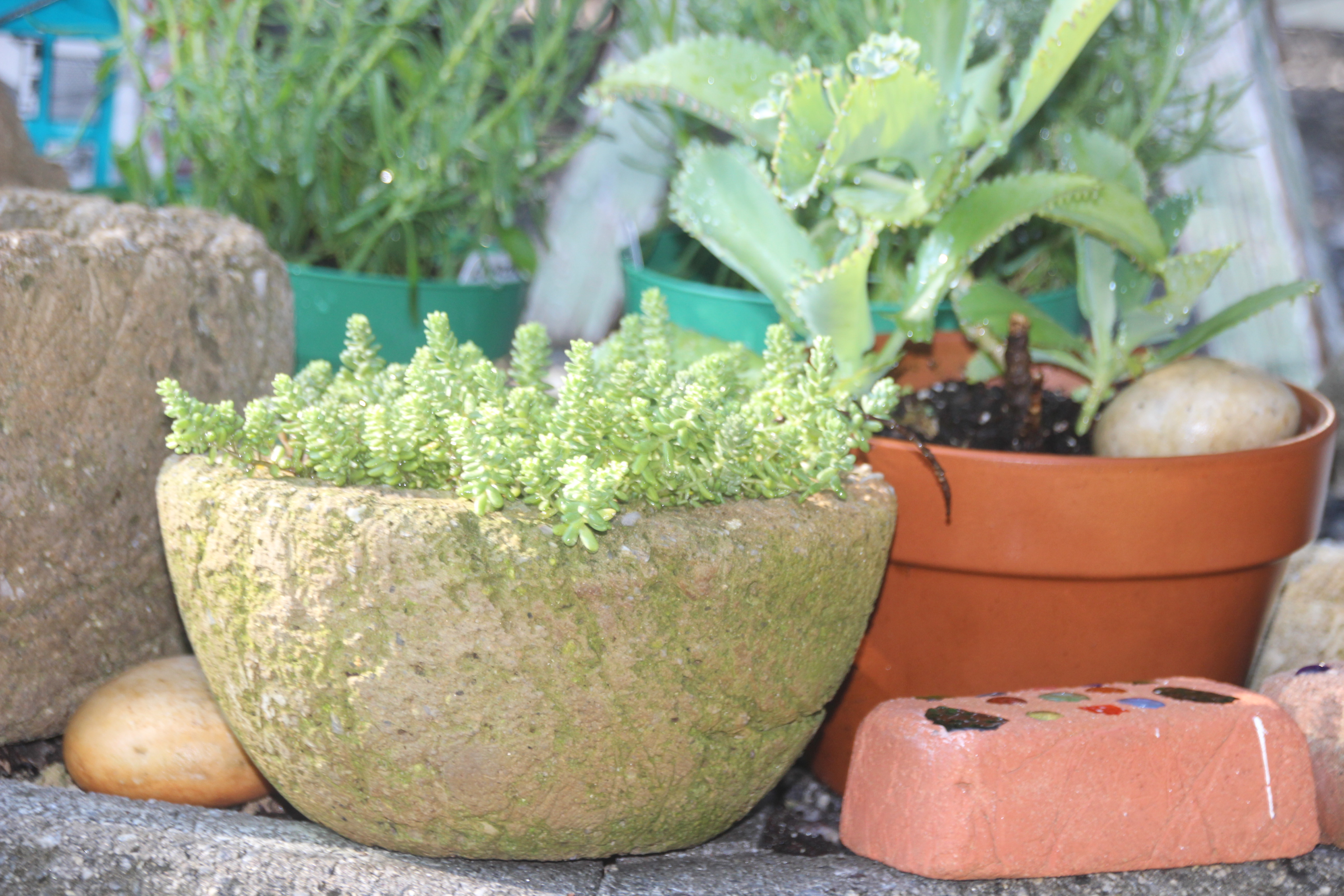
No-name sedums in a hypertufa trough
They change through the season and need very little care. They thrive in pots, troughs and walls. These can be kept close to sitting areas without them running wild and taking over. They are easy to move, remove and propagate.
I really admire the sedums for holding up to the August heat and then blooming afterwards.
I only water my small sedums in pots and troughs. The big plants in the yard are on their own.
I have three types with known hybrid names. The rest have been passed along or given to me without identification. These three are hard-working bloomers.
The hot pink one is aptly named ‘Brilliant’ because it really is showy.
‘Brilliant’ sedum
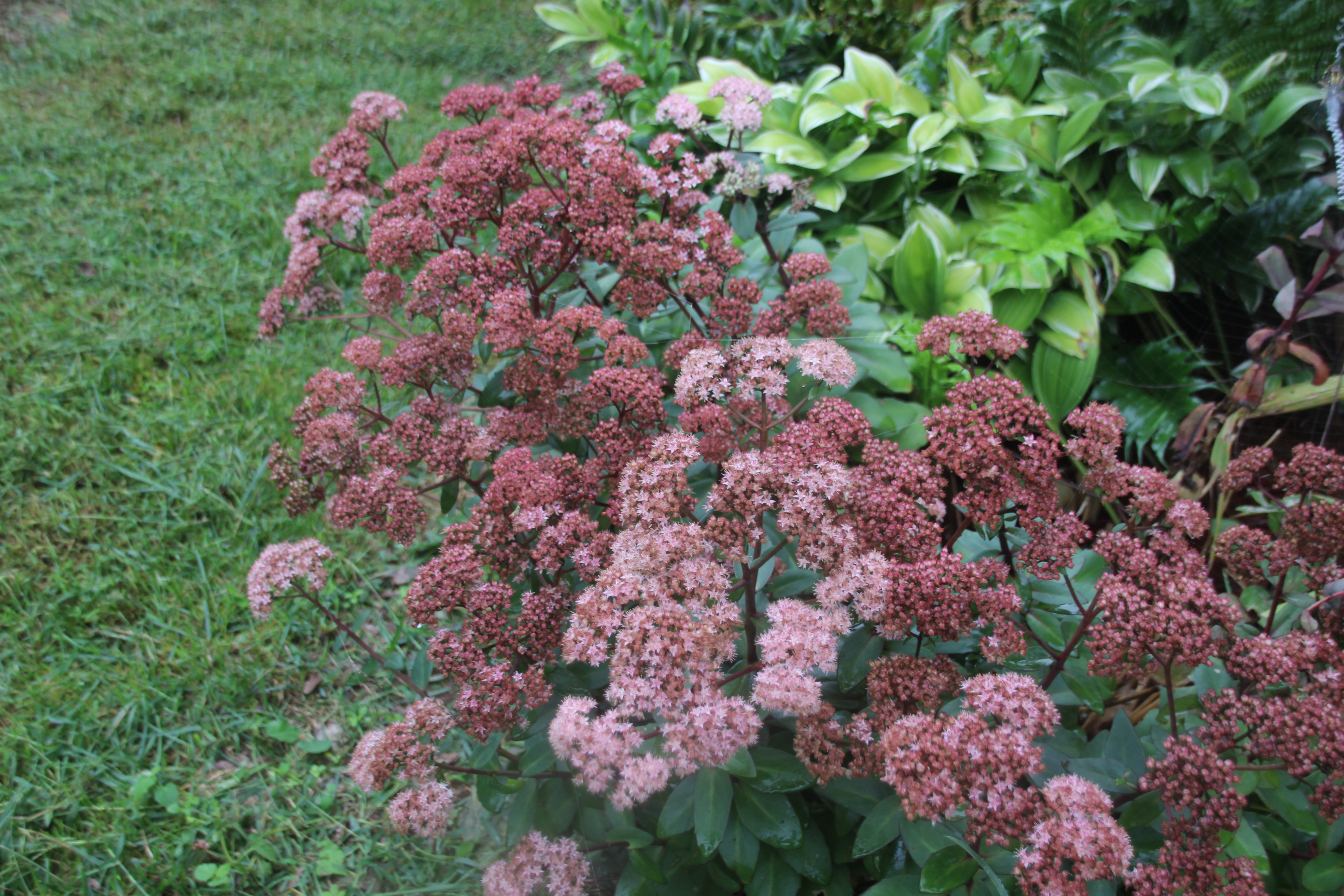
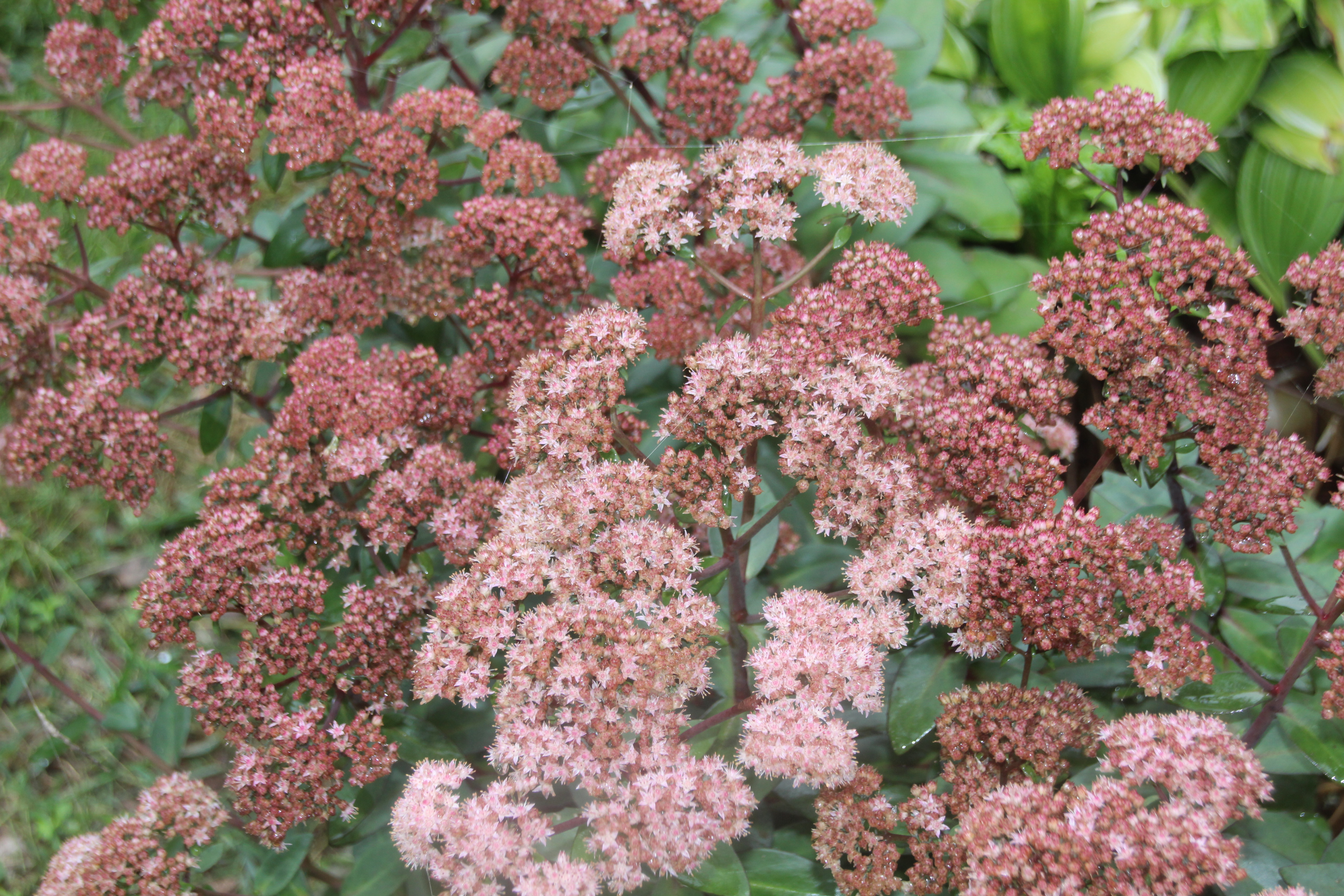
The more muted salmon, darker hybrid is ‘Matrona.’
‘Matrona’ sedum
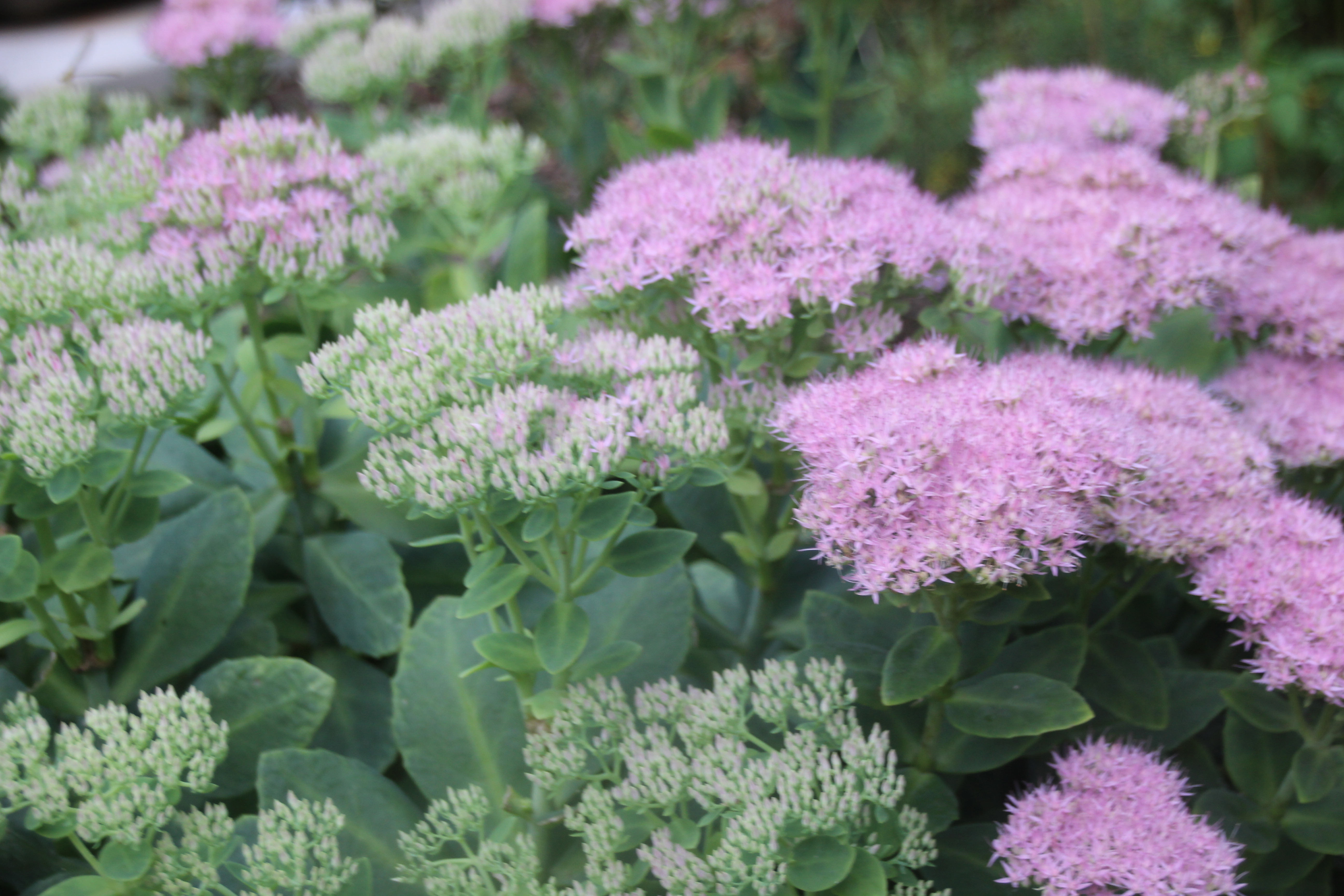
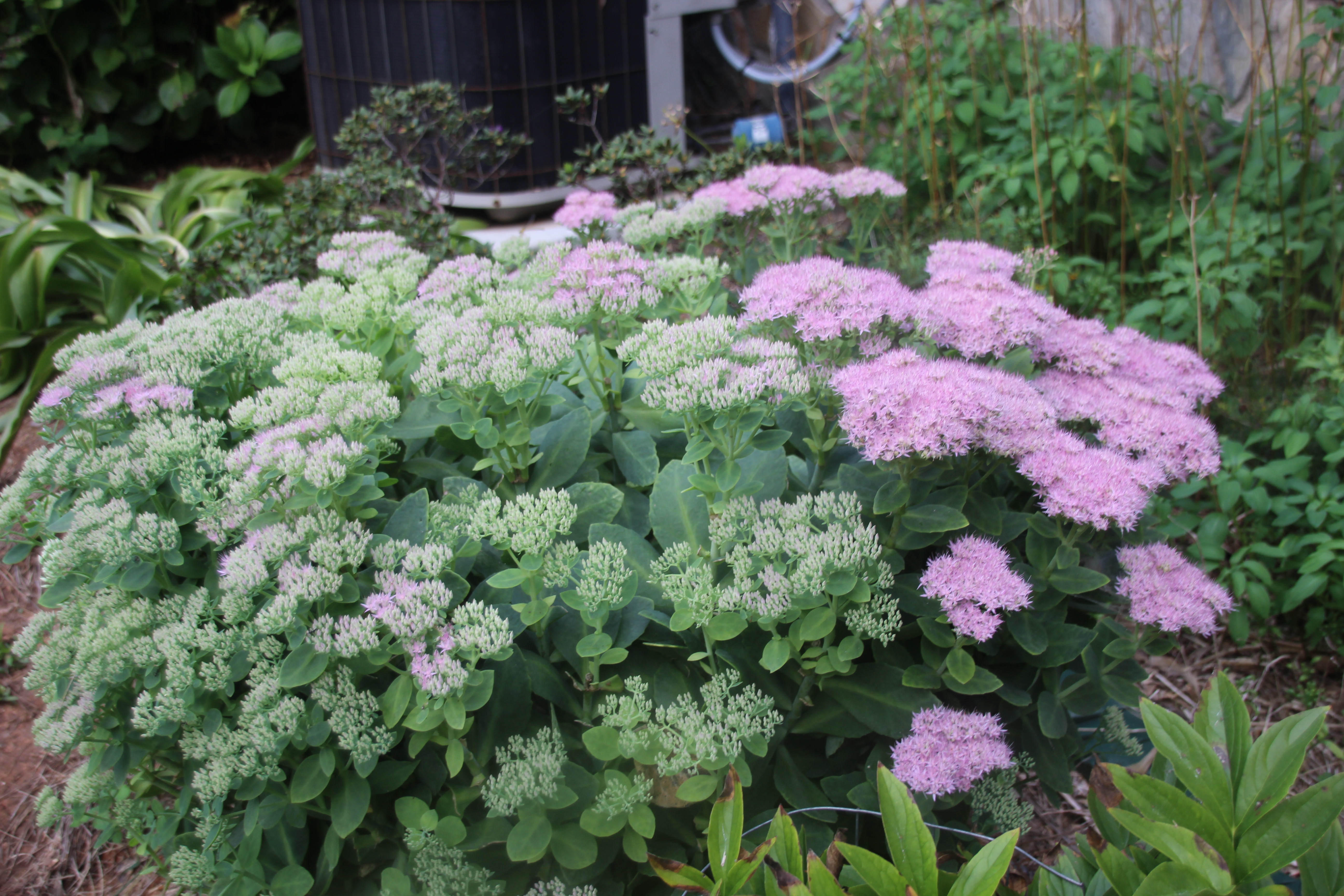
The one I have had for several decades is ‘Autumn Joy.’
This plant is two-toned because the deer ate half of the shoots earlier in the summer. It recovered nicely.
‘Autumn Joy’ sedum
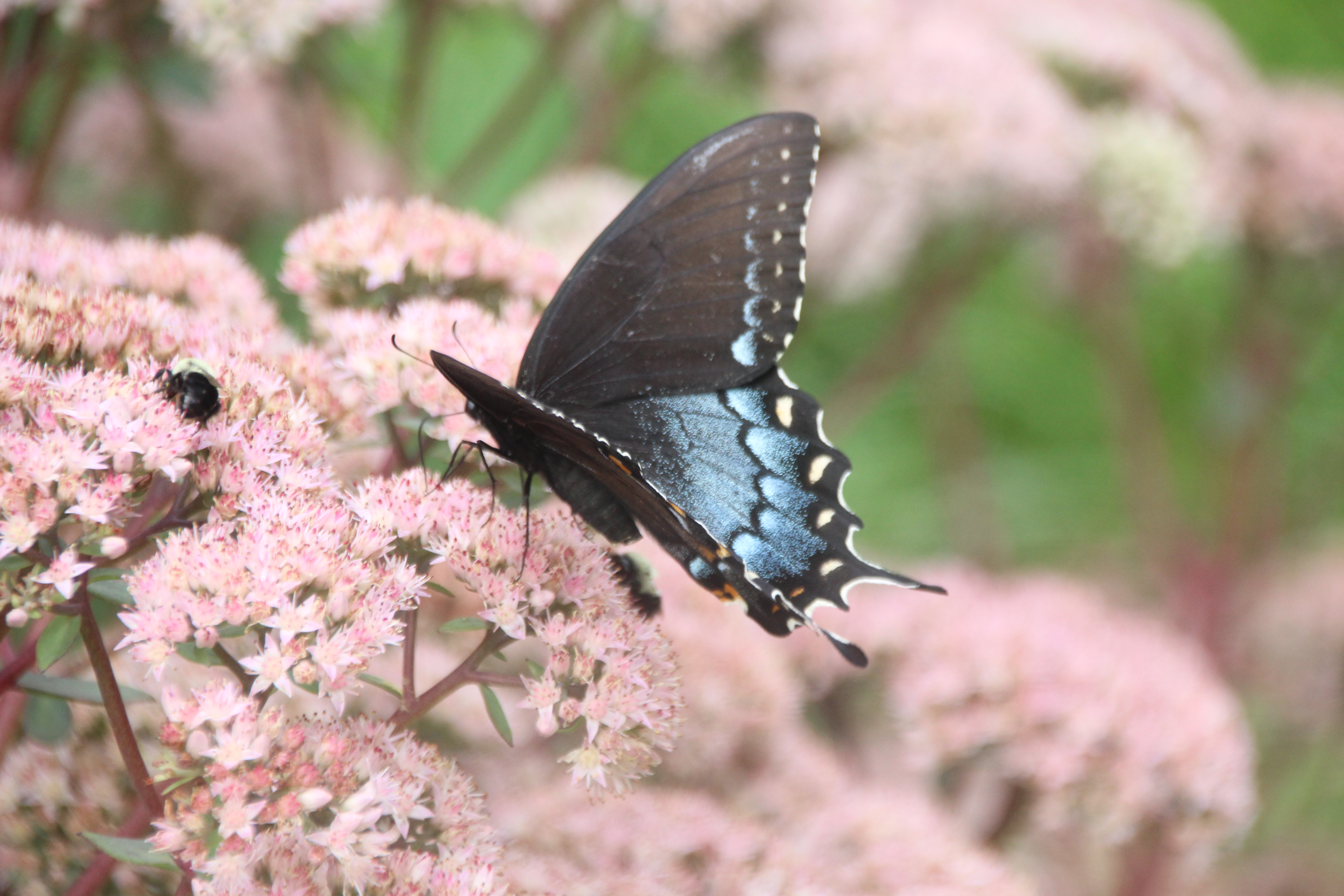
These three are covered with bees, wasps and butterflies all day long.
Their flowers are important to pollinators who still need food after most flowers have faded.




















 floweralley