Shovel Love

If you think loving a shovel is extreme, think of the last time you hated a shovel. I have broken quite a few. You have to be tough to survive here. I need tools I can count on.

My hip is painful right now, so every step is measured. I try to limit my ups and downs from the ground, also. I sit in my flower beds to work, usually on a disc sled or cardboard.

I took two diggers out and settled in for some serious weeding. The short handled trowel had a damaged handle, but getting another required a trip down the hill and back up the hill, so I made do with it. The long-handled trowel was purchased ‘on sale’ in the off season. I should have known it was a too-good-to be-true price. Long-handled trowels give the leverage to lift deep weeds out of the ground without damaging the plants nearby.
The blade BROKE OFF on the second dig. The price tag was not even dirty yet and the shovel was broken. Thanks but no thanks Kent and Stowe. I will take my $2.49 elsewhere! Ha.

I researched long-handled trowels and ordered two. One is made in Japan the other in America. Each costs about ten times the price of the piece of junk mentioned above.

My first digger arrived. It is made by Ishiguro Kinzoku Co., Ltd. Its handle was shorter than I expected. Its blade was a bit bigger than expected. I used it all day yesterday. I am brutal on myself and my tools in the garden.

This is now my favorite digger. Perfect for digging up ten thousand bunches of Star of Bethlehem. The wider blade is great. The shorter handle allowed me to push on the end with the palm of my hand. This gave me more power.

Yes folks. Flower is in love with a shovel.

No worries. I will use the blade-less handle to dig dandelions. We throw nothing away here.

FLOW

Biltmore Conservatory Scenes

I am a plant enthusiast, so I tend to focus on each individual plant.

I do notice when plant groupings and arrangements are done well.

Here are some scenes from the Biltmore Conservatory that I appreciated.

This mixture of cacti and succulents in pots across the brick floor gave a lovely view of the various
plant shapes and textures.
This is a bamboo bed with pillows accentuated with tiny bromeliads.
This vintage mantle seemed to be in an abandoned manor in a jungle.
Corners were softened with trees and tall orchids had a bright window background.
There was a theme with a twist everywhere. Here the bright orchid blooms were separated with interesting foliage plants.
Putting many tiny orchids together kept them from getting lost in a crowd.
Adding other plants to this huge hanging Staghorn fern gives it a chandelier flavor.

I always delight in seeing new plants and ideas when I visit Biltmore Estate in Asheville.

FLOWER

P.S. TOMORROW IS SPRING!

Orchids Under Glass

I am fascinated by orchids. Their various shapes and color patterns amaze me.

Here are my favorites from the Biltmore Estate Conservatory. CLICK in pic to enlarge.

I kept mumbling “Crazy Beautiful” as I clicked at every step. Nature is the best artist.

My next post will have arrangements and long shots. These folks are the best in the business.

Flower

Spring Under Glass

If spring has not sprung where you are, you may want to visit a conservatory.

I had the great pleasure of visiting one of my favorite places over this chilly weekend.

We swung by the conservatory of the Biltmore House in Asheville, North Carolina.

We drove straight past the mansion to the gardens.

I will share only my favorite photos of plants in a collage. The orchids will be in a separate post.

CLICK on an image to enlarge it if you wish.

I did encounter one fairy on the grounds. She agreed to have her picture taken.

It was a marvelous afternoon under glass. I enjoyed my sample of spring at Biltmore.

FLOW

My Amazing Camellias

The blooms always stop me. I have to pause by each shrub. I must touch a flower.

White By the Gate is blooming for the third time since February.

Professor Sargent’s blooms are too heavy for its limbs.

Each looks like it belongs on a lapel, perfectly round and tight with petals. Just add a pin.

Professor Sargent Camellia

Perfectly formed. Too pretty to pick.

White by the Gate Camellia

I will take some to my mama if the freeze does not burn them brown.

How could something so beautiful just appear here? All I did was plant a twig.

If you are a gardener, you understand my amazement.

Miracles appear each day in spring.

Bringing me back to life.

Hold on folks. Spring is sneaking your way. HOORAY!

Flow

My Chime Chorus

When the wind blows, I hear their voices.

Calling me back to the me before.

The strong me, the young me, the whole me.

The chime from my friend Mary Lynne sings of smiles and giggles.

Mrs. Robbie’s chime sings high notes of spring.

Each spring we gave each other a gift to celebrate Easter. (This chime was one.)

My cousin Mark’s chime sings of our precious grandparents and our sibling mothers.

All three sing together. Reminding me of love I had and hope I have.

Even in rain they sing. Even in darkness they harmonize.

In the worst storm they sing the loudest. Calling me through my past.

Singing me home to myself.

FLOW

Spotlight’s Spots

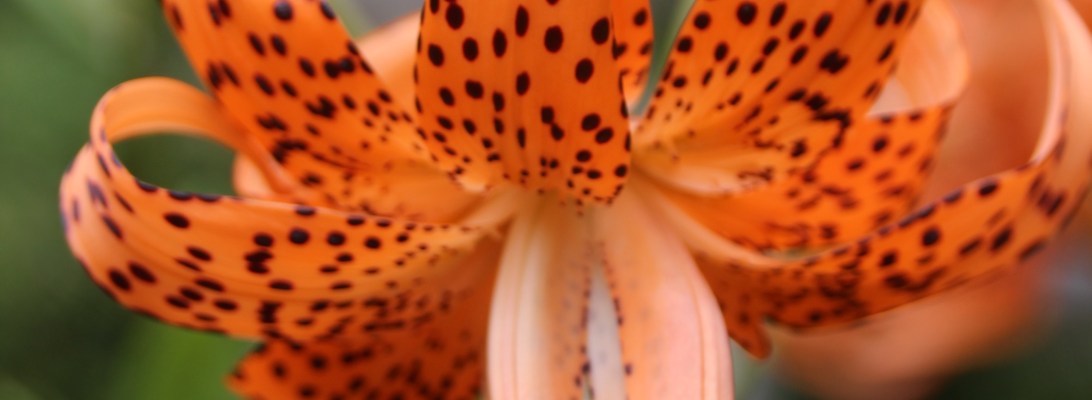
There is something about spots on flowers that intrigues me.

Spotlight Amaryllis

That’s why I love my spotted Amaryllis, Foxgloves, Tiger lilies and Stargazer lilies so much.

Spots on petals are not like dots of paint. Pigmented cells are in groups.

This gives the spots depth.

Spotlight’s spots under a microscope

This Spotlight Amaryllis has very well-defined spots due to the contrast of red on white.

All four of my new varieties are gorgeous this year. I hope they thrive in the garden.

FLOWER

Amaryllis All-Call

Here are this year’s amaryllis plants blooming together.

It is the first blooming for the two pinks in the middle.

The second blooming for the two red and whites on the ends.

From left to right are Santiago, Pink Surprise, Pink Pizzazz and Spotlight.

Amaryllis plants Santiago, Pink Surprise, Pink Pizzazz and Spotlight

My next post will feature Spotlight again. My first post did not do it justice.

This is how I survive winters. These beauties will go out in the garden.

They need a flat spot in full sun and a lava rock nest to thrive.

Flower surviving February