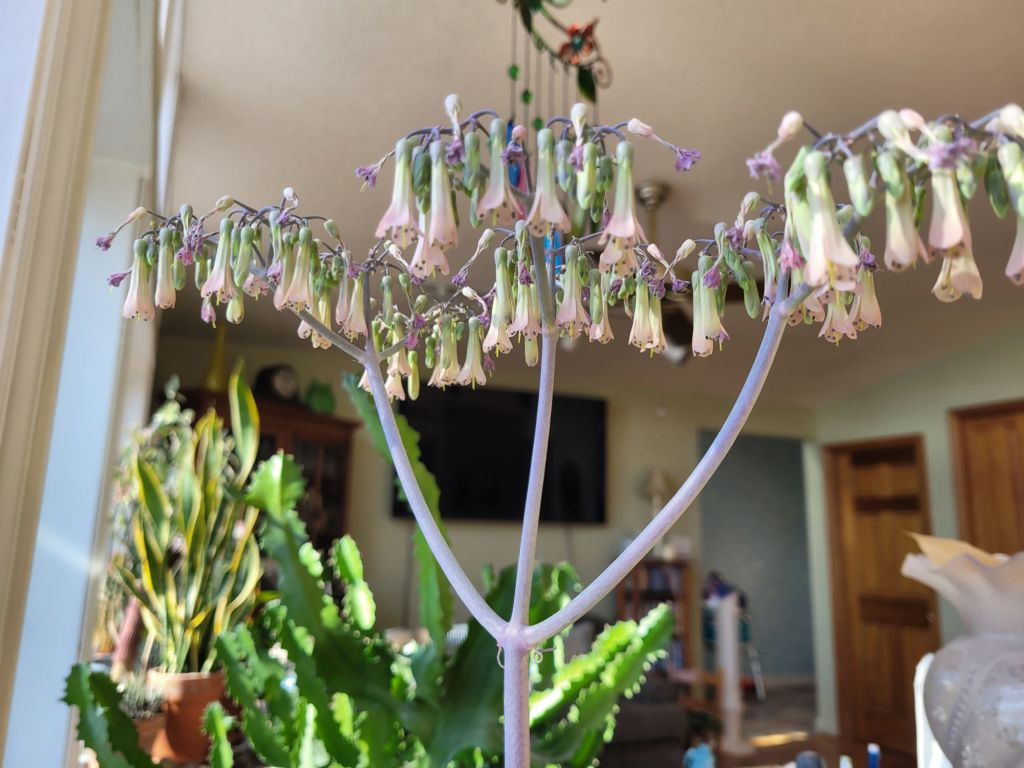
No, I am not referring to myself! It’s my succulent that is poisonous and was eaten anyway.
The deer demolished this entire pot of Mother-of-Thousands succulent that was on our bridge to the front door. This plant is supposed to be toxic! Daylilies are too but they eat those as well.
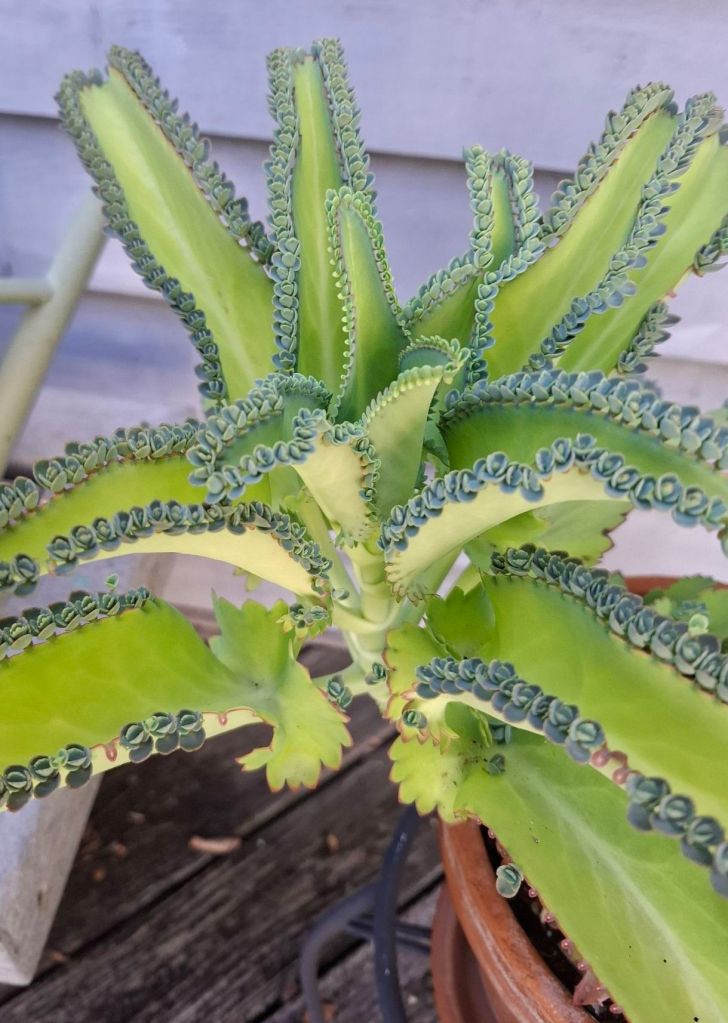
I think its latin name is Kolanchoe laetirvirens. The internet tends to mix up this ‘Mexican Hat’ plant and Mother-of-Millions/’Alligator’ plant (purple spots). They do not look the alike except they both have plantlets on the margins. My plant books are at Wildwood, so this is my memory talking.
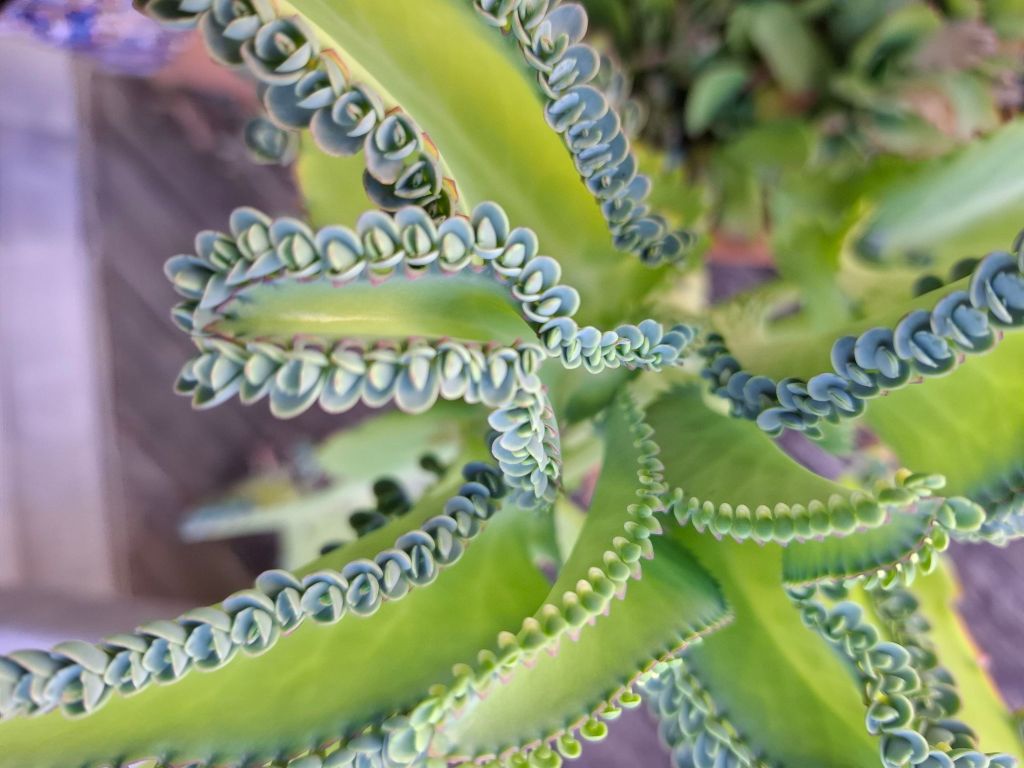
I moved what was left of the eaten plant onto the deck in June. It has recovered nicely. I hope the deer revovered as well. Kolanchoes thrive on neglect.
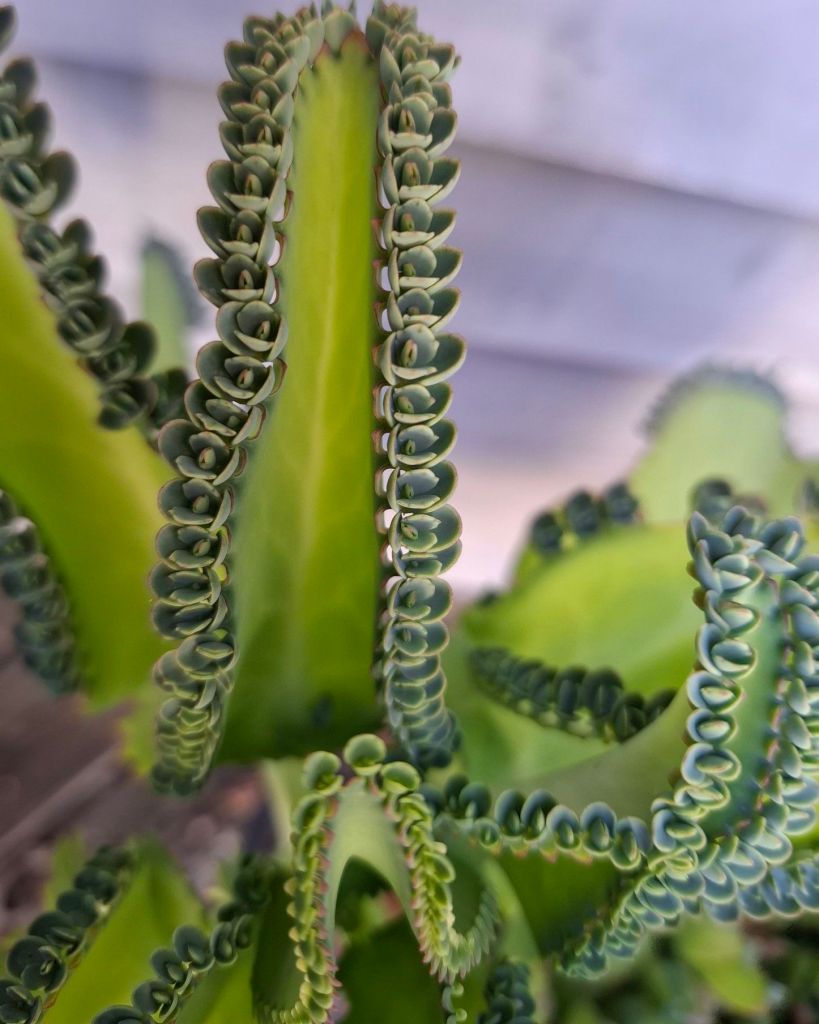
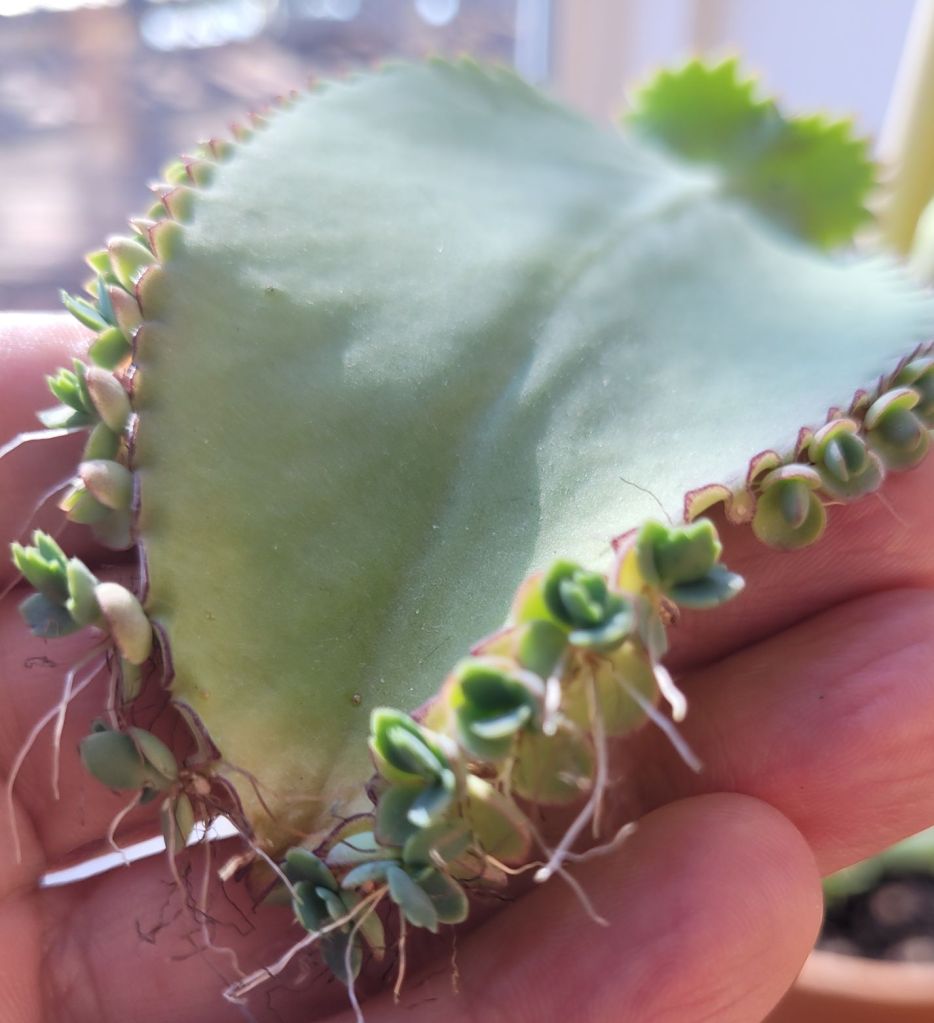
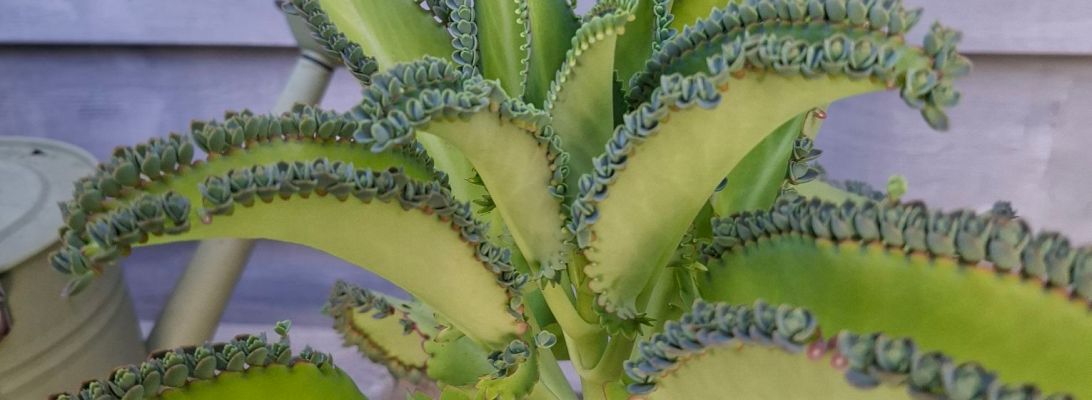
The plantlets along the leaf margins are perfect rows of clones. They look like tiny green roses.
I will bring in this pot in as my “stock plant” for the winter. I also toss some of plantlets onto a fresh pot of soil to root and grow.
Even small plants form babies along their margins.
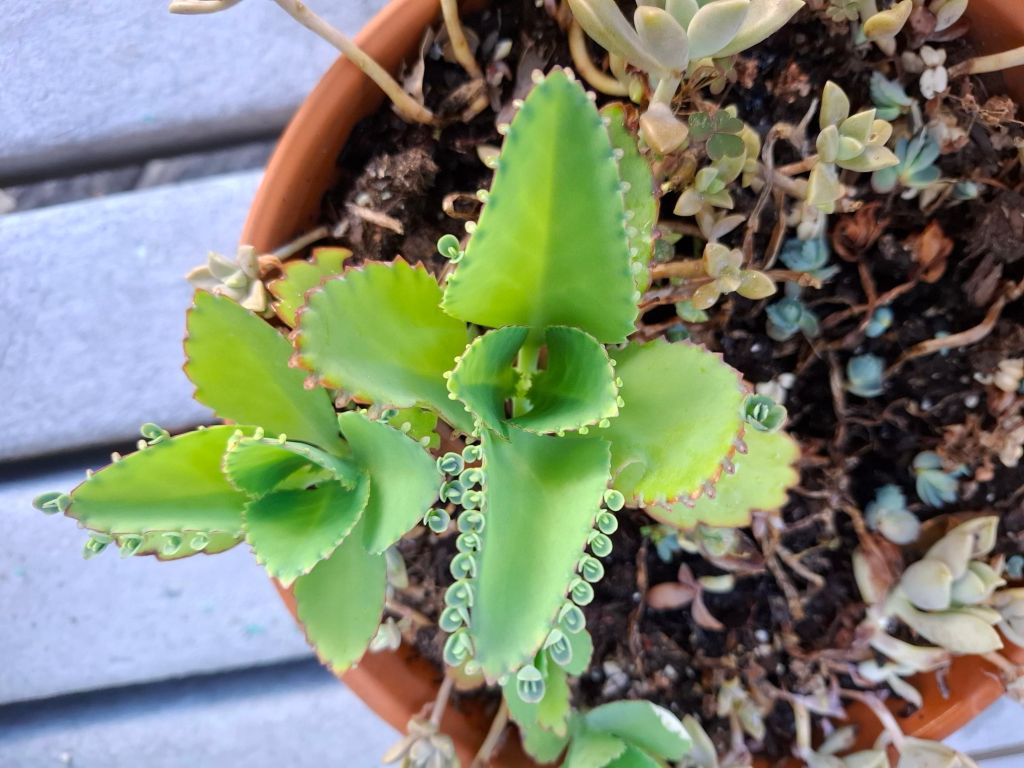
If you have pets or children that taste plants, you may not want this one in your house. Especially since it drops plantlets that could be eaten, even if the pot is out of reach.
FLOW