Jack-o-Lantern Plant

I visited the lovely North Carolina mountains this week to enjoy the fall leaf colors.

Fall leaves in NC.
Fall leaves in NC.

The weather was perfect. The colors were beautiful. We drove over the Linn Cove Viaduct and saw Grandfather Mountain.

20151021_134230

While we were there, one of my parents’ neighbors, Glenda, brought over some cuttings of a plant in her yard.

She wanted to share it with us. She said it was a plant that she had gotten from her aunt.

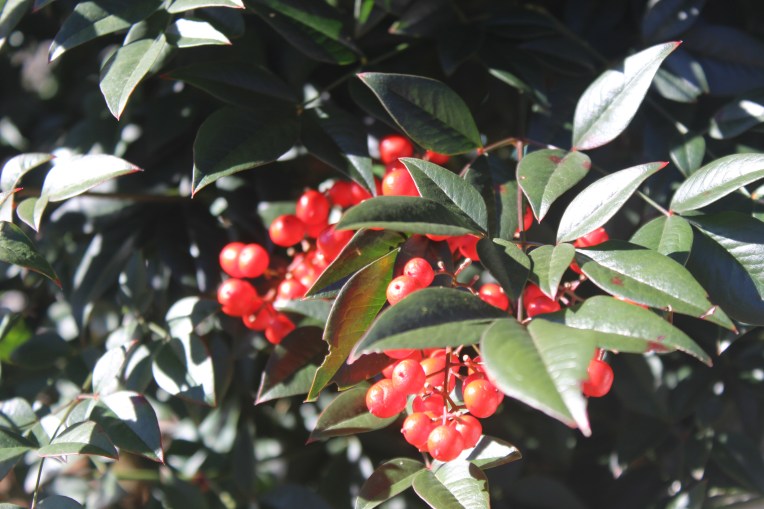
She called it a Jack-o-Lantern plant. It was the perfect name for these fascinating papery pods.

They are bright orange and resemble Chinese lanterns.

Physalis alkekengi
Physalis alkekengi

The outer husk of the pod is papery with and inner fruit that resembles a tiny orange tomato.

Fruit with the husk pulled back.

When you smash the fruit, the inside is sticky with small yellow seeds.

Tiny yellow seeds.
Smashed fruit with tiny yellow seeds.

Other names are Japanese lanterns, Chinese lanterns, winter cherry or bladder cherry.

This herbaceous perennial has white flowers called “Hozuki. ” (I have not seen these yet.)

The calyx around the bloom matures into the lovely orange lantern.

Glenda said this plant’s roots like to spread out, so I will keep it in a contained location.

I am so happy to have such an unusual plant to add to my garden.

I went to a garden shop on the way home. To my surprise, it offered artificial “lantern plants” for arrangements.

artificial latern plants
artificial lantern plants

I felt really pleased to have “the real thing” in the back of my car.

Follow the Flower.
Countdown to 32

All gardeners are busy in the spring.  Perennial gardeners also experience a frenzy in the fall when the first freeze is predicted. That for me, in my part of North Carolina, is early next week.

So for two days I have been furiously washing, watering, cutting and digging. This is crunch time. Any non-hardy, precious perennial left out to freeze may perish.

I have dozens of potted plants. These have to be moved in. Some stay upstairs and continue to look great. Others go to my basement workshop. Some of these basement-dwellers sit in the windows and continue to grow. Others are put away from the windows to go into their winter rest/dormancy period.

IMG_6287IMG_6289 IMG_6288

Then there are the plants in my son’s Koi pond, my husband’s banana trees and my daughter’s collection of avocado trees. I try not to get involved with these, but I usually need to assist.  I have a dozen cute little key lime trees that I bring in for safe-keeping. I have planted some out in the garden this fall, but fear they will not survive.

IMG_6291 IMG_6274 IMG_6276

I have thousands of plants in my gardens.  Some of these need to be dug up and stored in various ways. You must know when to dig and how to store them.

Then there is the matter of seed collection. I am guilty of doing this at the last minute. Seeds must be dried and stored properly or you will have bags of mold in the spring.

These tips may be too late for my northern friends, but you southern gardeners need to get busy. Let’s start with plants  growing in the garden.

Pineapple Lilies/Eucomis: Dig before frost, leave some soil on the bulbs, cut off the bloom stalk(save some seeds) slow down watering and allow to go dormant.

Wagons 001IMG_6277 IMG_6284

Elephant Ears: Let the stalks die back in a freeze, then cut off the limp and gooey stalks and bring in the “bulb.”

I usually cheat and cut some ears off each before the freeze so there are fewer mushy stems to deal with.

IMG_6293 IMG_6292 IMG_6279

Dahlias: Let the freeze “wilt” the leaves, then bring the bulbs in and store bulbs in vermiculite.

Hmmm.  Looks like we have some stow-aways on the purple dahlias!IMG_6253 IMG_6255 IMG_6271

Gladiolas: Lift before the freeze, but leave the leaves attached. Cut back after they turn brown. Sometimes I leave the old fashioned glads out and gamble, but my Orchid glads (Acidanthera) are coming in.

Morning Light 077

Japanese Sacred Lilies: I bring some of these in just in case we have a harsh winter. Since they are good luck, I figure losing them would be bad luck.

377

Fairy/Rain Lilies: These are planted in pots with other plants. The sweet things bloom during the winter.

IMG_3789close-ups 003

Now, let’s talk house plants.  You should NOT wait until the night of the freeze to rush these in to warmth and safety.  If you do, you may bring in some unwanted guests with them. Earwigs, spiders, millipedes, centipedes, ants, earthworms and even lizards like to take up residence in the plants and in the soil.

IMG_6243

You must encourage these little critters to move out before moving the pots inside. I remove all saucers from beneath the pots and generously flood each pot with water several times. I have found critters and eggs hidden in the saucers and in the holes of the pots. I do prevent larger fauna from entering pots from the bottom by covering the drainage holes with plastic needle-point mesh from the craft store.

Check plants themselves for nests and parasites. I love baby praying mantises, but I don’t want several hundred skittering around in my library. The same goes for baby spiders.

IMG_6241

If a house plant has gotten too big over the summer, I cut it back and root the cuttings.  These include hibiscus plants and vines.  It’s a great way to keep a favorite plant going and being able to share it with friends.

IMG_6244

So get busy my southern gardening friends. The countdown has started.

Follow the FLOWER.   Hurry.

Know the Name

I am a gardener, but I’m also a biologist.
Because of this,I want to know the name of the plants I find.
If you have ever used a dicotomous key. You know that you can answer one question wrong in the series of many questions and end up with the wrong class and family name. This means you have to start all over again to find the actual species name.
In other words, you can’t get there from here.

Manual of Vascular Flora of the Carolinas

I have a dicotomous key for plants in the Carolinas that is rather large. I have used it quite a bit over the years. There are also keys on-line associated with universities or companies that can be used. I struggle with these when I have to back-track.

There’s a new way to help find the name of a flower. It’s an app called Like That Garden. I have this on my phone.

IMG_6234IMG_6236

I have tested it out on plants at home that I know. You take a picture of the flower. The app scans the photo and comes up with a list of possible names and photos of those choices.  I think color is the main searching factor because several times a totally different shape of flower would appear as a choice, but the color was true to my mystery flower.

You then confirm that the apps’ picture is a match and it stores your pictures and location along with its data. I used this app to identify two wildflowers in Volterra, Italy.  Now my data is part of the information bank.

gardenphoto_14433658057201443365845808

gardenphoto_1443448205629ATT_1443620851753_1443448544825

The app keeps track of the plants I have identified in my phone with the date and their location.

IMG_6239

If you are like me in needing to know plant names, you will love this app. It has a huge bank of photos at your fingertips. You won’t need a ruler or to know the leaf venation nor arrangement. You just need to find a match for your photo. I even took a photo of a flower on my computer screen to see if it could identify it.

It’s like having a new toy.

Follow The Flower

Fresh Flowers for Sale in Italy

I have been reminded of a book about the flower industry this week
I have photographed many flower shops.
The book is Flower Confidential.
I will be doing a post about it soon.
Here is a glimpse at some high-end offerings available to city-dwellers who need their “flower fix.”
image

image

image

image

image

image

image

image

These lovely flowers are like living jewels.

Follow la Flower.  I have been Italicized!!!!!
image

Wild Wandering

“I’d rather be a tall, ugly weed.”

This is the last line of Julio Noboa Polanco’s poem, Identity.

Many of my posts have been about cultivated plants and flowers,

purposely bred, raised and carefully tended.

In Julio’s poem this type of plant is described as “watered, fed, guarded, admired, but harnessed to a pot of dirt”

Harnessed to a pot of dirt.

I have chosen to give some attention on Wednesdays to the wild plants

that are sometimes called weeds.

Not all weeds are wild and not all wild plants are weeds.

Weed is a term used to refer to a plant growing where it is not wanted.

Weed is also used as a verb referring to the removal of the unwanted plants.

This is not the case when using the slang term Weed to refer to marijuana/Cannabis/hemp.

It is possible to weed weeds while smoking weed. If you confuse these three you may end up in a bit of a jam.

So today, I will show you some tall weeds on the Alley farm the are far from ugly.

Mr. Alley and Mr. Alley taking a walk out back to see the
Mr. Alley and Mr. Alley taking a walk out back to see the “weeds” and butterflies.

These may be called wild flowers by people who appreciate their beauty.

A former post  “Weeds are the Champions” highlighted the resilience of weeds.

I would like to tweak that to say “Wild is the Champion” for this post.

Scollid wasps on Goldenrod.

These lovely plants were neither planted nor tended.

God is the best gardener.

rabbits,Cheraw, Portland, Blog 1060
Strong and free Ironweed.

I have nothing in my garden that compares to this vine.

rabbits,Cheraw, Portland, Blog 1082
Wild pea vine is not praised, handled nor plucked.

The butterflies love this tall Joe Pye Weed.

rabbits,Cheraw, Portland, Blog 1071rabbits,Cheraw, Portland, Blog 1079

I was a bit jealous that I wear myself out taking care of my “harnessed hybrids” ,

while all this beauty was totally maintenance free.

Spider having snacktime.
Spider having snack time.

Follow the Flower.
Noxious and Invasive Foreigner

Mulberry weed, Fatoua villosa, is the worst weed-foe that I have ever encountered. It is a survivor.
Mulberry weed
Mulberry weed

It has alternate leaves with spiked, microscopic hairs as well has hairy stems. Little “stemlets” and blooms come from the nodes where the leaf emerges from the stem.
If you break off the top of the plant, the stem “medusas out” and it comes back up as a little bush.

multiple stems from being broken off

The tiny white flower clusters ripen into purple pod clusters full of tiny seeds.

seed pods ripened purple

The seeds shoot out of the dried pods as you pull up the plant. You must get it before blooms ripen into pods.

“hairy crab” seed pods

20150913_185438

Do not throw these weeds on your compost pile.  If you do you will plant them next year. Even the tiny plants can set seed.

different sizes
different sizes

It is an import from Asia that piggy-backs into your plantings from nursery stock.

It is suspected of coming to the USA with the troops and equipment after WWII.

alternate leaves and blooms at the joint

It is described as noxious and invasive. These are not terms of endearment.

I usually try to find attributes for my local weeds, but this is an imported pest that ranks right up there with Kudzu.

Follow the FLOWER. Return next Wednesday for another visit with a WEED.