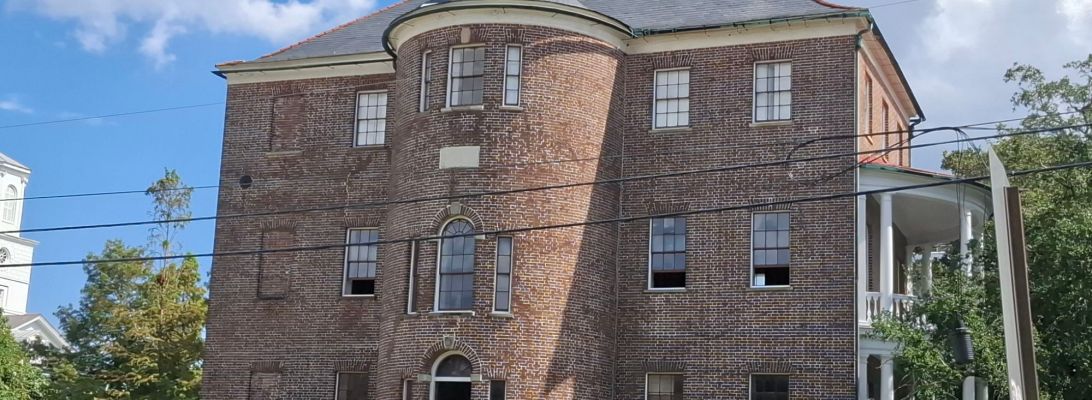
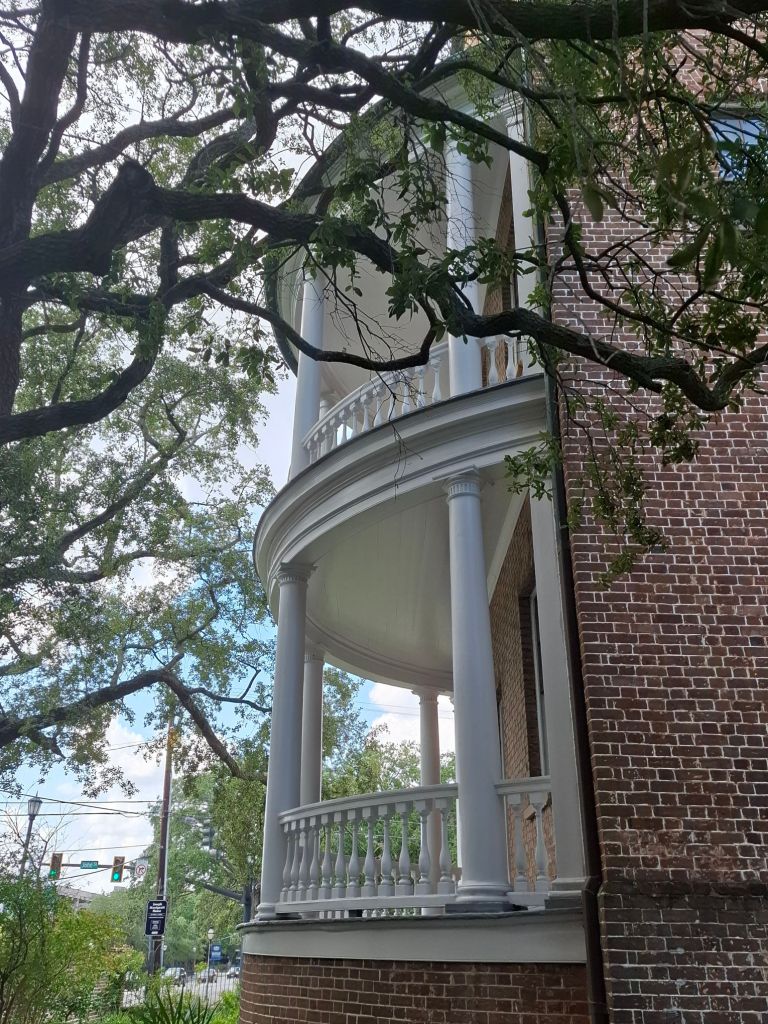
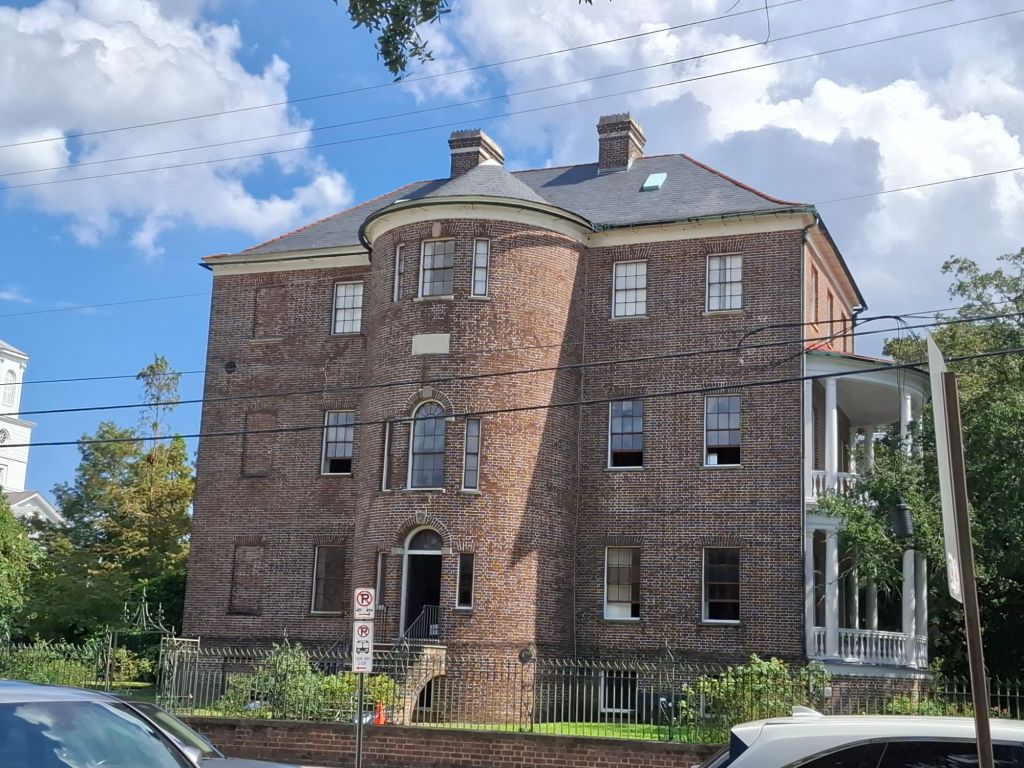
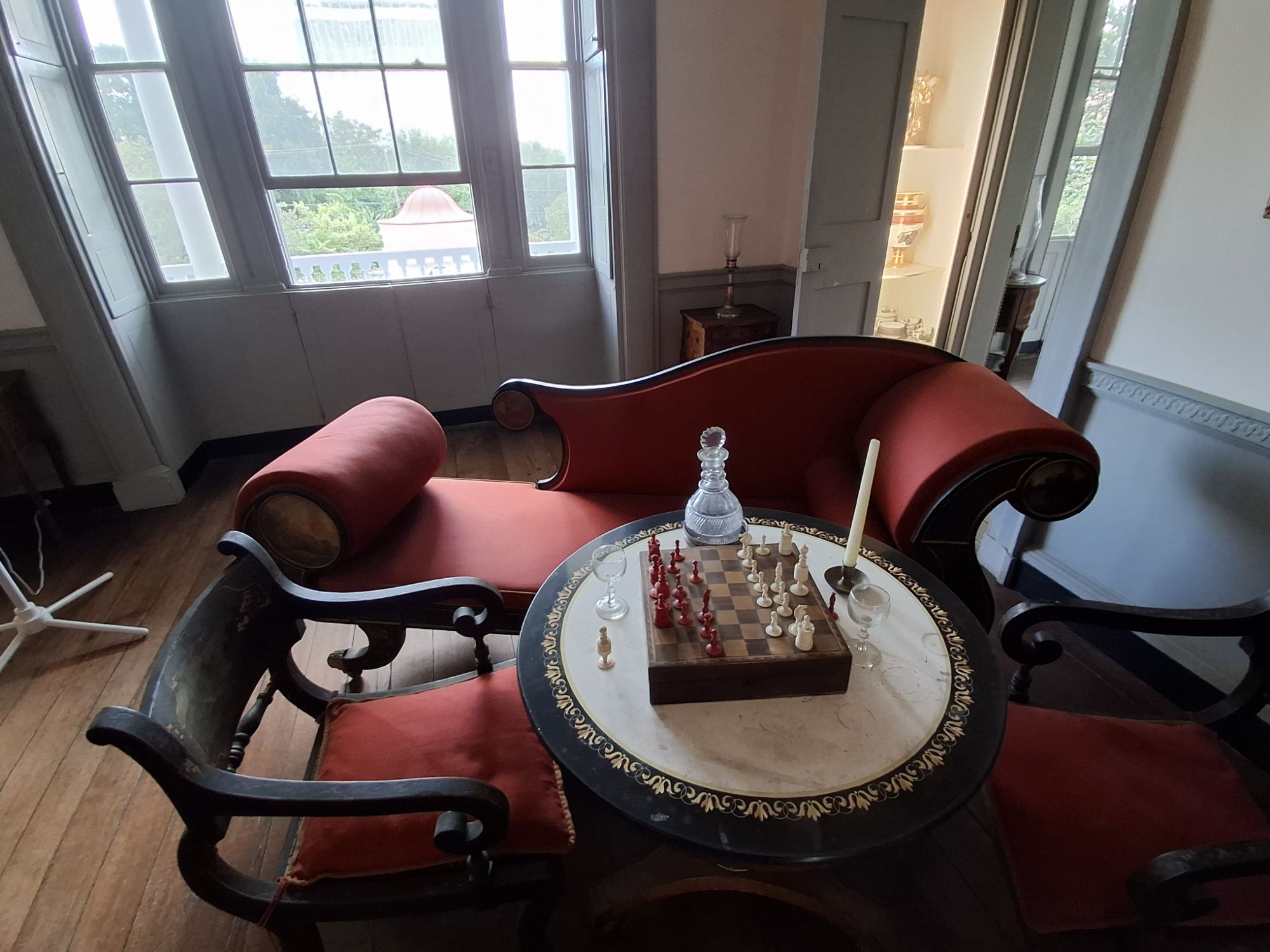
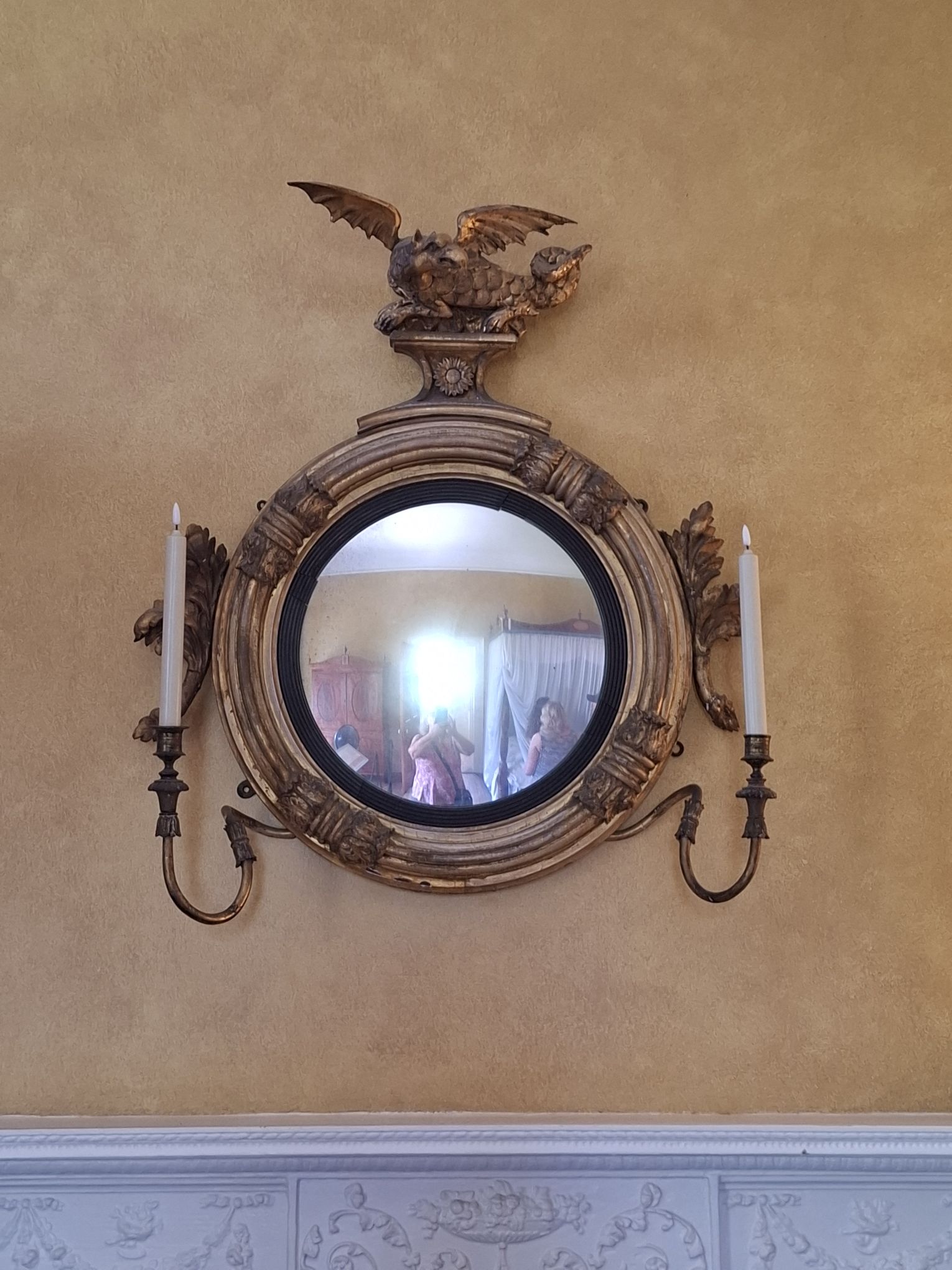
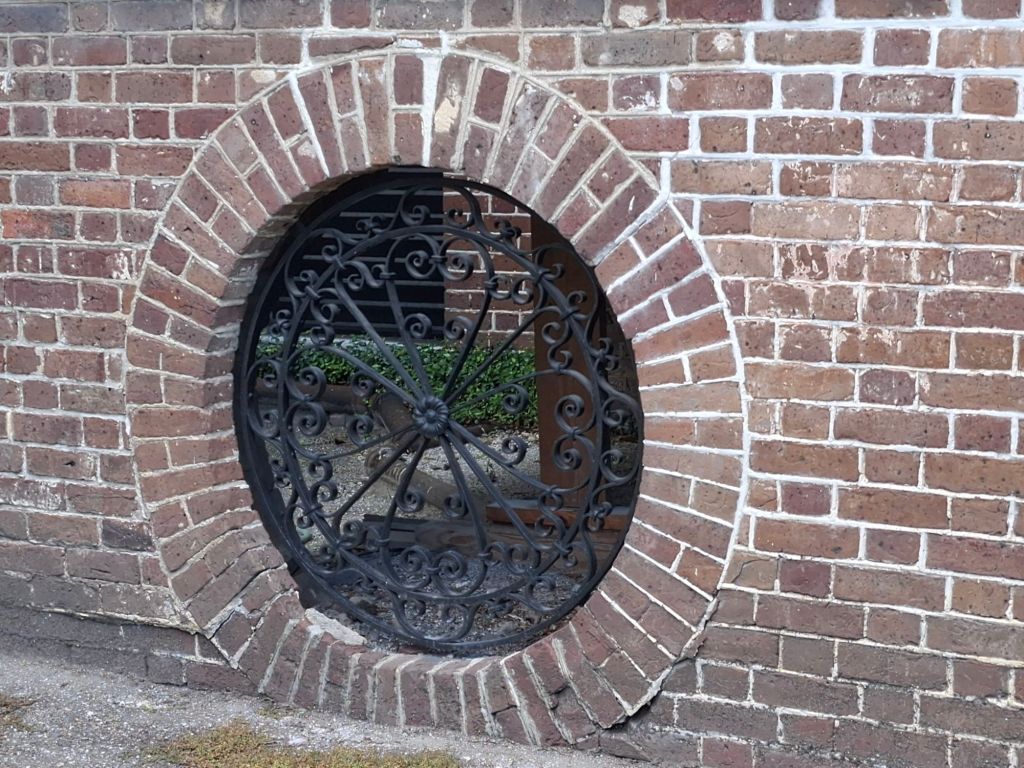
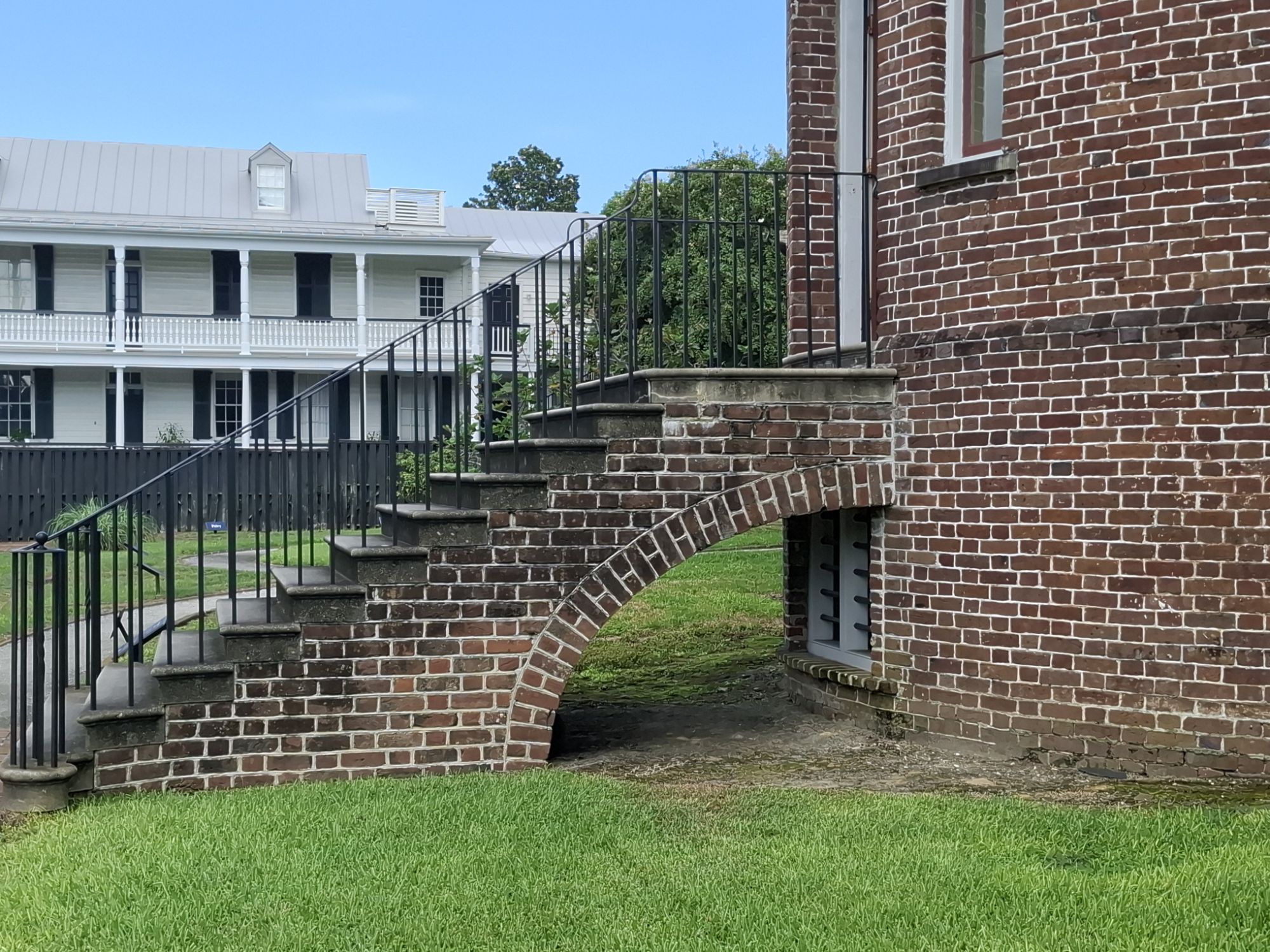
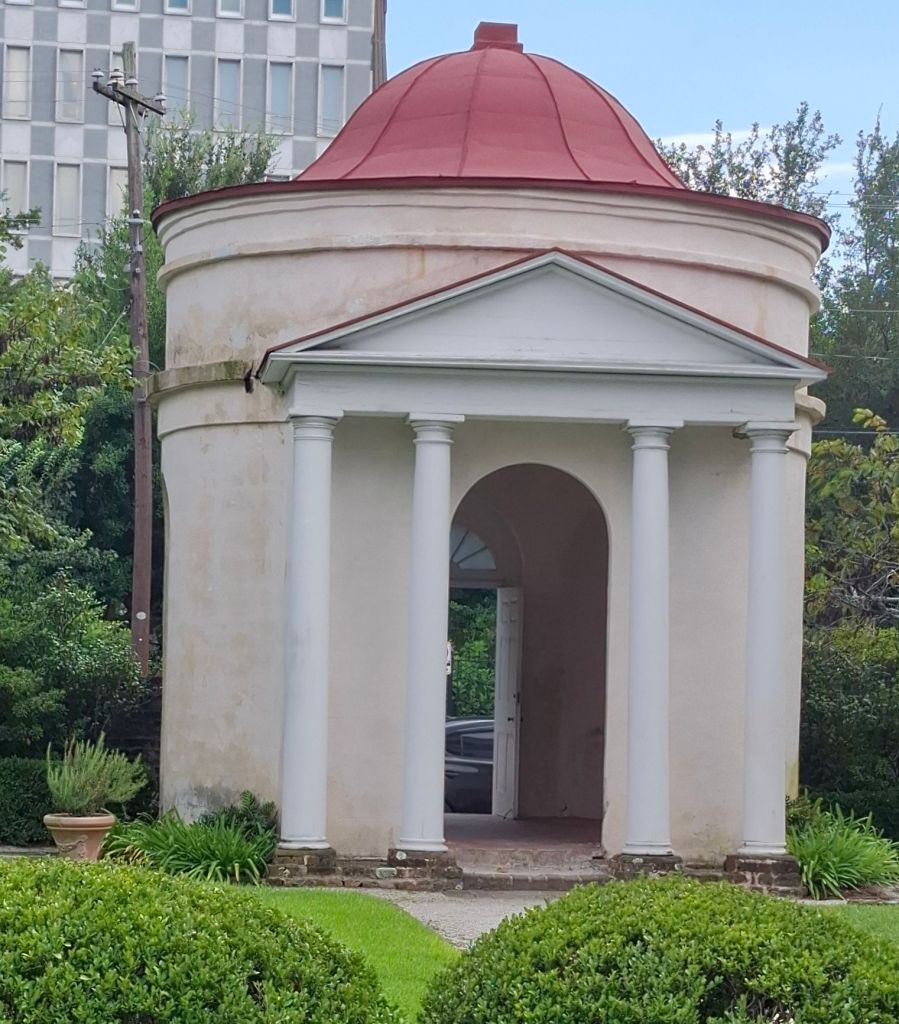
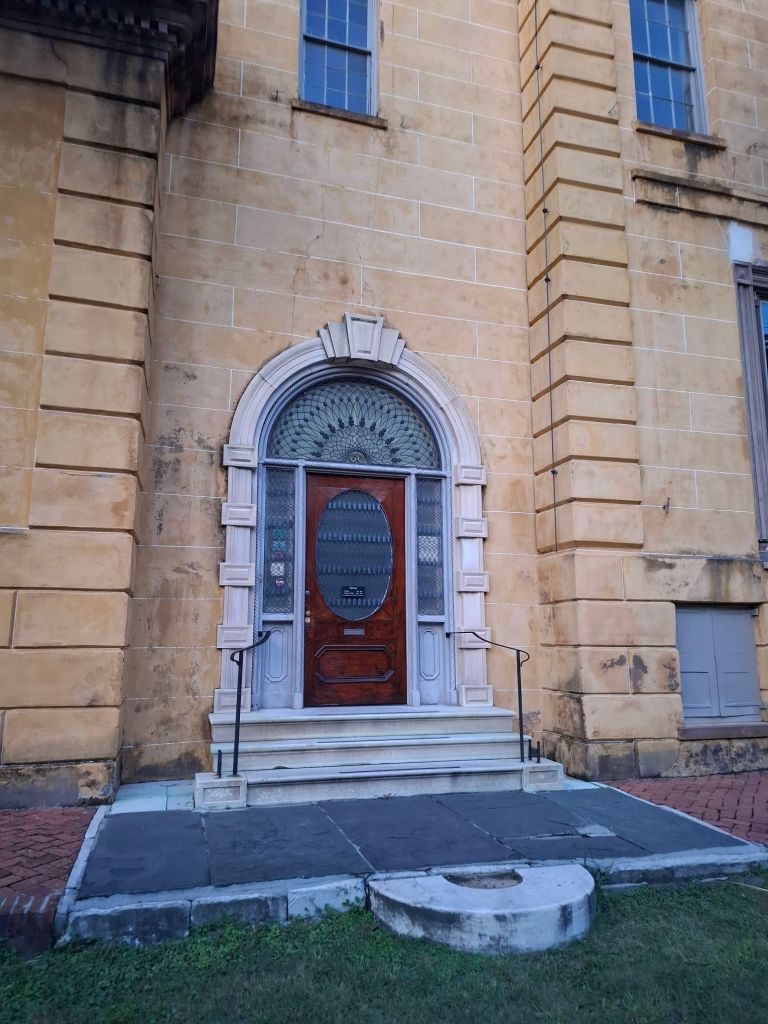
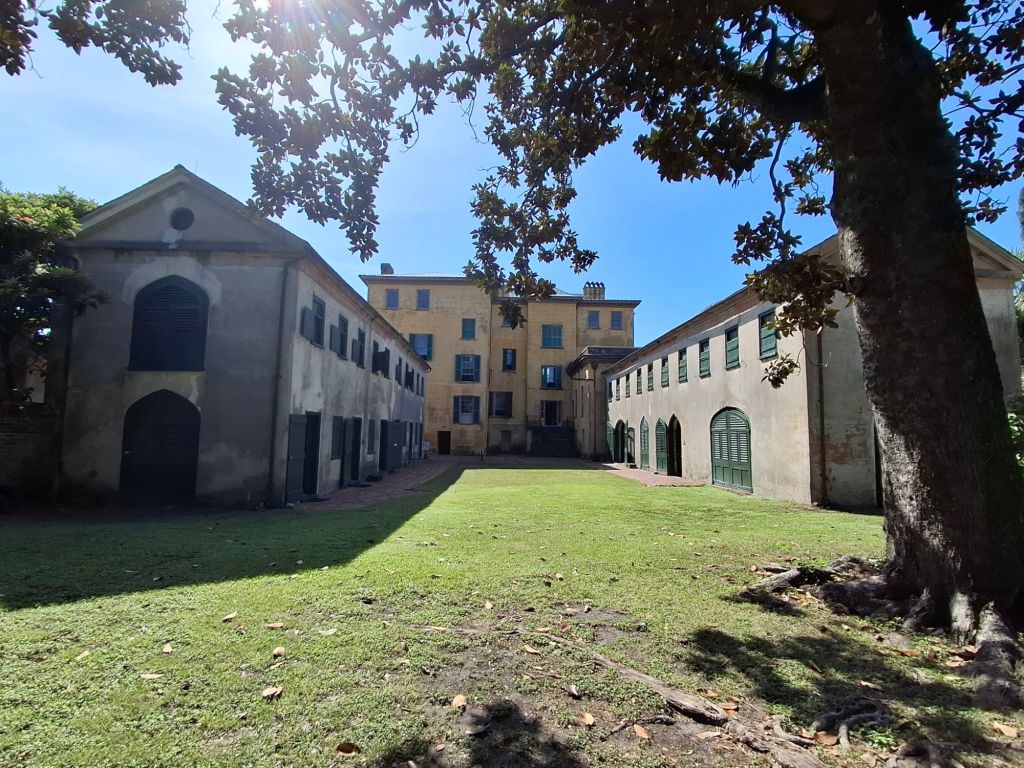
We visited the Aiken-Rhett house in Charleston, South Carolina today. I have been to this lovely city many times, but have never toured this treasure. My blogger friend Ted Jennings of TPJ Photography recommended that I go there because of its uniqueness. (Thanks Ted.) I was thrilled by the authenticity of this house, dependency buildings, workyard and stables. It is owned by the Charleston Foundation and first opened for tours in 1995.
The house was built in 1820 and modified in 1835 and again in 1854. It has been “frozen in time” since then. The audio tour mentions the names some of the enslaved people who worked there and described the fate of some of their decendents. This is an important part of the history of Charleston that should be included.
The slave quarters were on the floor above the kitchen and laundry. Families shared seperate rooms with very little ventilation because all windows opened onto the workyard.
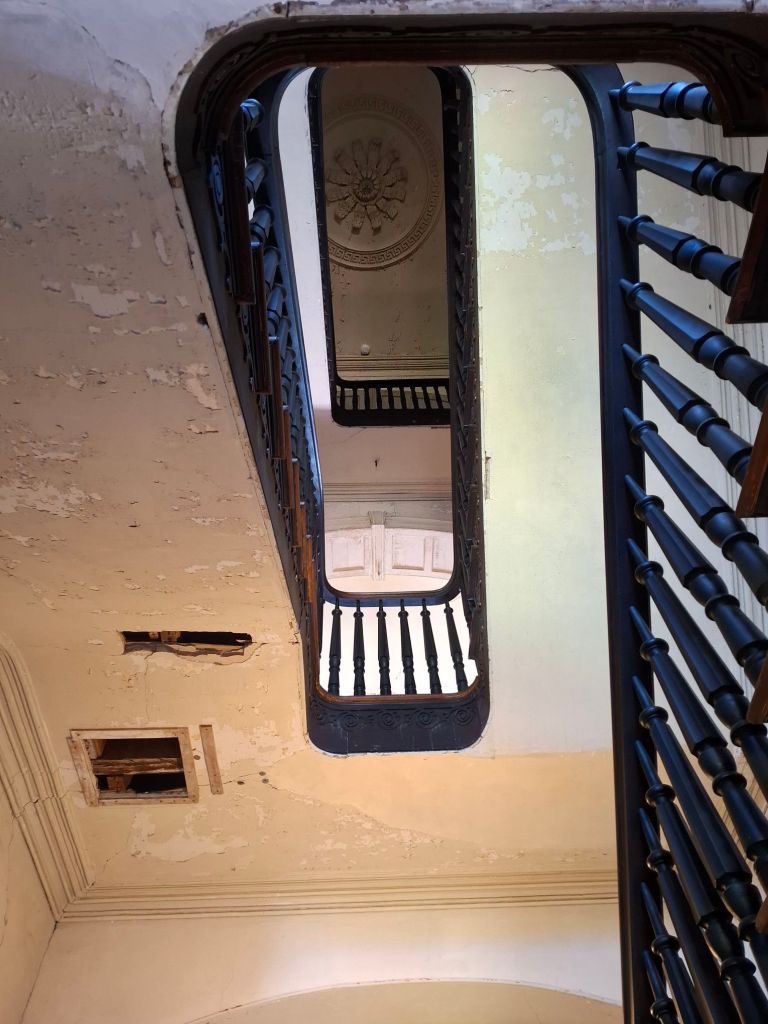
I have toured many Charleston houses but gained real insight from seeing the deteroration and wear from years of use and damage from Hurricane Hugo. Seeing a preserved mansion forces the visitors to appreciate how much work is required to restore houses like the Manigault house which will be in my next post.
Here are some of my favorite photos from the Aiken-Rhett Complex.
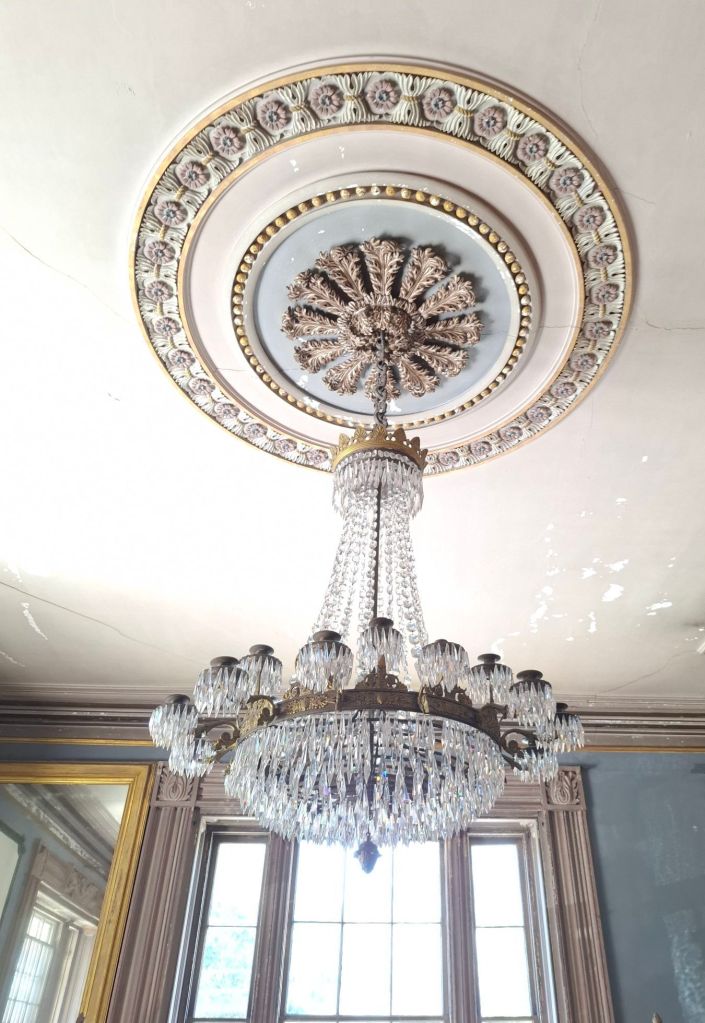
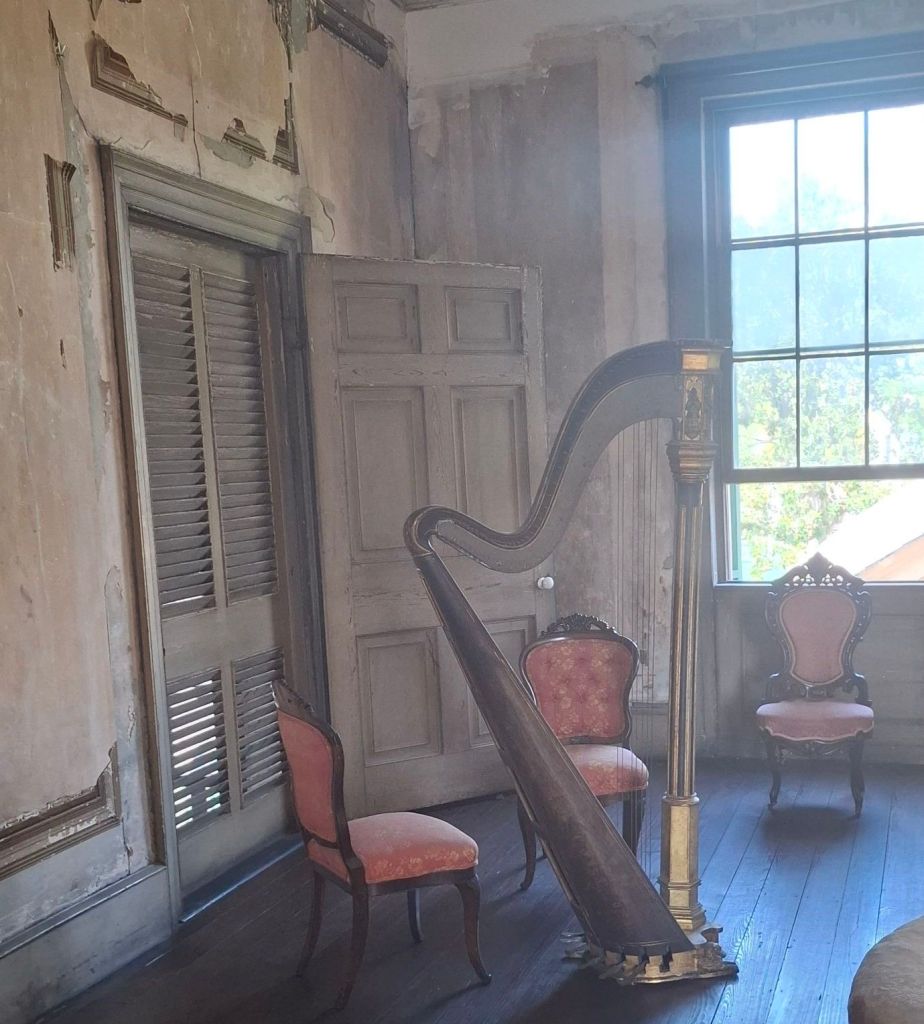
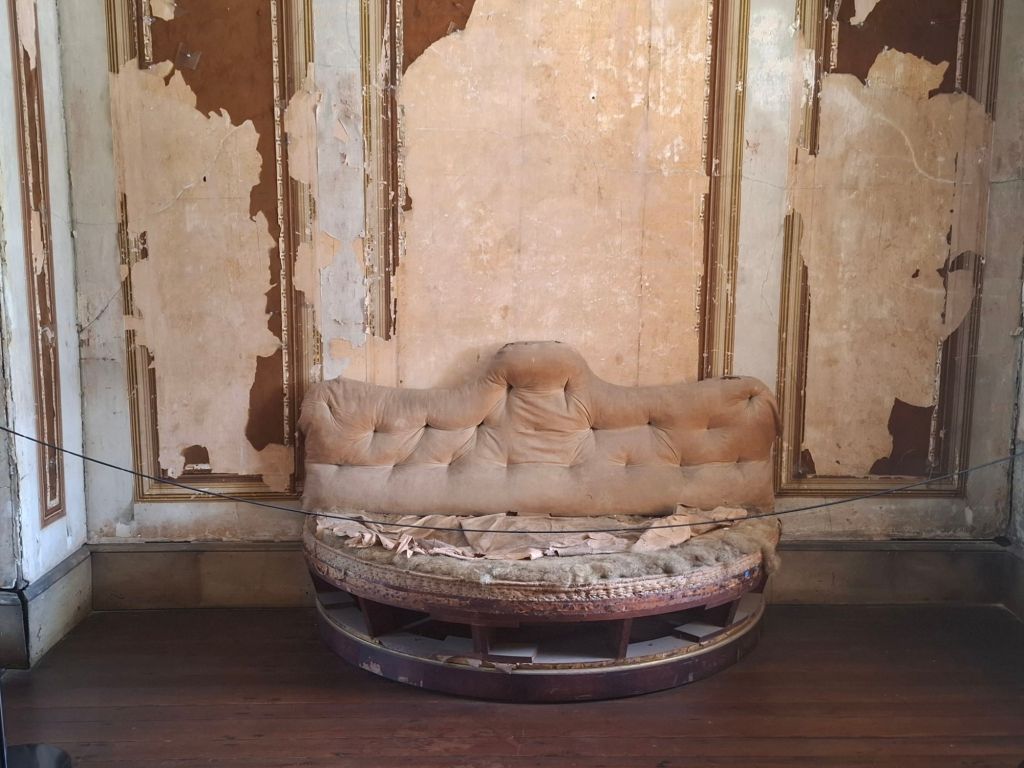
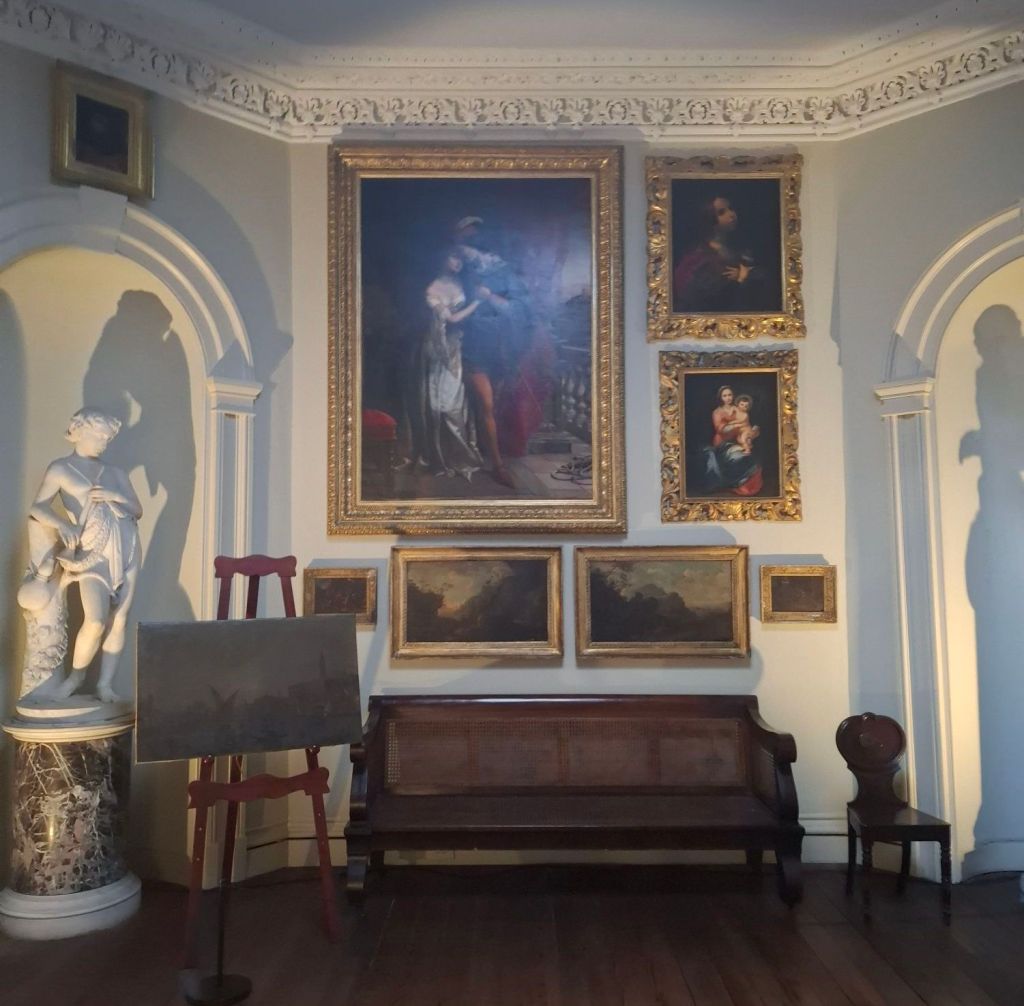
The entrance. Ring the bell to be let in.Enslaved quarters above the kitchen and laundry on left. Stables to the right. Main Aiken-Rhett house in the middle. Photo taken while standing in the workyard.Looking up through the stairways to the medallion on the third floor ceiling. Notice peeling plaster and holes. This house was damaged by Hugo in 1989.Chandalier and medallion on ceiling.Harp missing strings.Damaged furniture and peeling wallpaper.The ART ROOM was the only preserved and air-conditioned room. These works were collected by the family during their travels.
This house was amazing. The audio tour included some great historic details that I want to follow up on later.
You may recall that my sister and I found a package of letters from Mama’s high school boyfriend in her bottom drawer when we cleaned out her house. She had carefully saved these letters from Louis for over sixty years.
We put these letters and photos in plastic sleeves and arranged them in a notebook. We gave the notebook to Louis’s daughter and grandson. I kept copies of the letters and photos.
Louis’s daughter and grandson with the notebook of his letters to Mama.
As fate would have it, Louis’s widow’s sister found a bag of old letters that my mother had written to Louis during the same time period. The aunt gave these letters to Louis’s daughter who gave them to my sister and me.
Letters from Mama to Louis
My sis and I put these in order in notebooks. Then we spent several days on the porch reading them outloud. They are a documentation of young love developing and then fading. My sis and I cried several times. The obstacles between them were insurmountable.
My sis reading the letters outloud.
We collated his letters with her letters in the notebooks. Now their story is complete. We hope his daughter will come and experience Louis and Dottie’s story with us when we have it finished.
Louis and Dottie did not end up together, but their years of letter writing, 1949-1953, impacted both of their lives.
I will be writing more about this. That darn book keeps popping back into my life. Sigh.
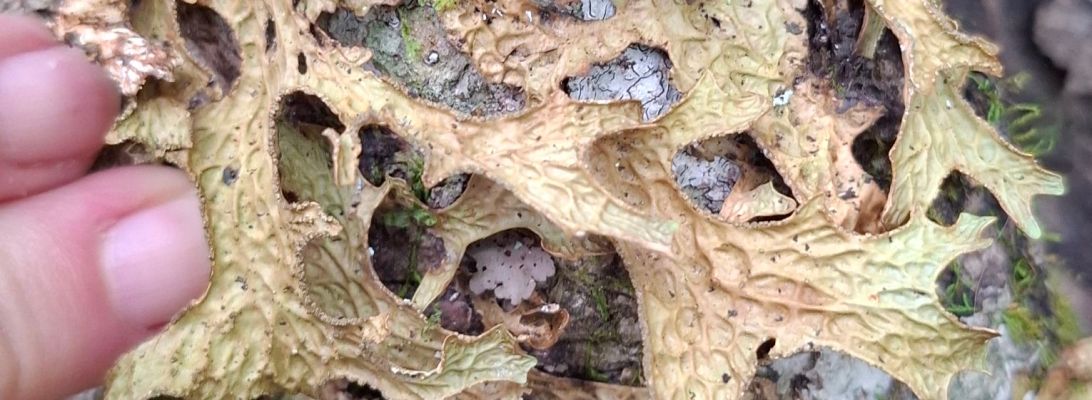
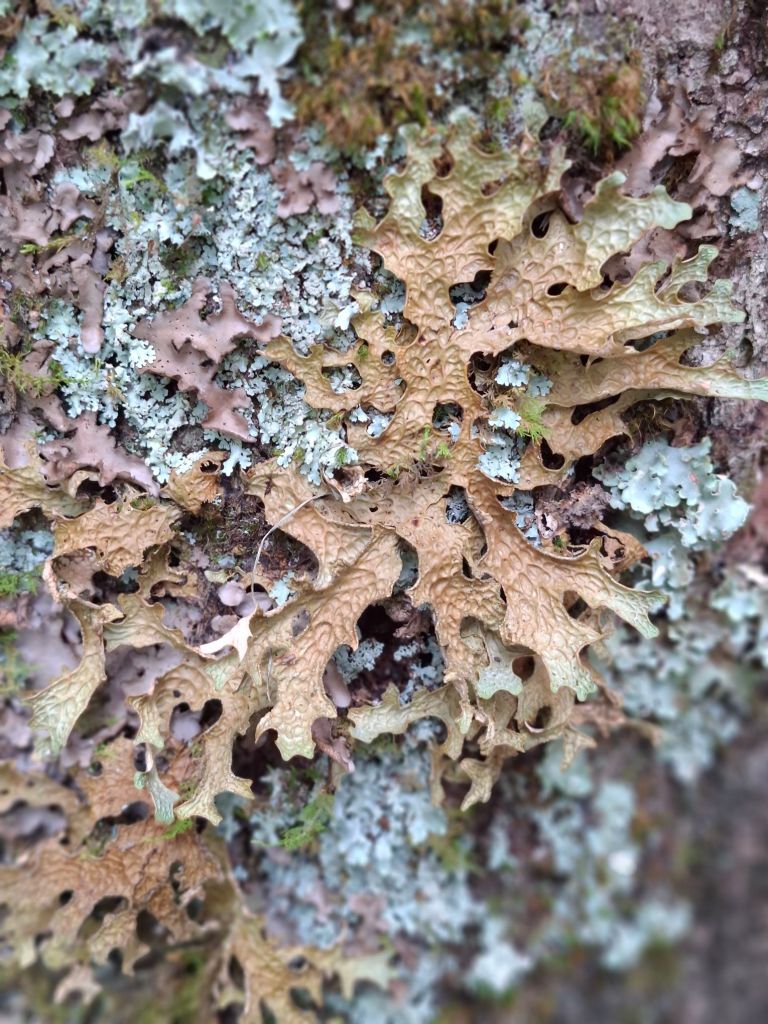
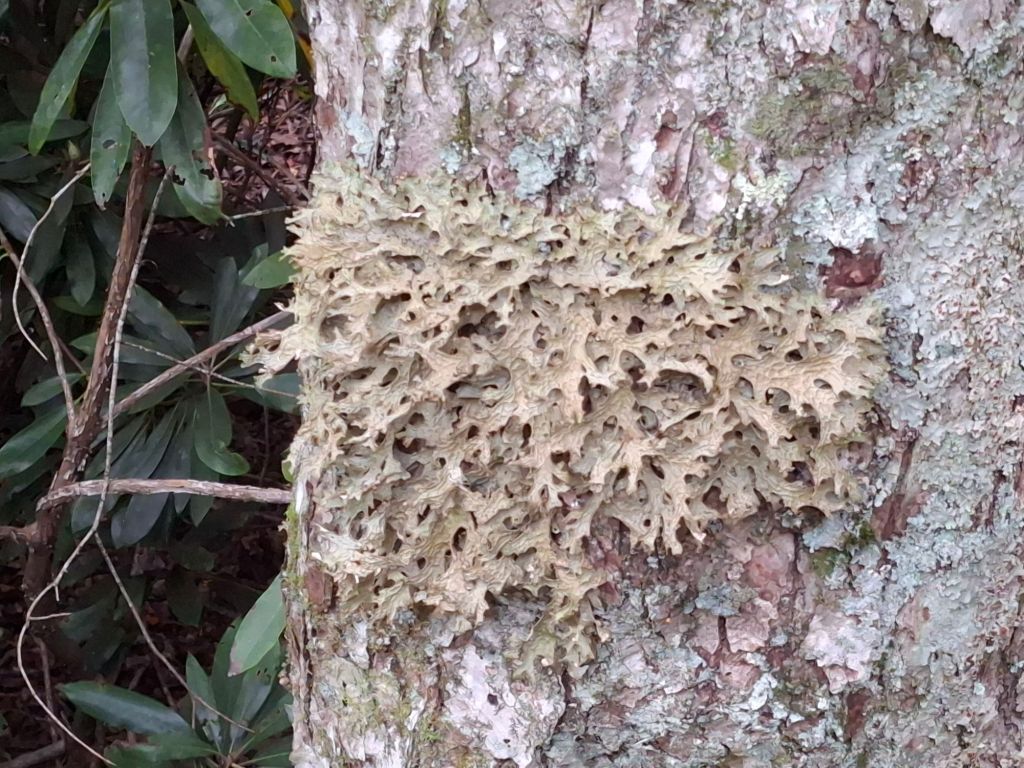
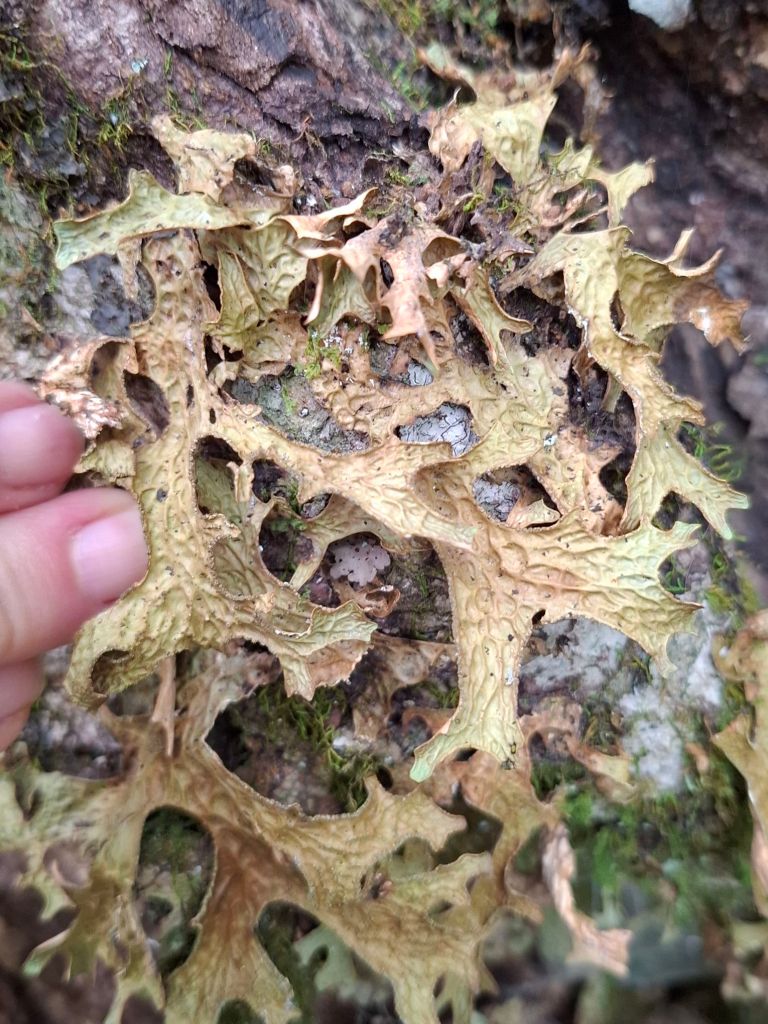
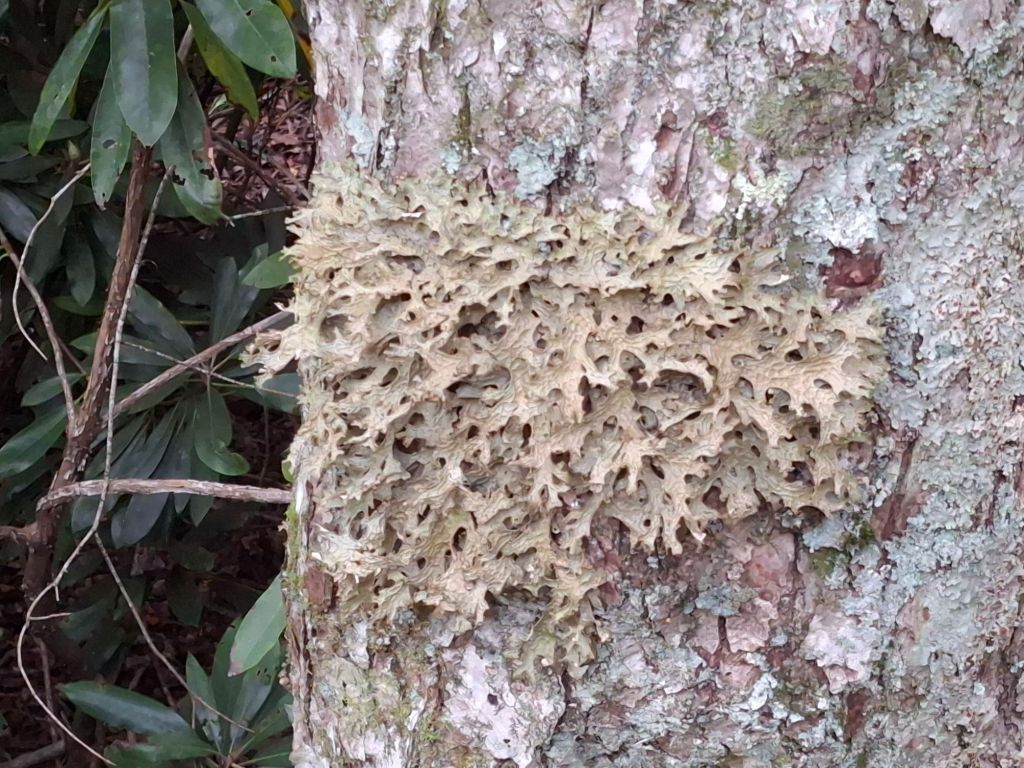
The lovely tree lungwort, Lobaria pulmonaria is three lives in one. Fungi, algae and cyanobacteria work together to survive in their own little community. This being has members of three different kingdoms of the phylogenic tree living in a symbiotic relationship.
Dried up Lungwort among lichens.
The cyanobacteria fixes nitrogen from the air to assist the photosynthesis of the algae. The fungi component serves as the scaffolding and roots of the complex. Lungworts are sensitive to air pollution and acid rain because the cyanobacteria dies under these conditions. Having a forest full of lungworts is a good sign of the health of the ecosystem.
Tree Lungwort/ Lobaria pulmonaria
Symbiosis is a win:win relationship that enables organisms to expand their niches. Each depends on the other(s) to provide an essential resources that it could not acquire independently.
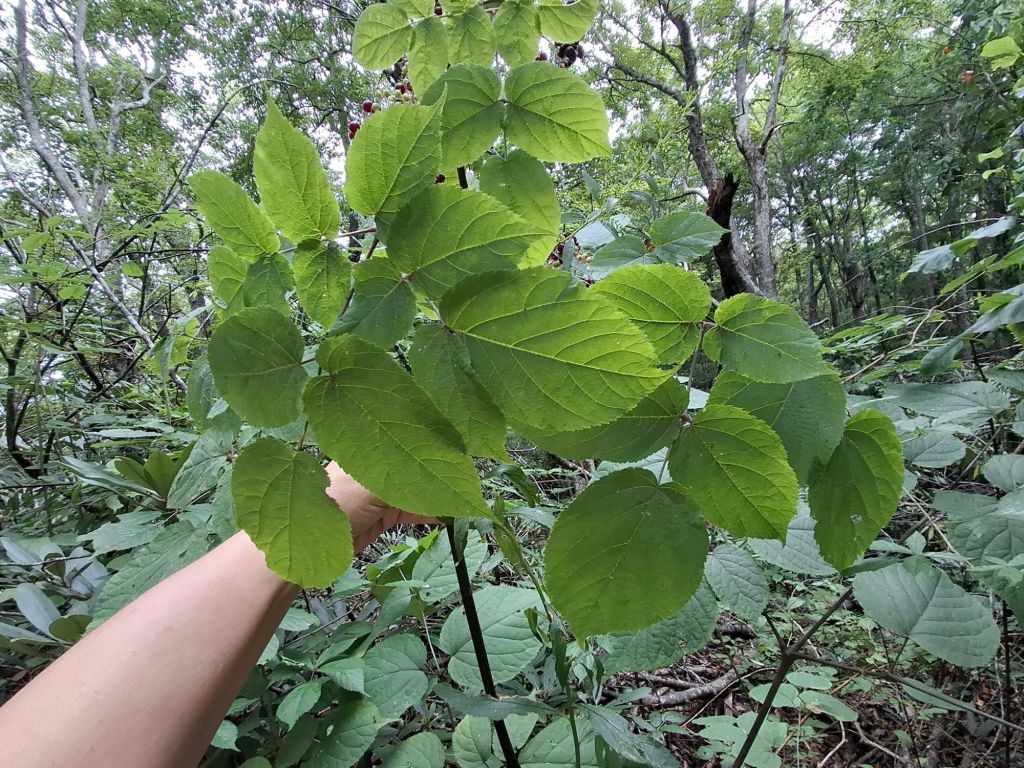
I cannot believe I do not know this fabulous plant. I must have passed it for years. It is herbaceous and over five feet high. Its flowers start out as green little pompoms then turn white. I do remember detecting an interesting aroma in the area earlier in the summer.
Spikenard leaves on dark stems
I love the little sparkler-shaped umbels after the berries fall off. This plant is in the genseng family. Roots are edible, also.
Little umbel “star stemlets”
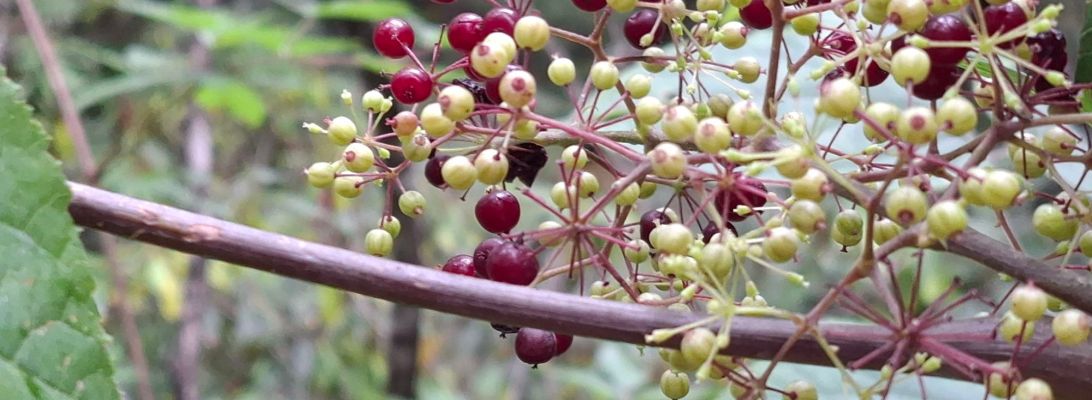
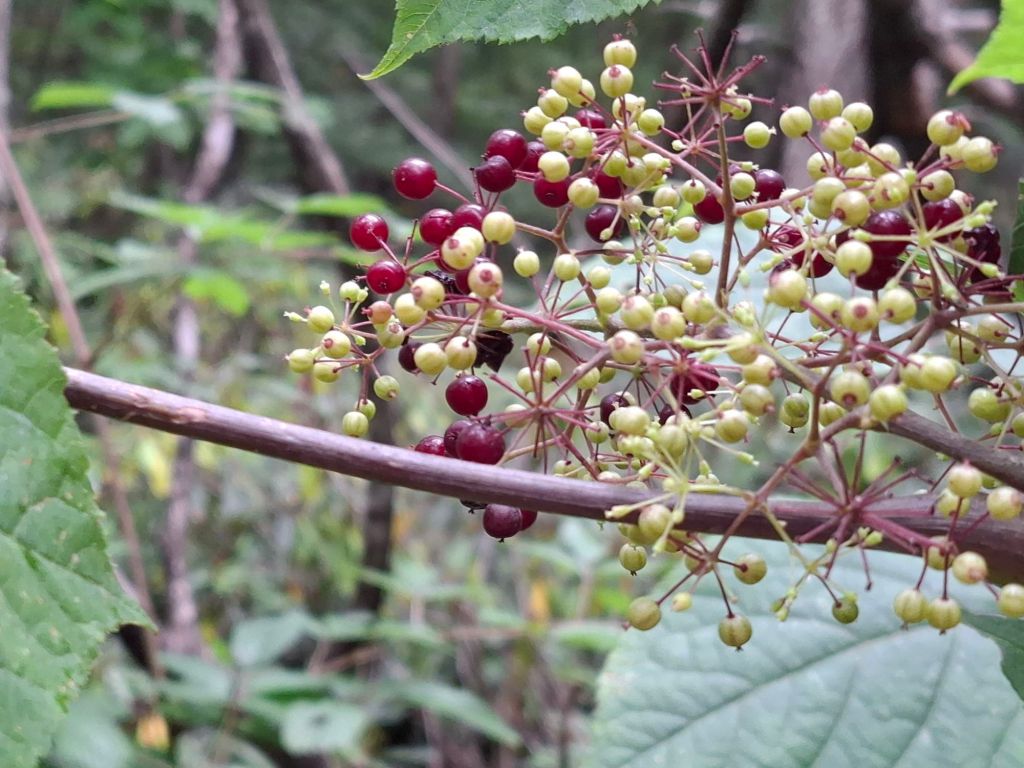
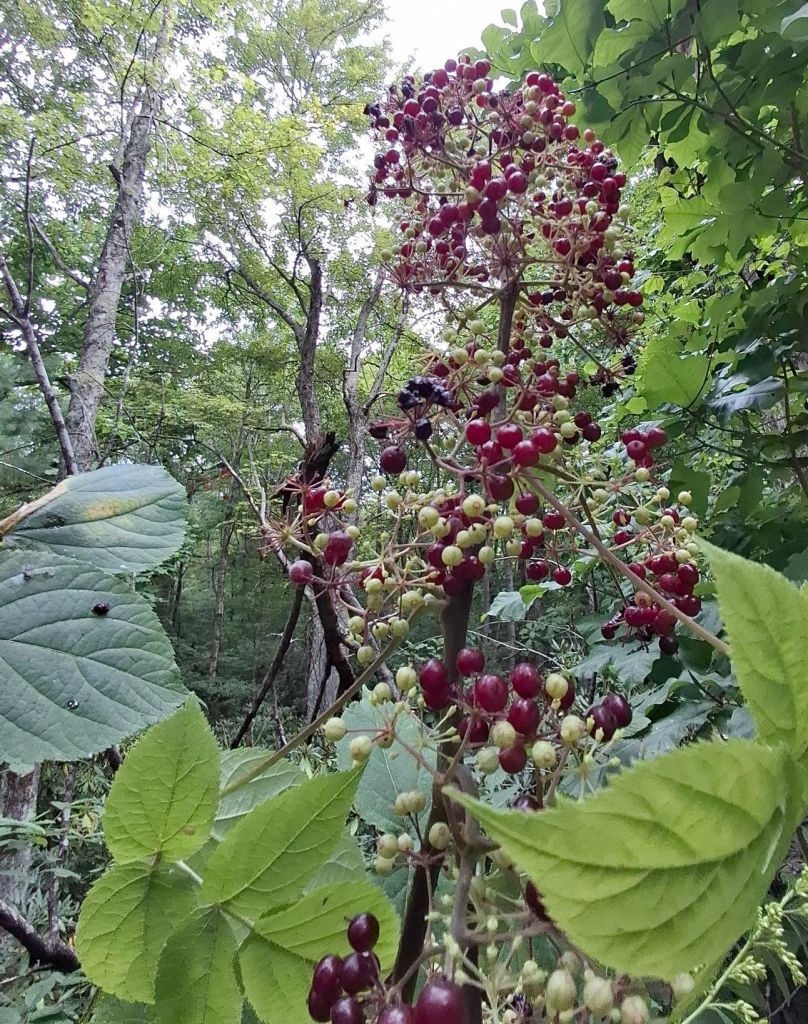
Its the berries that caught my eye. Tiny and shiny in the sunshine. A mix of dark purple and red among light green.
I do not forage, but read these are edible. I may pick a few to throw in the thicket I am creating.
American Spikenard berries
I must do more research about the American Spikenard/ Aralia racemosa.
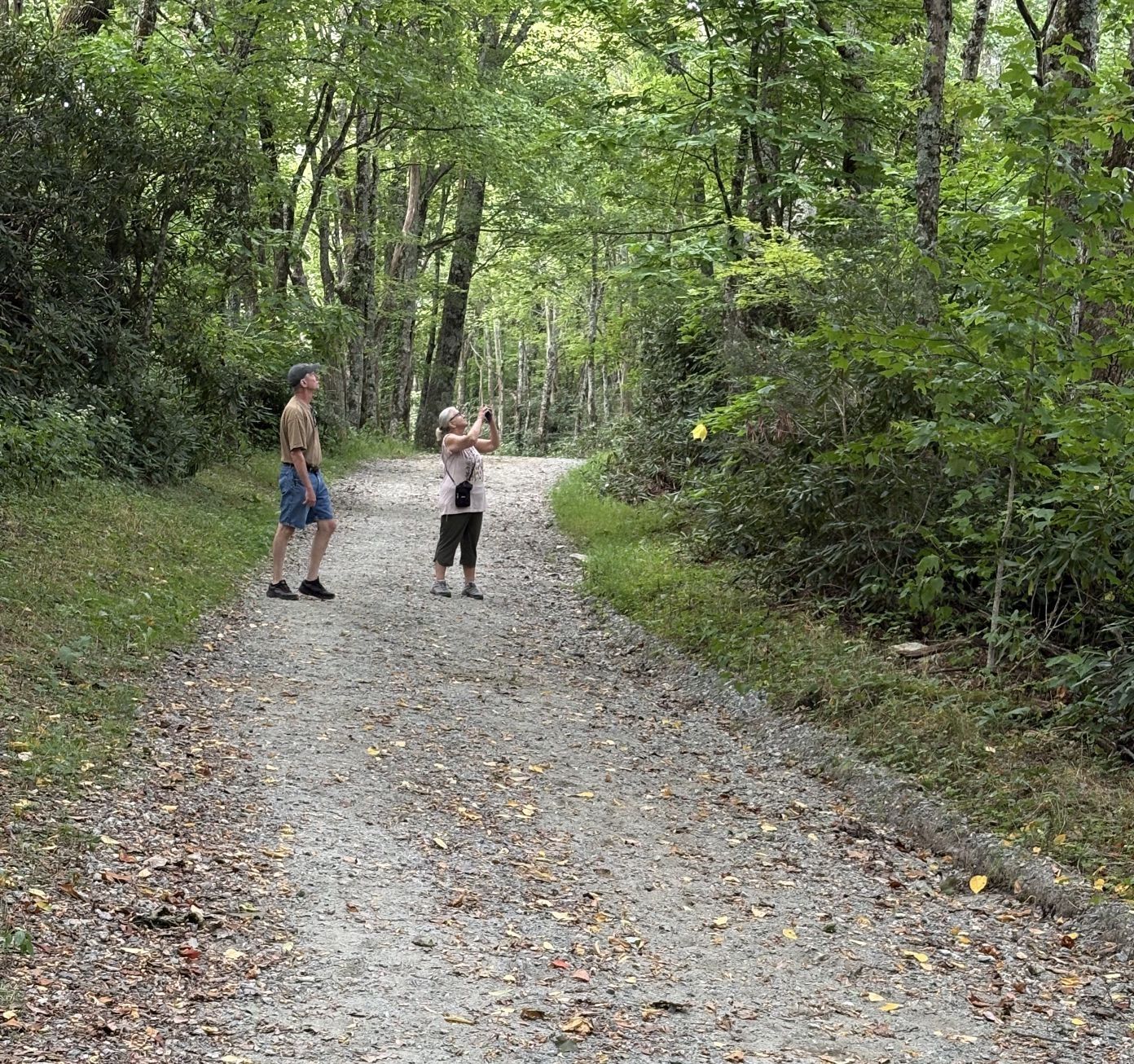
We avoid the tourists on holiday weekends. Mr. Flower, my sister and I hiked one of our favorite trails before the clouds blew in today. We saw no other hikers, just horseback riders the whole time.
Mr. Flower and my sis are used to hiking with my slowpoke self. They know to keep walking while I dawdle and take photos. They even act as spotters and stand beside anything they think might be of interest to me. Then they take off again as I examine the new discovery.
Mr. Flower and Slow-poke Flower
The same trails change every week. Fungi emerge, flowers bloom and seed pods form. My eye is trained for the changes. I cannot hurry past all these wonderful things.
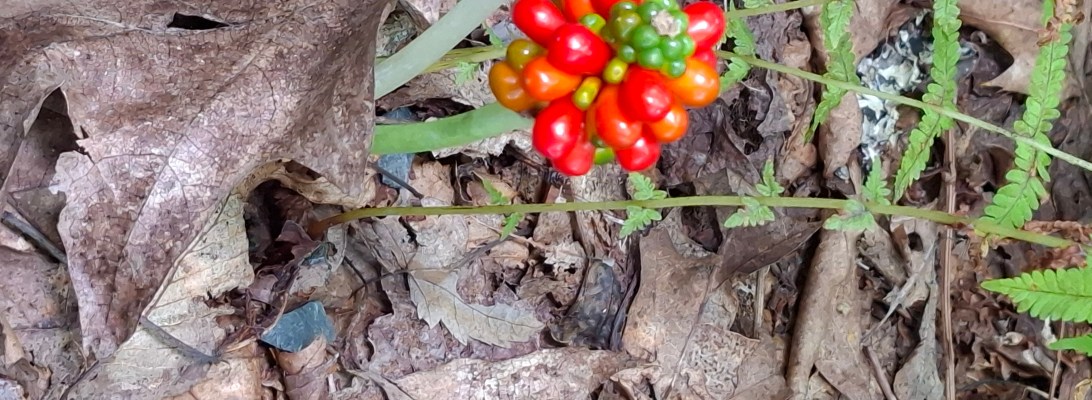
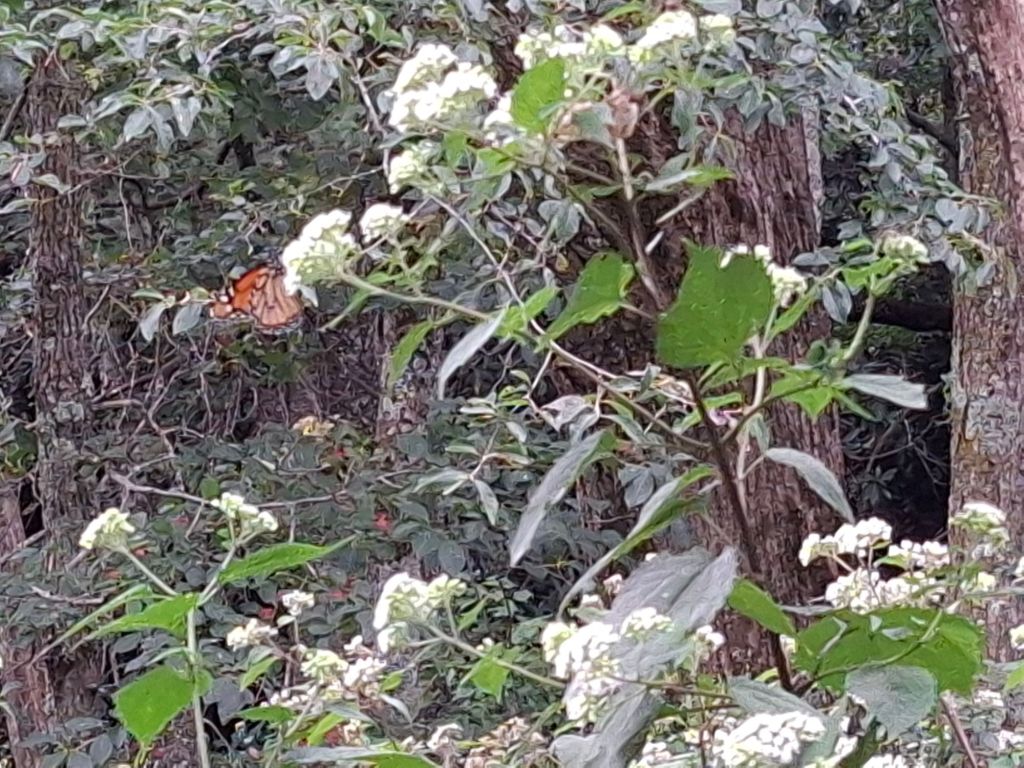
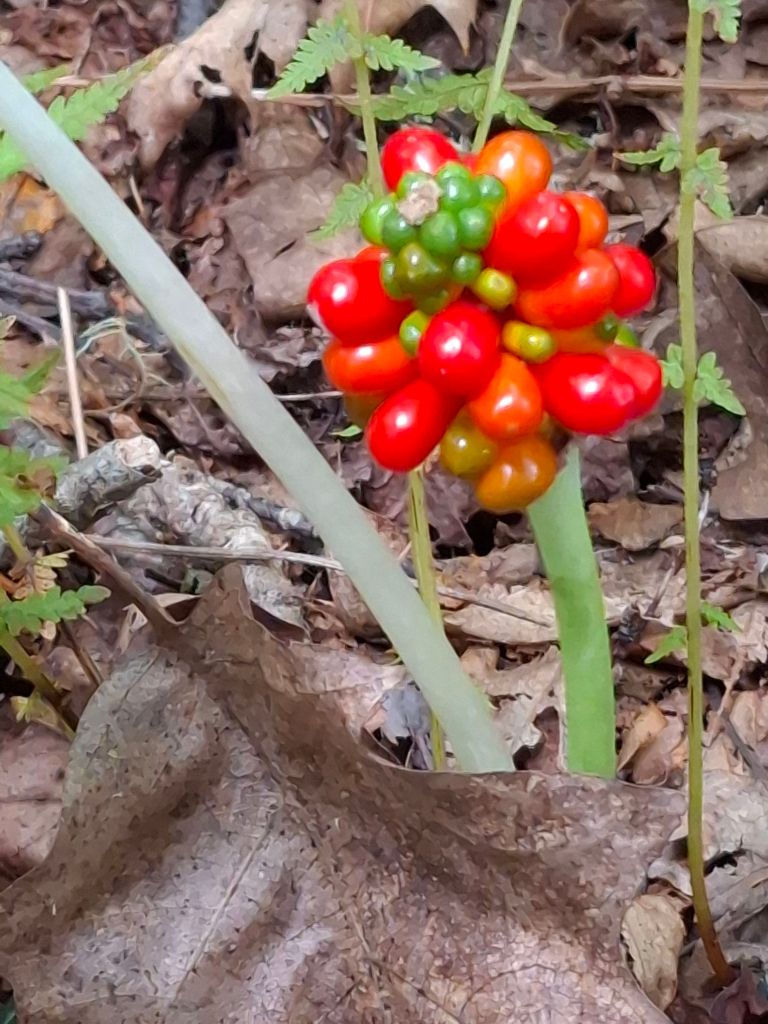
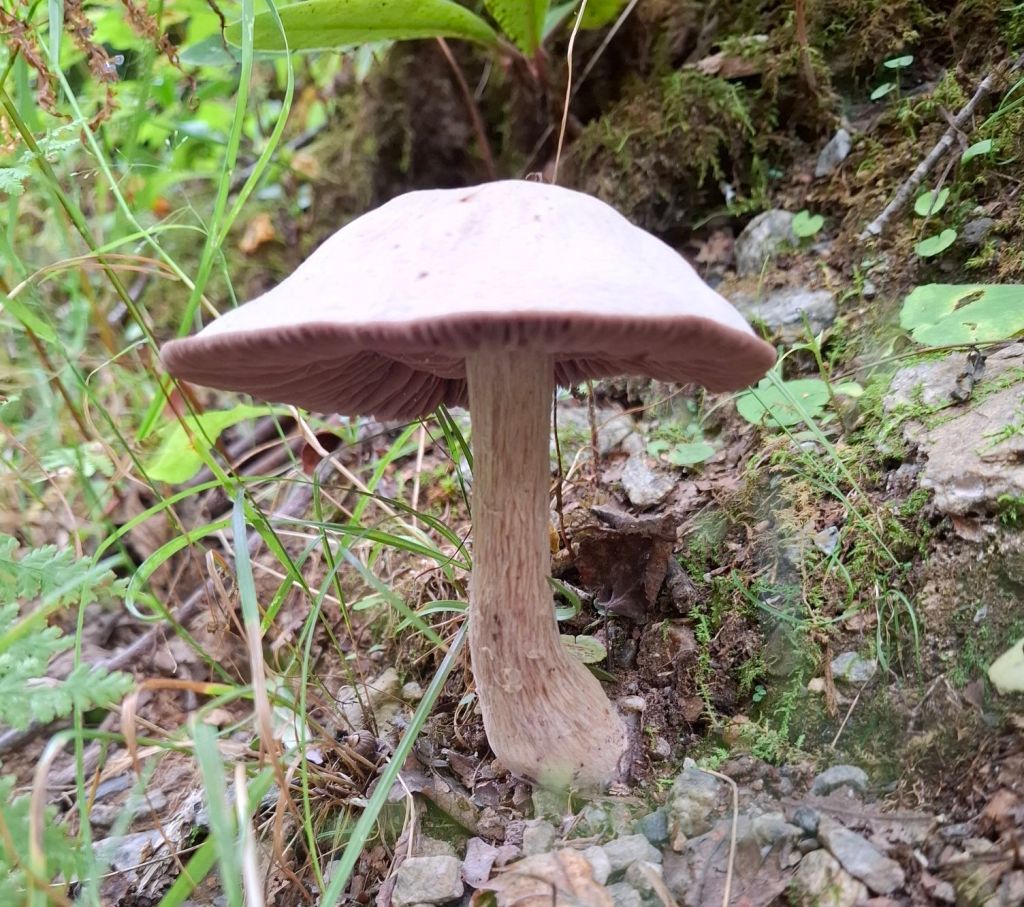
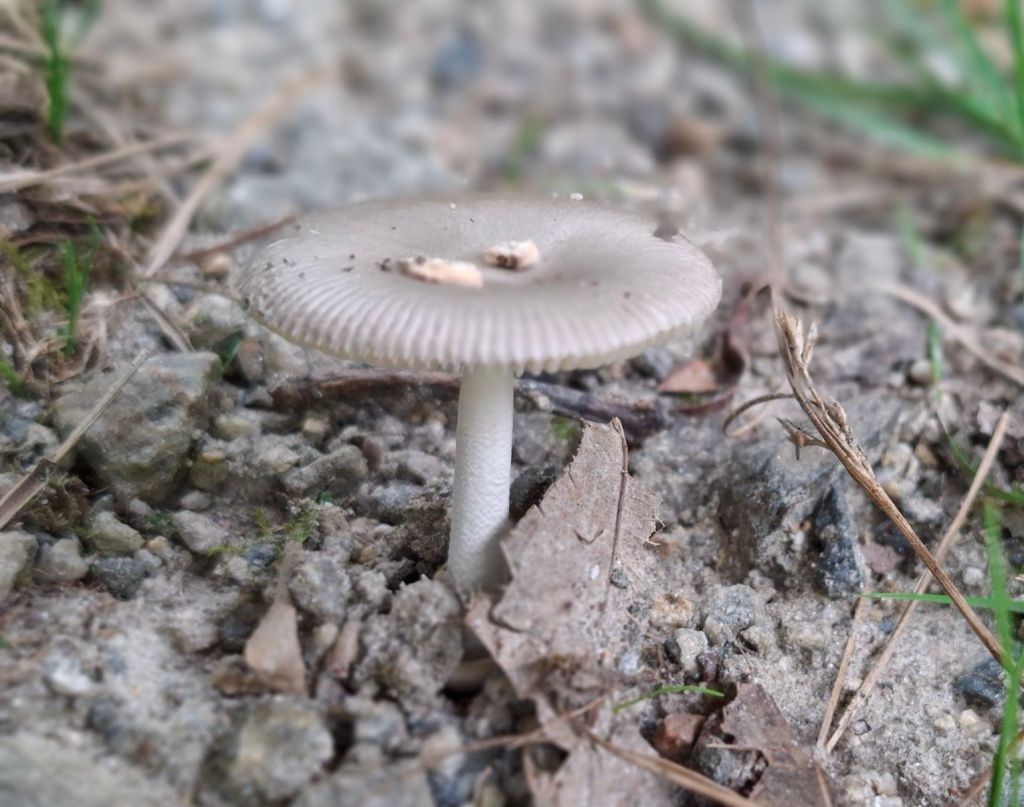
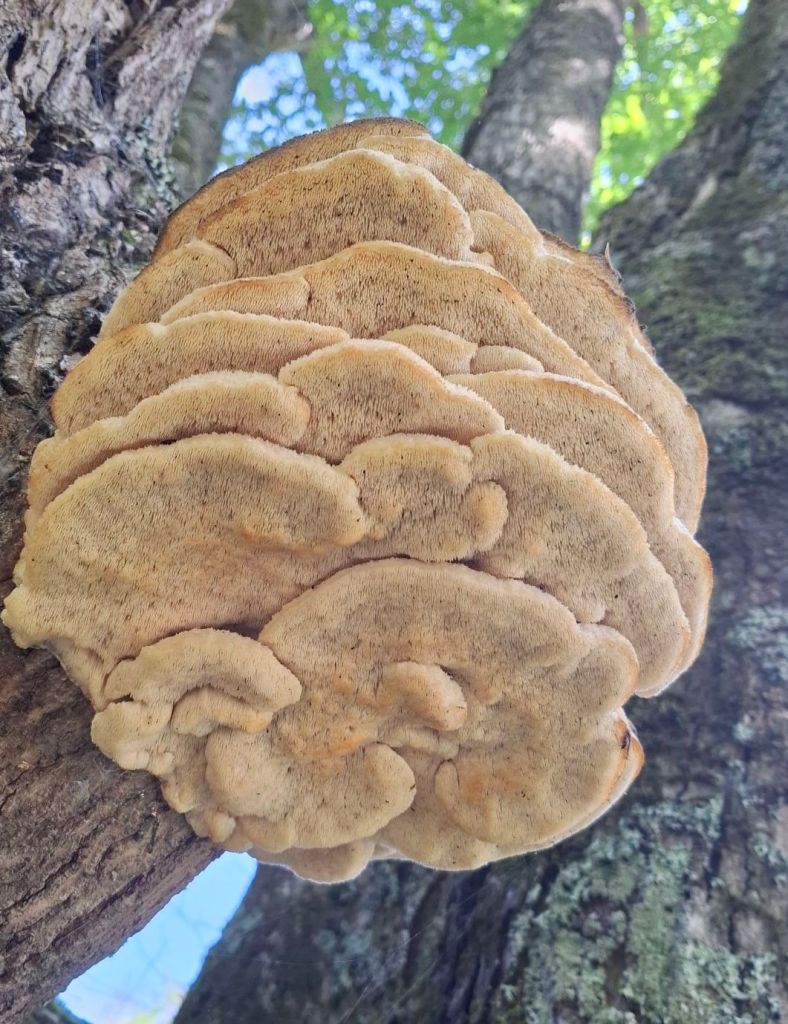
Monarch on White Snakeroot/Ageratina altissmaJack-the-pulpit seeds/Arisaema triphyllumDried up lungwort lichen/Lobaria pulmonariaVarious mushrooms
Mr. Flower chops firewood. He keeps big chunks of stumps near the woodpile to split wood on. These serve their purpose for many years until the fungi find them.
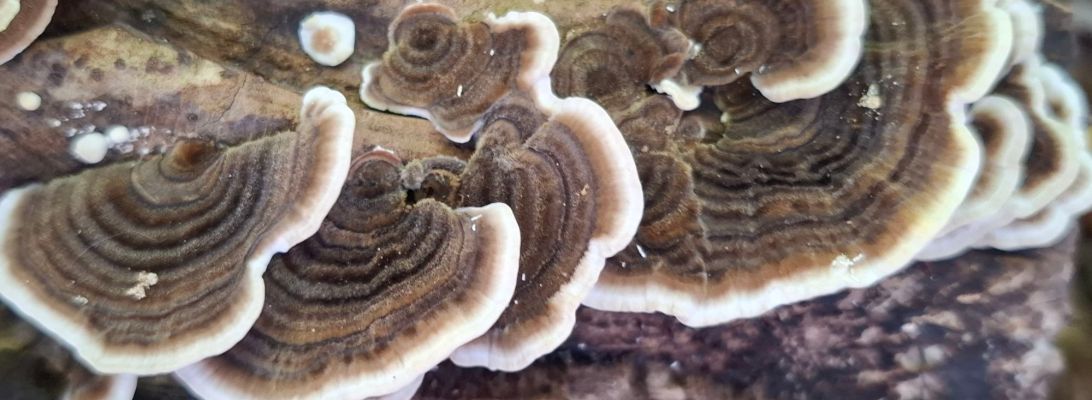
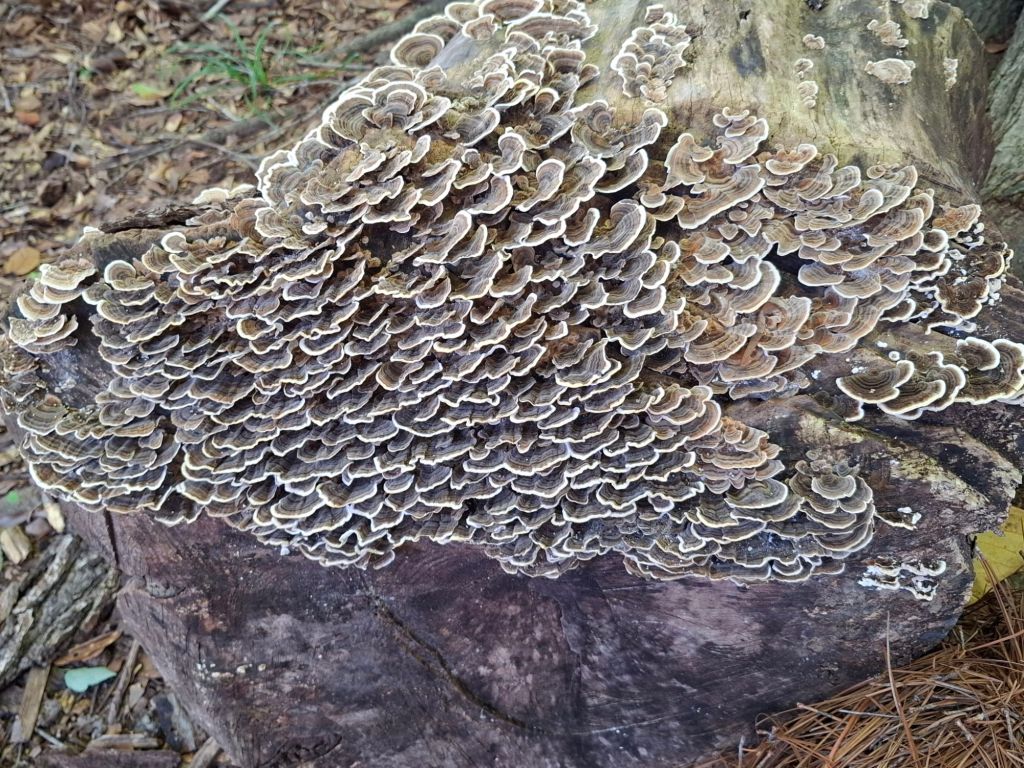
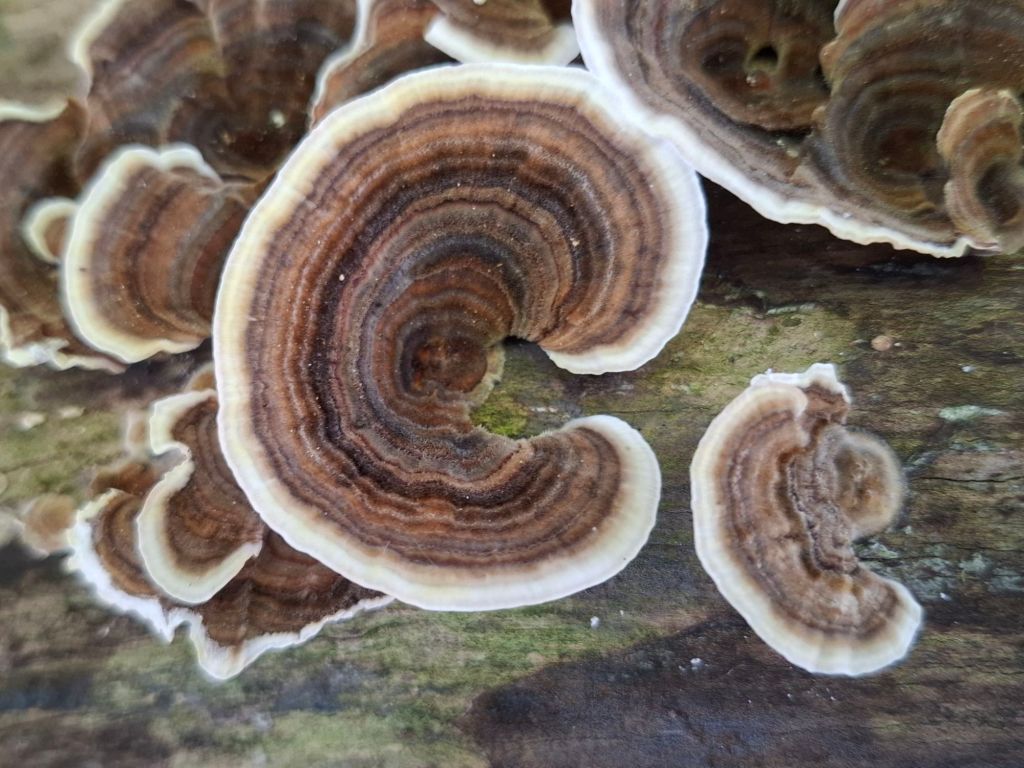
Layers of Turkey Tail fungus
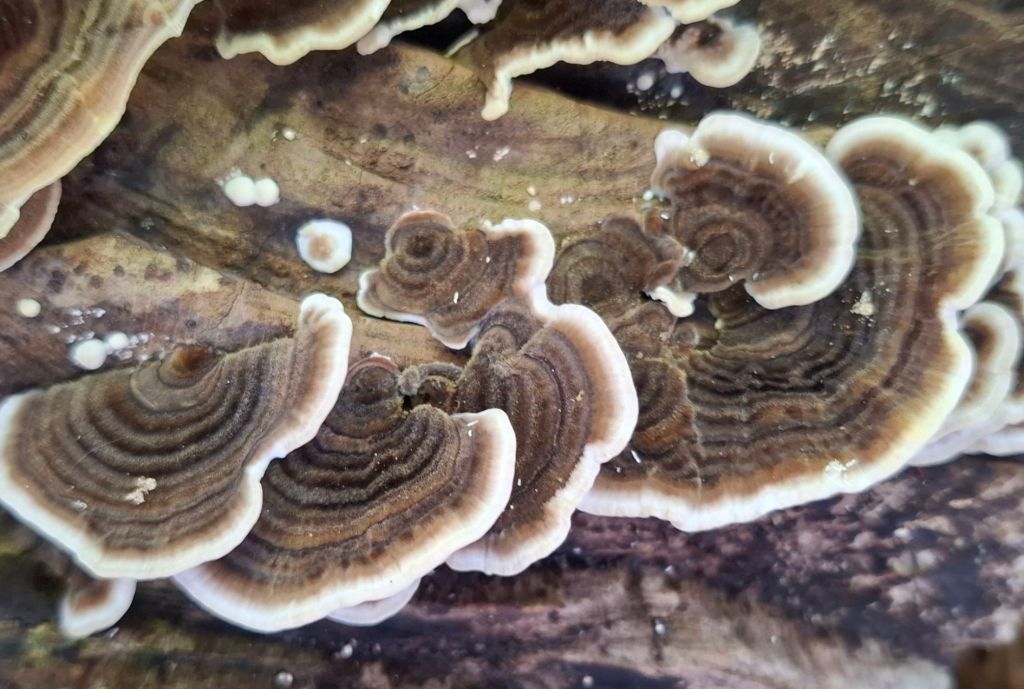
This chunk is covered in hundreds of Turkey Tails. The proper name is Trametes versicolor. The name is due to the concentric rings of various colors. The top is velvety not smooth.
Trametes versicolor
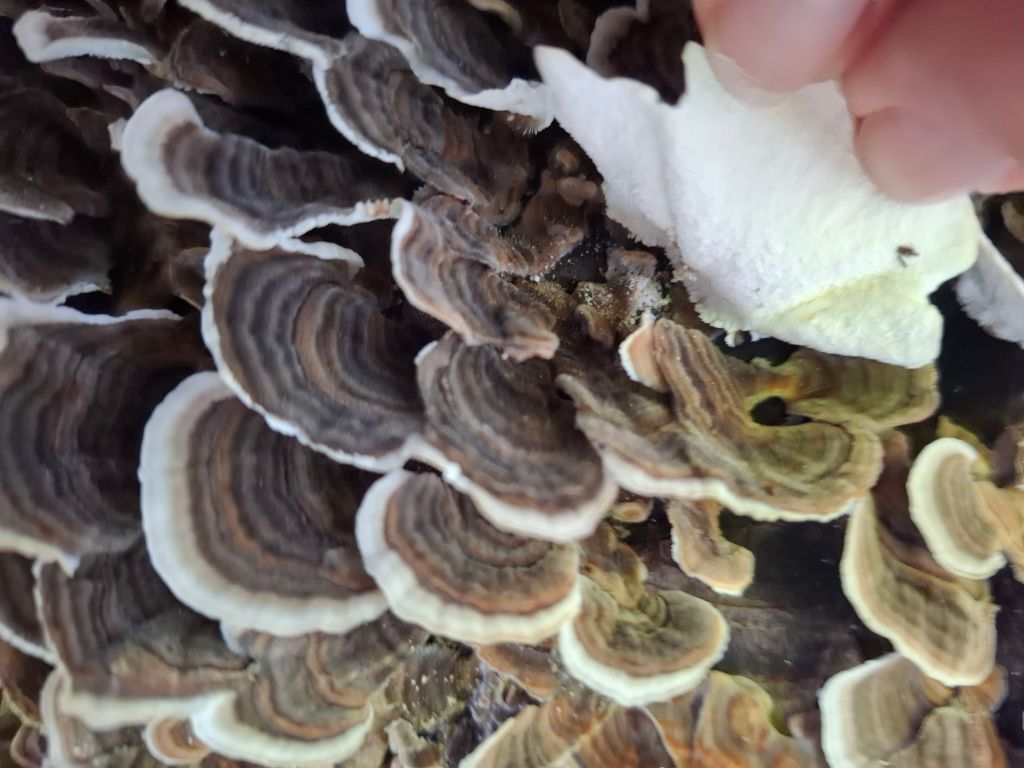
The porous underside is white. The margin is a lighter color.
Polypore under-surface
Its lower layers are fan-shaped with the top looping around to look kidney-shaped.