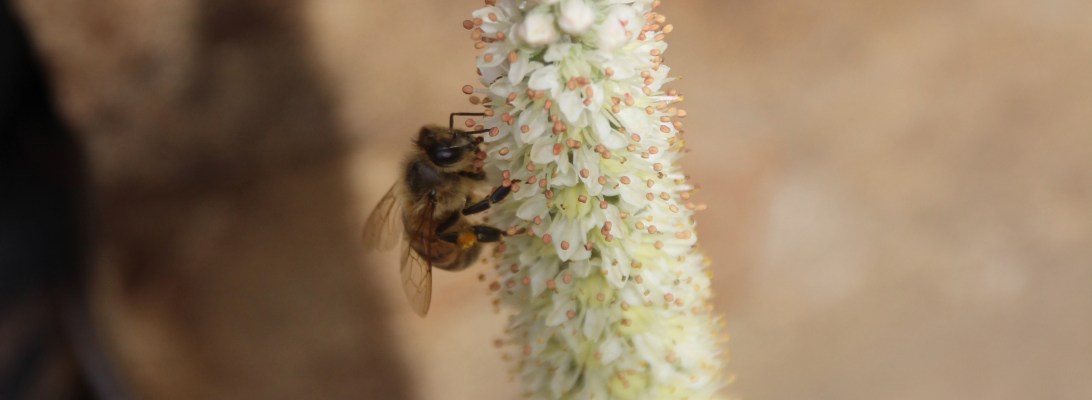
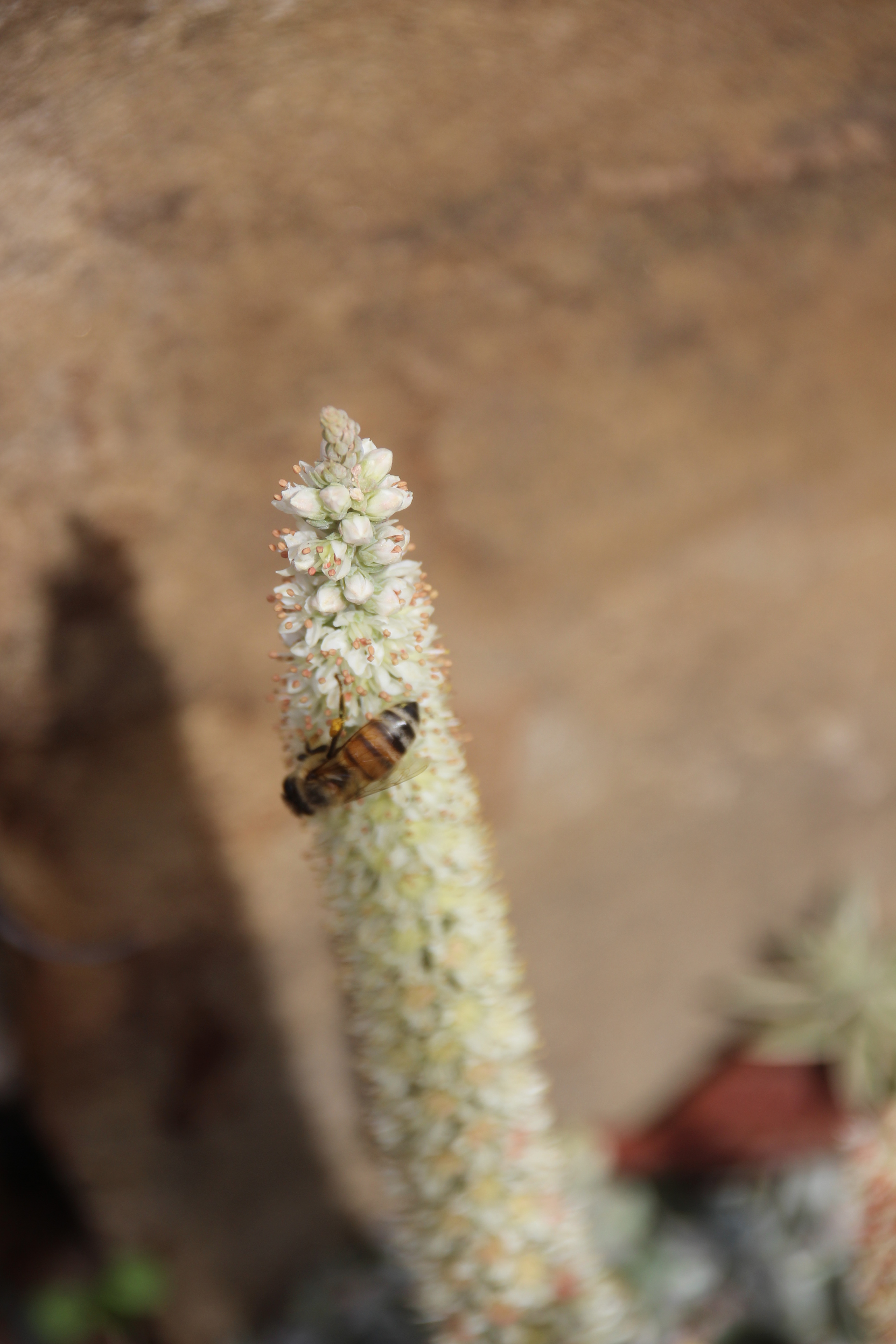
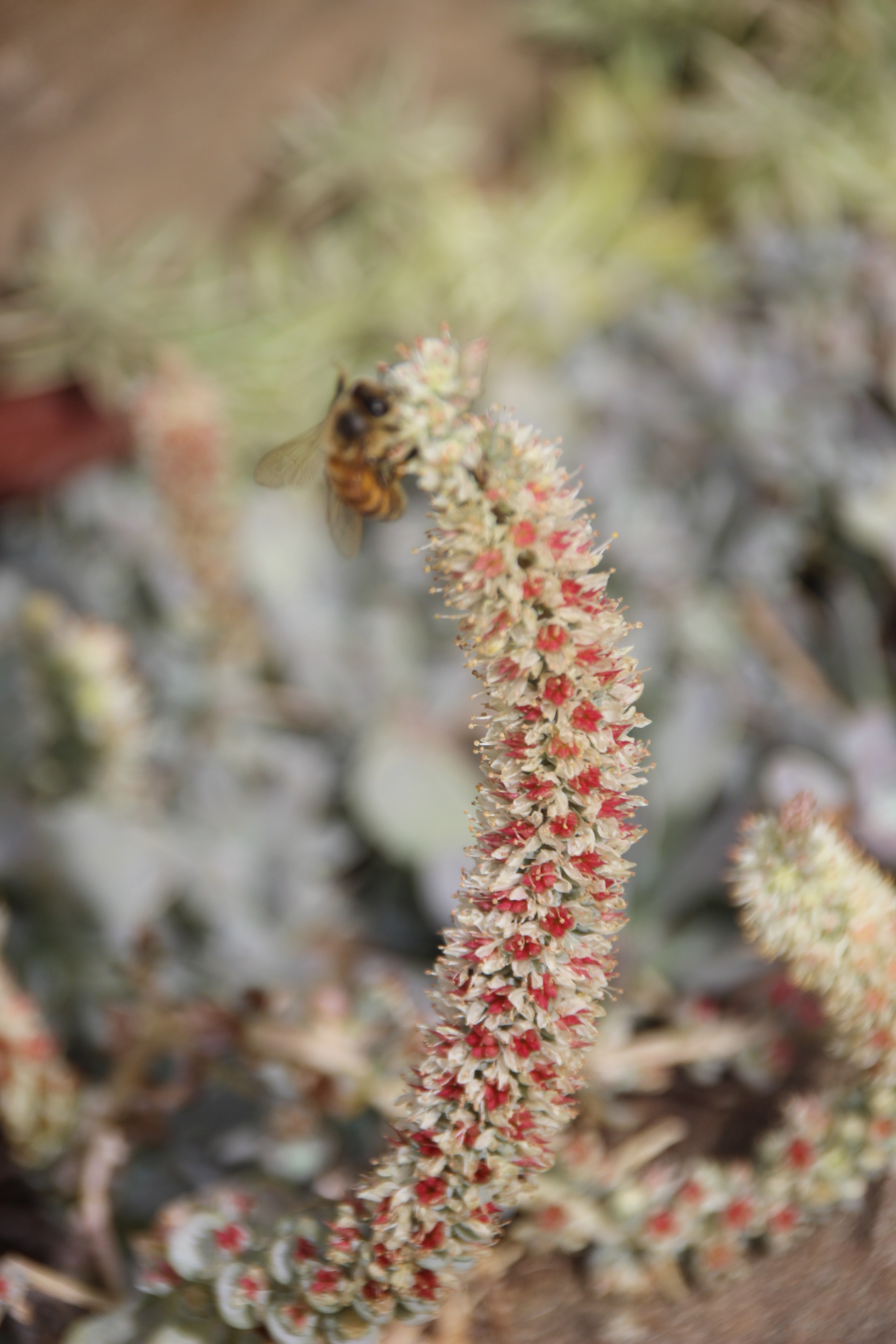
I must admit I would never have noticed these tiny blooms if it weren’t for the bees. Bees are busily visiting the last bloomers now before the cold sets in. They kept zooming past me as I worked to put plants into the ground before the first freeze.
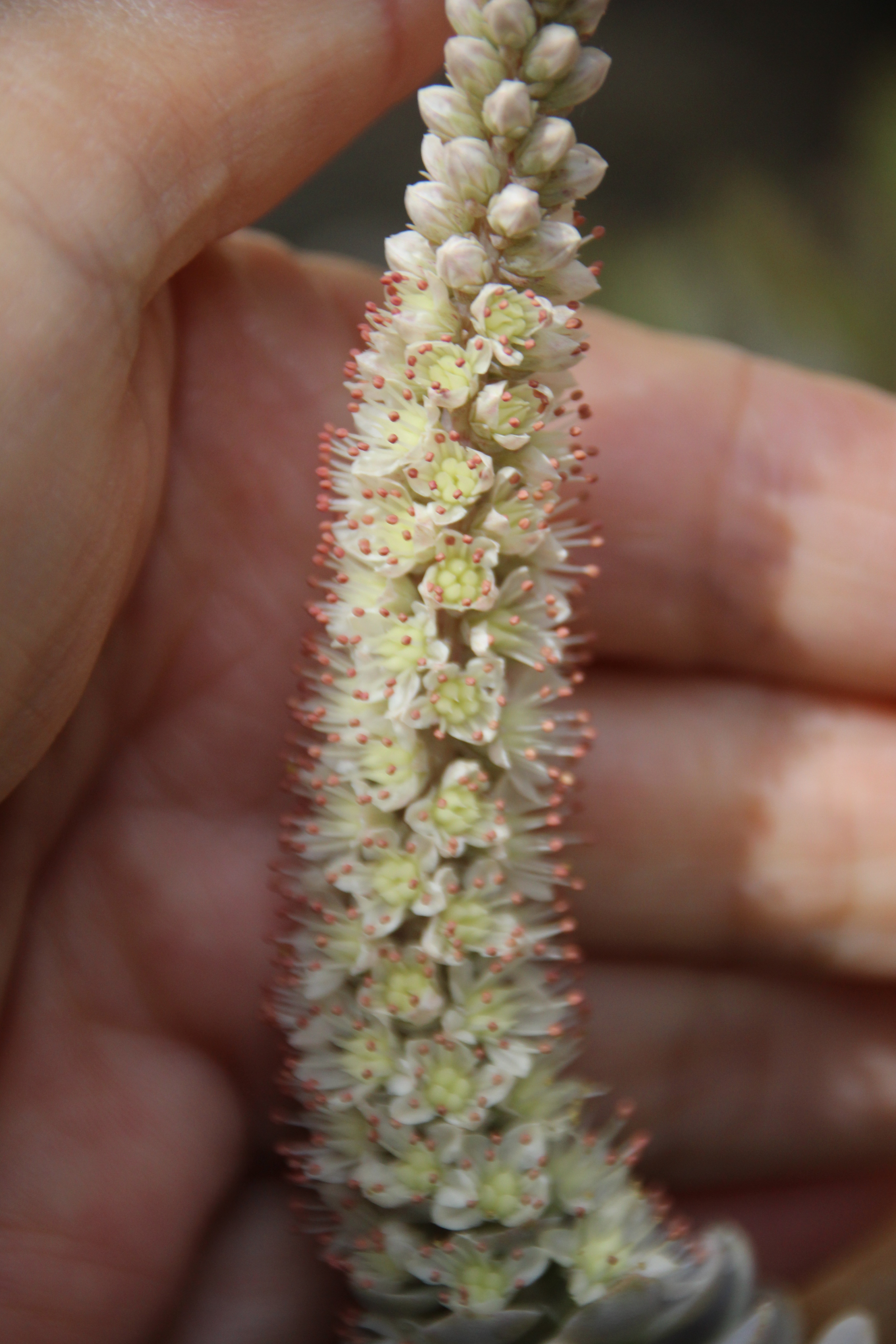
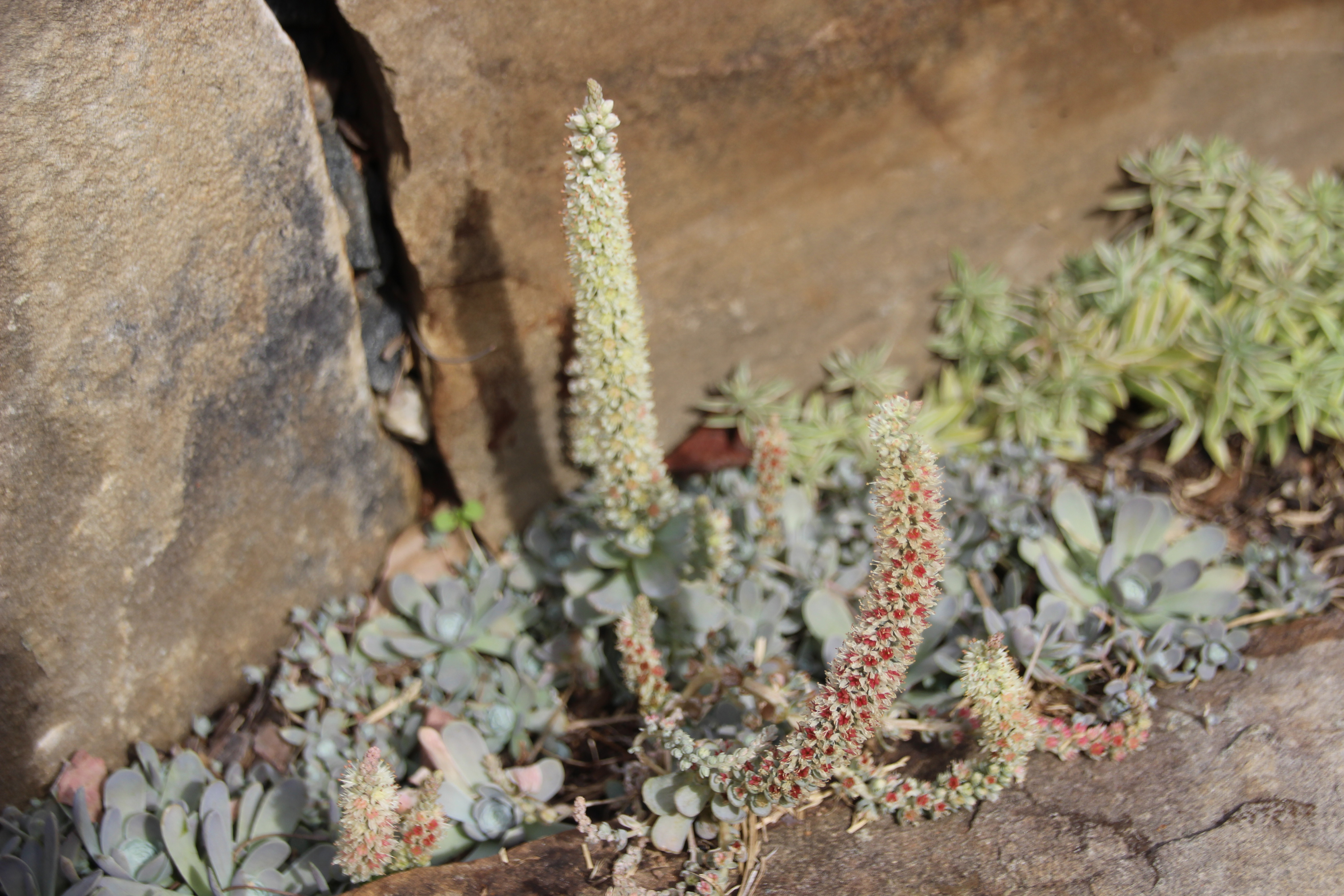
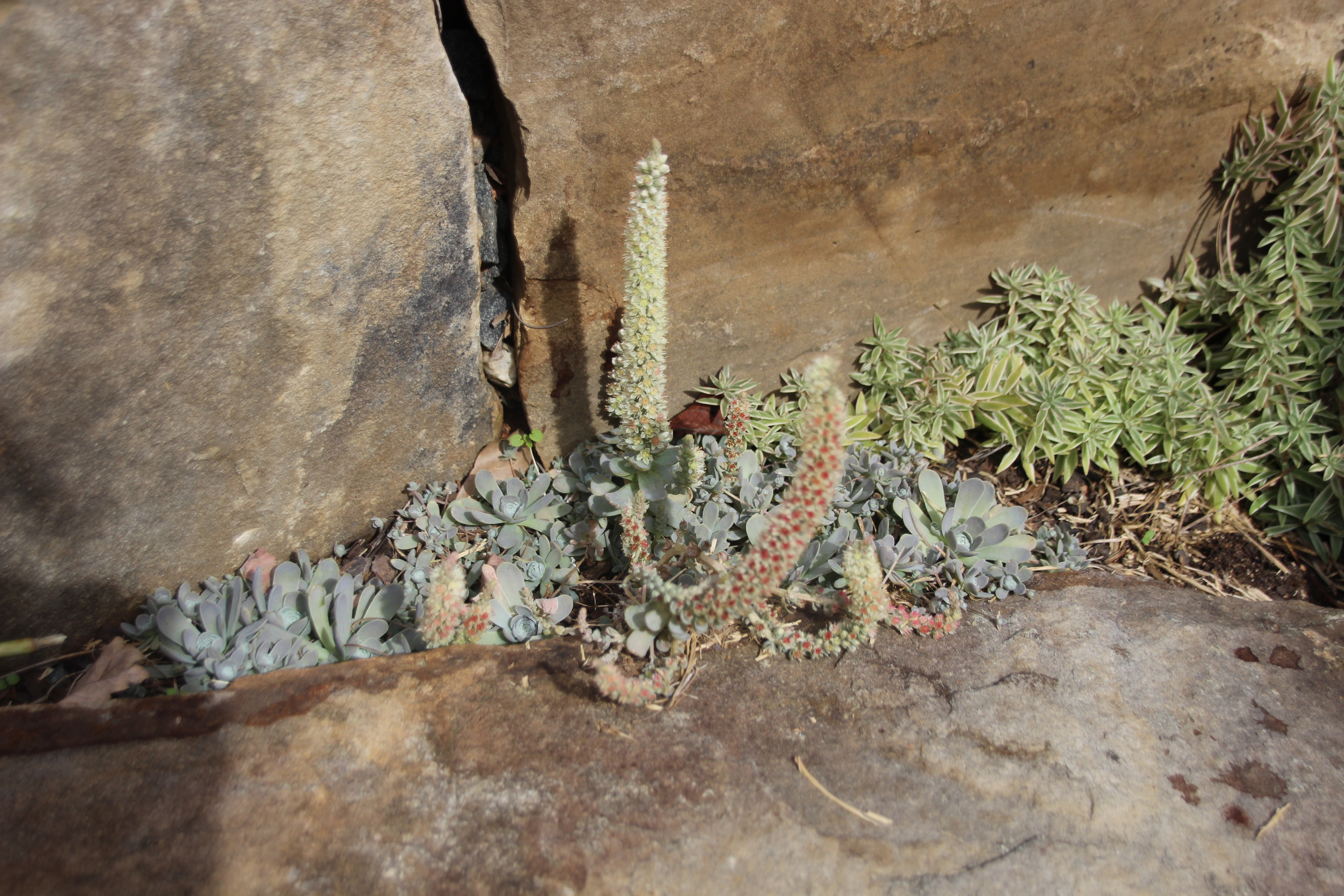
All bees lead to this Chinese Dunce Cap, Orostachys Iwarenge. I usually watch as the caps arise and then ignore the plants afterward. Good thing the bees did not ignore these tiny, late flowers. I would have missed them in my haste to winterize my other green babies.
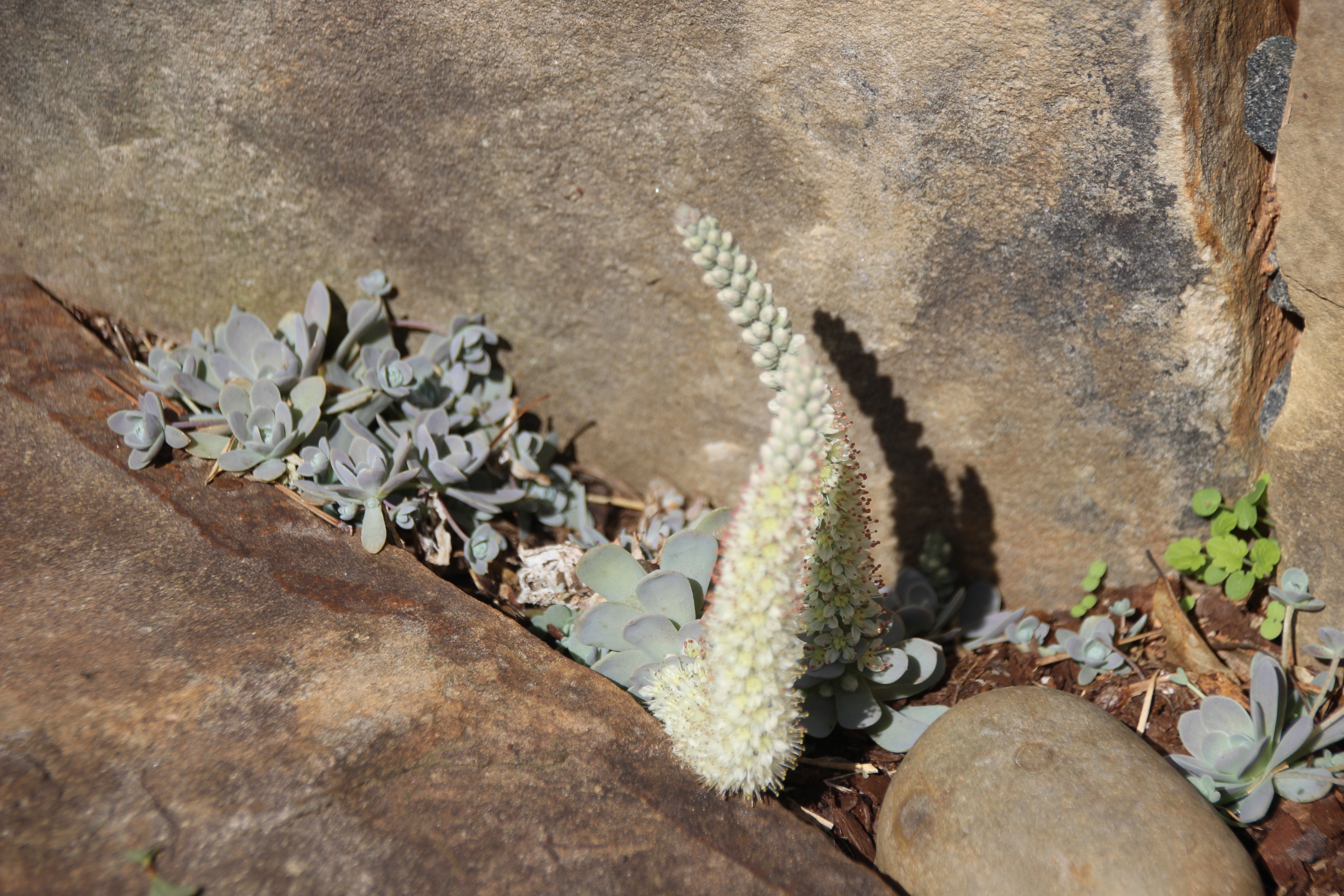
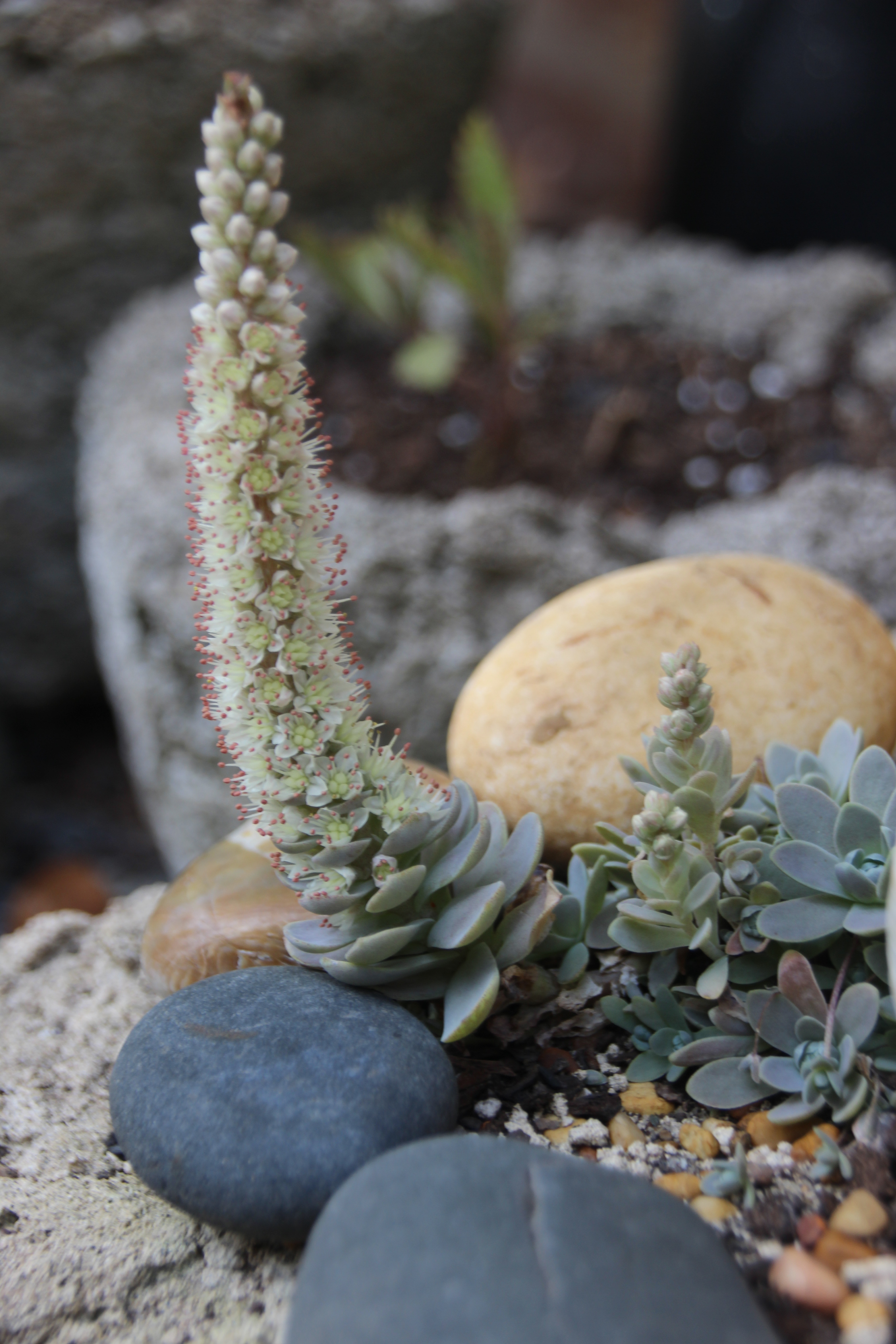
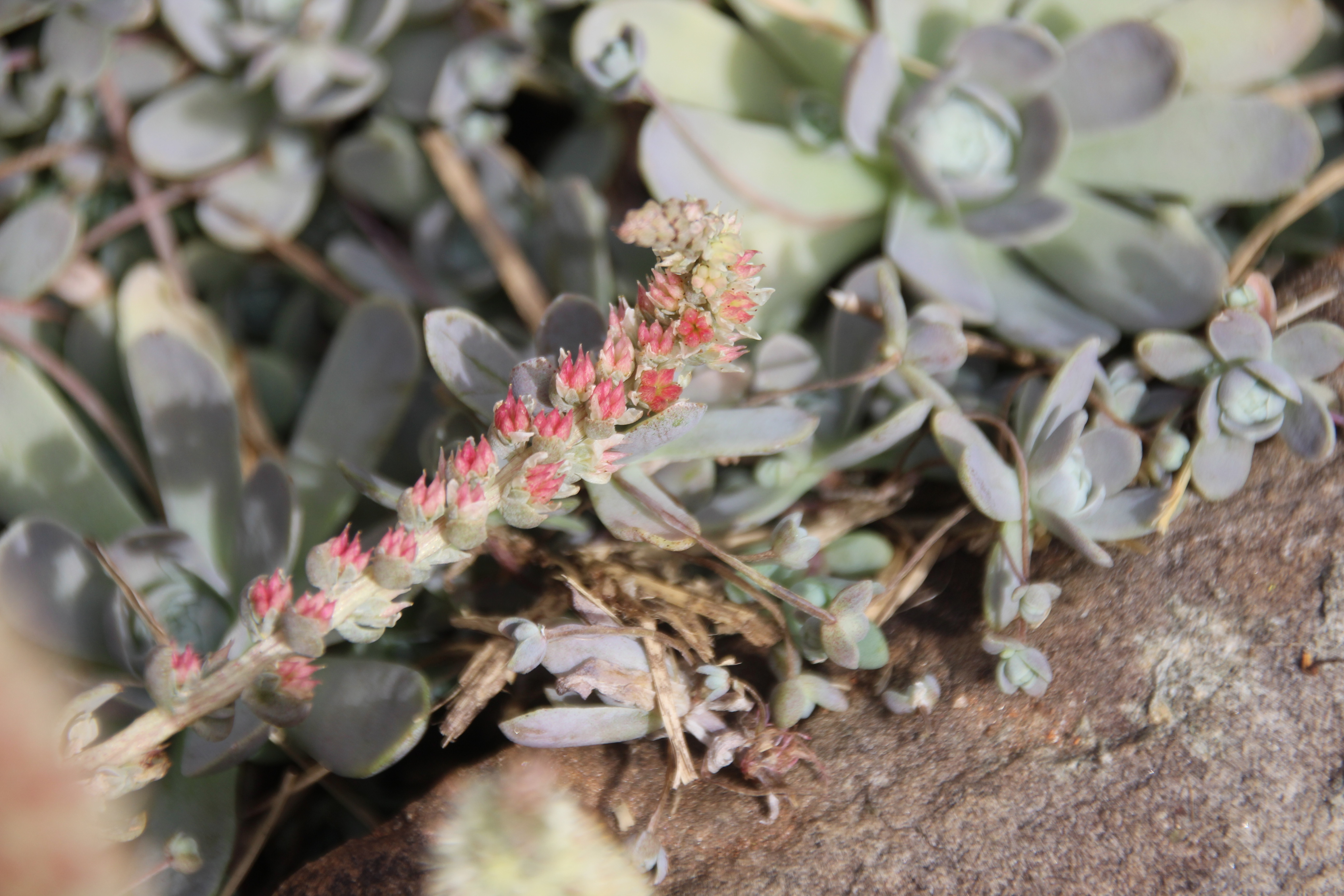
Chinese Dunce Cap/ Orostachys Iwarenge
I need to use my jeweler’s loop to see the structure of the flowers.
There seems to be a white blooming and a pink blooming form nestled here in the rock wall.
This is the best spot for them; dry, warm and sunny.
I have been watching the busy bees buzz the last blooms all afternoon.
I am glad to supply their last snacks before frost.



 floweralley