
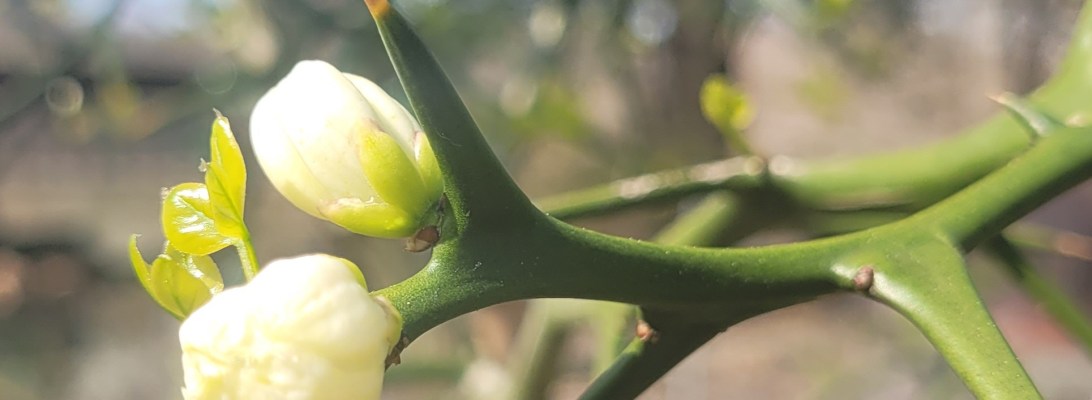
I went home this past weekend to switch out some of my cold-weather clothes for some warm-weather clothes and to do some plant maintenance. Things went well even though I did sustain three injuries. Two of these involved my mean plants.
Mr. Flower tried to assist and supervise but things happened if he turned his back. This is how it goes when you lose yourself in your work. Injuries are expected. Supervision is needed.
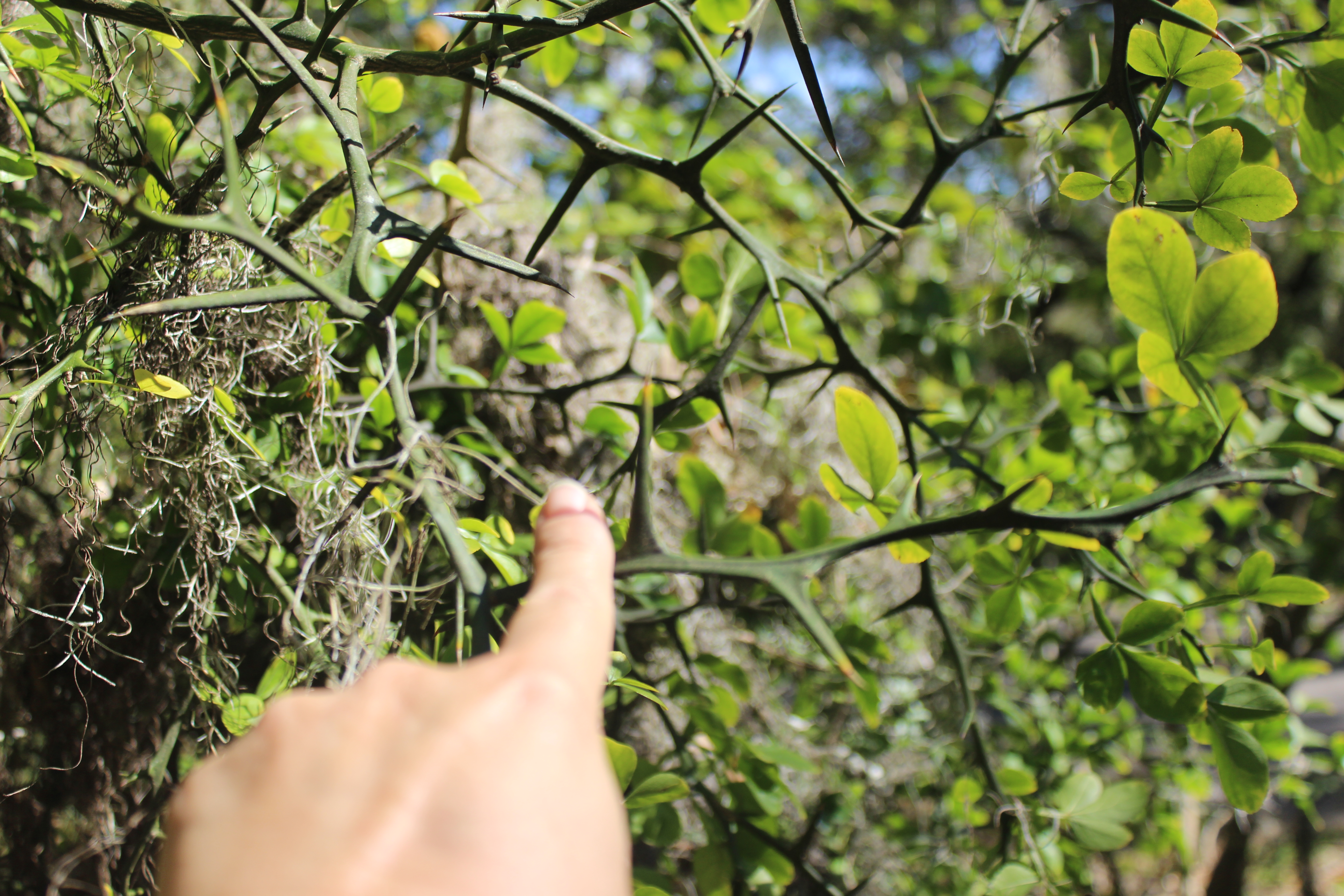
The finger that got smashed was the same one that I trimmed the tip off of years ago. I always receive a souvenier from my cacti when I get near them. I do remove the outer tips from the Century plant’s lowest leaves, which are also dangerous. My worst injury came from the meanest plant in the yard, Poincerius trifoliata.
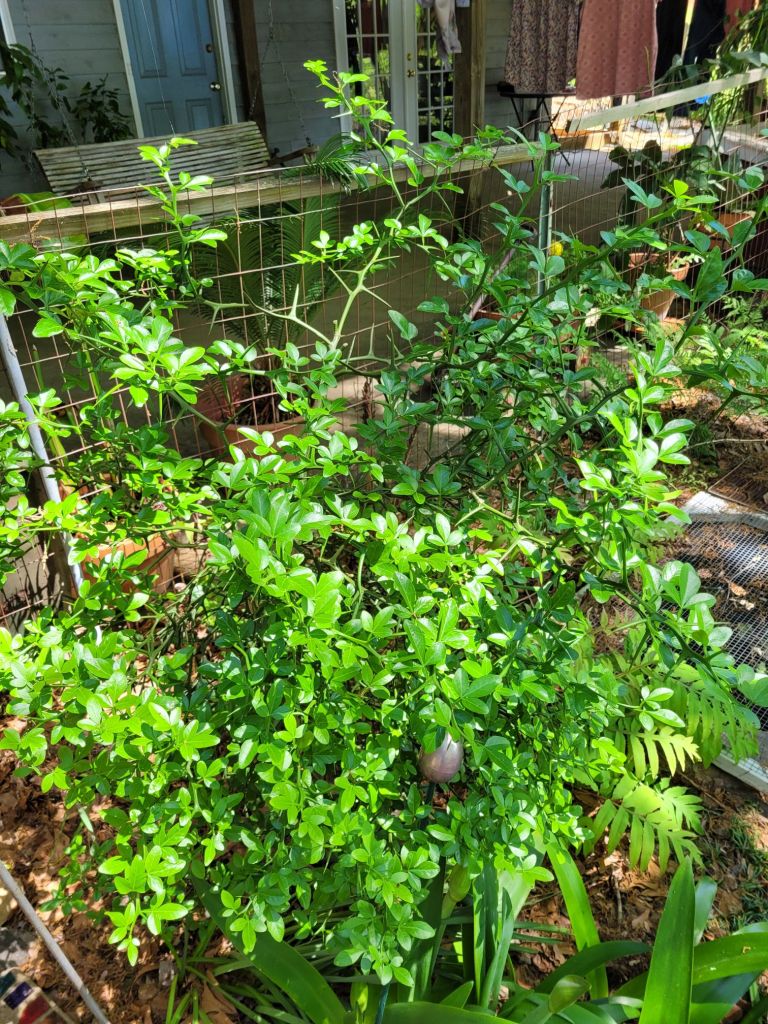
I deserve this stab as punishment for purloining one of the fruits from a southern plantation and smuggling it out in my brazier. The little bitter orange was forgotten until that night when it rolled across the floor of the hotel room while I was changing into pajamas.
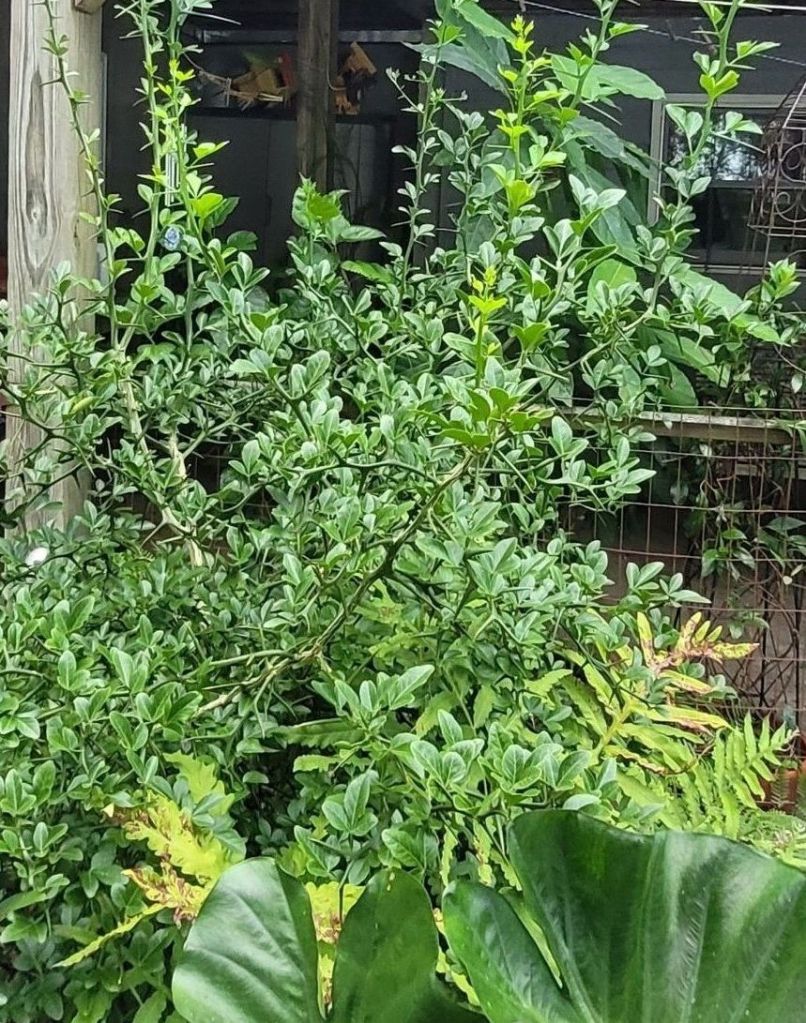
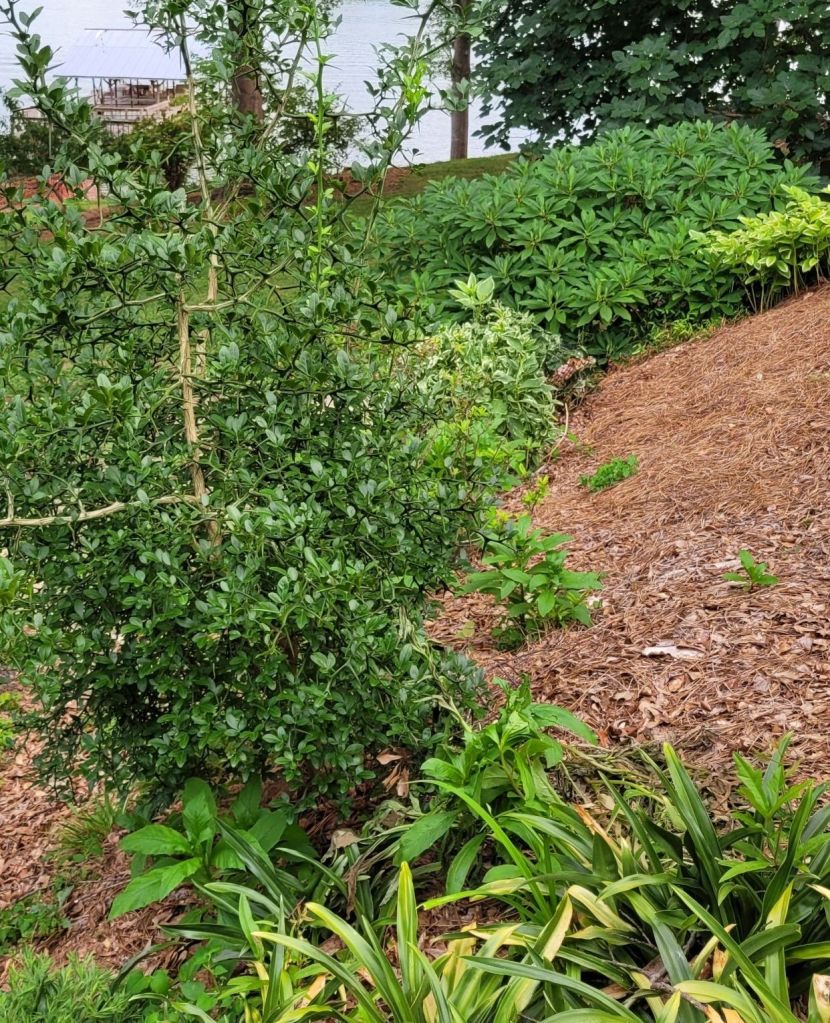
These are technically deciduous shrubs, but send up long sucker shoots which need managing. Also, the center needs to be cleared enough to allow airflow through it. These plants can be used as a formidable hedge and the fruit can be made into marmalade if enough sugar is added to mellow the bitter.
I dressed for battle in double gloves and my Pawpaw’s old hunting jacket with a squirrel pocket in the back. It is made of thick canvas. Mr. Flower has suggested a hard hat for next year’s trimming.
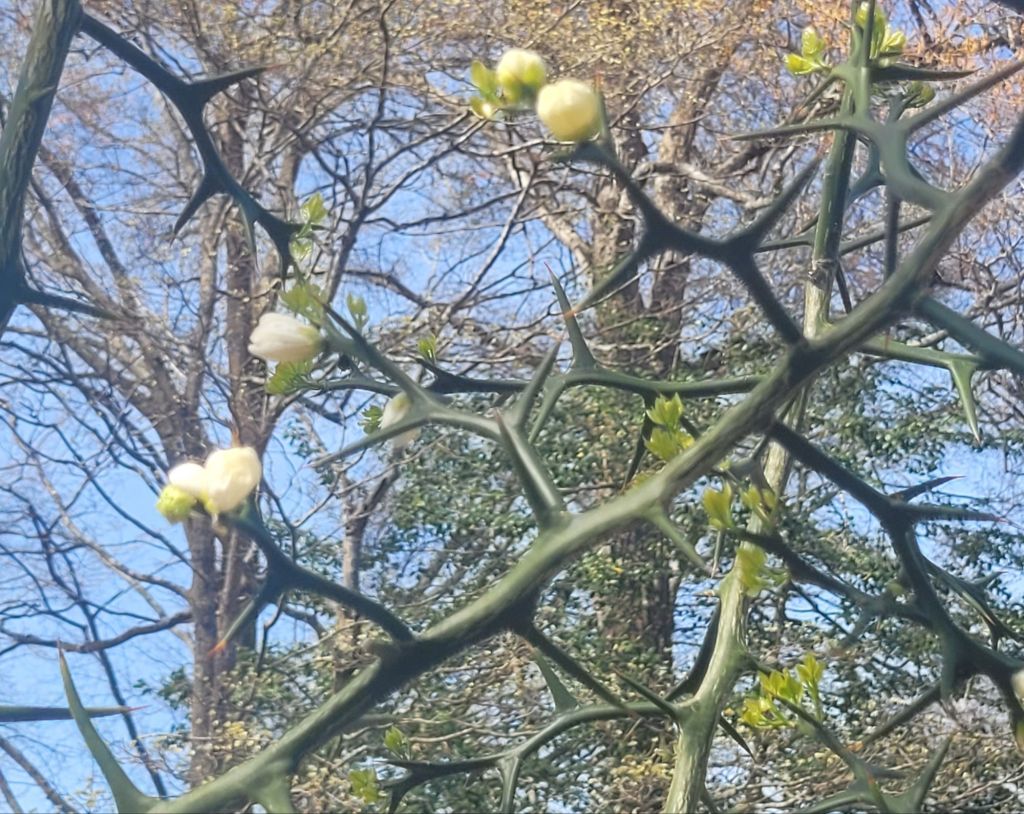
I was innocently butchering the shrub by the fish pond when I was mercilessly stabbed in the head. It did hurt, but I continued on with my work like a good little warrior.
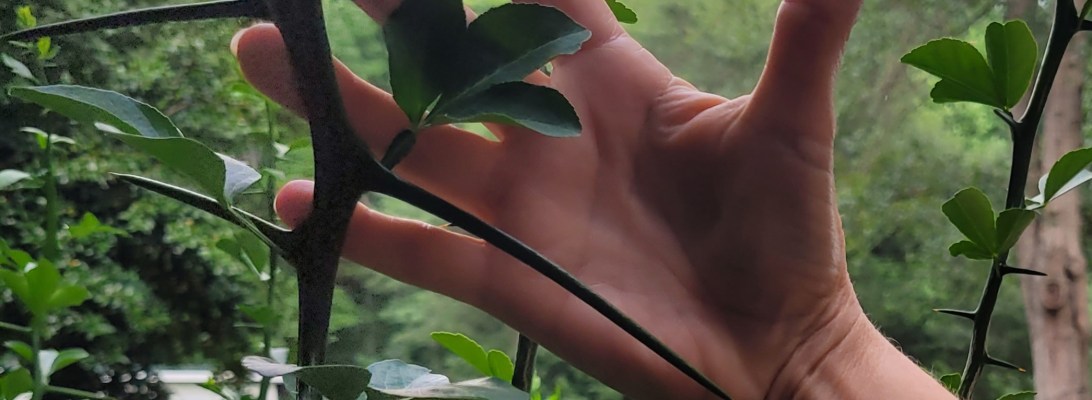
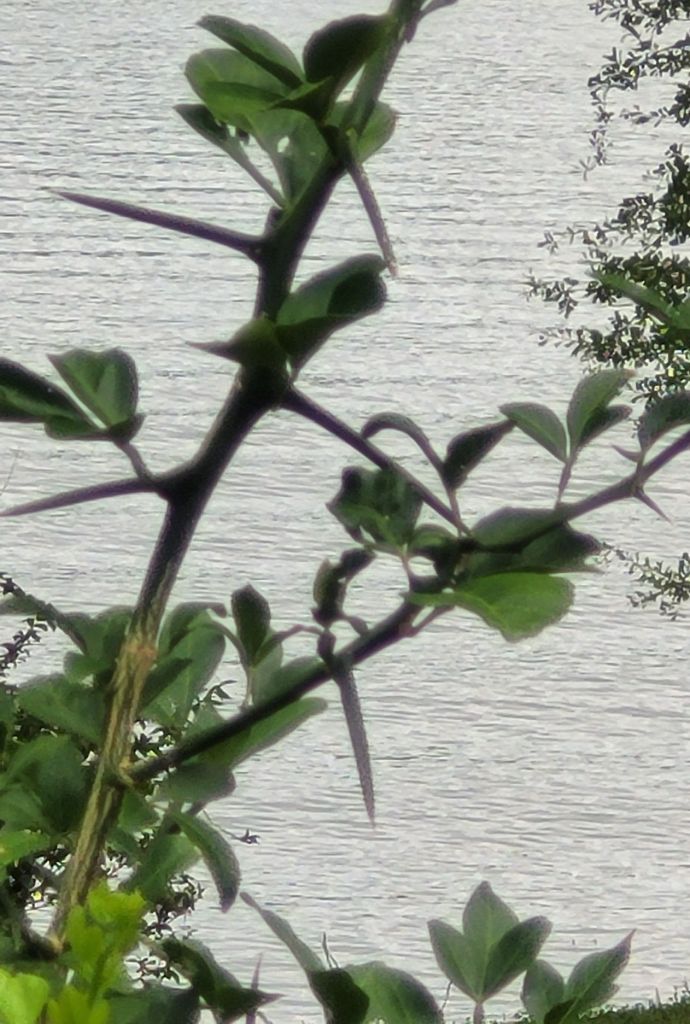
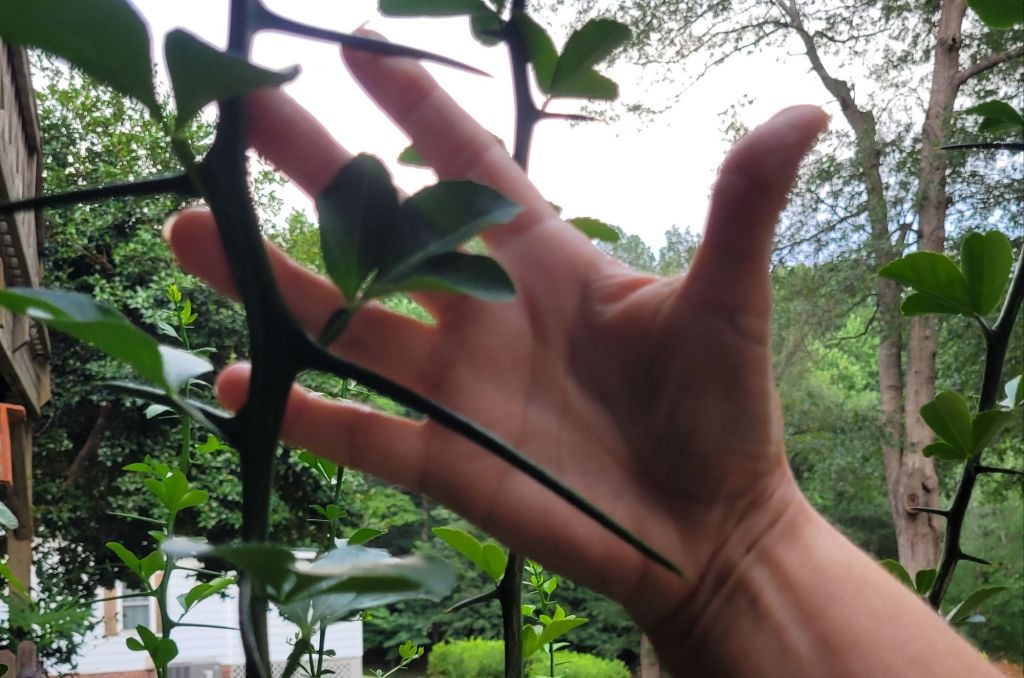
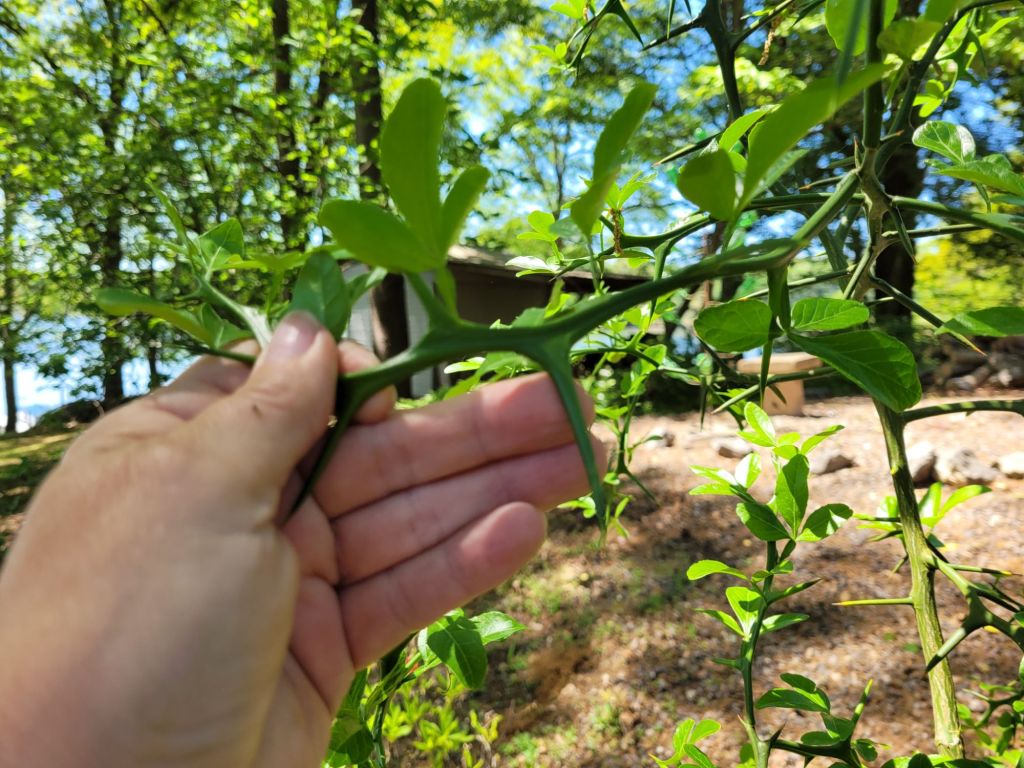
The long limbs must be chopped up to burn if not carefully placed out of the way to be used as a fence. The thorns can penetrate a tire. Its nickname is Flying Dragon. I should have been discouraged by this name, but I am a fool.
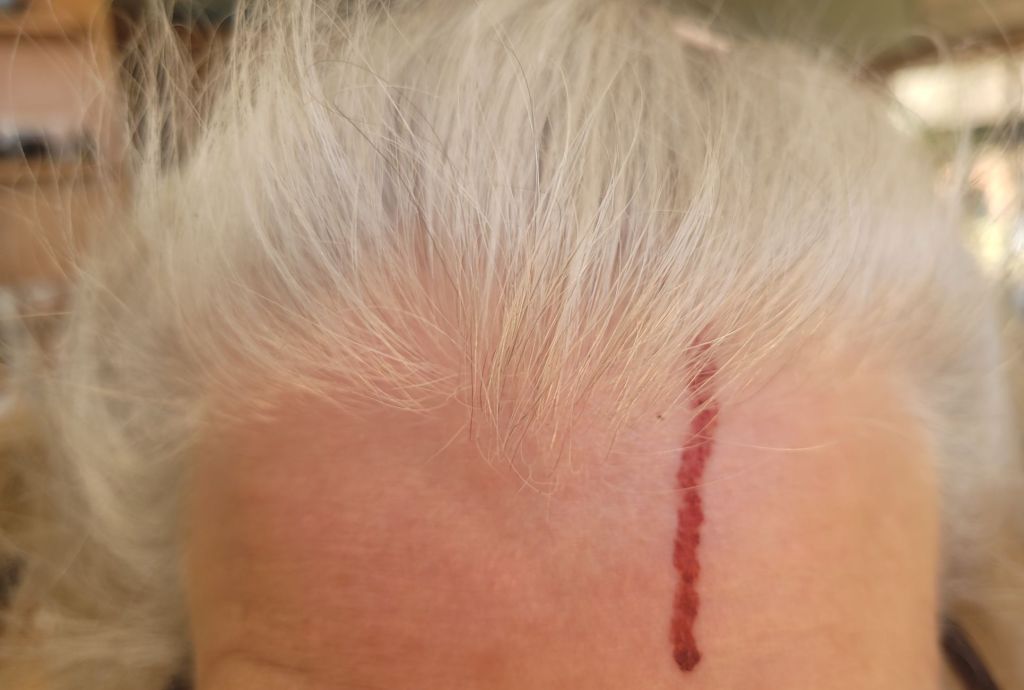
No one realized I was injured until I turned around to speak to my husband and neighbor. They both gasped. A picture was taken. Then Mr. Flower decided to take over the clippers for the next shrub, which is on a bank.
We carefully arranged the removed sucker shoots around two hydrangeas which get eaten down to the ground every spring by our hungry deer herd. One hydrangea is pink and the other is blue. I have not seen a bloom on either in years.
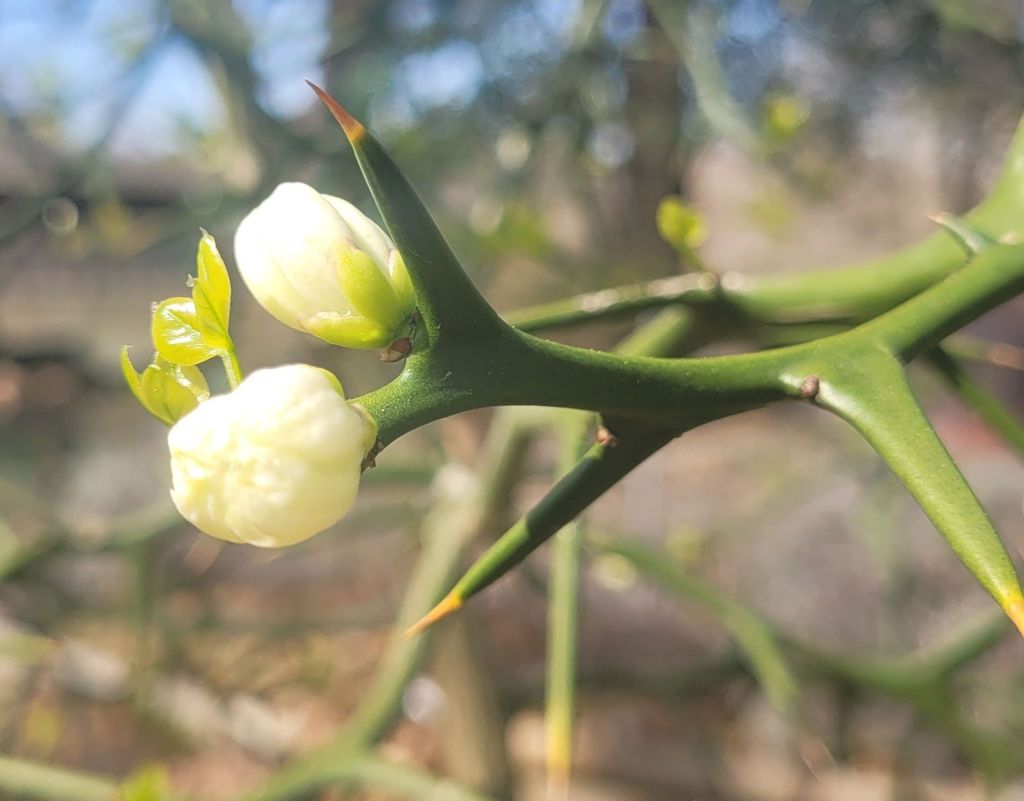
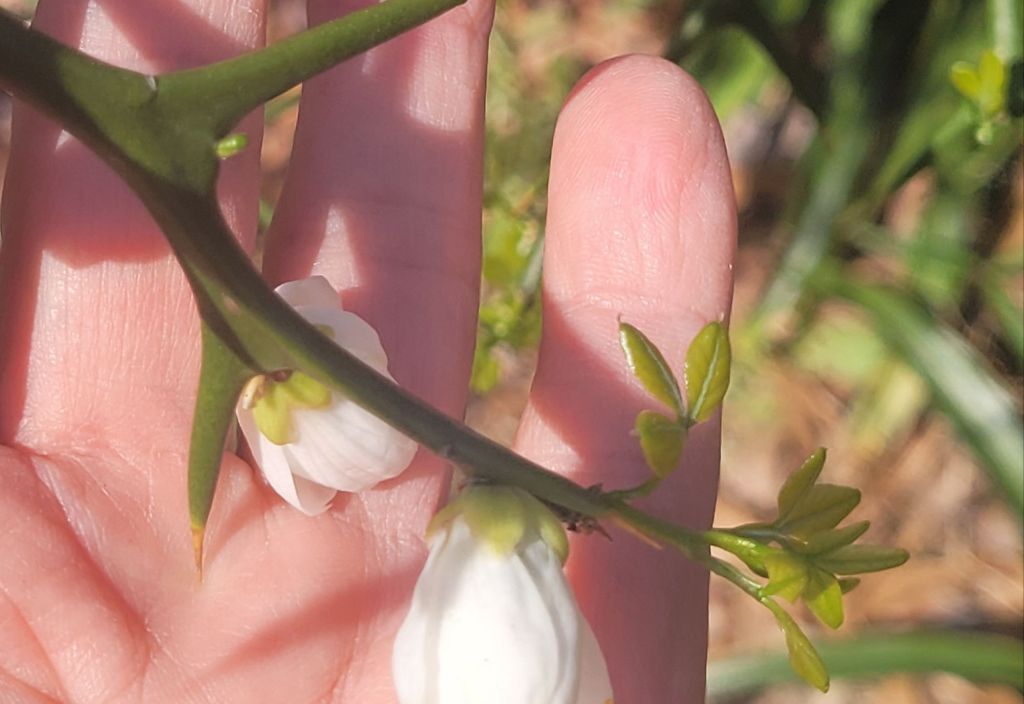
There is one new development with the Poncirius. It is blooming for the first time. This makes things complicated. You see the fruit might fall or be carried off and the seeds may germinate. This pointy plant can become a pest in the south. I am surprised at my biologist self for bringing it home. I intended to keep them in pots, but they got too big and mean to bring in.
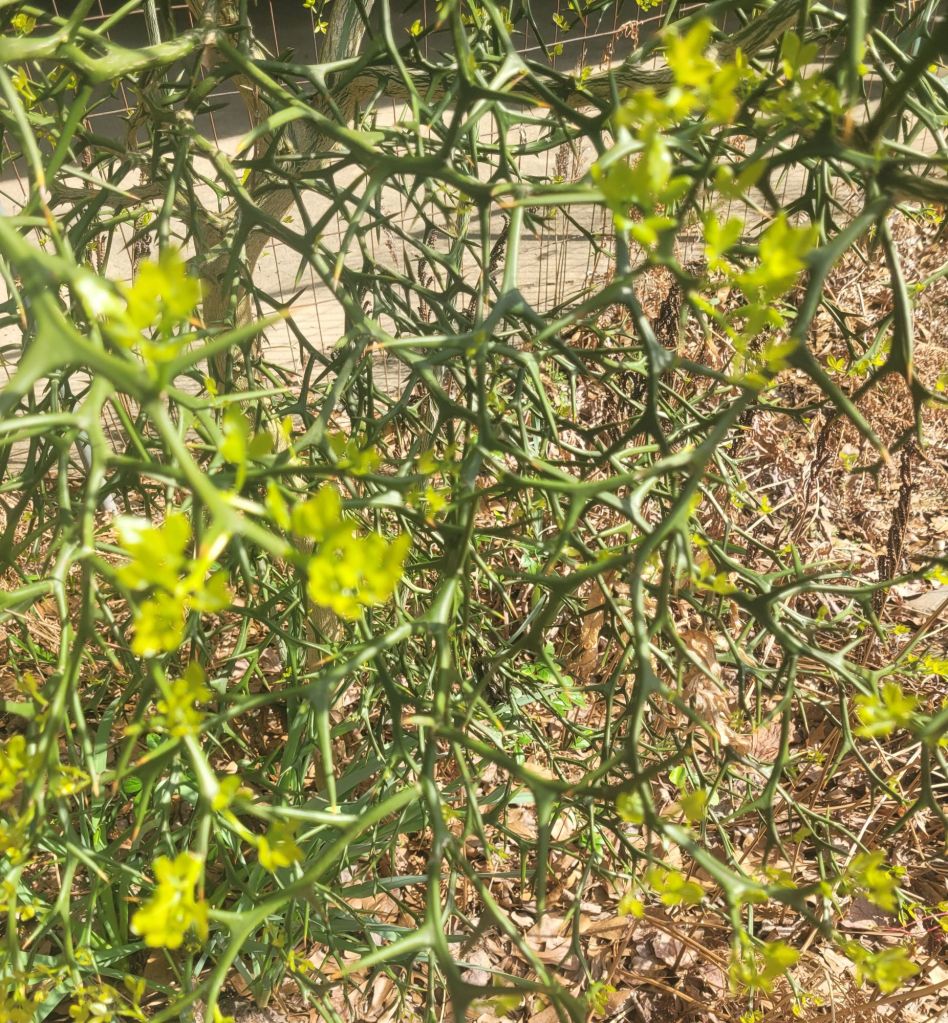
People tend to make their own problems. I know what I must do eventually. But this year, I just want to see if it will make those cute little bitter oranges. Don’t judge!
BLOODY FLOW





 floweralley