Tea and Stones

Sometimes I am lead down unexpected paths of discovery. I have been sick for ten days, so I have spent a lot of time searching shoes, purses and brooches on-line. I have been sucked into the internet for hours at a time. Here is an example of one of my internet adventures.

My latest path started with a tea box. I was perusing the many choices of teas on the internet and was drawn to a specific type due to its lovely box. I purchased the tea to get its box to make a bookmark with it. I was drawn to the box because it reminded me of the botanical work of Mary Delany.

Then I looked up Mary Delany and ordered this lovely box of cards with photos of her flower mosaics on them. I was trying to tell folks about this remarkable woman who did not start making these marvels until the age of 72. She is one of my ‘old lady idols. ‘

The cards came in the most beautiful box…another box for me.

I realized I wanted to learn more about Mary Delany, so I looked up books about her life. I ordered the one by Molly Peacock and put another by Ruth Hayden on my Christmas list. I hope Santazon brings it!

We even waited at the gate for the book’s delivery. (I stalk my delivery people on-line.) It was later delivered to our neighbor’s porch, so Mr. Flower had to go retrieve it in the dark. Since he went to all that trouble, I felt compelled to start reading the book immediately. It is fabulous and has many photographs of Mary Delany’s art and several of Mary herself.

Then a fellow blogger posted a lovely blog about painted rocks being left out for folks to find.

https://wordpress.com/read/feeds/24620341/posts/4372809849.

I thought this was an interesting idea since I am intimidated by the thought of painting on canvas. I have plenty of river rock and paint. I also have thousands of photographs of flowers. I figured that painting my flowers onto rocks would make better plant markers than my chop sticks, plastic knives, etc. that I inevitably step on and break.

So, this is how a box of tea lead to stones.

FLOW

The Gran Plant

I spent decades calling this ‘The Gran Plant’ before I knew its proper name. Our family still refers to it as such. My Gran kept this plant in her foyer in the winter and on her porch in the summer. It was planted in a gorgeous Majolica Jardiniere. My Aunt has this planter in her dining room.

It seems strange to call it ‘Christmas Candle Plant’ or ‘Redbird Cactus’ since I have never seen it bloom.

I won’t be calling it ‘Devil’s Backbone’ because I have too many other “Devil’s” all ready. Its Latin name is Euphorbia (Pedilanthus)tithymaloides. I definitely will not be calling it that.

There are many conflicting facts about this plant on the internet. The most interesting pair was that the milky sap is poisonous versus making a cocktail with it. Some say water it in winter, some say do not. Another tip is to root cuttings in dry soil, while I have always successfully rooted them in water.

I am the guardian of ‘The Gran Plant’ and ‘The Pearson Peony’ for the family. I consider this responsibility of great importance. These living legacies are of great value.

The FLOWER Keeper

My Big Begonias

My favorite begonias can get rather large. They can also change colors.

This type of angel wing begonia is gorgeous in a pot, in a vase or in the ground.

It is time to take cuttings. This means sharing. I have had this begonia for decades. It is a keeper.

I cut the longest stems and remove most of the leaves. Stems must be cut at an angel just before putting them in water.

Blooms should be removed, but I like to leave them to enjoy for a bit longer. Remove when they start to shed.

A sunny location will make the blooms red and the leaves bronzed.

I prefer green leaves so mine get less sun. New leaves tend to be bronze wherever this begonia is planted.

Shade makes the blooms a light pink and white. This is lovely also.

The blooms hang in clusters.

I think an individual flower is worth inspection.

This is a perfect fall or winter gift. This vase just went to my neighbor, Nancy, this afternoon.

Cuttings will grow in water for years, but the plants need to be put in the ground if you want to see how big they can get.

Pots brought inside for winter will go semi-dormant if not in heated space and kept lightly watered.

Begonias left in the ground go dormant and take longer to get going in the spring. (I am in zone 7.)

I vary my over-wintering methods to a few each way. This ensures that I will have this big begonia forever to pass along.

FLOWER (with scissors)

Bulbs of Hope

When my garden starts shutting down, I have a ritual of planting bulbs for the future. I can think about them waiting patiently under the soil in their fresh holes as winter approaches and retreats.

There are many tasks that must be done to shut down a garden. The ponds must be cleaned and covered. The fire bowl needs to be tipped. Leaves must be raked. Acorns get blown into piles for my foraging friends. These tasks are necessary, but they signify an end.

I plant bulbs as an act of faith that there will be a spring with a beginning on the other side of winter. This small act gives me the hope I need to push through the darkness and cold.

I did not plant many bulbs this year. I ordered bulbs that I have not had here before. Just three Red Spider Lilies, two Magic(Surprise) Lilies and one Oxblood Lily. I read the instructions carefully. I marked each hole. I recorded what was planted where in my gardening journal.

Now comes the waiting. Some of these will not bloom for years. “Be patient with Mother Nature.” the papers say.

I need these little sites of hope sprinkled around underground.

FLOWER (prepping for dormancy)

Stolen Tea

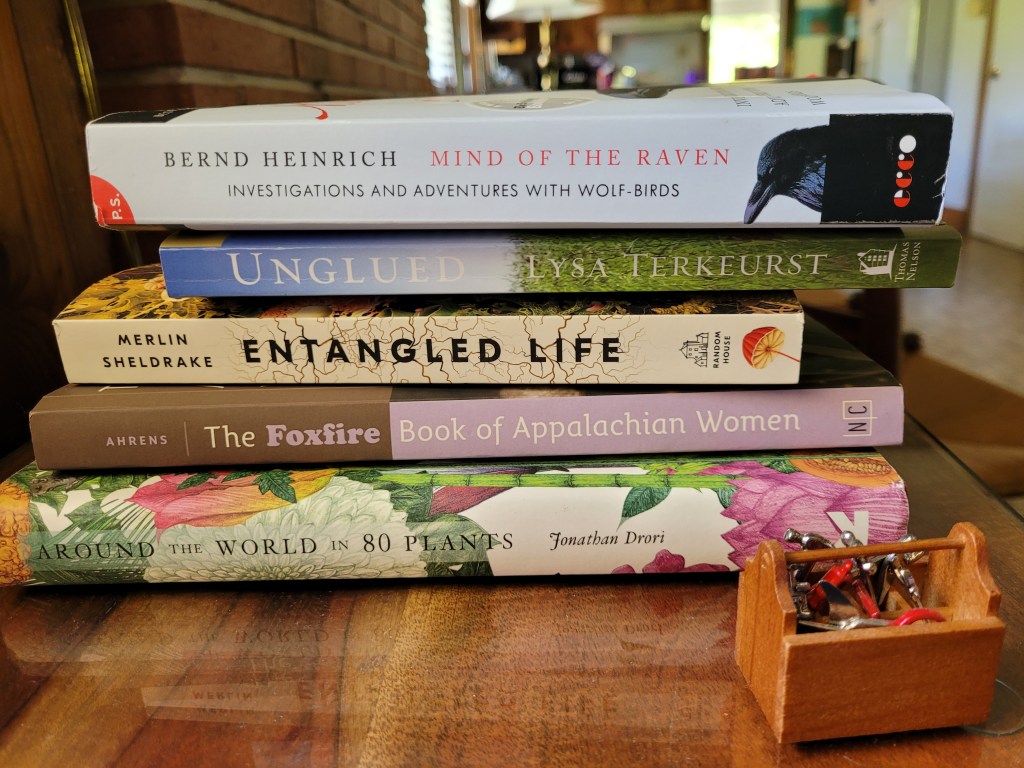
When my gardens go dormant, I turn to my books to keep me occupied. Many of my books are about plants.

For All the Tea in China by Sarah Rose is an excellent account of Robert Fortune’s adventures, undercover, as he infiltrated the Chinese tea trade and stole its secrets and thousands of plants and seeds.

The secret to his success was the use of Wardian Cases to keep the seeds and seedlings alive on the long journey from China to India. These little greenhouses were crucial to his success in maintaining the health of his stolen crop.

Robert Fortune also spied on the picking and processing of the tea leaves. He even discovered that the Chinese were adding poisons to their tea to make it look green. This revelation eventually gave the new crops in India an extra advantage in the minds of the British consumers.

Robert Fortune brought back many other plants and treasures from his years in China. His espionage assignments in China left him both rich and famous.

Sarah Rose did an excellent job of covering the tale of tea. This book gets a 10!

FLOWER

Life Inside a Stick

I gather sticks to burn in our fire bowl. As I tossed one onto the pile, it broke in the middle. I picked up the two pieces and noticed a dark cylinder in the middle. The cylinder sections were wrapped in tiny brown leaves. I knew that this meant a larva was inside.

I took the stick pieces inside to be examined. I carefully unwrapped the dozen or so small leaves from a section.

The first one only contained yellow powder.

The next section squirted as I got to the center. I carefully cut open the capsule. There was a light colored blob inside.

I put the blob on a slide and looked at it under the microscope. This face appeared.

I put the rest of the stick back outside. I do not know what is growing in it, but it was carefully wrapped to ensure its survival and placed in a well made tunnel.

If the stick had not broken, It would eventually have been burned. Sometimes our fire makes whizzing and squeaking noises. Now, I will worry that I have roasted some larvae.

Who knew that such mysteries would be enclosed in a stick?

FLOW

Change

The leaves of North Carolina are glorious as they give up their lifeblood of green and prepare to fall.

I think about this fact more this fall than ever before. The leaves are giving the trees back their chlorophyll as they die.

The result is a crescendo of colors. Folks who do not glance at trees the rest of the year drive here to enjoy fall.

The leaves demand attention as they die. They have been there all along, mostly ignored.

The change makes us notice.

I have driven down this road hundreds of times and have never seen this house until heavy equipment removed the vines that kept it hidden for decades.

We had to take a closer look before more heavy equipment removed it. It is an intriguing liability on land newly purchased.

I knew the boys who grew up here as old men. They are now gone. I hope someone has saved the pictures and the stories.

We got one last look at a jewel that we never noticed before it falls.

I am not a fan of fast change. I am unsettled by the huge waves of development that are washing away the history here.

Every outing brings new lamentations. More houses, more people, more traffic…less trees, less nature…

This old house was built on cleared land many years ago, nature took that land back for a bit.

The vegetation engulfed the buildings, strangling the structures, erasing its human history.

This land will be changed again. We will be changed with it.

FLOW

Fatsia’s Freedom

It is time to set Fatsia free in the garden. After a year of pampering it and potting it up, I finally believe it will be better off out in the ground instead of a pot. It has quadrupled in size.

It is an act of faith to put a plant in the ground. Is it ready? Is this the best location? Will it be beaten by weather or eaten by wildlife?

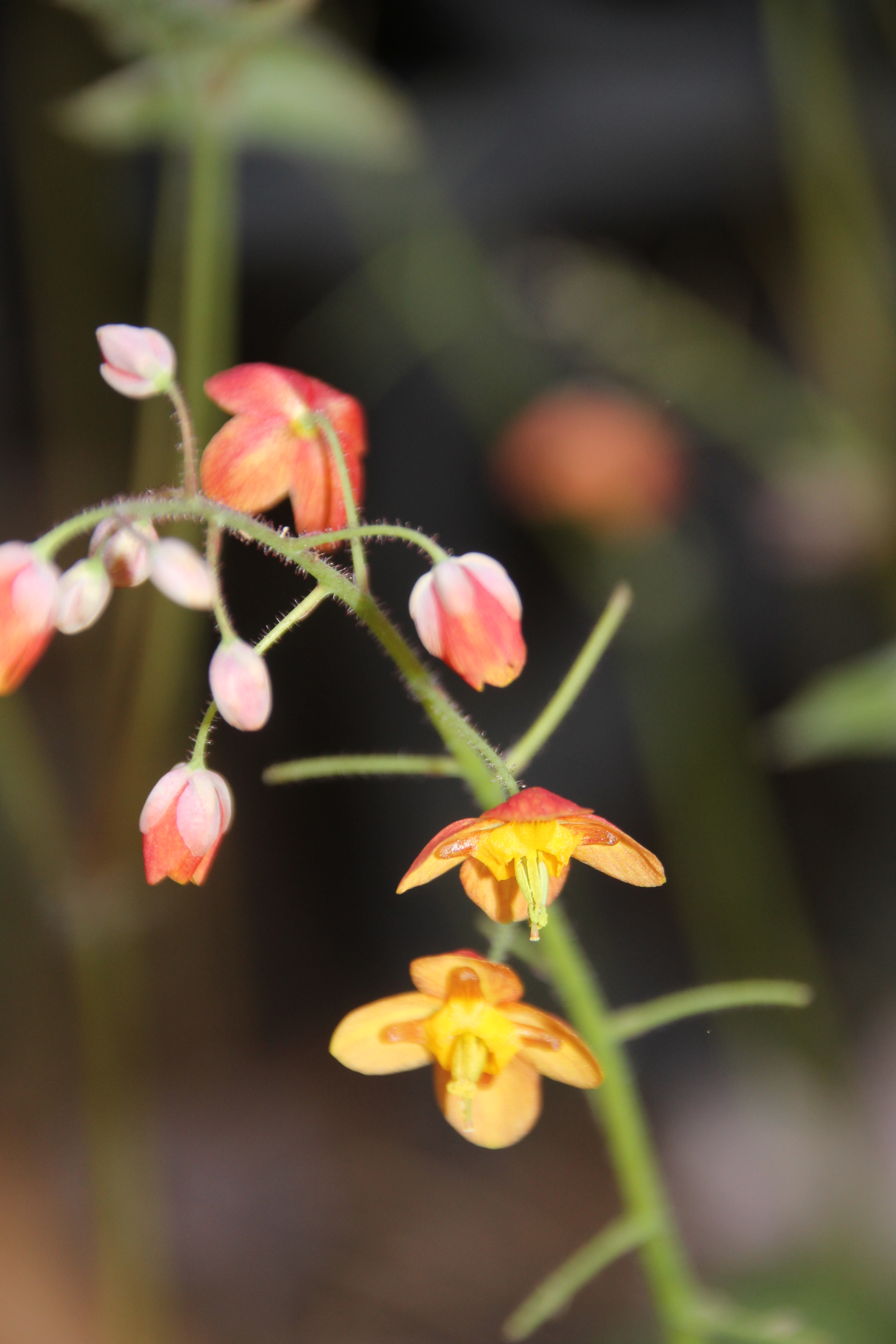
I must release my friend Fatsia japonica ‘Spider’s Web’ and hope it thrives among the Selaginella, Autumn Fern and Orange Epimedium.

A beautiful plant in a lovely spot.

FLOWER

The Muhly Fountain

The rain has transformed the Pink Muhly Grass into a fountain. Its draping stalks glisten with drops.

I petted it and the drops converged and ran to the ground.

It feels like delicate, wet feathers.

The drops sparkle. It is a new kind of beautiful.

Flower