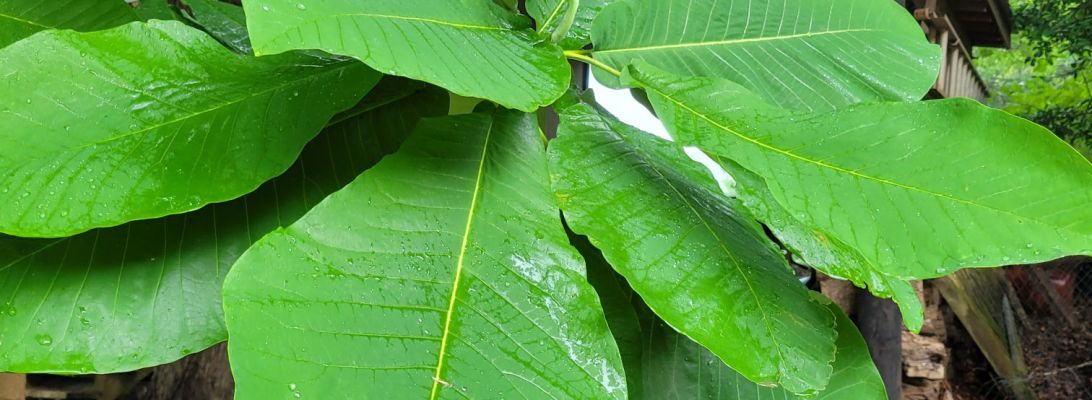
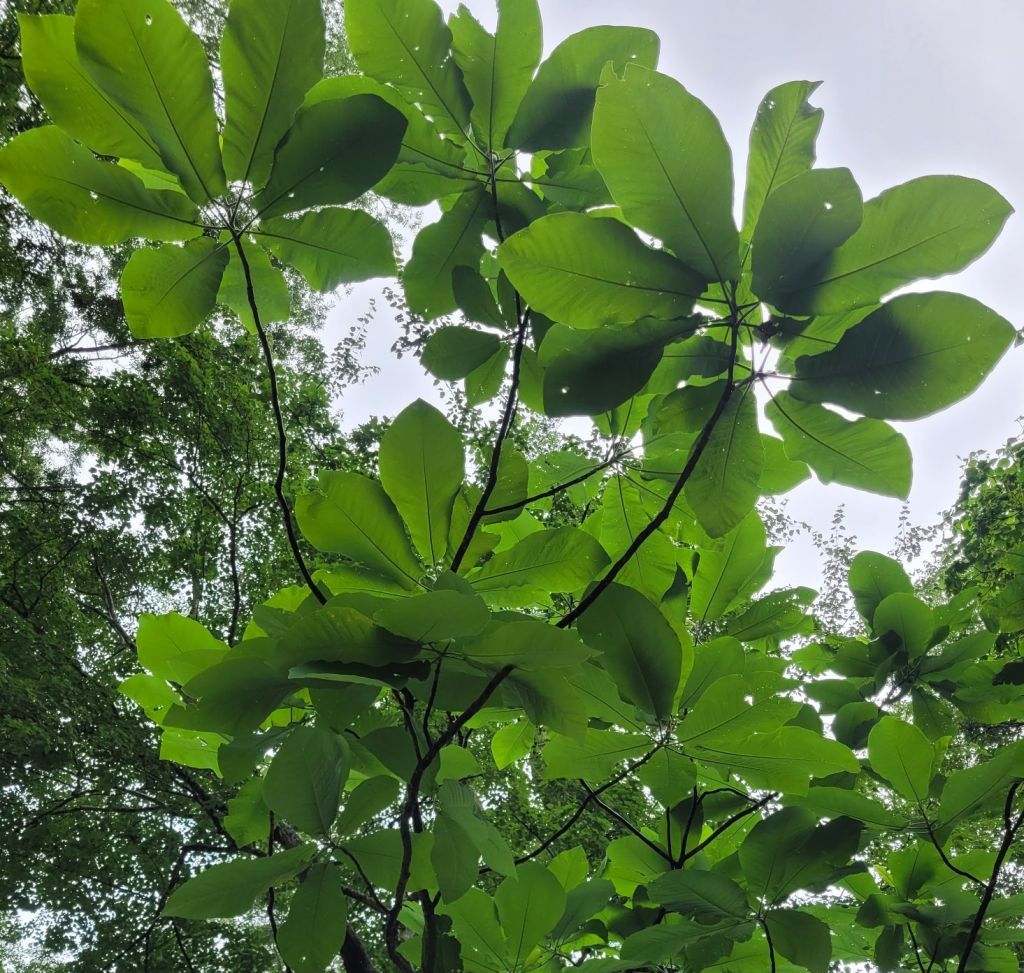
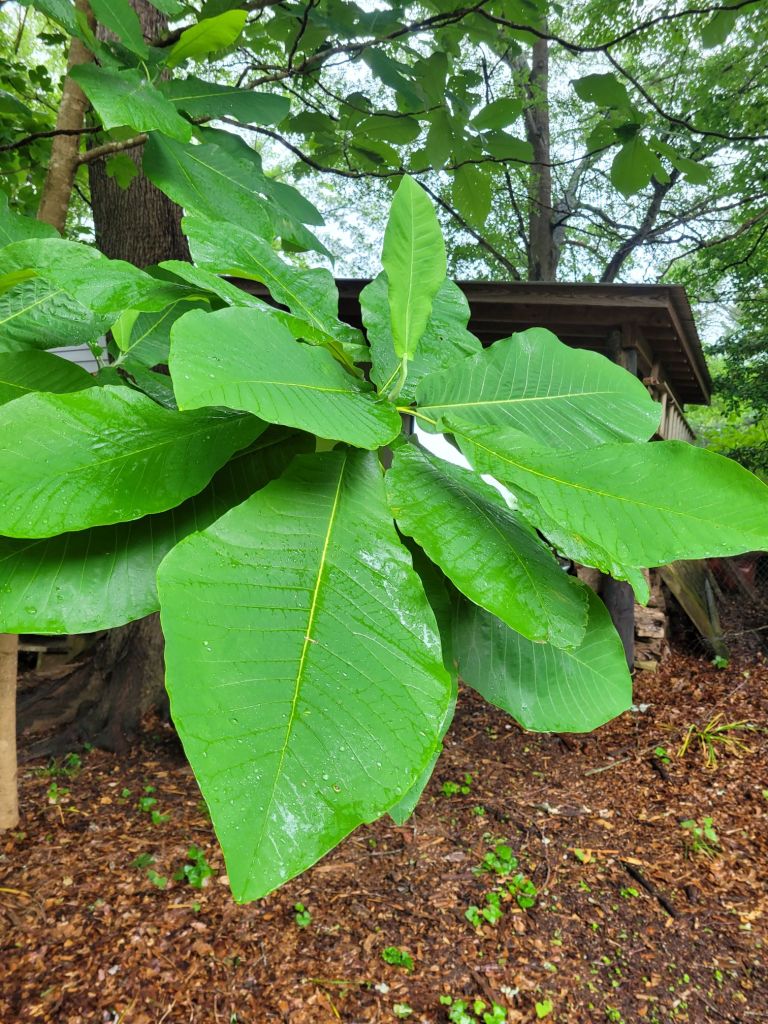
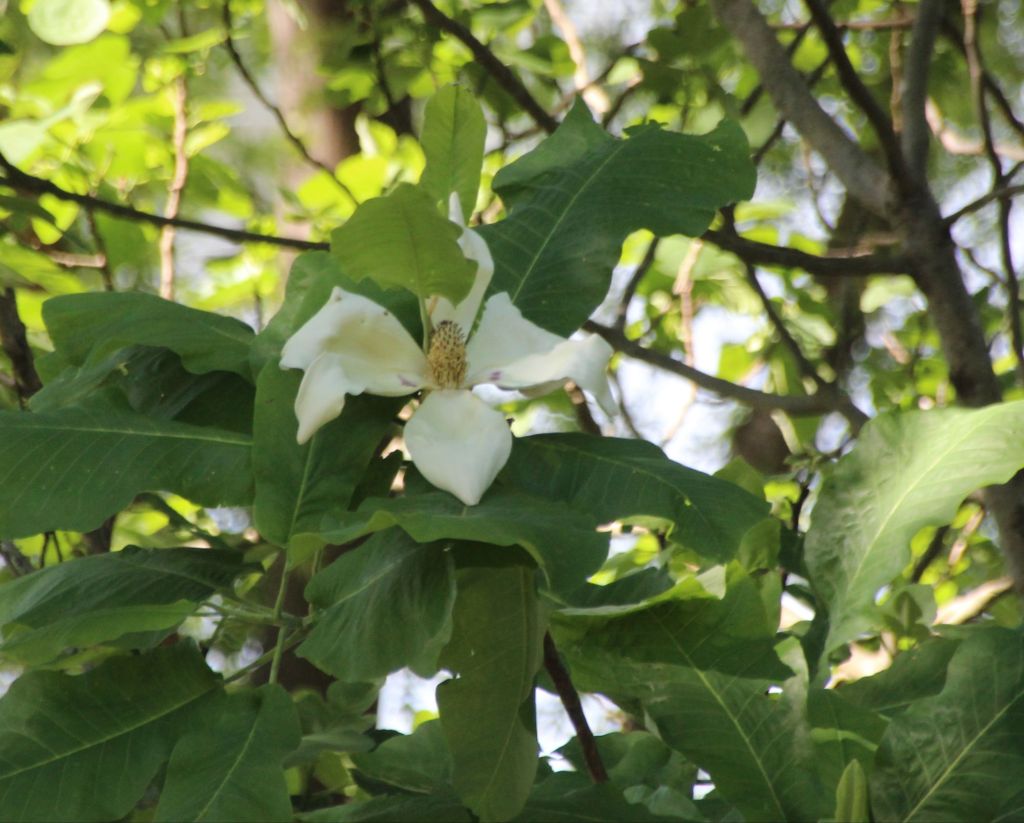
I love to stand under this Magnolia macrophylla. It has the largest single leaf and largest single bloom of all the North American native trees.
Magnolia macrophylla
This tree is naturally found in only certain spots of North Carolina. I admit to moving this one out of a friend’s yard, near Charlotte, several decades ago. It has thrived in its new location.
Its common names are Bigleaf Magnolia, big-leafed cucumber tree and umbrella tree. It is a native of the southerneastern United States.
Its leaves splay out from central branches like opened umbrellas. It has an interesting form even in winter as these braches reach up like arms of candelbras.
I am lucky to be able to see its big white blooms from up on our deck. These flowers are so high that they are hard to see and impossible to smell from the ground.
This is not a case of altruism. It is an example of my mindlessness…again. Head one place; hand somewhere else.
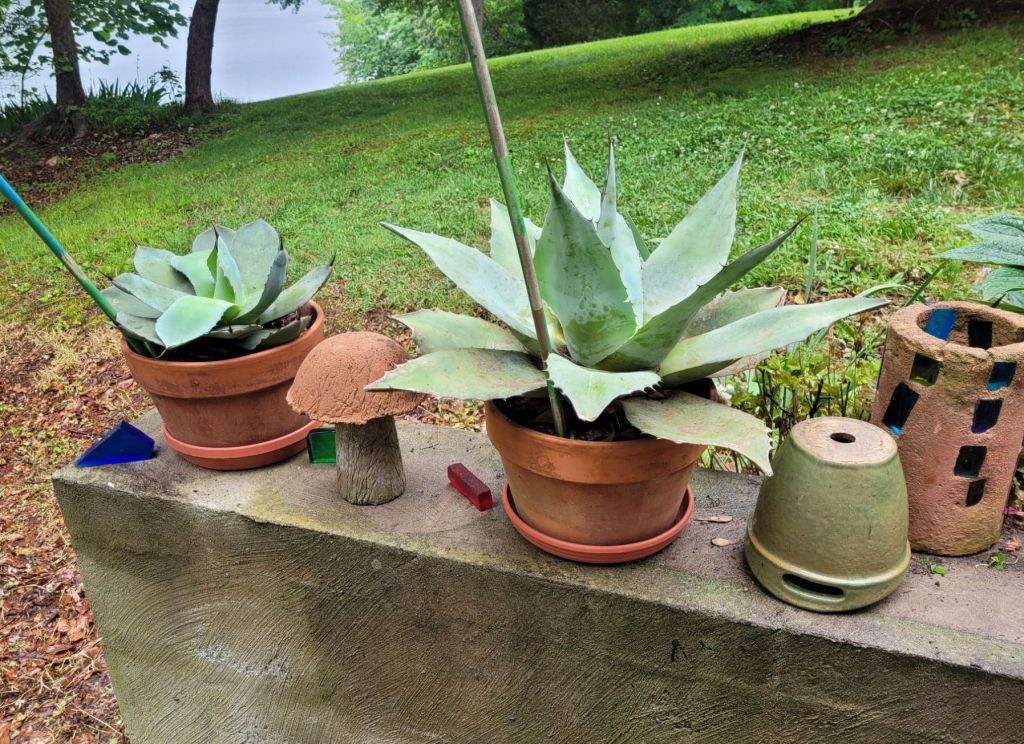
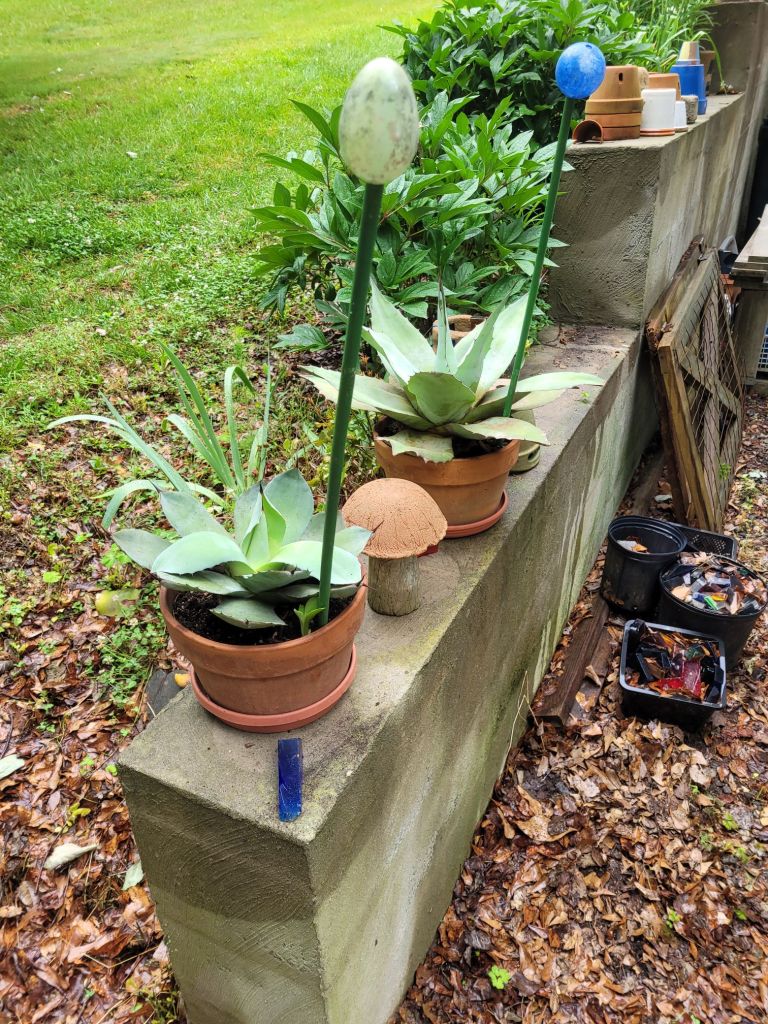
We moved the Century Plants back to their favorite spots on the wall. They love the heat from underneath.
Two Centurys
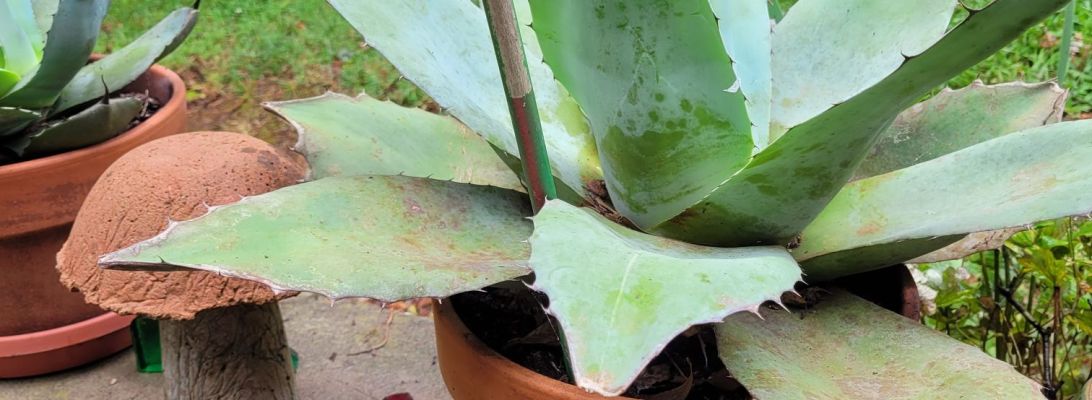
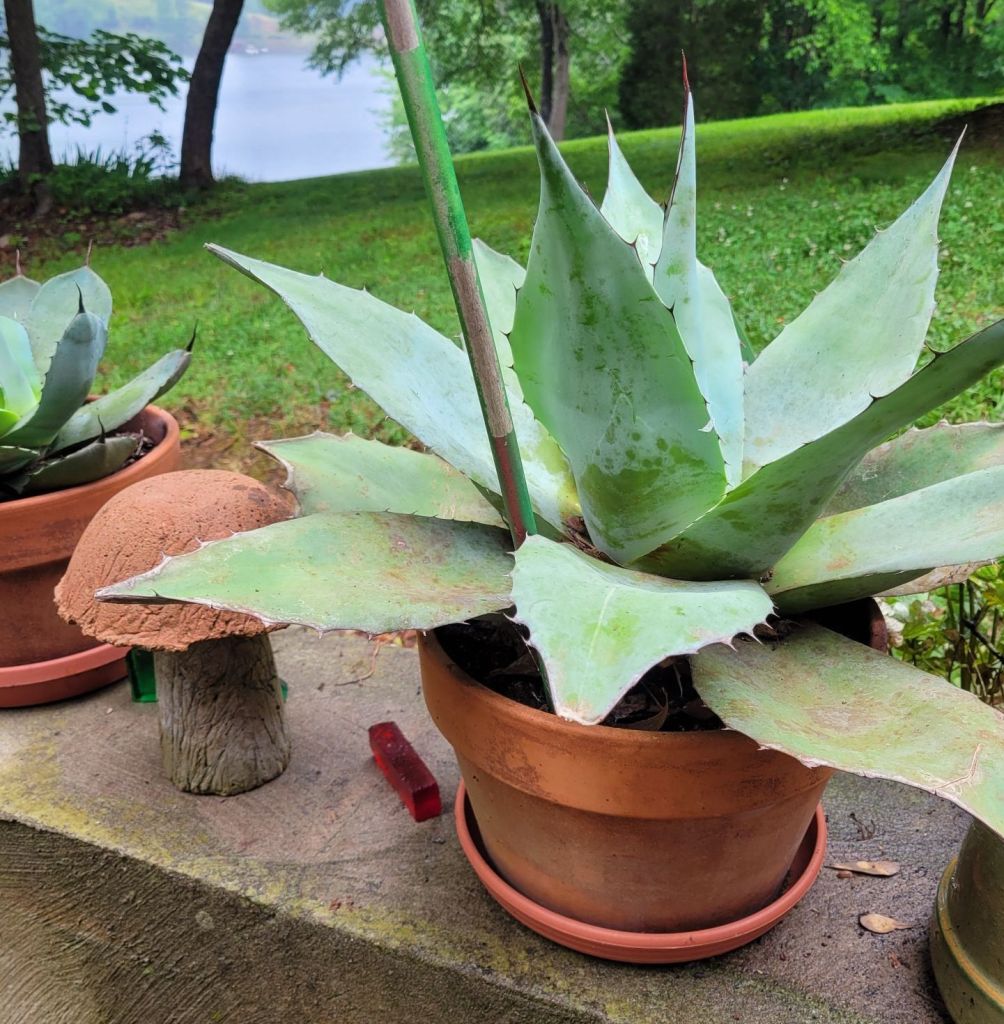
I put on gloves to prune off dead leaves. These plants need sun and very little water. The only time I touch them is to trim old leaves and remove pups.
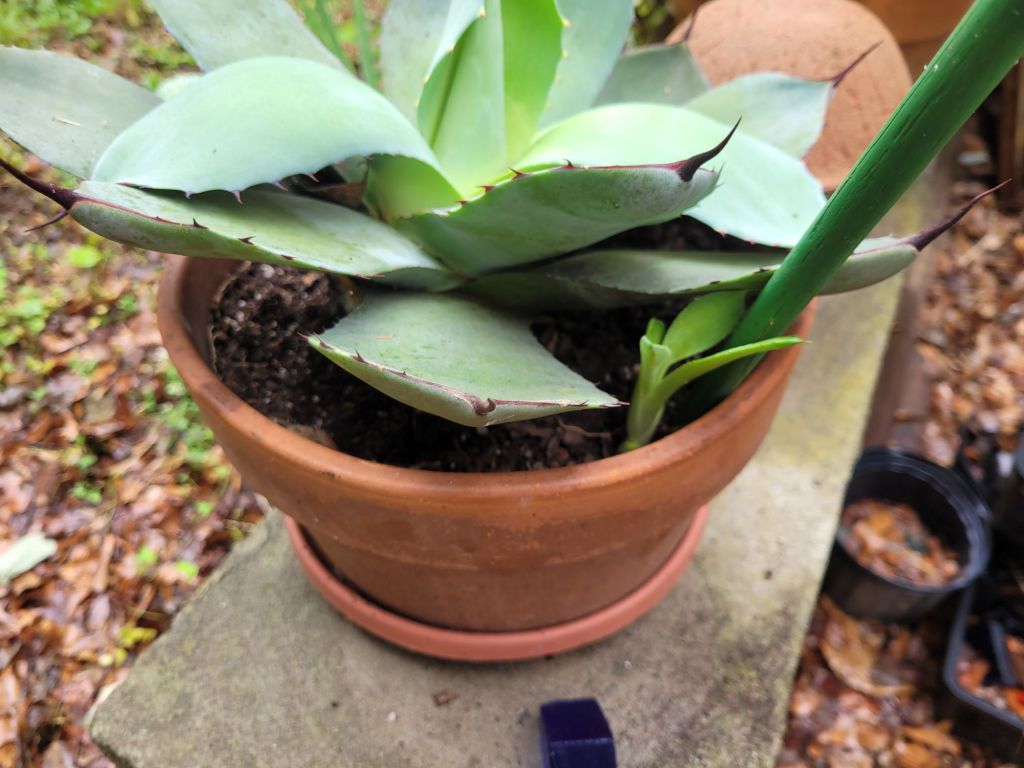
Mama agave and pup
When they stayed inside I clipped off the spikes. They are big enough to leave out, so they may go in the ground this fall. These bloom only once in a lifetime. I hope I live to see the giant flower stalks.
Century plants
I put sticks with balls on the ends to prevent passers-by from running into the mean spikes at the end of each leaf.
I needed one more stick. I took off my gloves to search, but did not put them back on. OUCH! The sap is poisonous.
Red but not swollen.
I think I heard a whisper from one of the agaves. It sounded like ” Touche!”
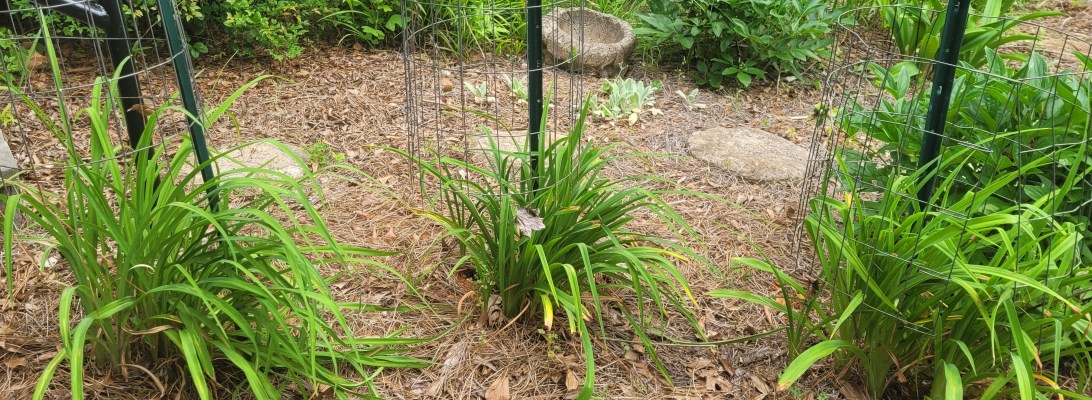
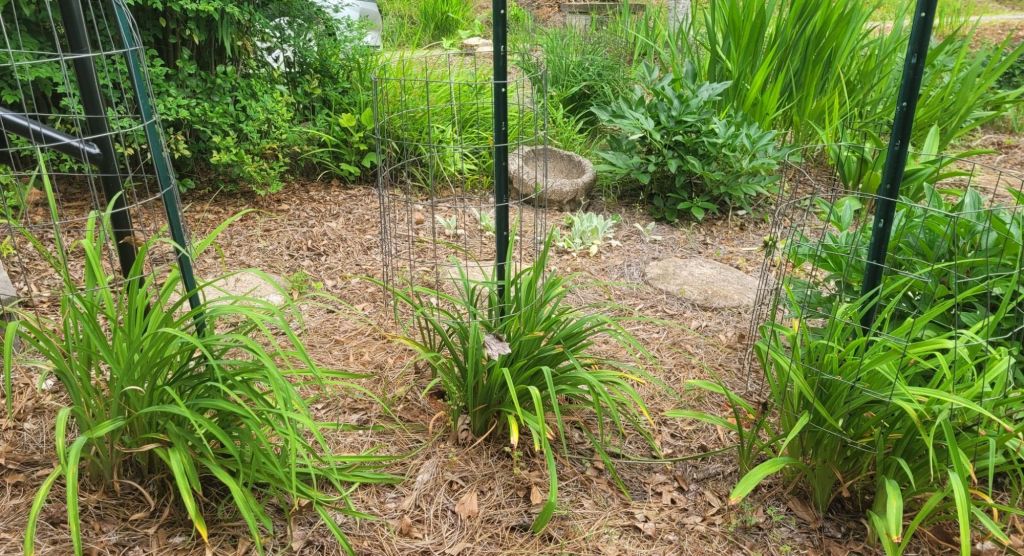
I may be a weakened and injured warrior, but I still have a fighting heart for my green babies. It is past time for Deer Protection Phase II. That means that fence rings were put around all deer delicacies to protect the emerging foliage, but no stakes were in place to hang the rings.
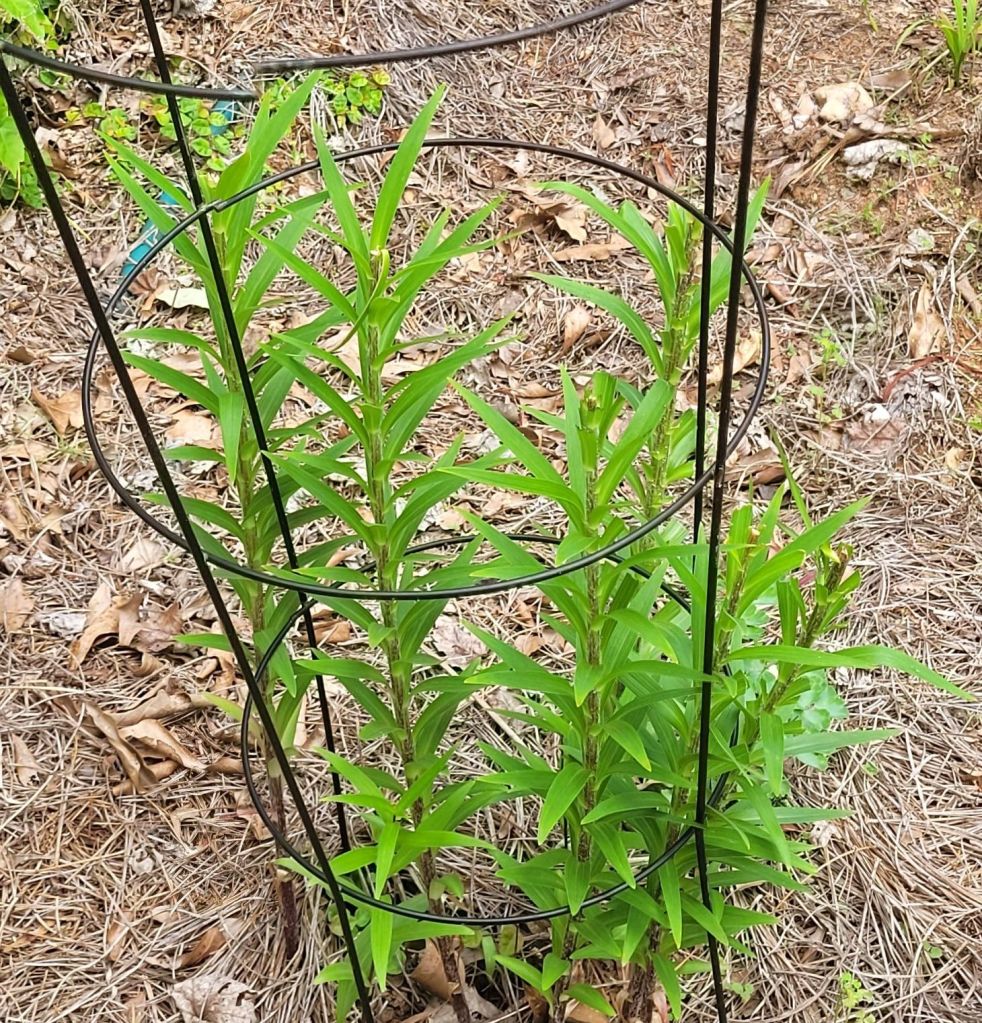
Three rings ready for bloom stalks to rise.
My family tried to intervene with deer deterants, but the herd is so big now, they were undeterred. When we moved here there were no deer or squirrels and very few people. Things have changed drastically in the past decade.
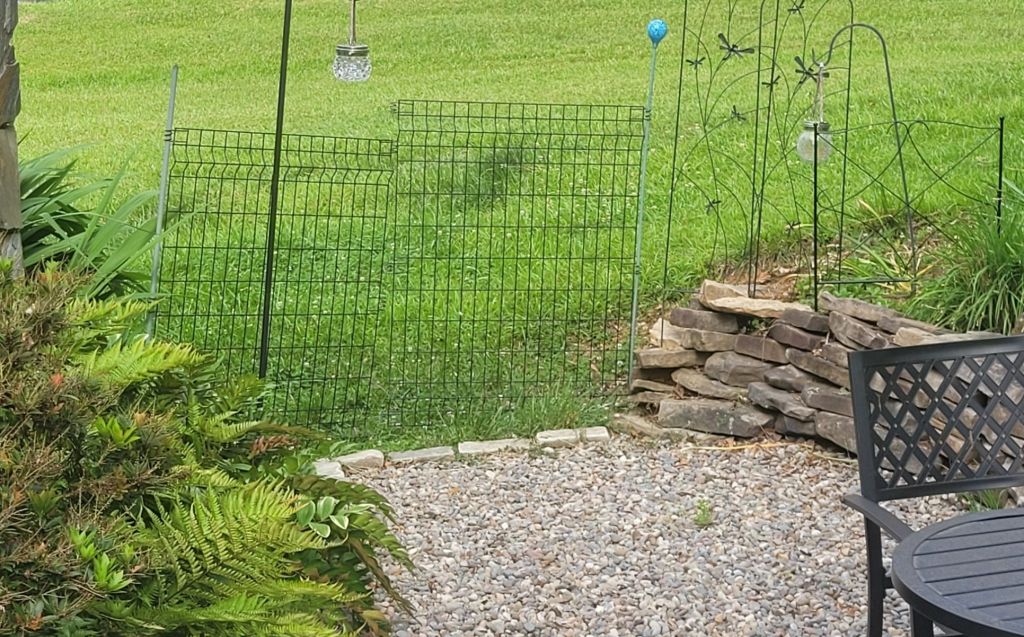
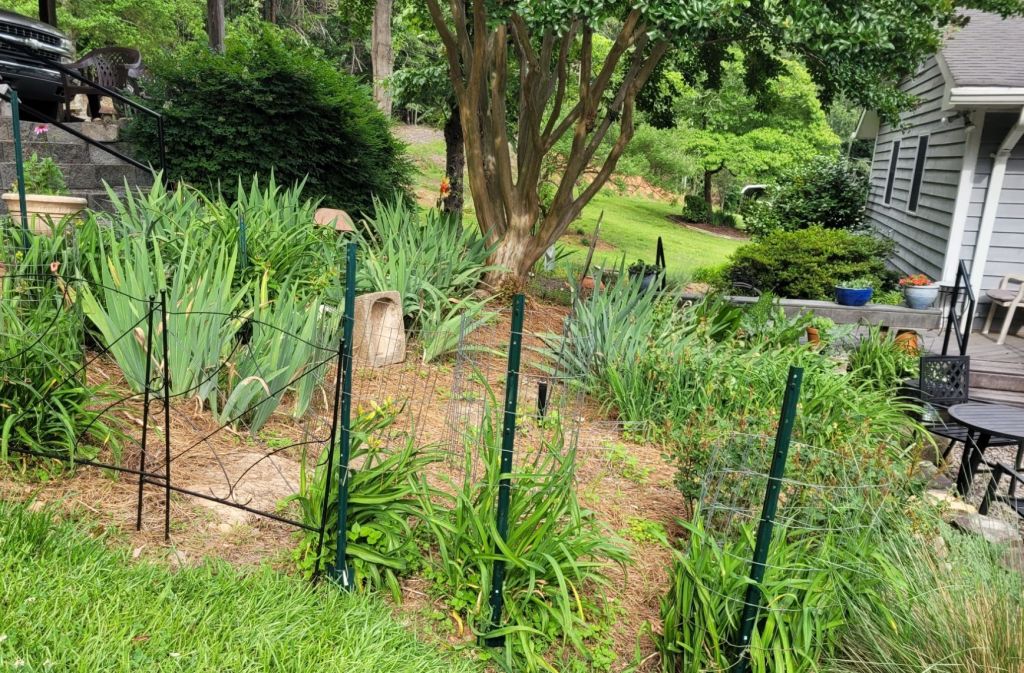
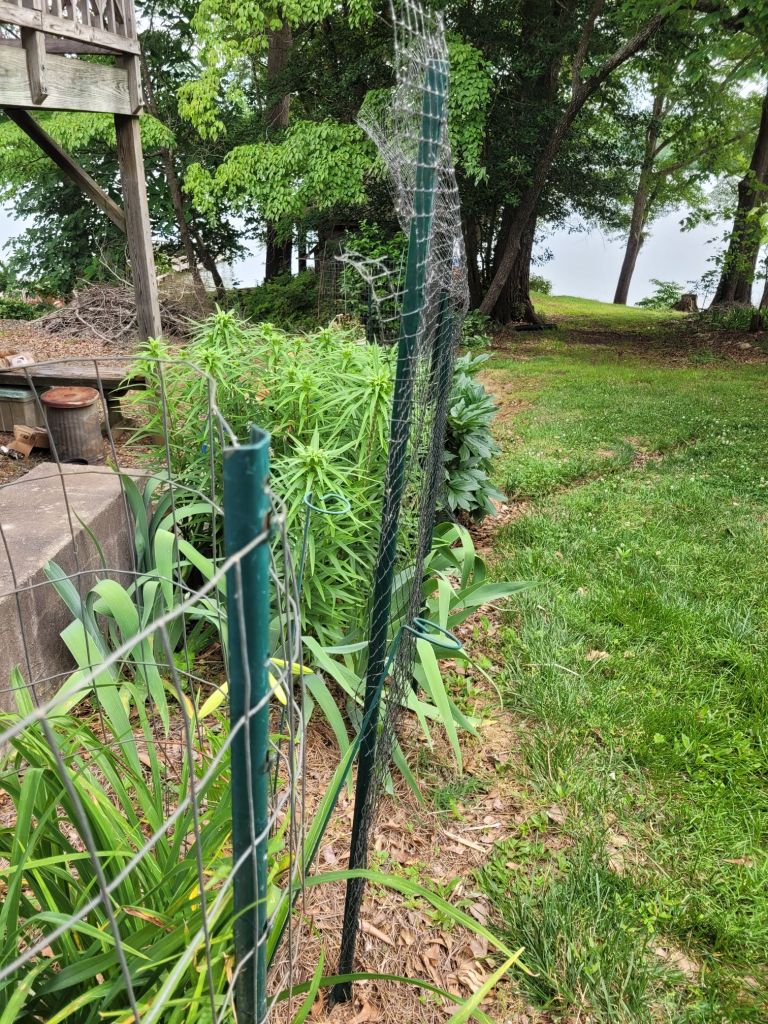
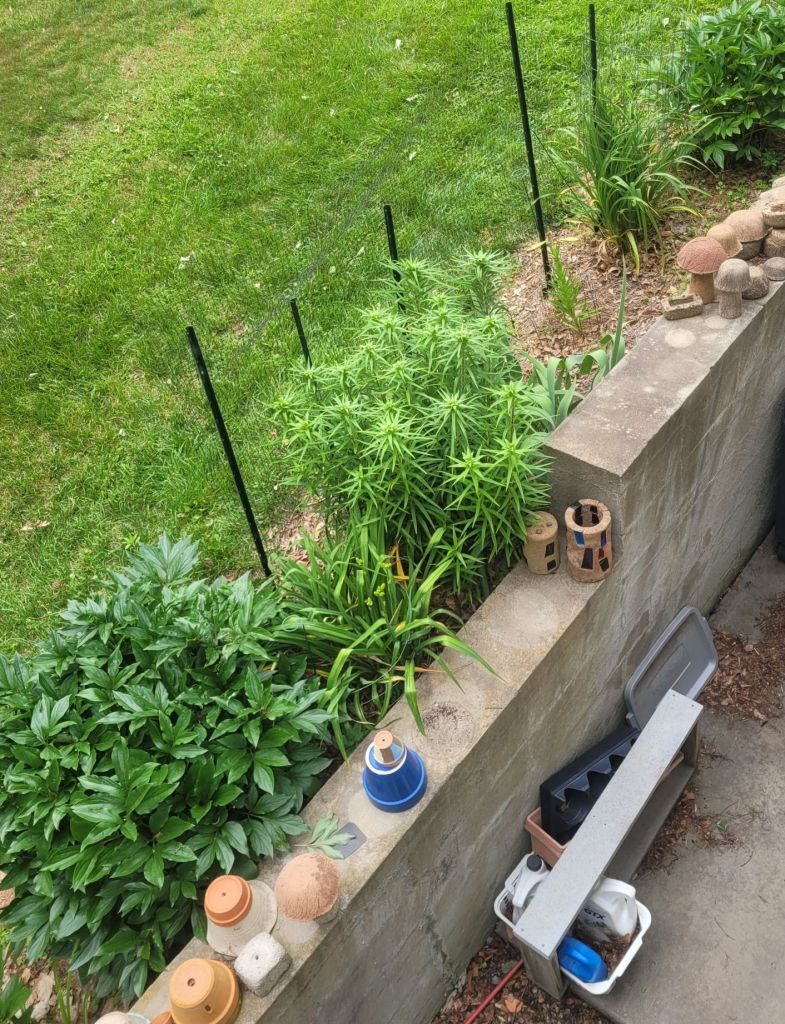
Any fence or stake is put in the defense.Rings hanging and fences blocking walkways
I have been hiking and hauling up and down the hills for hours. Stakes were placed for Mr. Flower to hammer in, since I should not stomp them in as usual. My body is now too expensive to be used as a gardening tool.
I must admit that I automatically stomped several in before I caught myself. I was pleased to get away with this move without an ambulance ride following. I hope my two PT people, Rick and Jeff, do not read this.
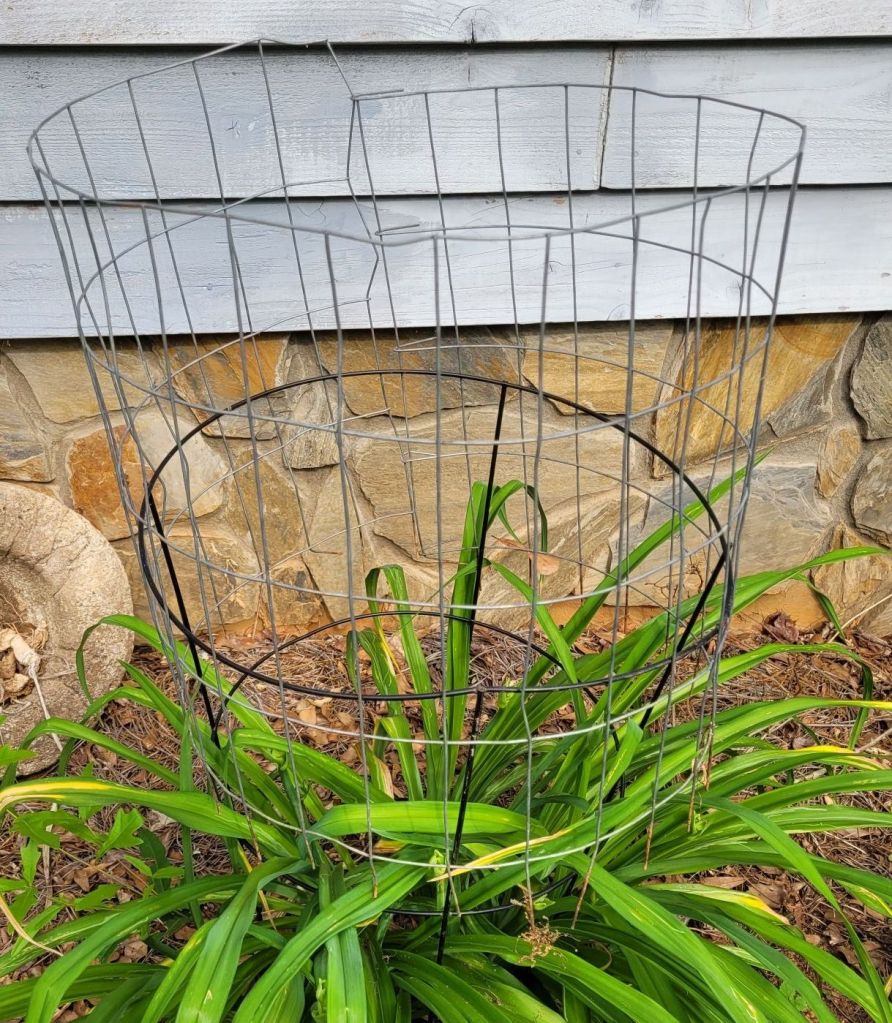
I also use tomato cages and a hanging fence ring. Things start looking a bit messy this time of year, due to my using any old thing on hand to inconvenience our hungry herd.
HEAVY Tomato cage and fence ring
They eat daylily and Asiatic lily buds before they open. They behead all sedums be it new foliage or blooms. This year I was shocked to find an entire Tiger lily topped off. They usually leave the tigers alone.
Beheaded Tiger lilies. Bummer
I am pleased that my hips, knees and shoulder allowed me to work all day. I am sure they will not allow me to sleep tonight as punishment.
I hope all this will save my blooms. I am too old to battle a big herd of hungry deer, but I am not out of the fight yet!
My bank is where the wild things grow. I do not fight the weeds over there. It let plants battle it out on the bank. Only the fittest thrive across the drive.
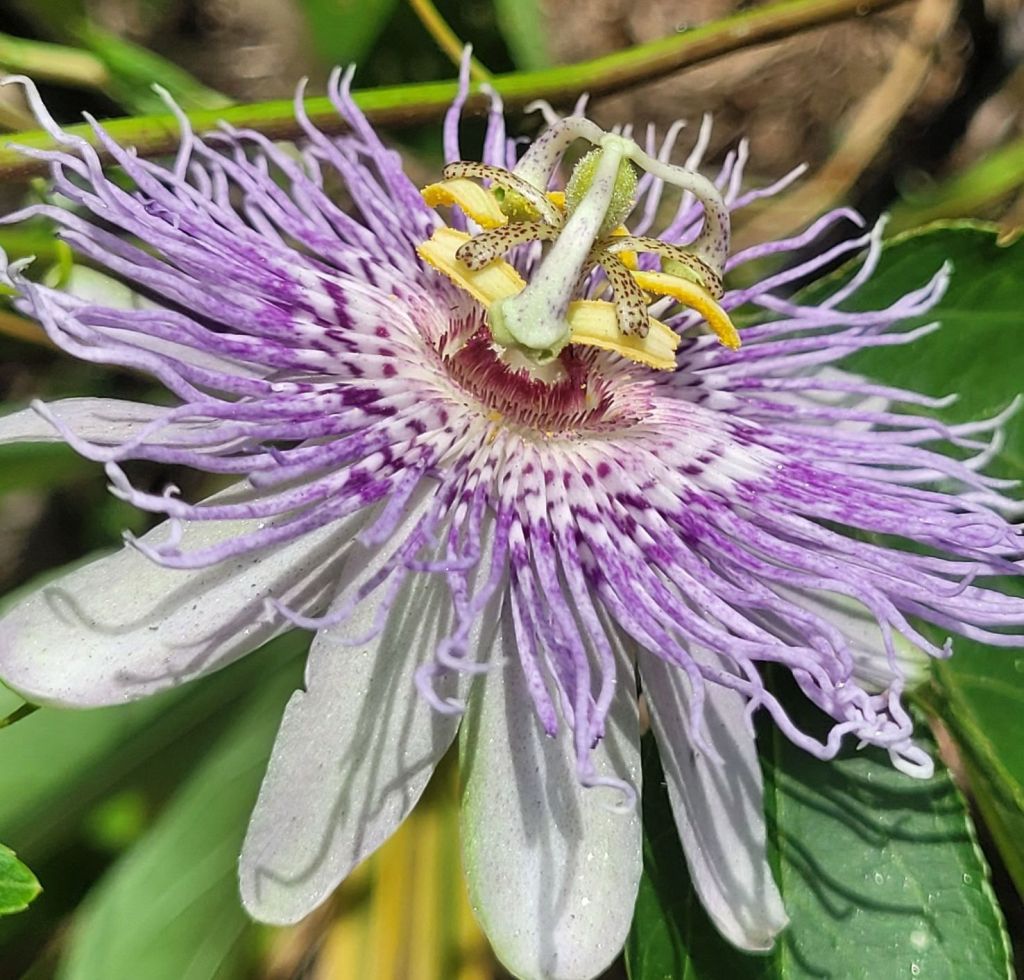
A weed and some passion
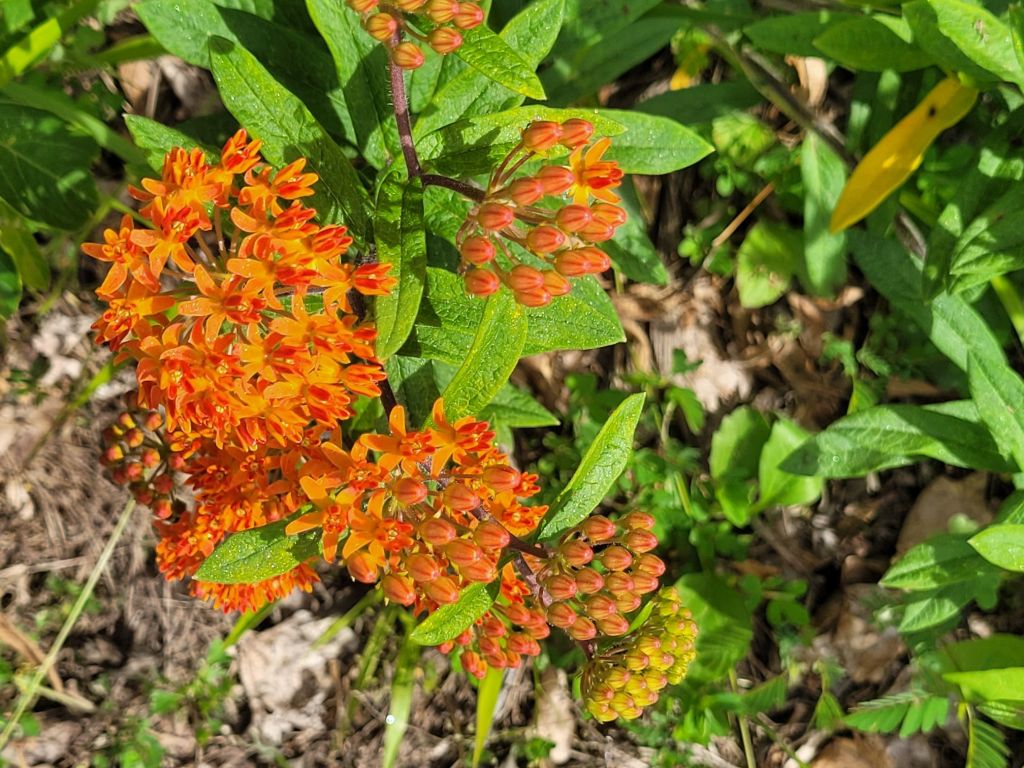
Two of my favorites are this wild purple passion vine we call Maypop. The orange is butterfly weed. I love this combination of color.
Maypop
I watch this bank for butterflies all summer long. It is a well-remembered spot for my flying friends.
Butterflies and deer love it.
I highly recommend a wild spot in your garden. It is a place I enjoy without all the maintenance. I do not fight weeds nor deer over here.
Stones stay warm after the sun goes down. I have places to sit in my wall which are cozy on cool evenings. Sedums and succulents appreciate the warmth and good drainage of a stone wall.
My most interesting type of tiny plant in the wall is tucked in a safe spot behind a seat where I can sit next to it to care for it and enjoy it.
Chinese Dunce Cap
This is Orostachys malacphylla var. iwarenge. I call it by an easier name, Chinese Dunce Cap. It gets that name because its fall blooms are on tall cones.
Orostachys malacphylla var. iwarenge
I love the gray rosettes against the gray stones. This plant needs full sun and perfect drainage. You will want to sit near it while it blooms. The cones are complex and beautiful.
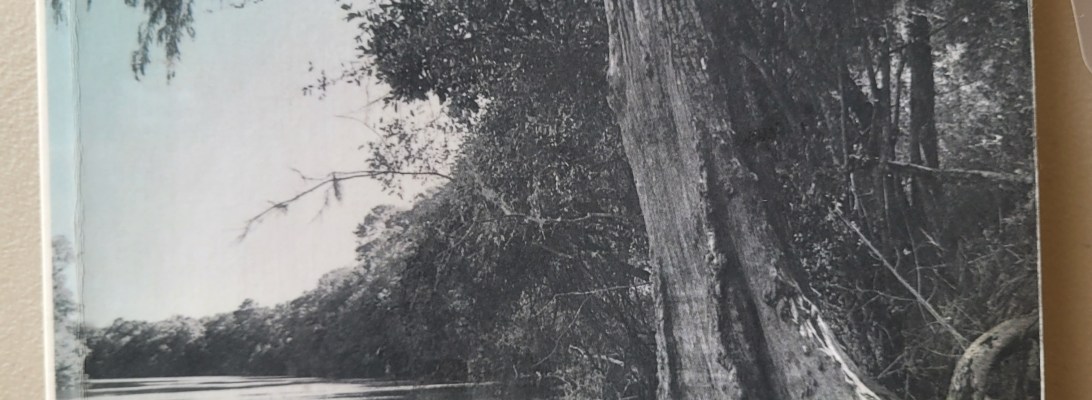
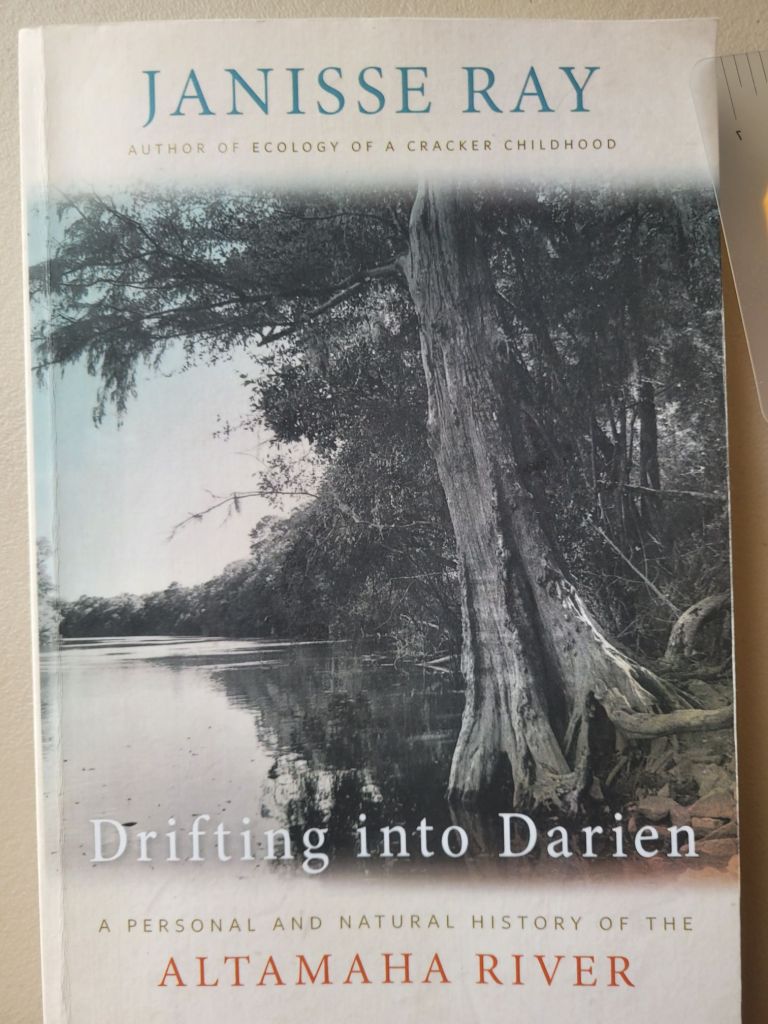
Janisse Ray is a nature writer with a deep, personal connection to the Altamaha River in Georgia. The firstpart of the book chronicals her week- long journey by kayak down one of the few undammed rivers in America.
Later sections describe various habitats along the river and efforts by Riverkeepers to protect the adjoining areas that protect the water quality of the river.
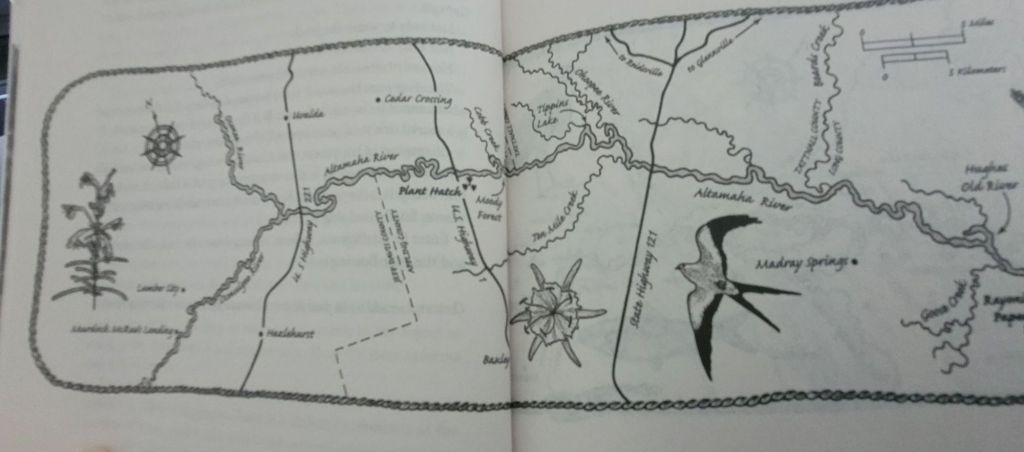
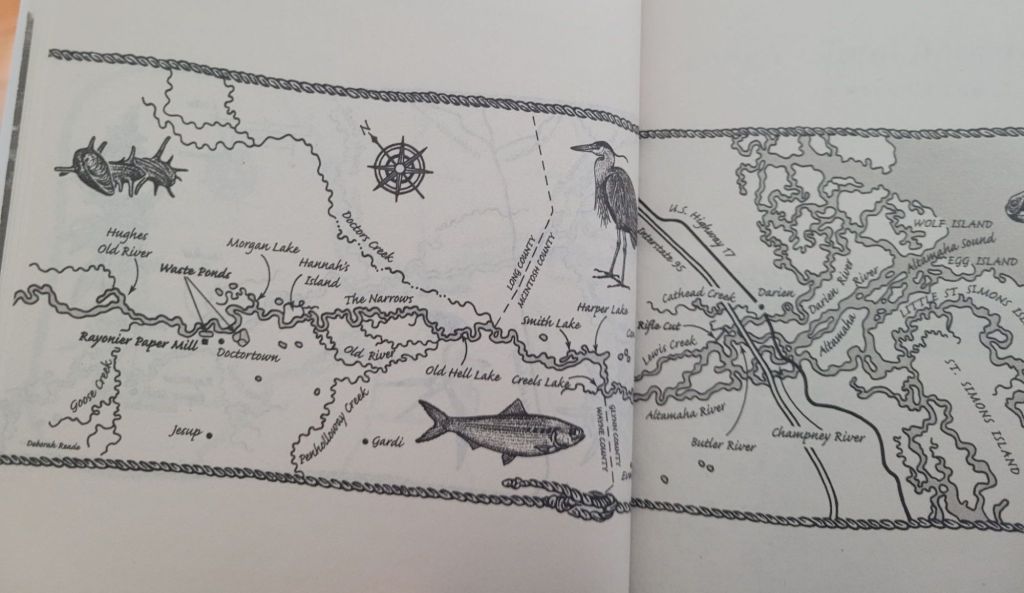
Map of the Altahmha RiverSecond section of map including delta
Janisse Ray’s love of her home state and this river are clearly evident in her documentations and reflections.
I have ordered two more of her books. I consider her work important and essential in keeping us all aware of the many human activities that threaten our rivers.








 floweralley