I brought a few of my Chinese Ground Orchids up the mountain. They are also called Hardy Ground Orchids which are said to survive in the ground in Zones 5 -7.
Ground orchid striated leaves
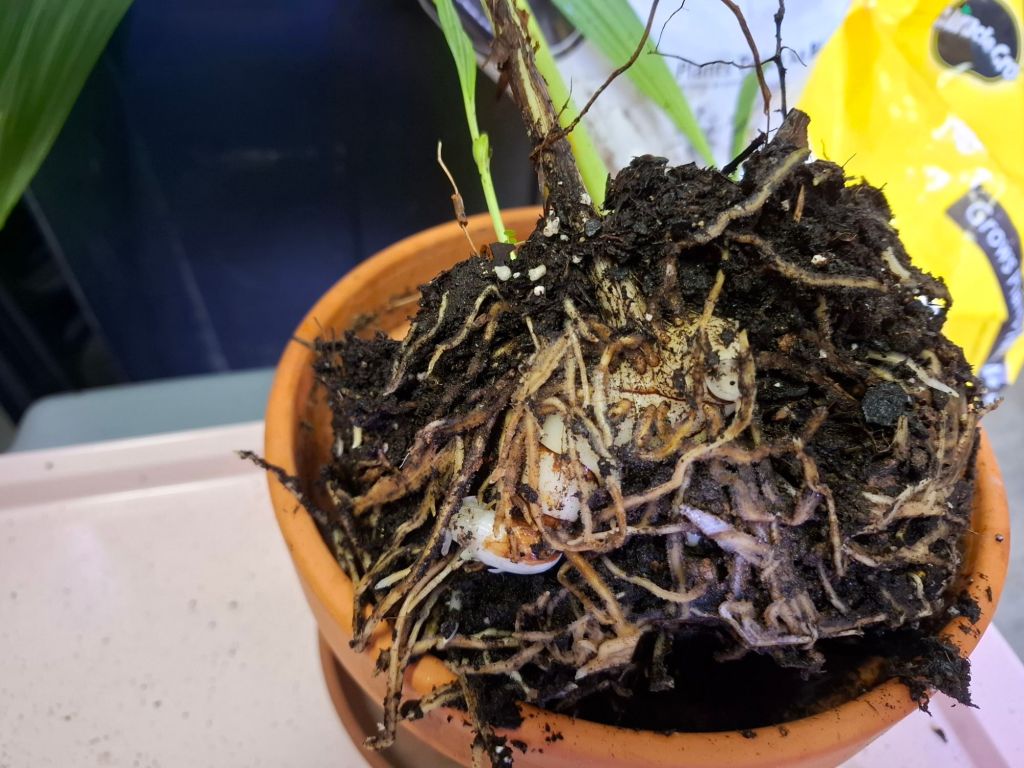
I am new to Zone 5 gardening. The winters here are harsh. I hate sacrificing plants during experimentation. I decided to bring one pot into the unheated garage to go dormant and divide the second pot.
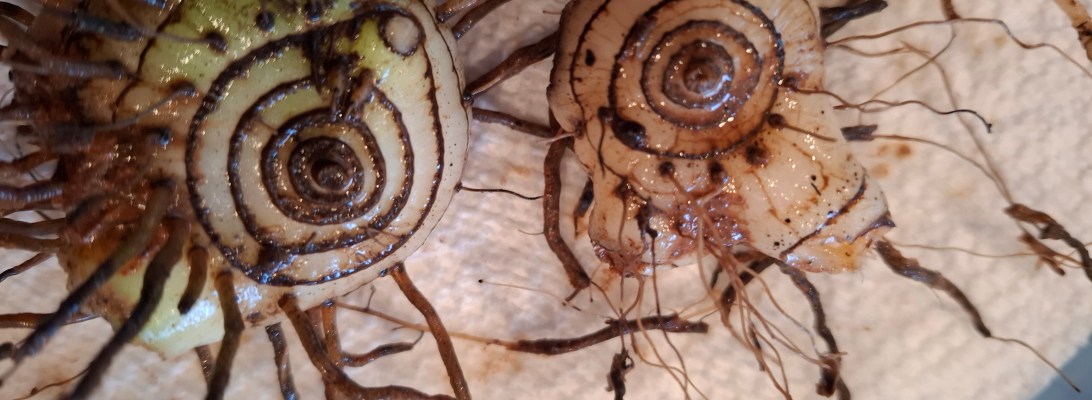
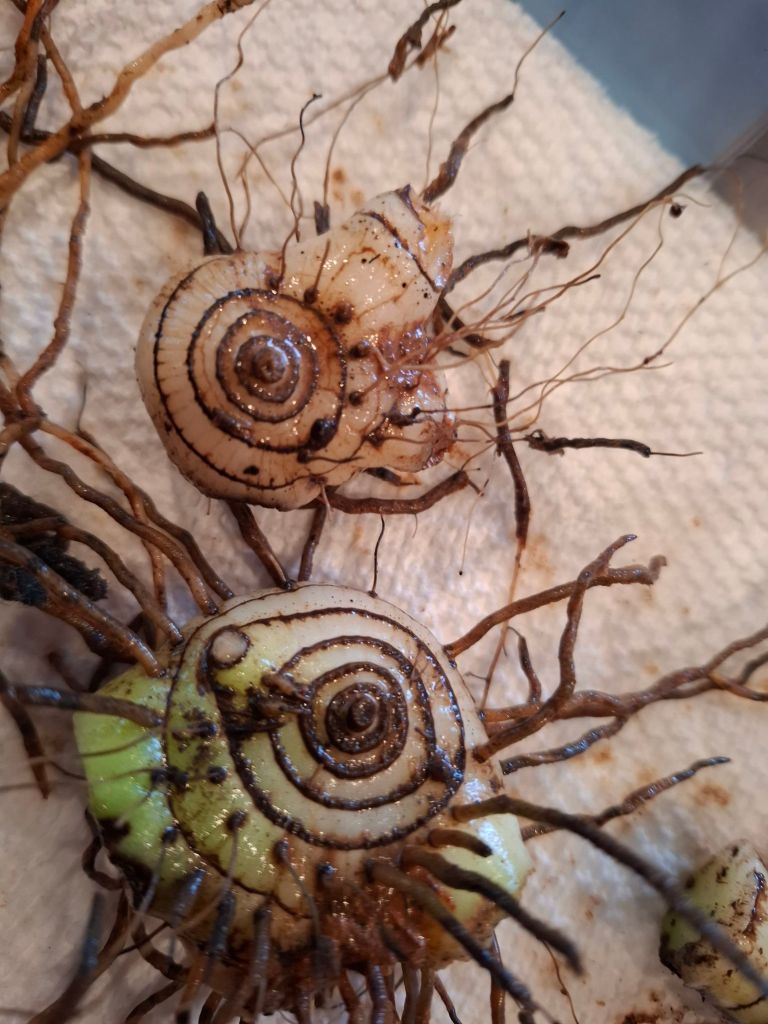
I will put 1/2 of this plant in the ground and pulled some pseudobulb/tubers to wash, photograph and store inside.
Pseudobulbs/ tubers
If all fails, I have a nice stand of this plant inside the fence at Wildwood which is in Zone 7. I can get more in the spring and try again.
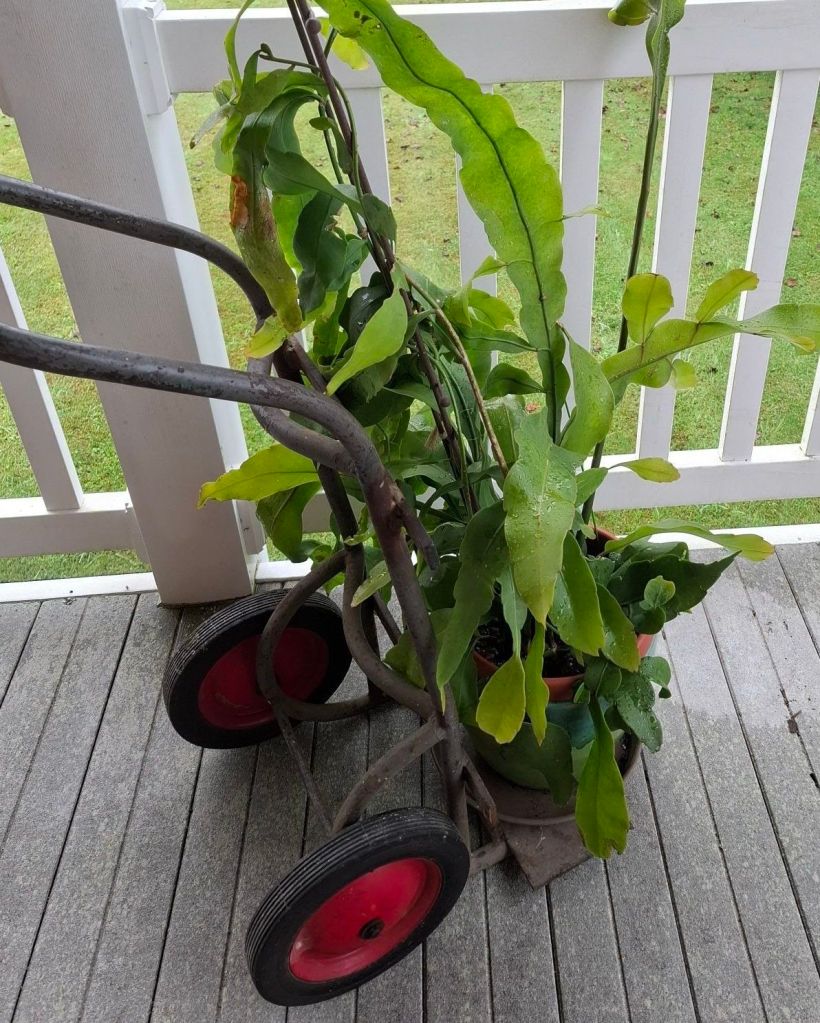
It was forty-eight degrees this morning when I checked the thermometer on the porch. This is a tad too chilly for the Queen. I never dally when it comes to bringing in my tropicals.
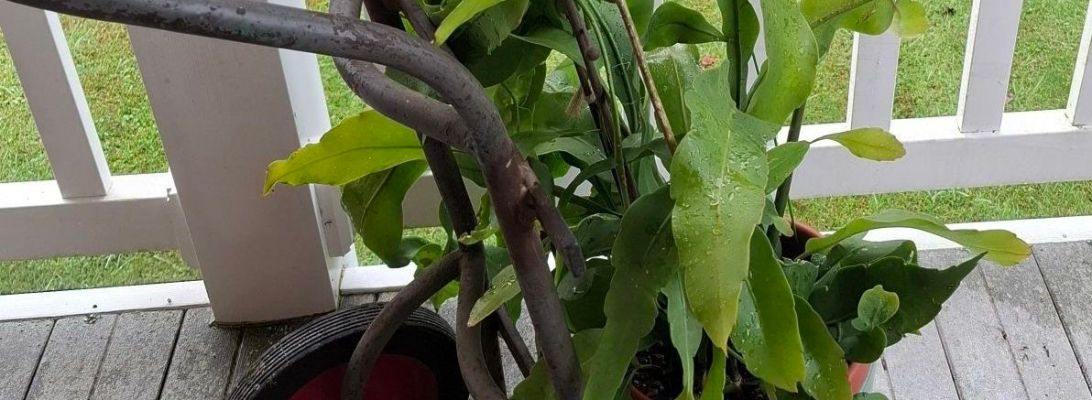
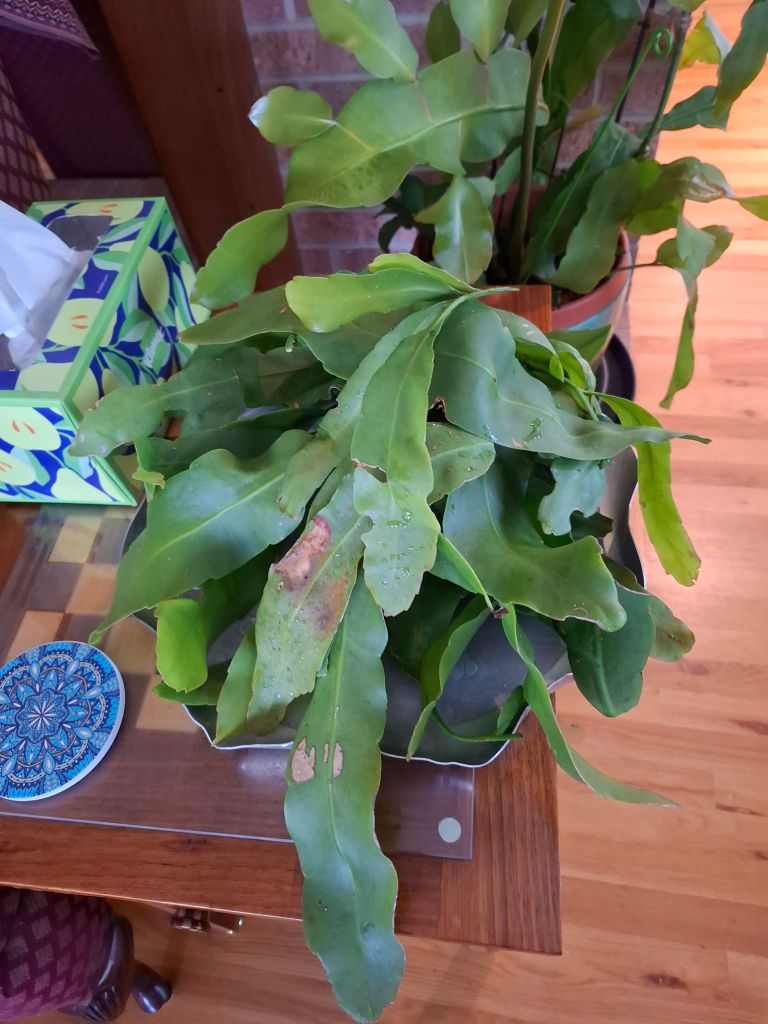
My first order of business was to find the handtruck. I should have trimmed her before bringing her in, but it was raining.
Not heavy, just bulky
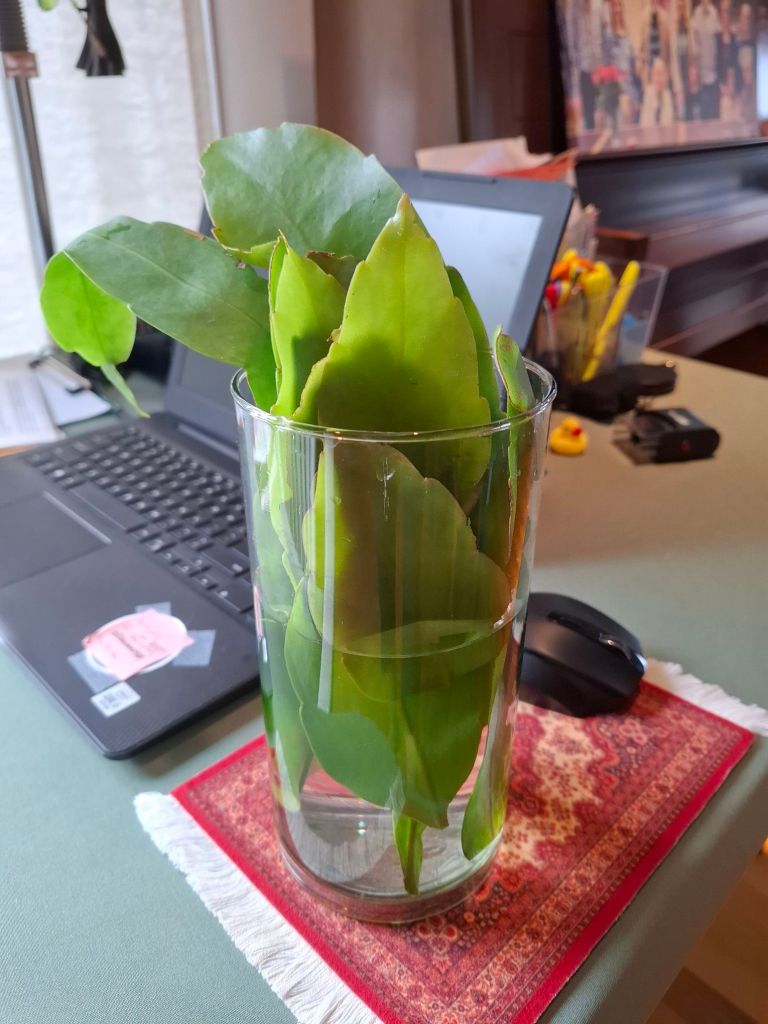
I bent the one-third rule a bit. I saved the best cuttings incase some local followers want some.
Over 1/3, don’t judge
I can bring some to Wildwood when I return there in October for winter-prep and Rose’s birthday.
Only the best
Message me if you want some Queen cuttings. I will also put out a list of plants for adoption while I am there. Stay tuned for that.
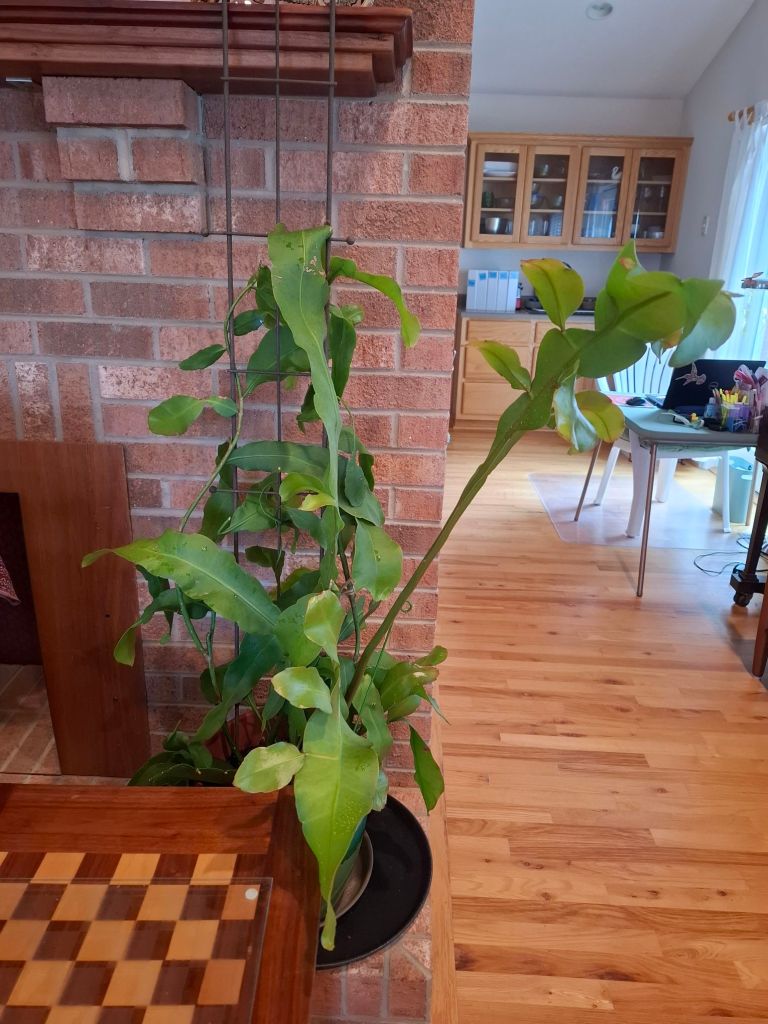
Rogue stem must be trained.Double-sided green velcro as a harness
The mountain weather seems to pay more attention to the equinoxes than the piedmont. I must adjust to this.
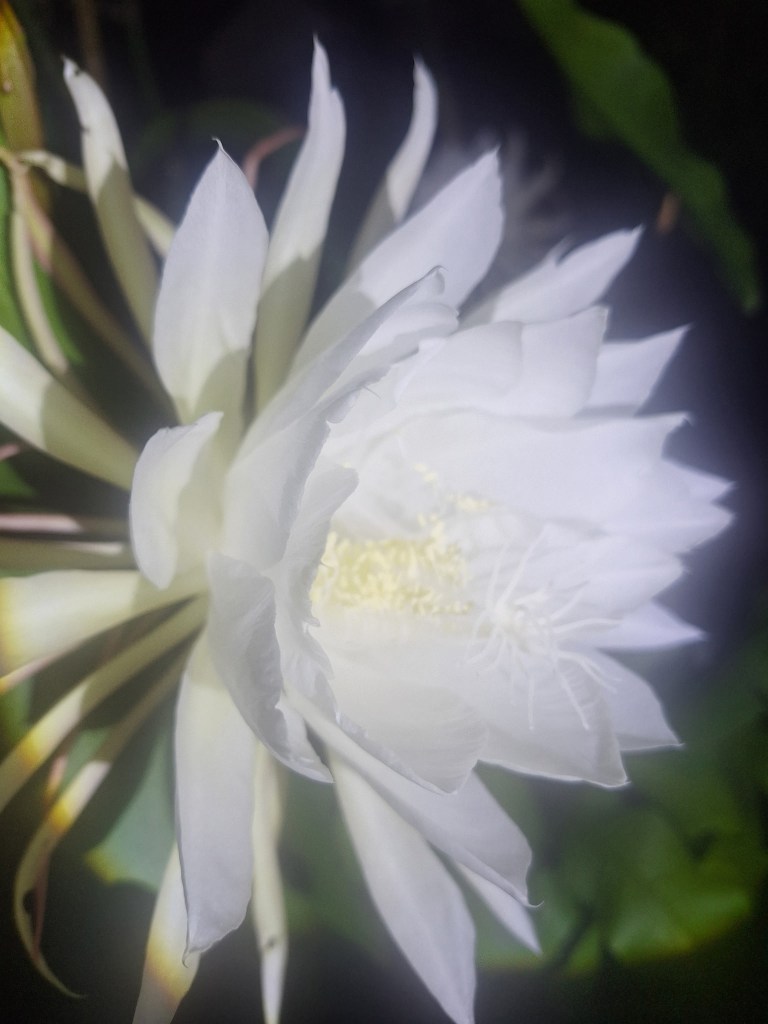
The fuss is always over the blooms. How many? How big? When will it bloom?
One of Palmer’s Queen of the Night blooms
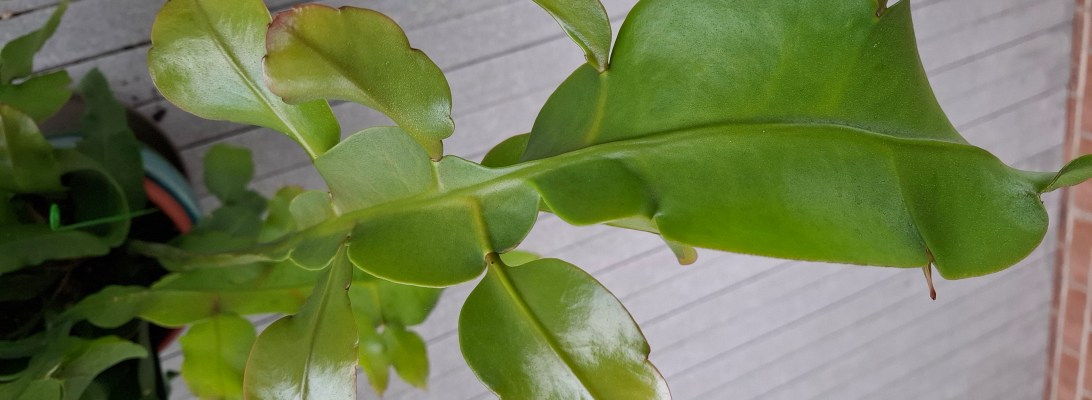
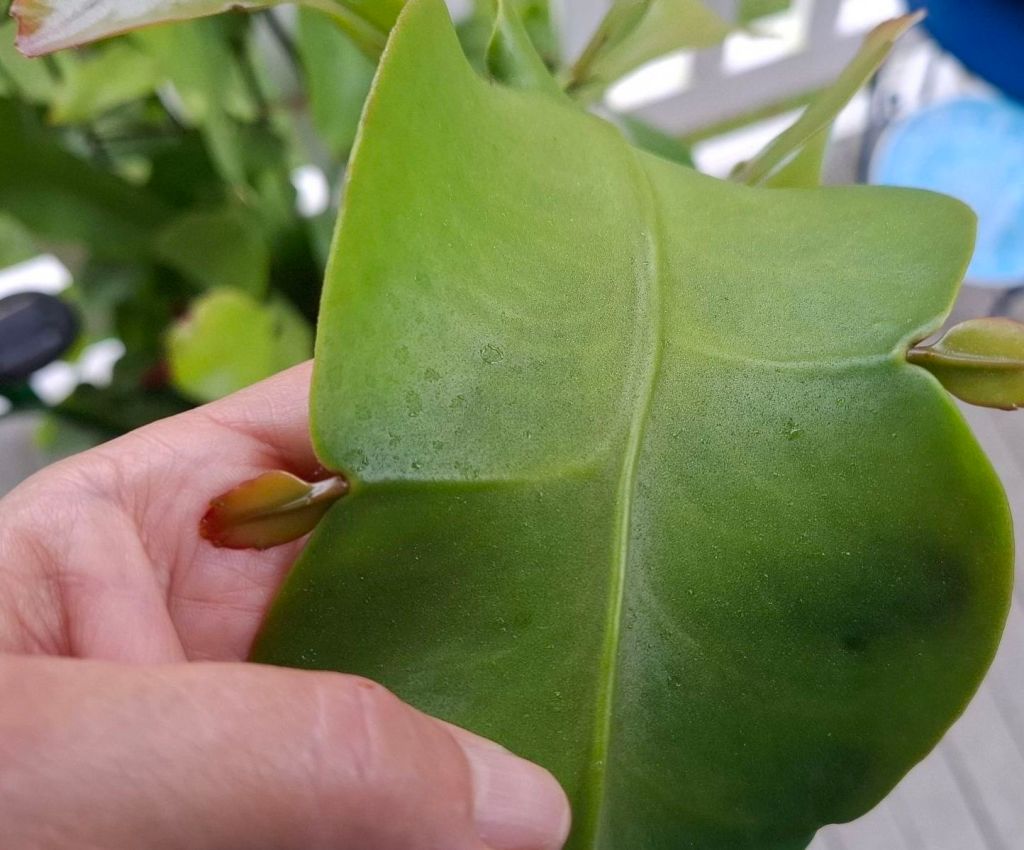
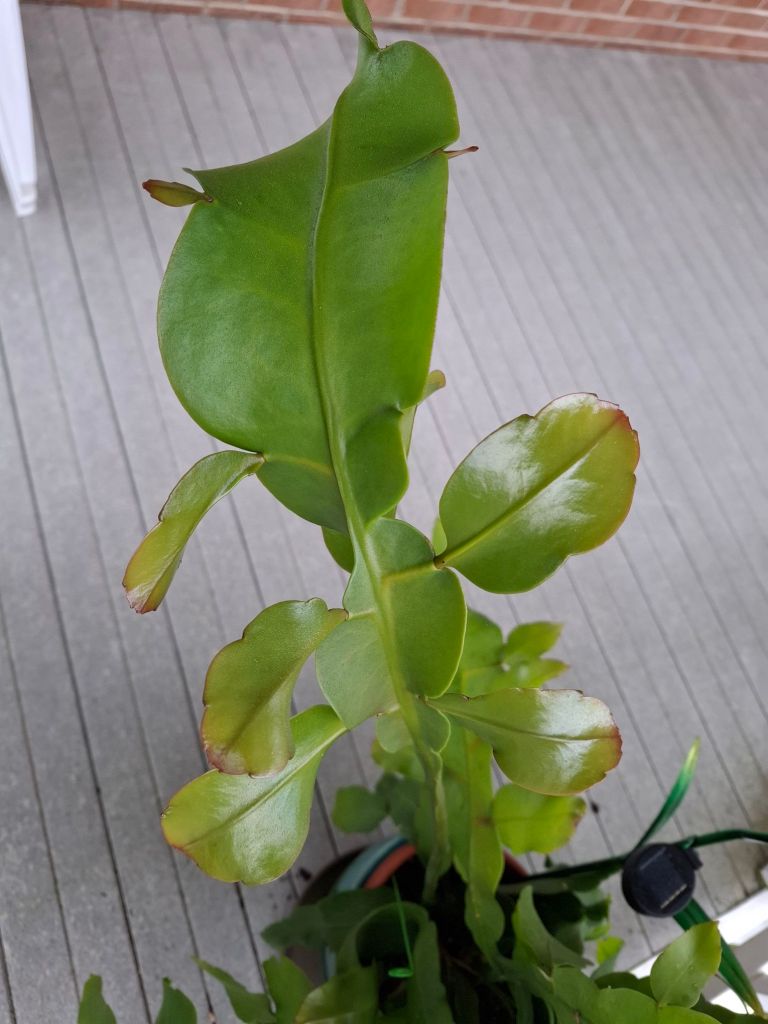
I fell in love with the Queen of the Night because of the leaves. My friend Madge/The Fairy had one at the farmers’ market. The pot had one long leathery leaf in it. On the edge of that leaf were tiny, shiny leaflets emerging.
Leaf and leaflets
A bloom was the furtherist thing from my mind. I was fascinated by a leaf becoming a stem.
Leaf transformed
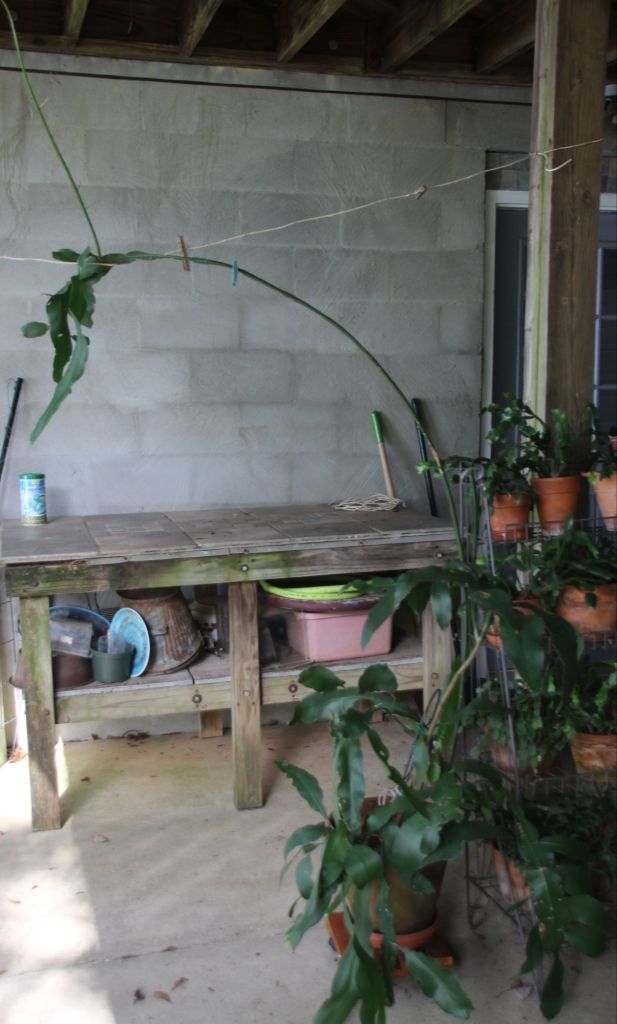
The next trick the plant did was to send up a stalk/stem five feet into the air. It reached up and touched the clothesline. I secured it there with a clothespin. Then she grew another one from that one.
The Queen doing tricks
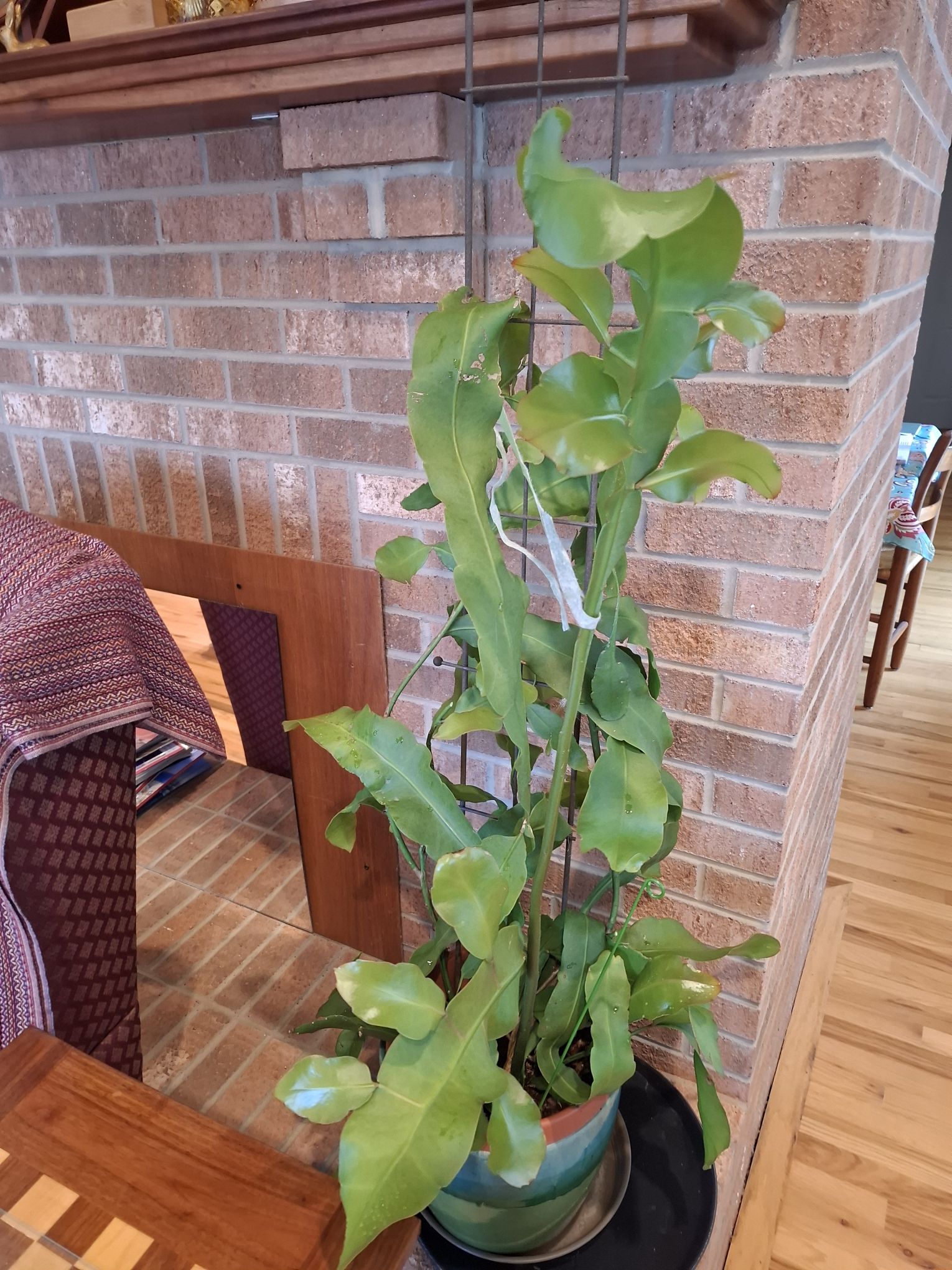
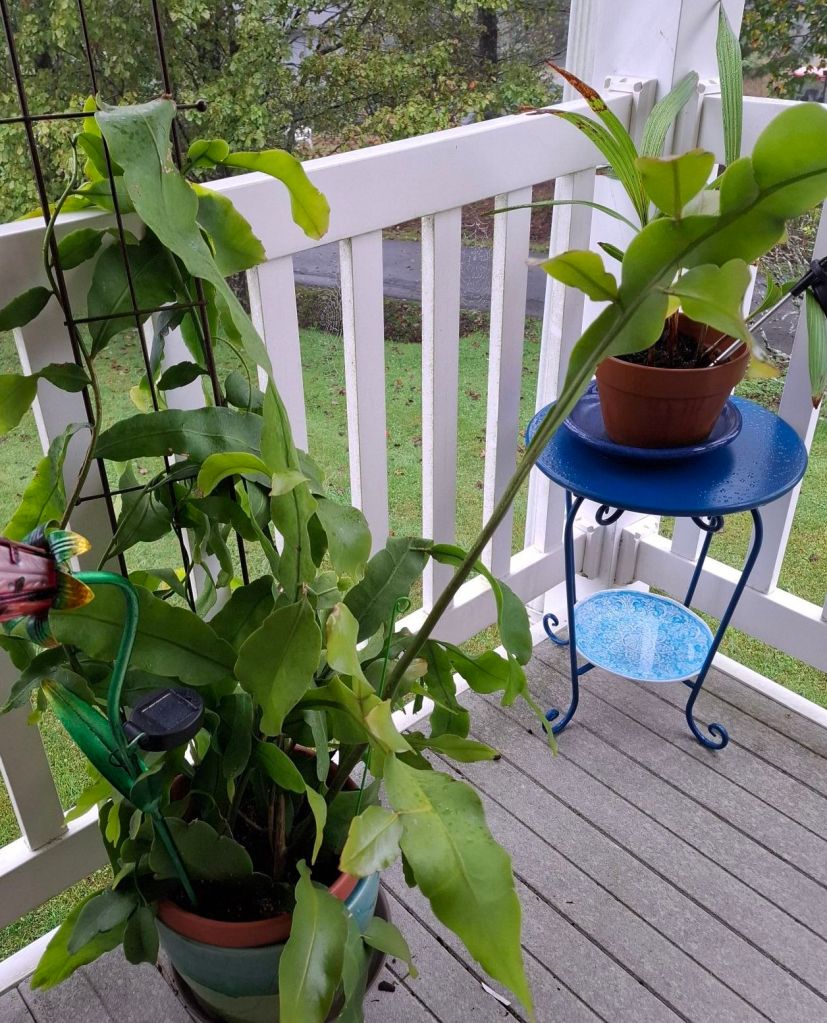
My Queen has not made an attempt to bloom this year. She is growing and adjusting to her new home on the mountain.
My Queen
She will bloom again when she is ready…and so will I.
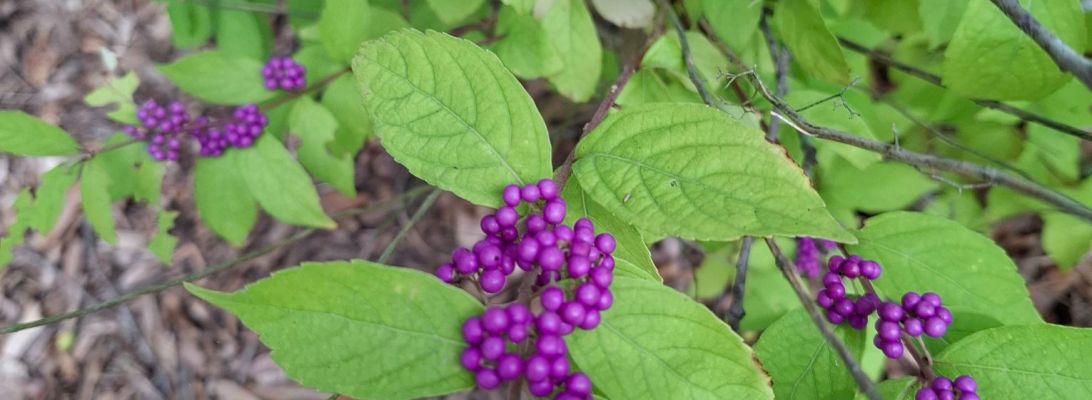
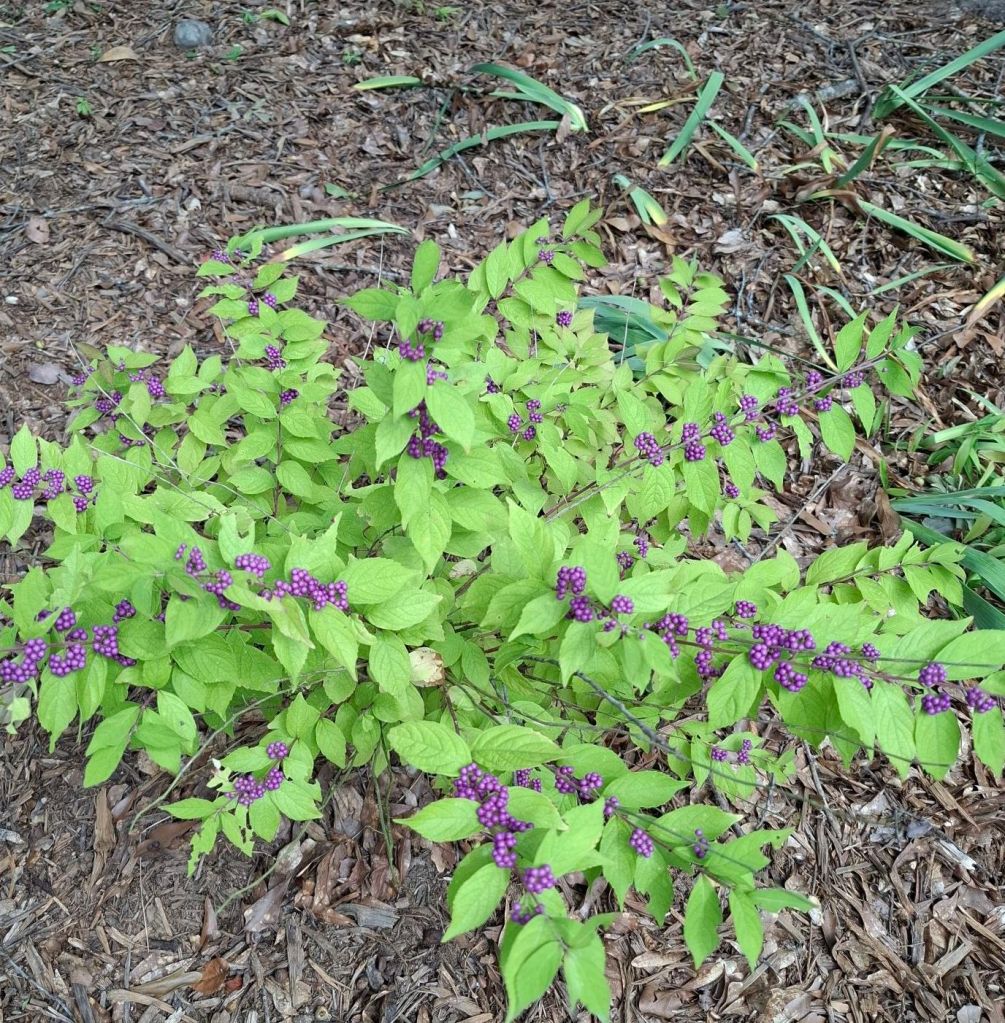
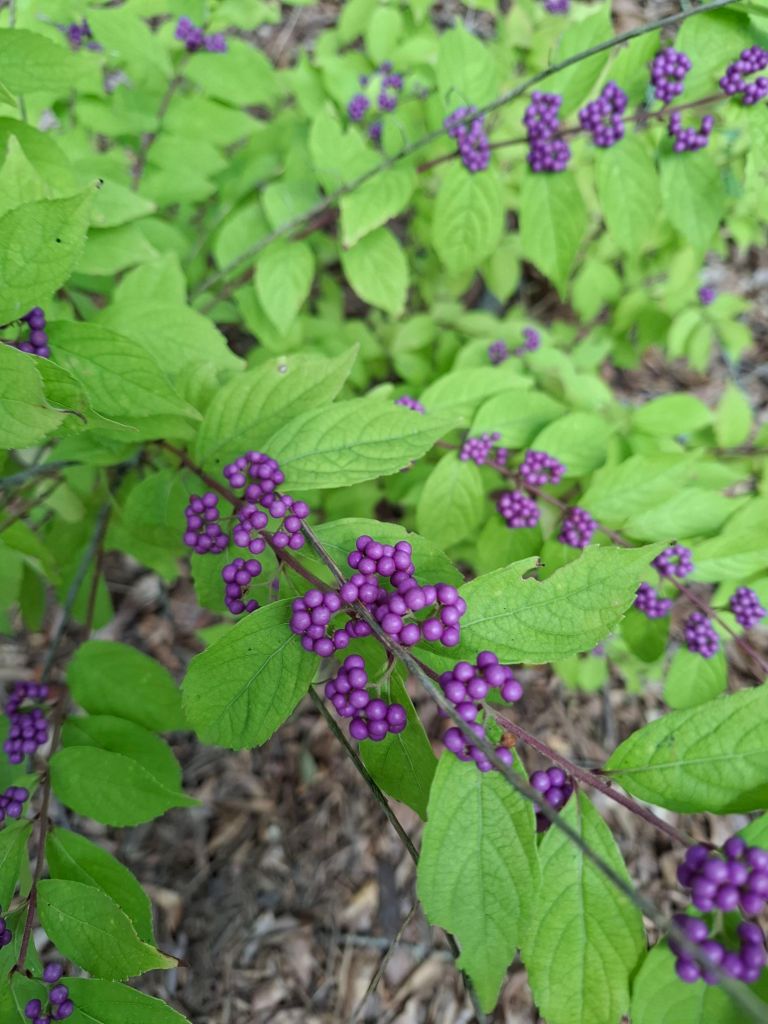
I have a beautyberry bush in my garden at Wildwood. It has thrived in my absence. I love it when things do that.
Beautyberry at Wildwood
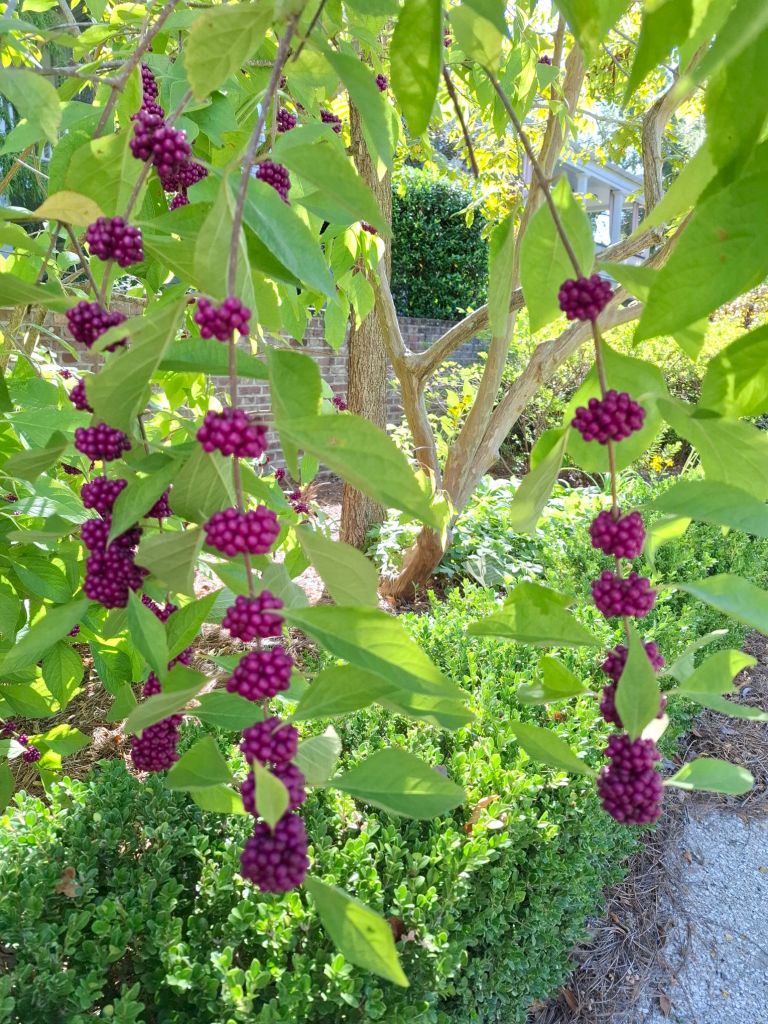
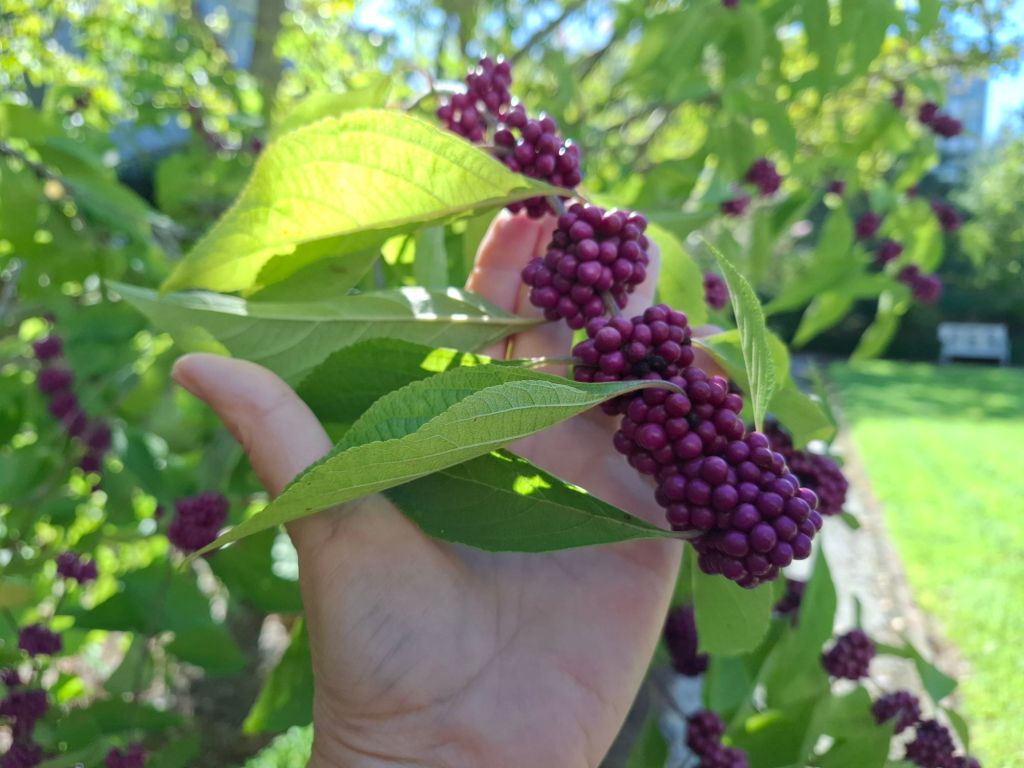
I found a bigger, more berriful bush in a Charleston garden. It grew in the side garden of the Manigault Mansion. It seems things grow better in Charleston.
Beautyberry in Charleston
I am still proud of my little bush on the hill at home. It is just as lovely.
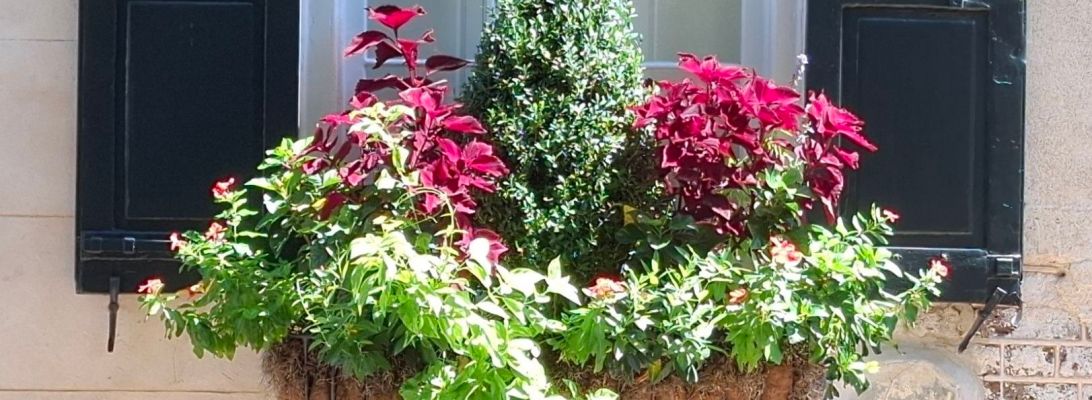
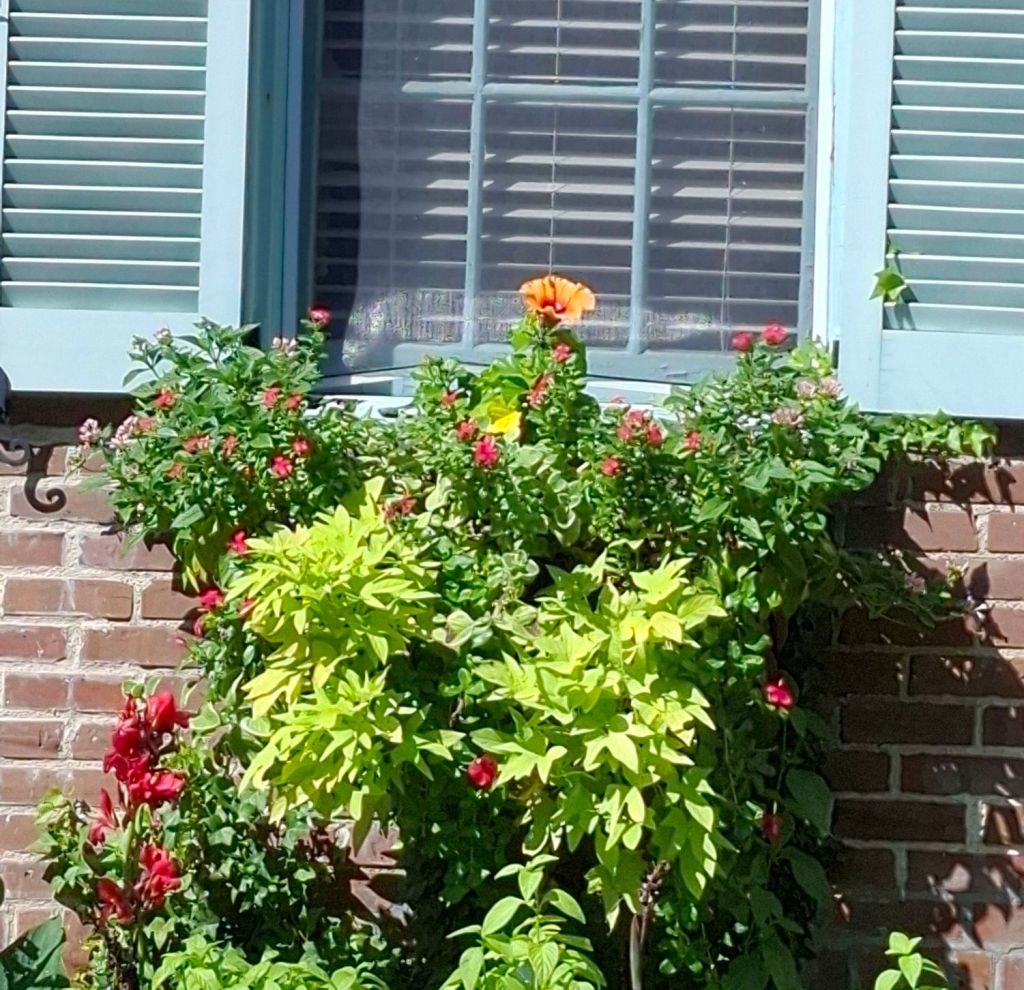
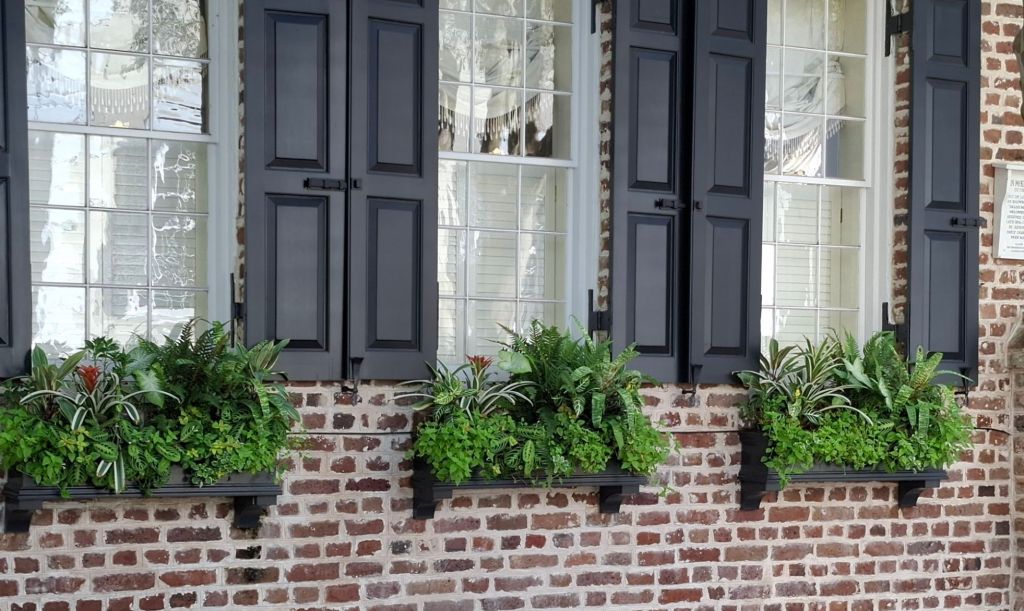
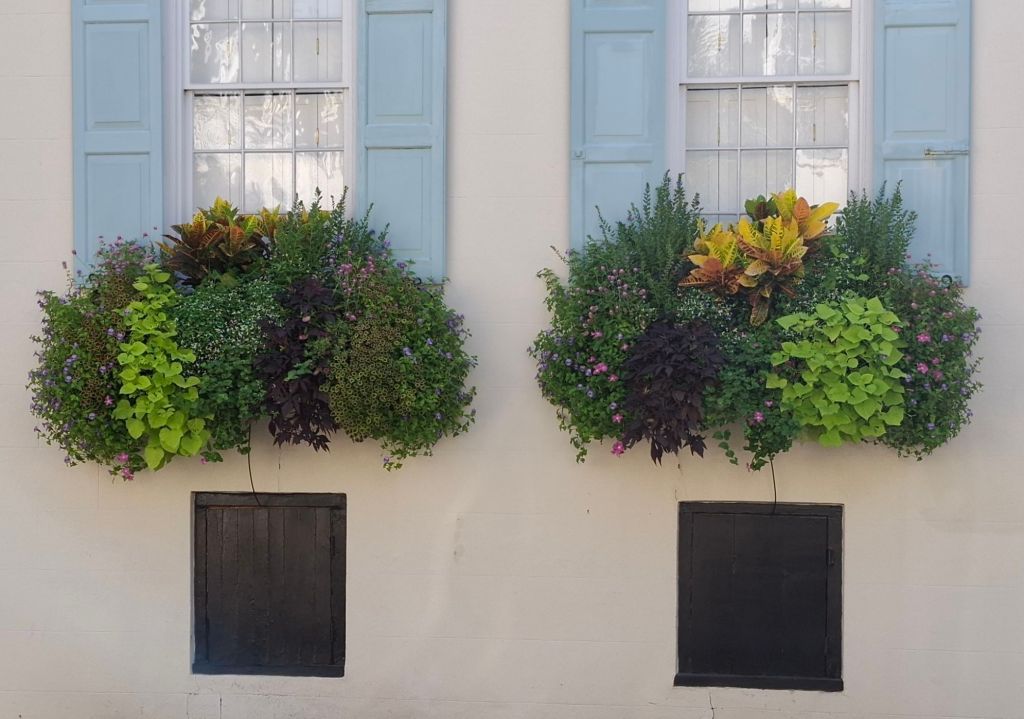
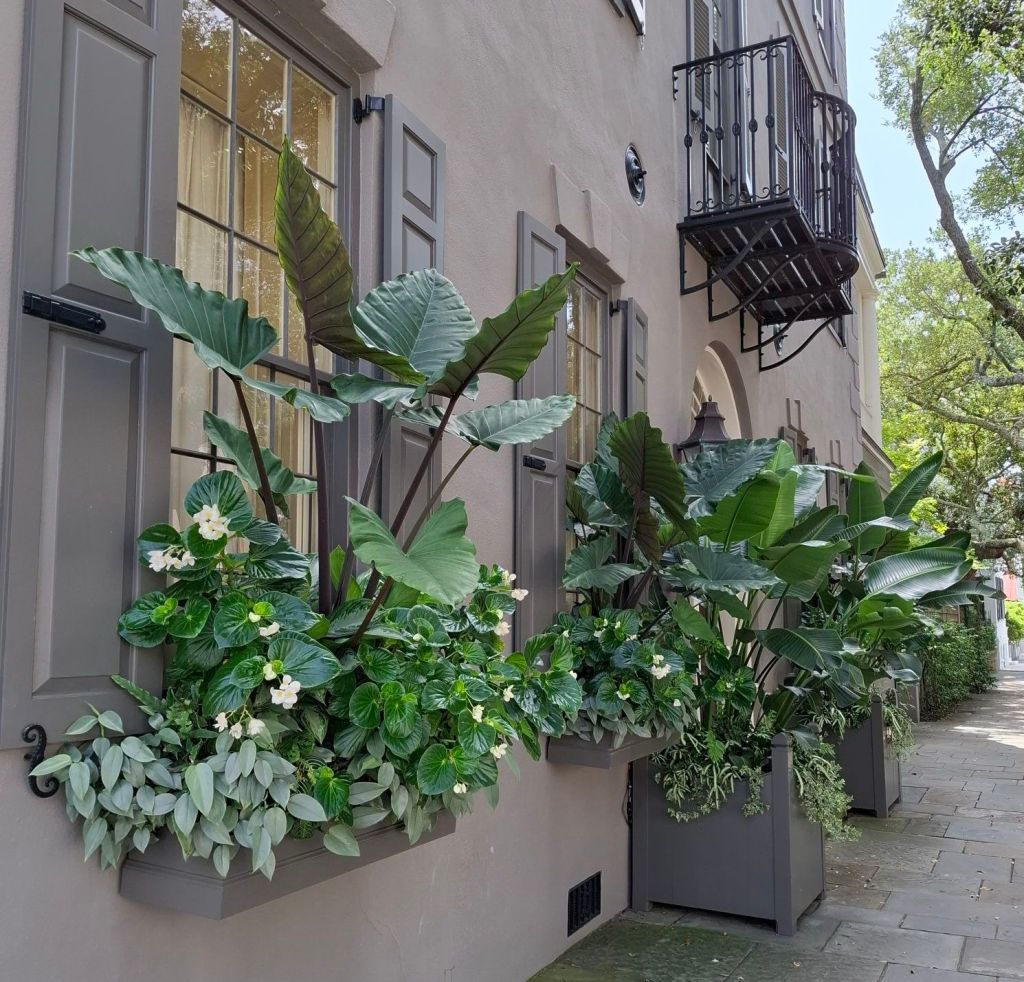
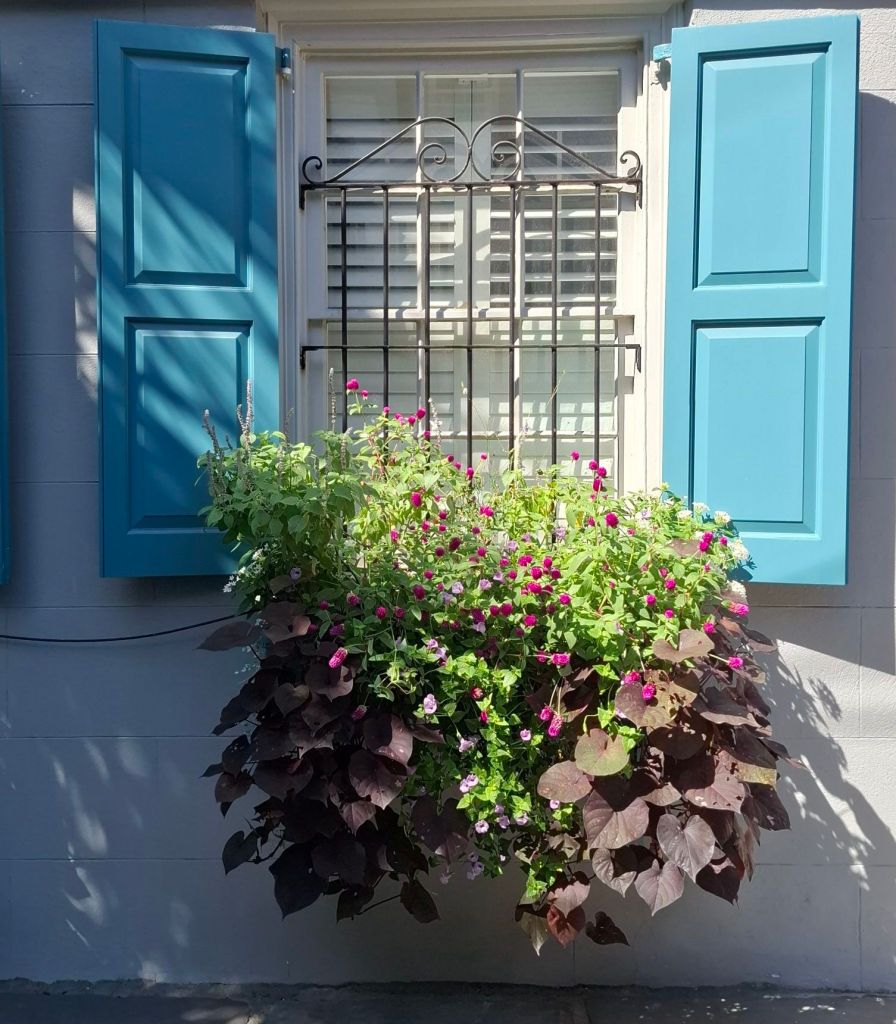
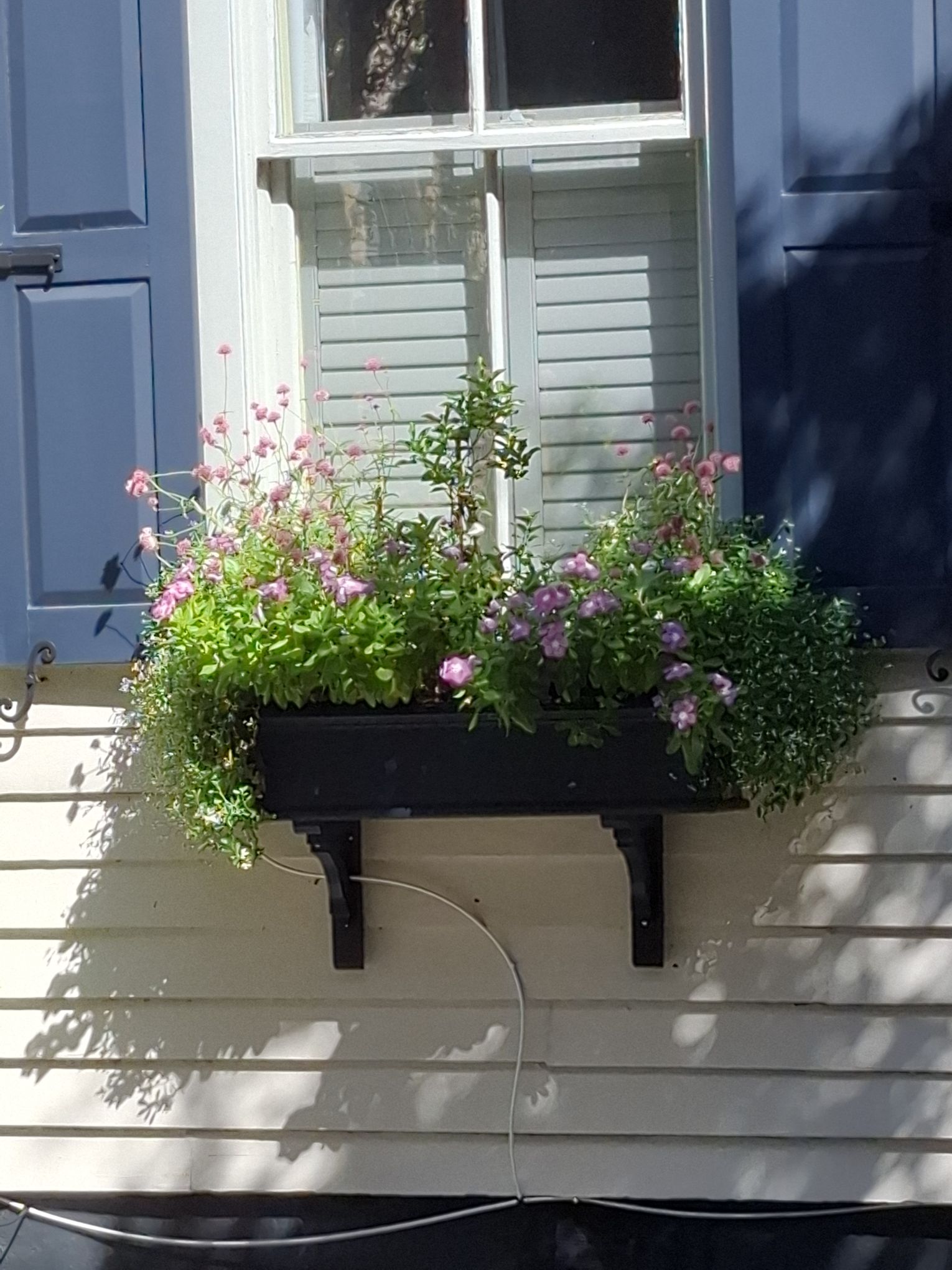
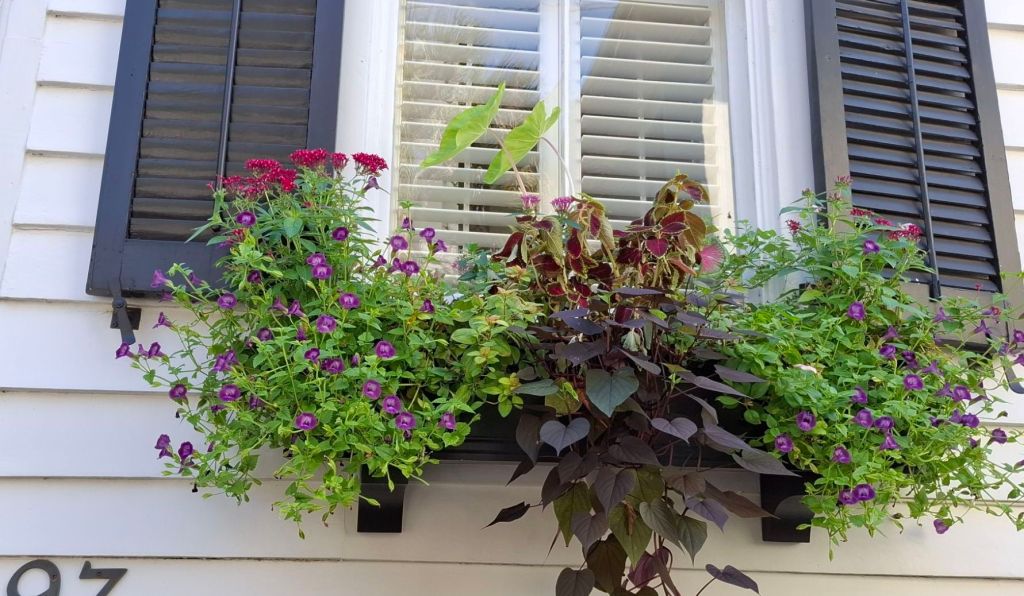
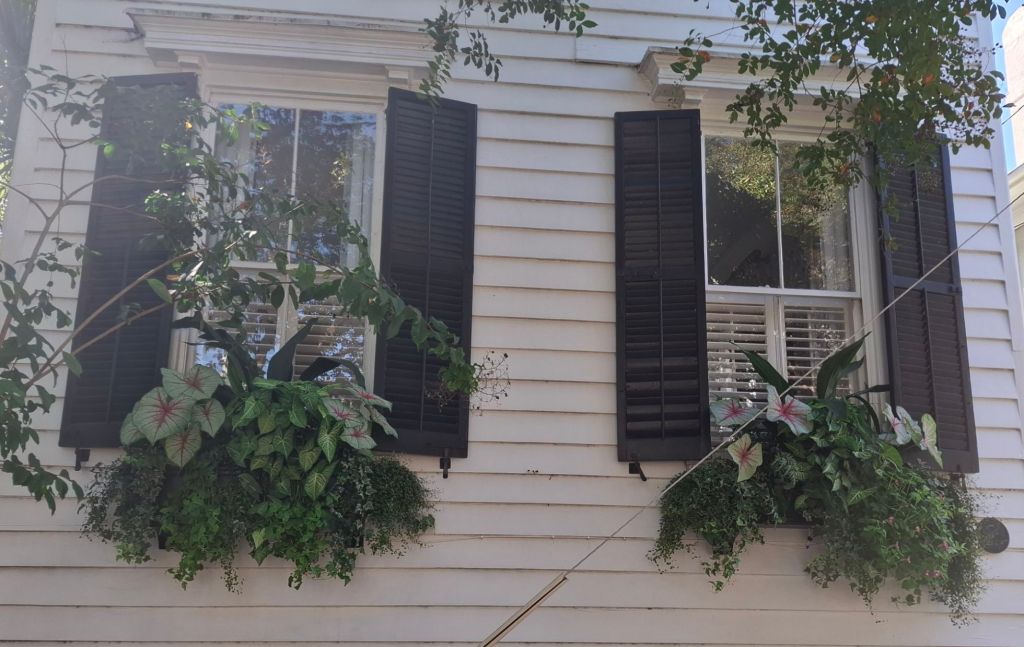
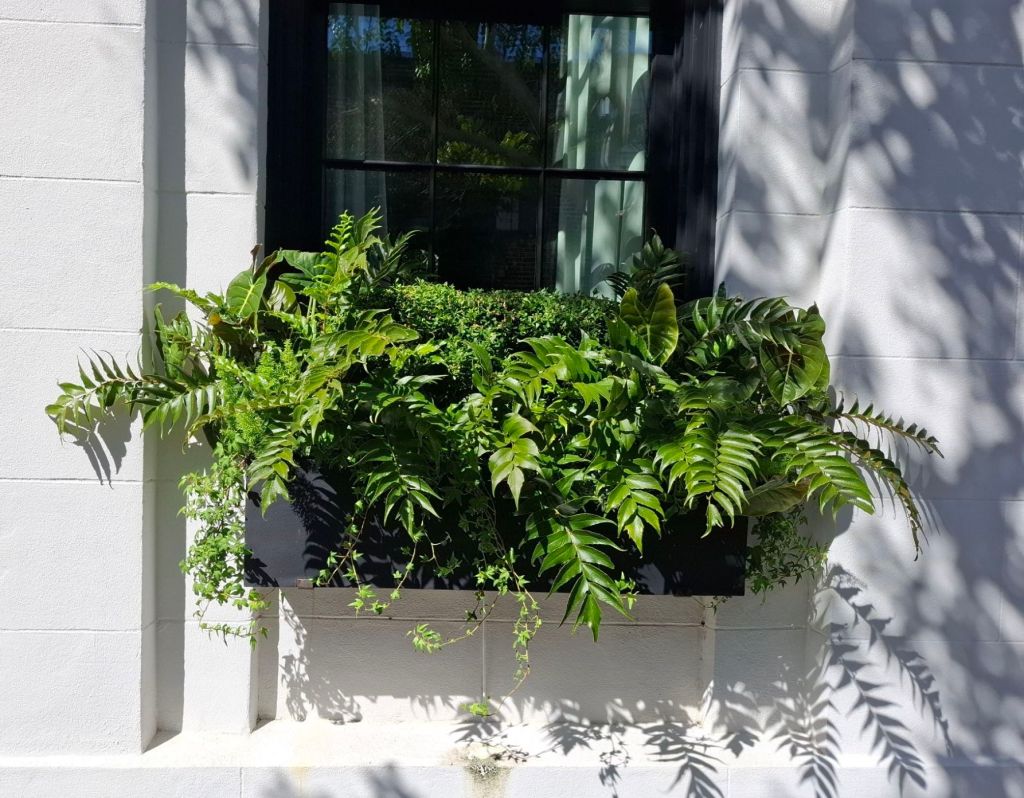
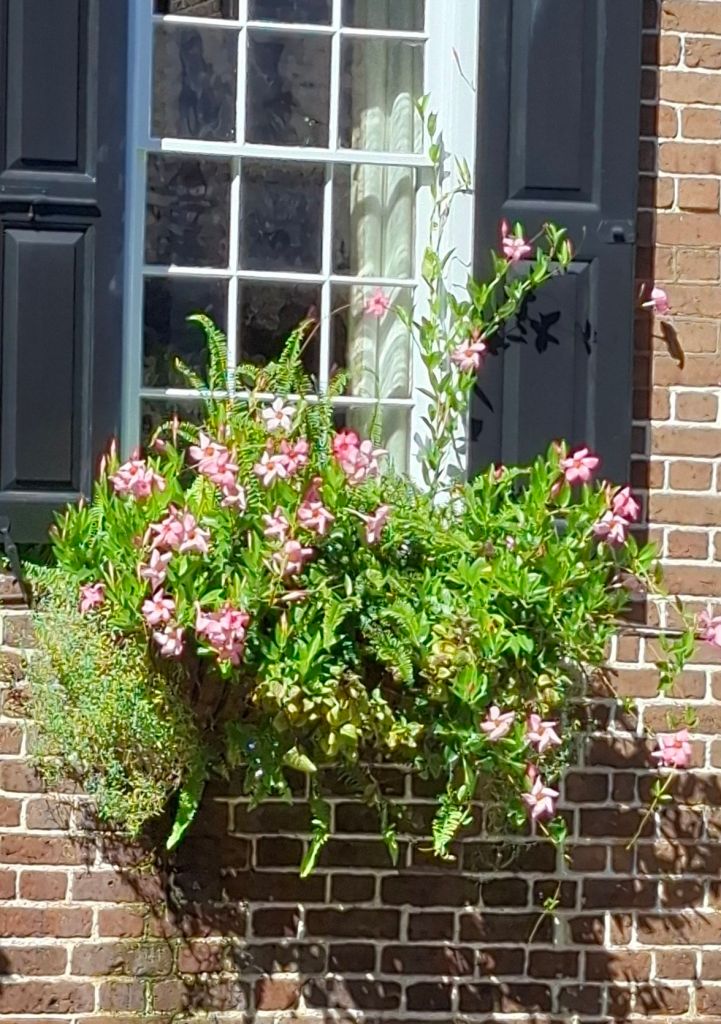
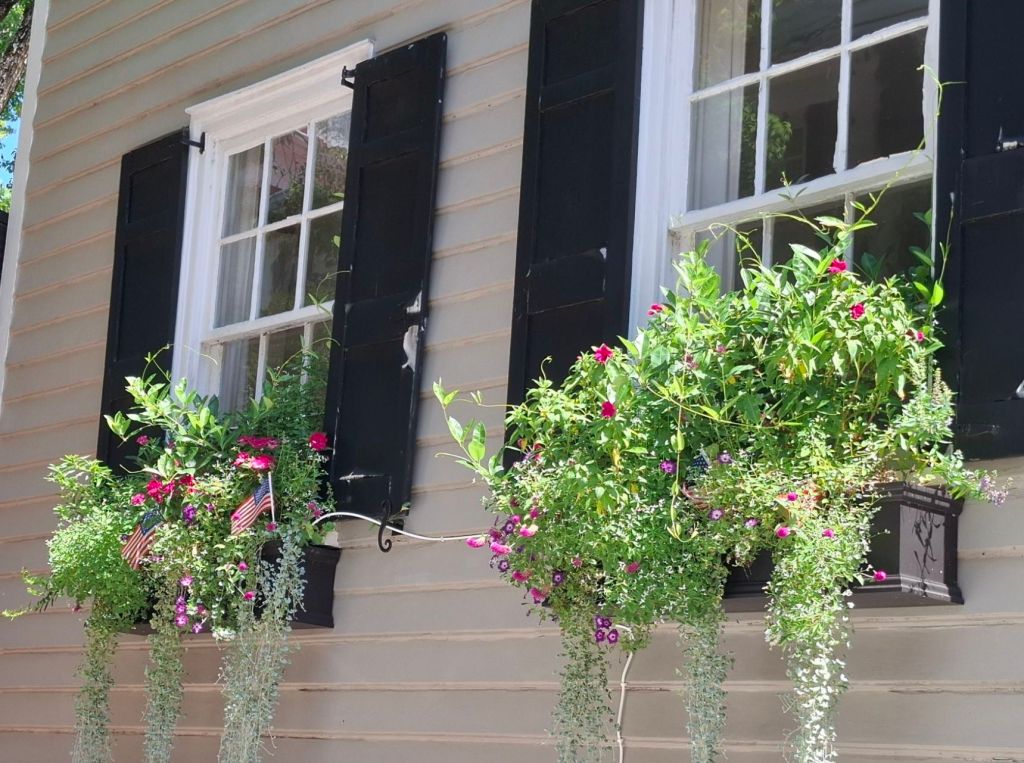
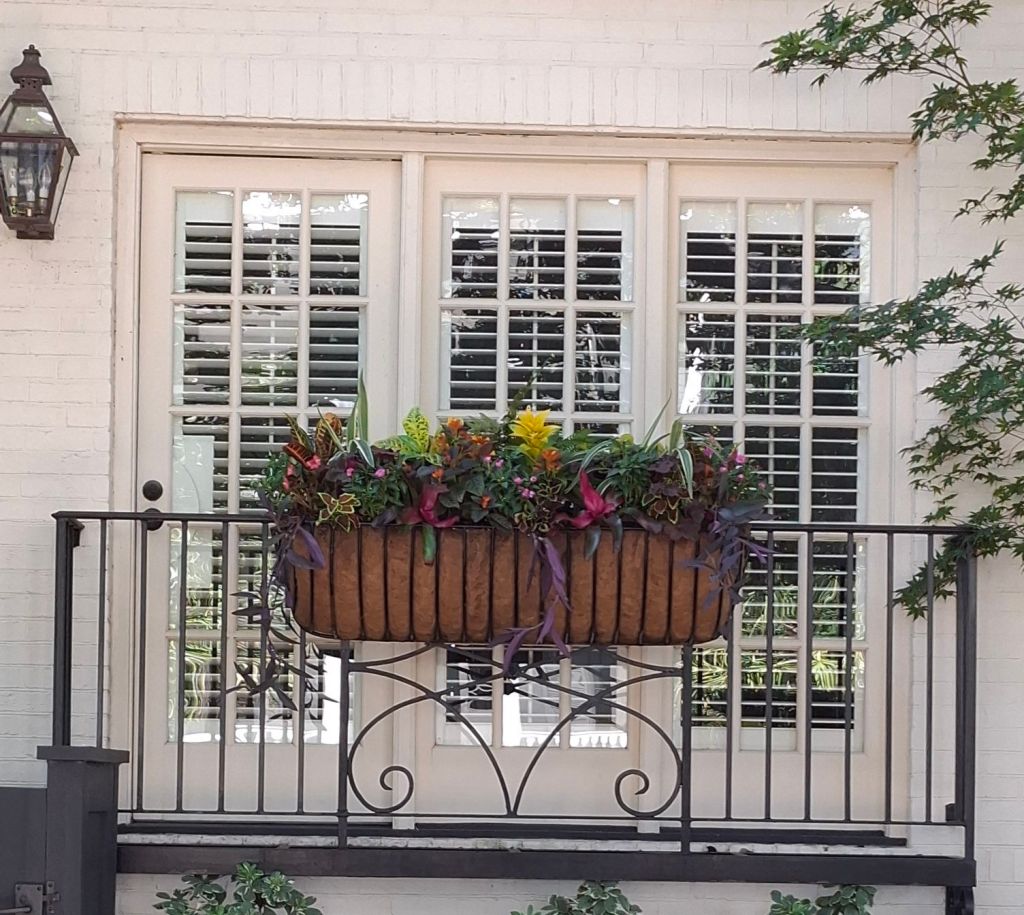
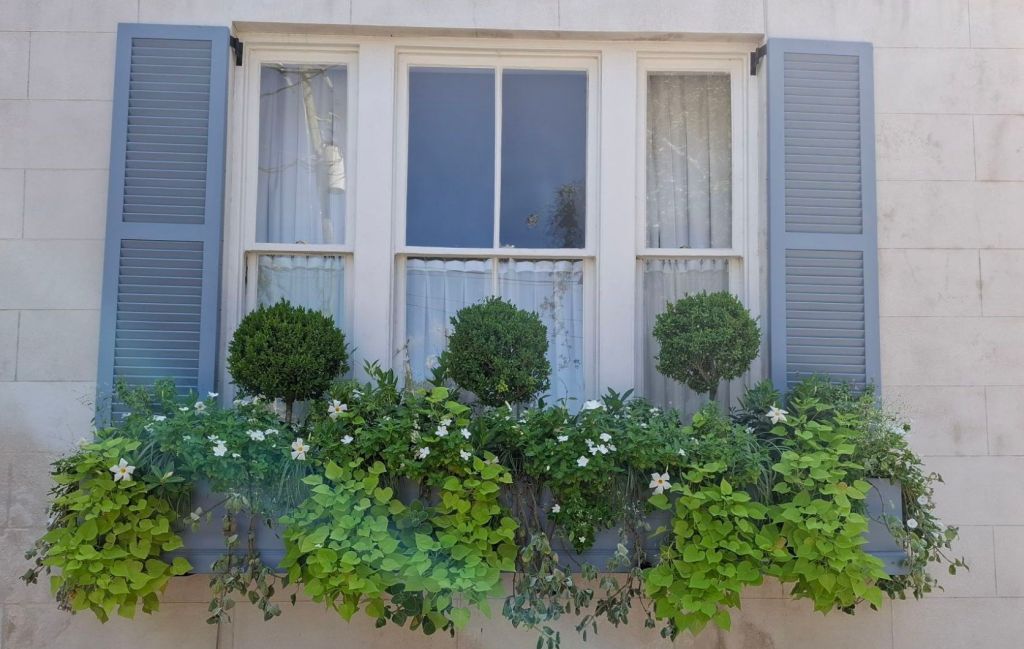
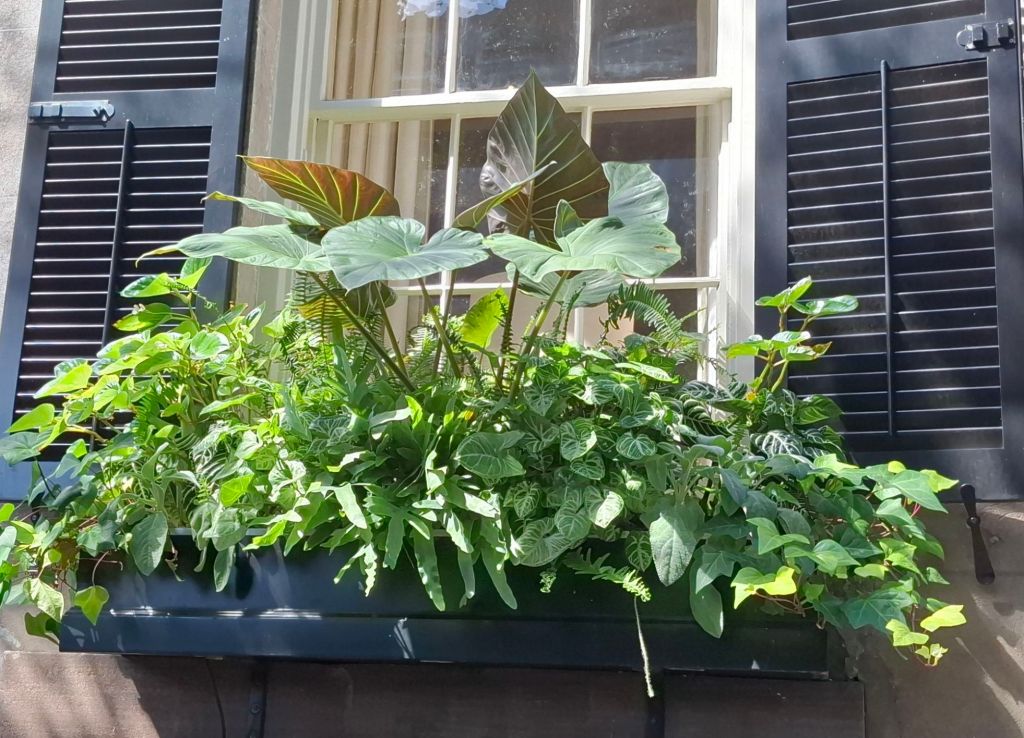
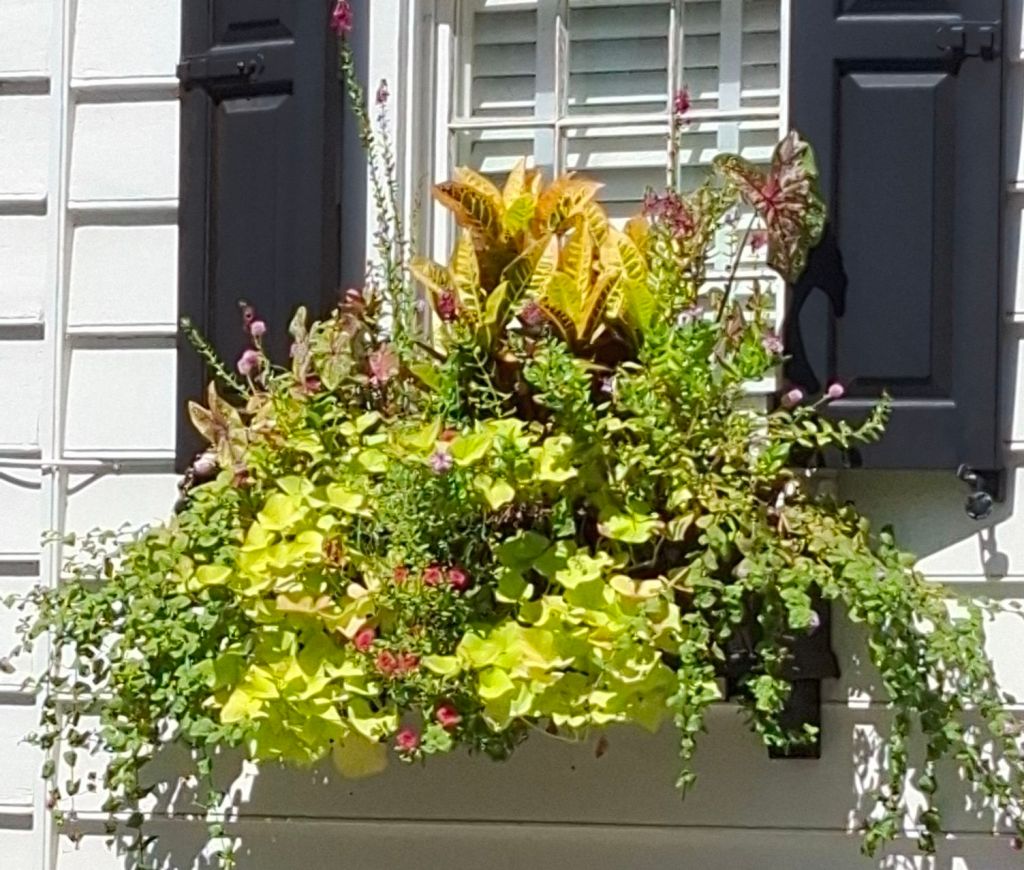
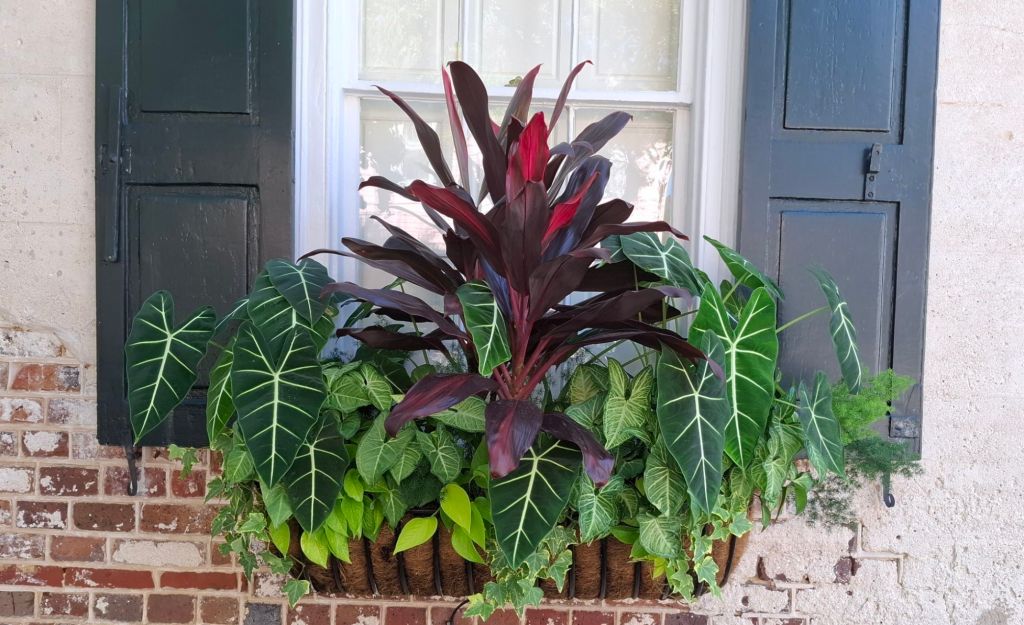
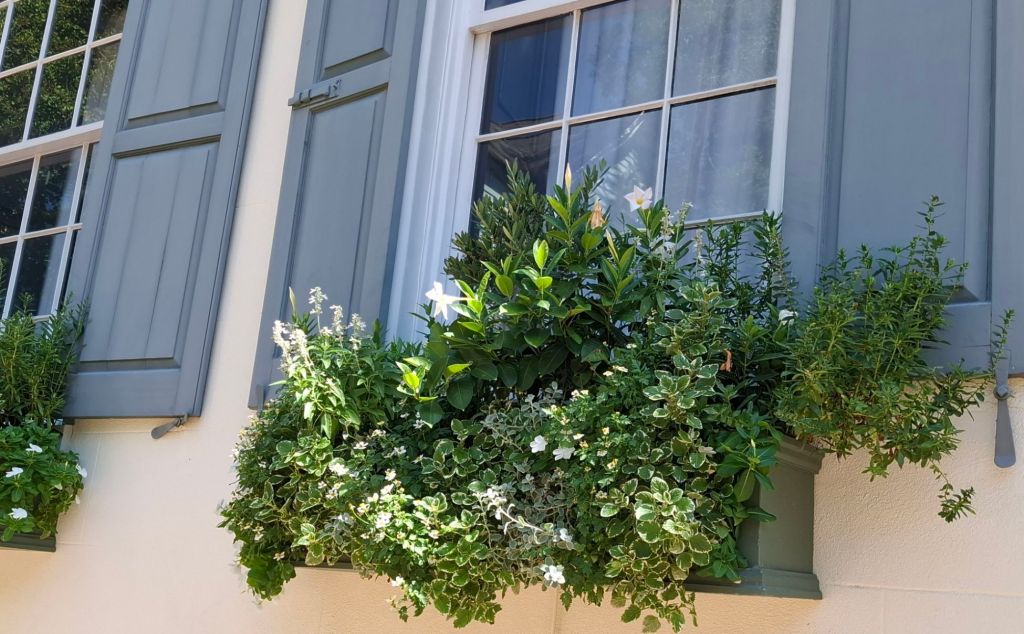
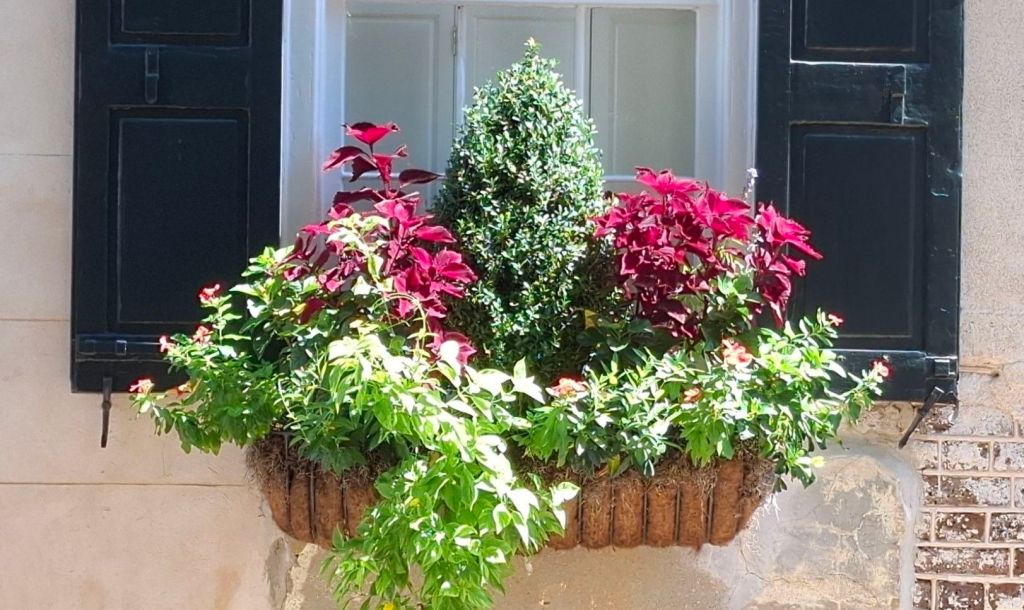
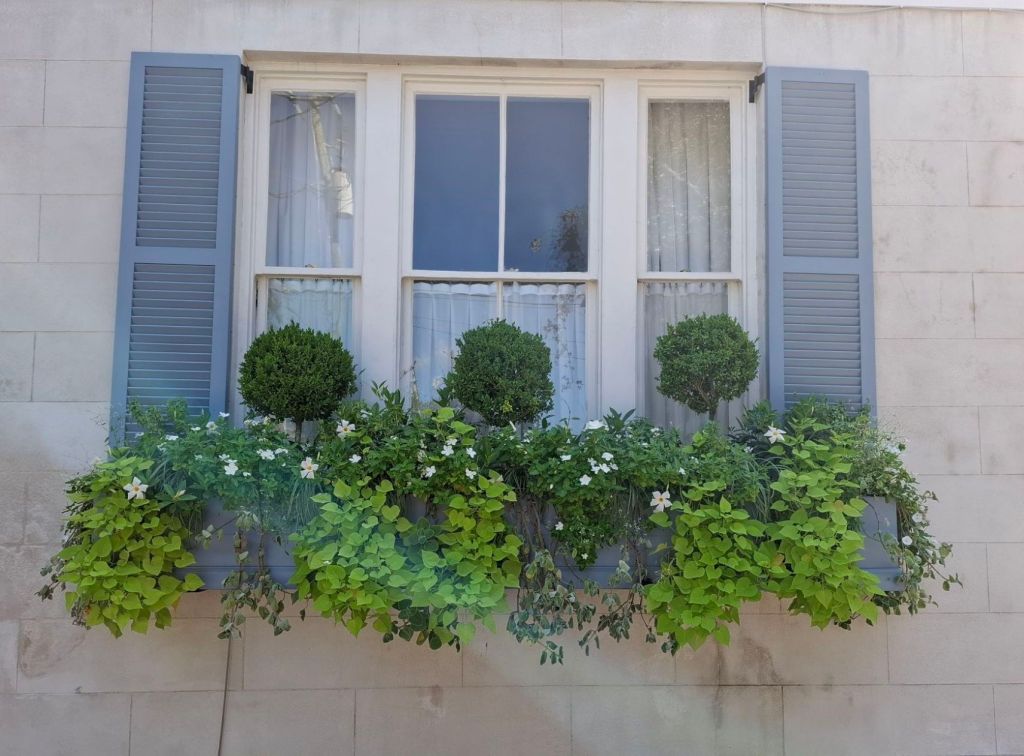
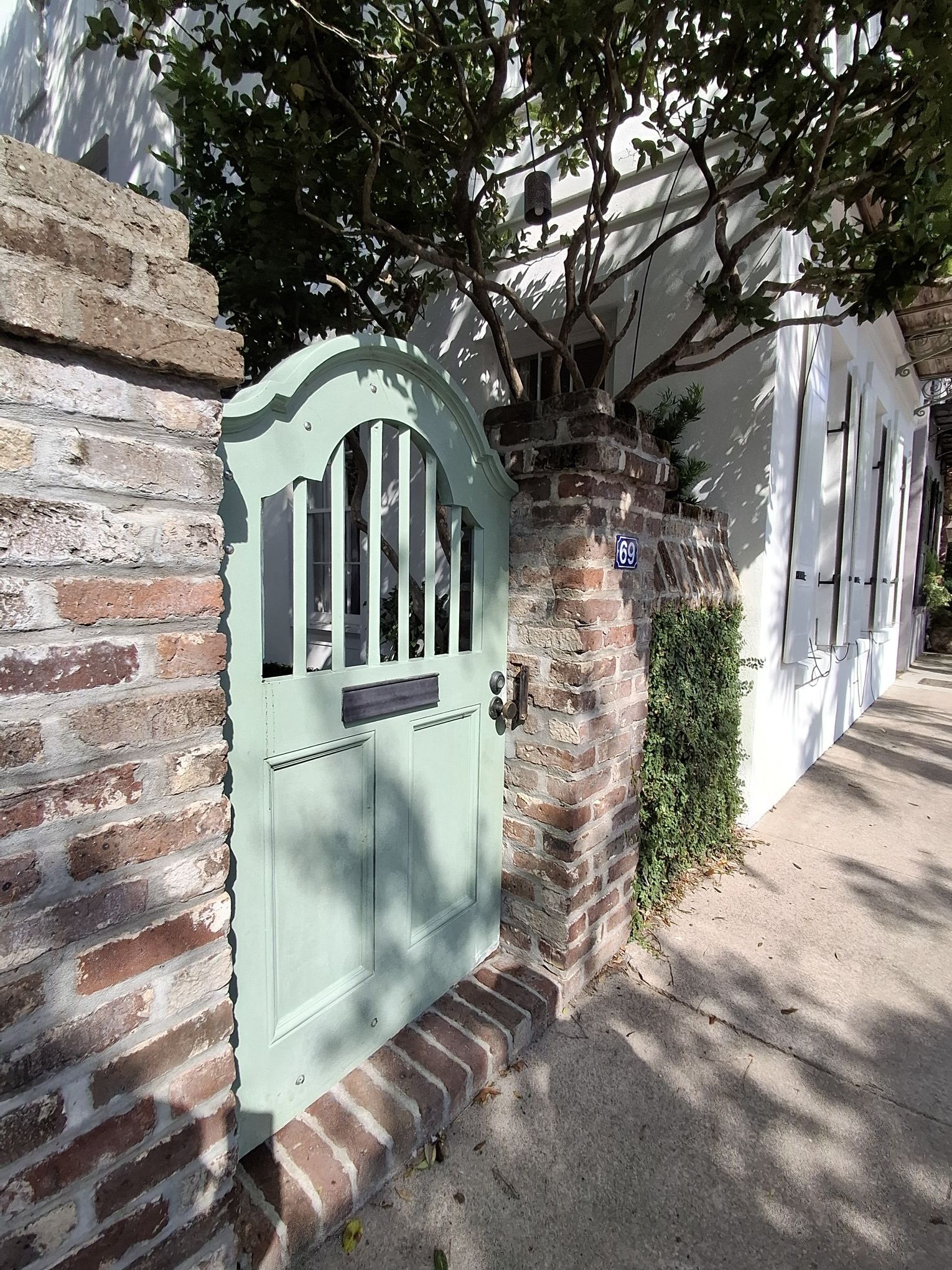
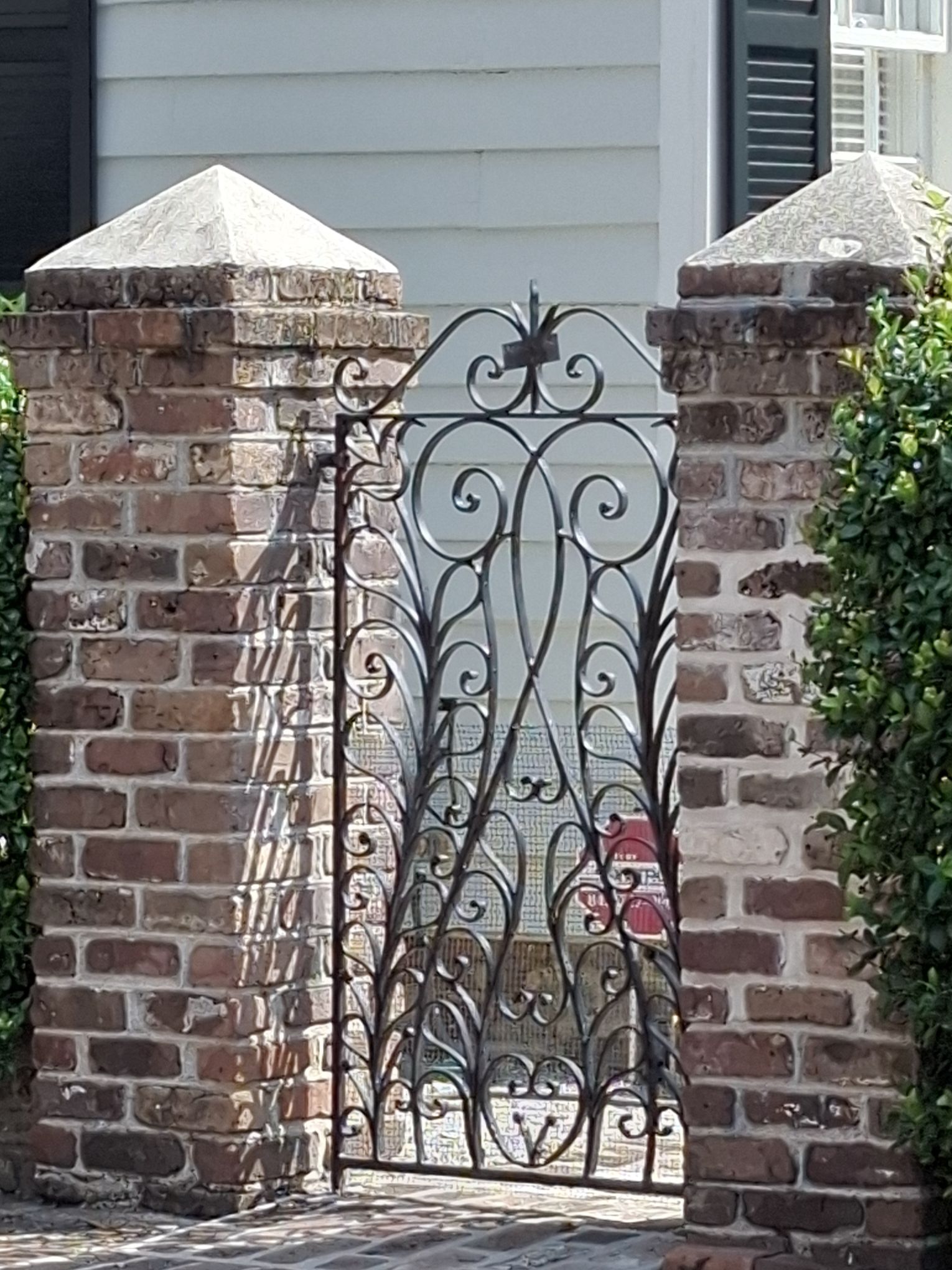
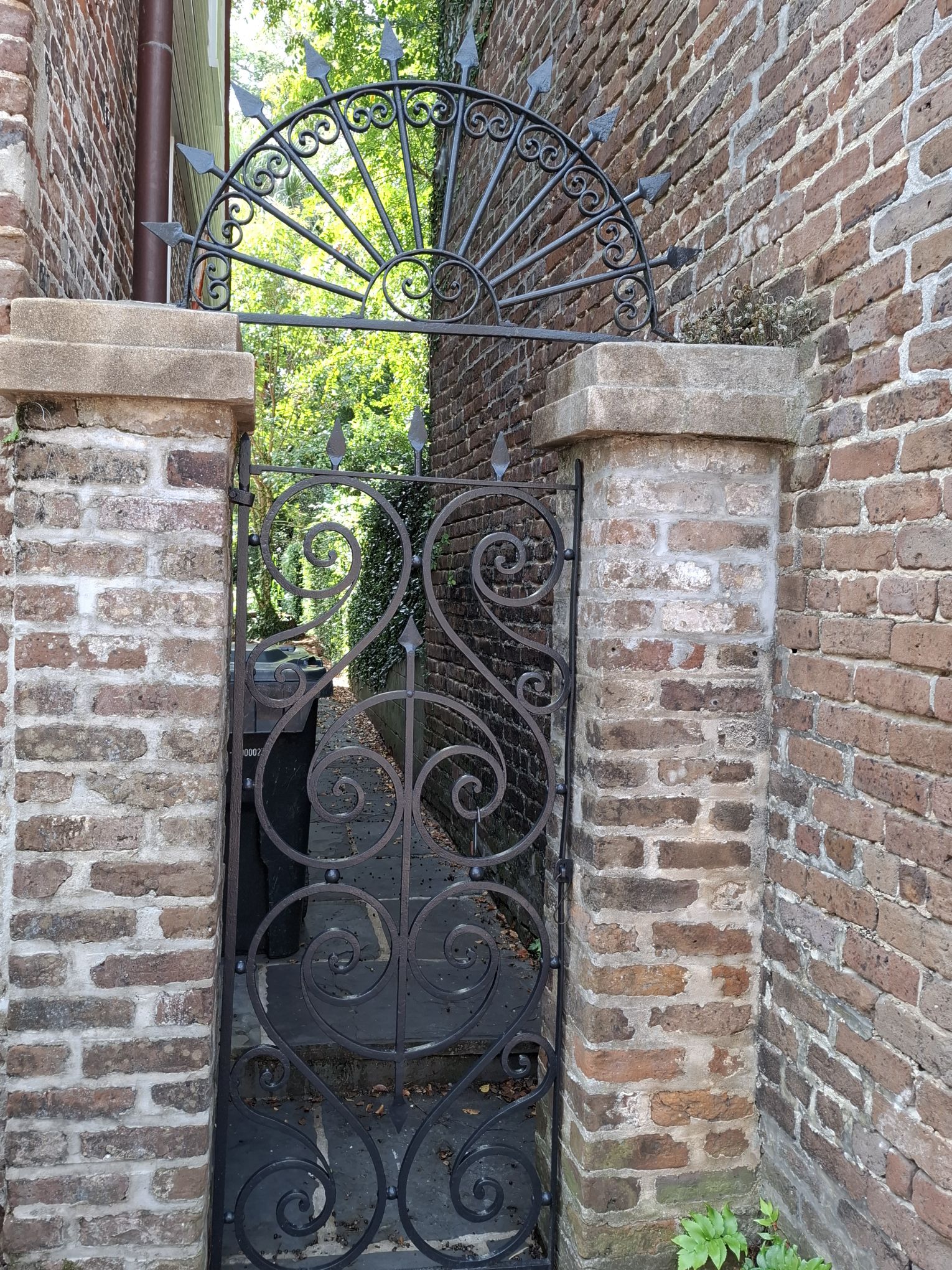
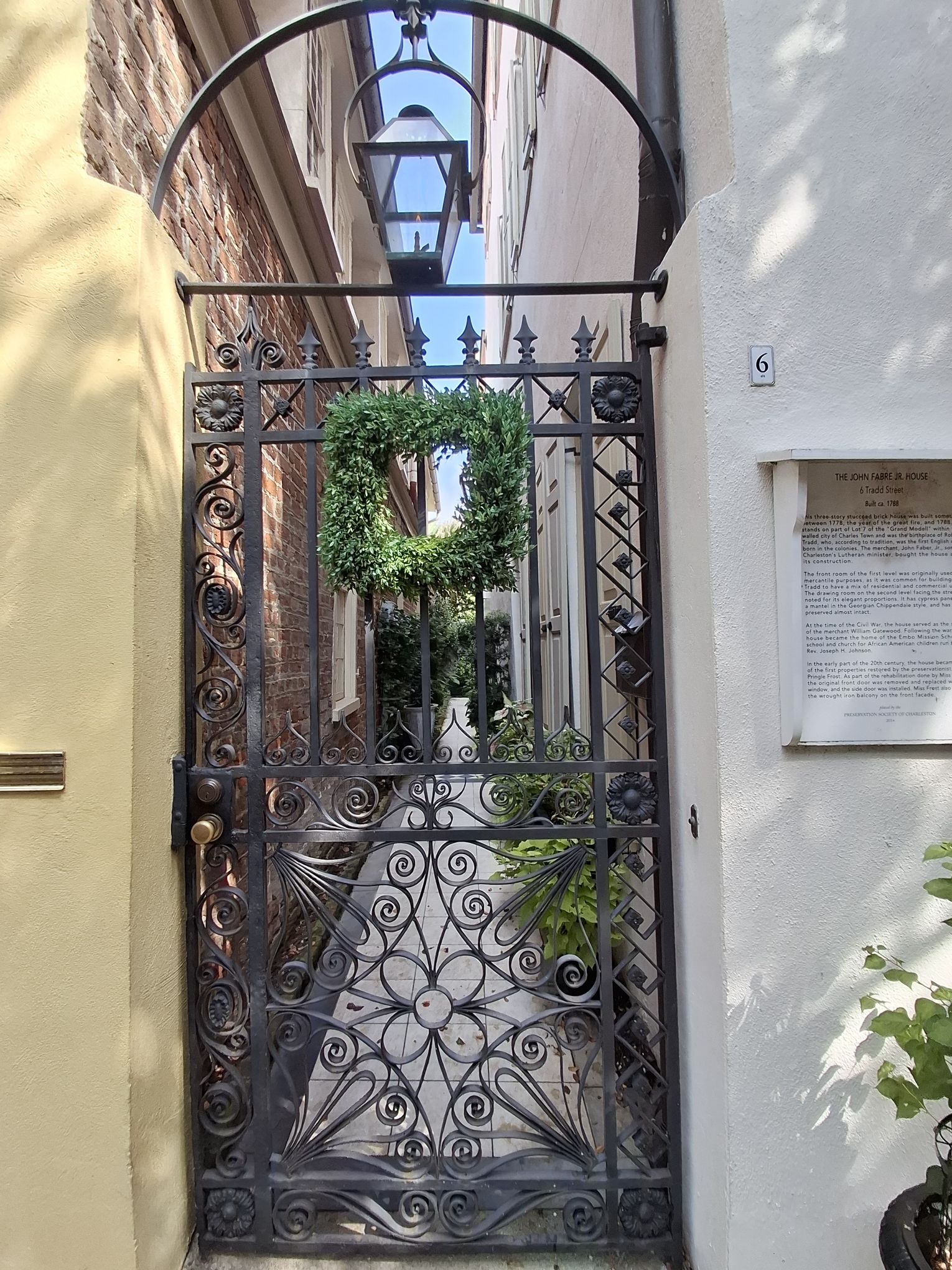
Many homes in Charleston are against the sidewalks. Instead of front gardens, these homes have window boxes at each window with matching plantings. Many have large pots by the entrances. This breaks up the look of the walls with some shapes and colors.
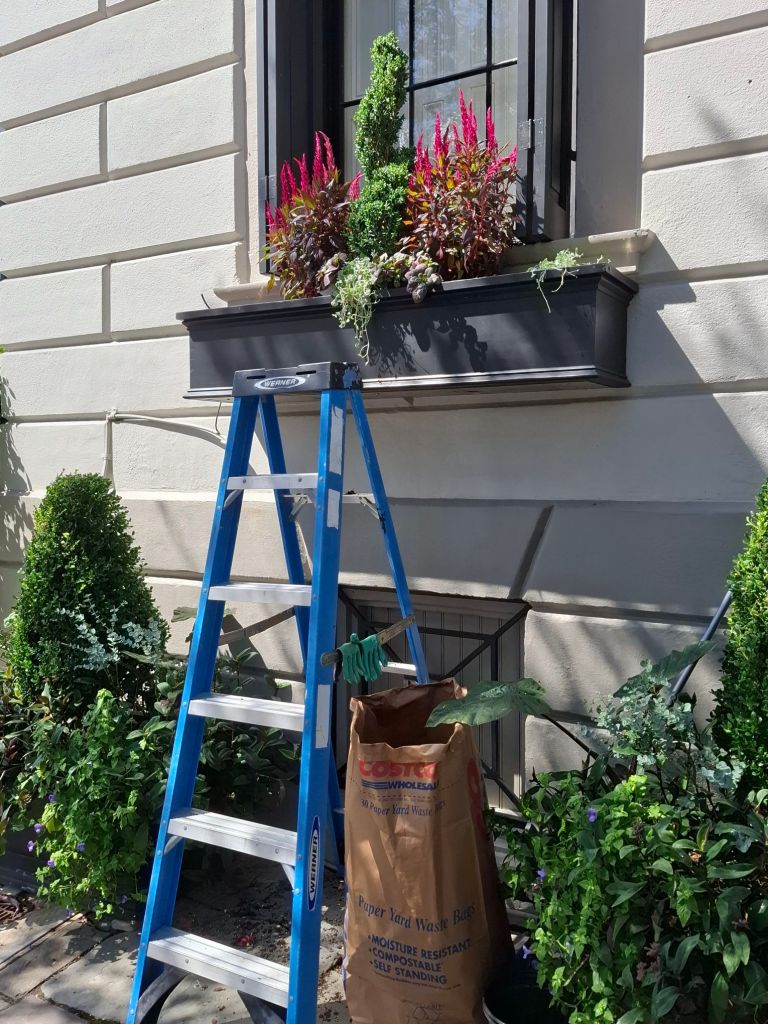
We marveled that most of these plantings are in perfect condition. There is no wilting or leggy growth. It is like they are constantly maintained…because they are. We stopped at one house that had a ladder under the planter and plants in their plastic pots preliminarily placed for arranging.
Window box by Potted Pleasures
We were standing at the ladder when a woman appeared. She said she was from a company, Potted Pleasures, that designs, installs and maintains windowboxes and potted arrangements along the sidewalks.
No wonder all the plantings are perfect!
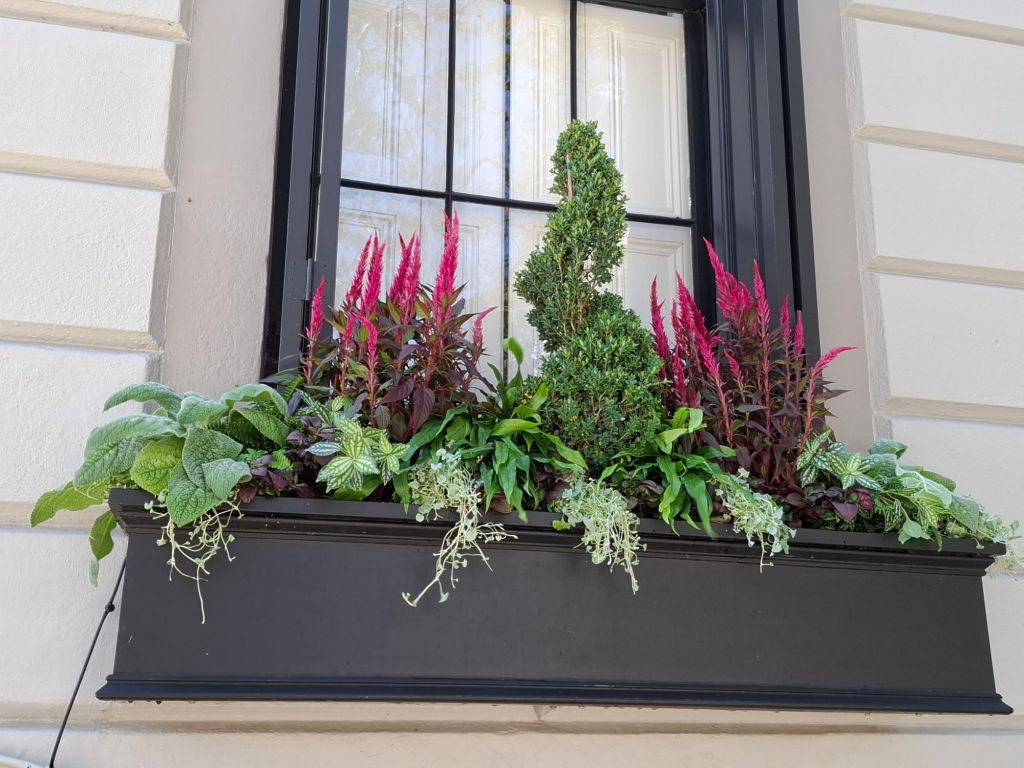
We stopped back by later to see the finished product. It was balanced with the three basics: spill, fill and thrill.
Another reason I love this city is that beautiful plants are everywhere.
This whole town has me charmed. It usually does that. It’s the art, architecture, fountains and flowers that get me. Wandering through the streets of Charleston is like walking around in a dream. Beauty is everywhere.
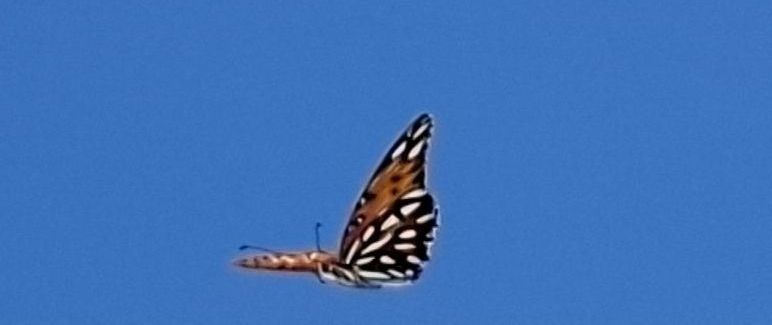
The migrating butterflies caused a pause this week.
The sunset at the Citrus Club on top of the Dewberry took my breath away.
Cooper River Bridge
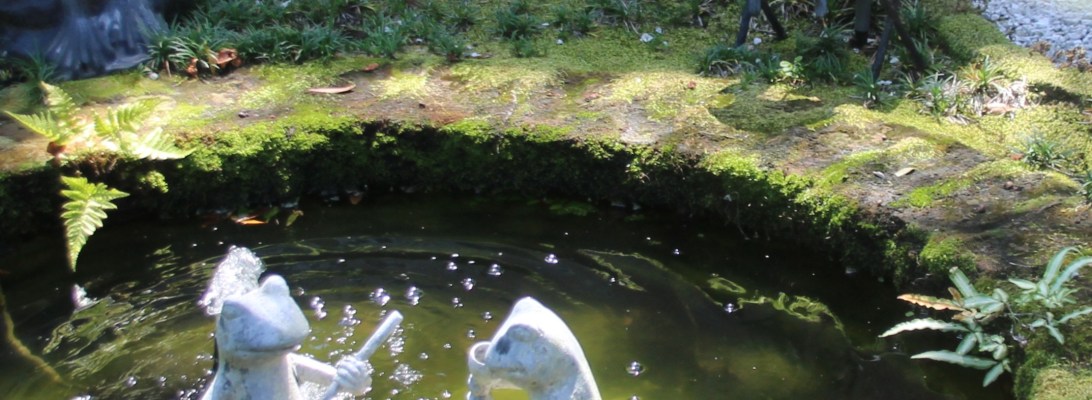
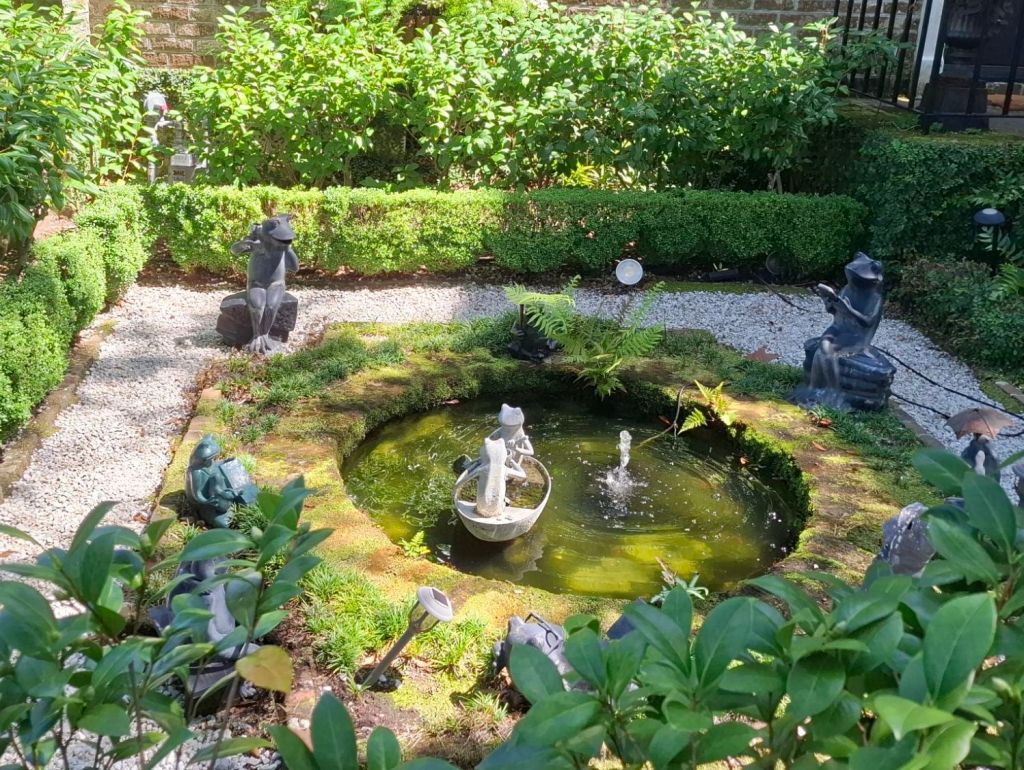
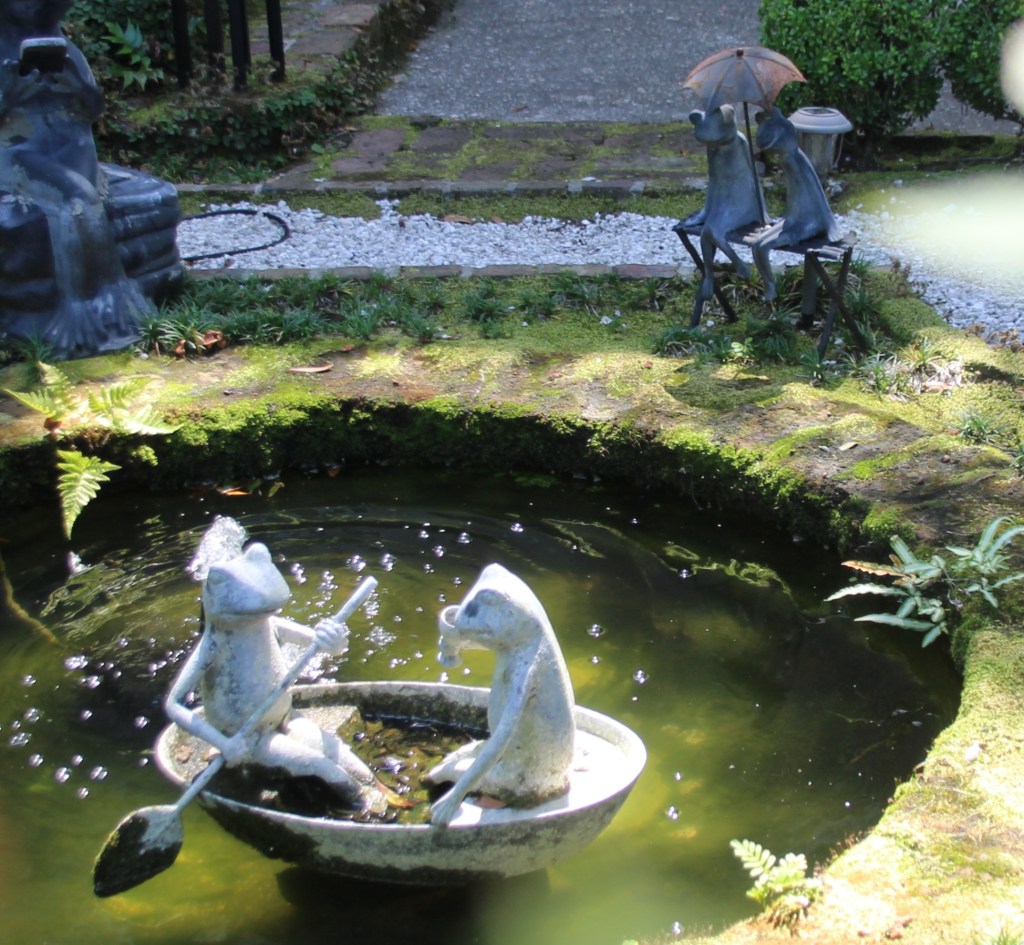
But I did not fall head-over-heals in love until I spied two frogs in a tiny boat.
The cutest scene in the city.
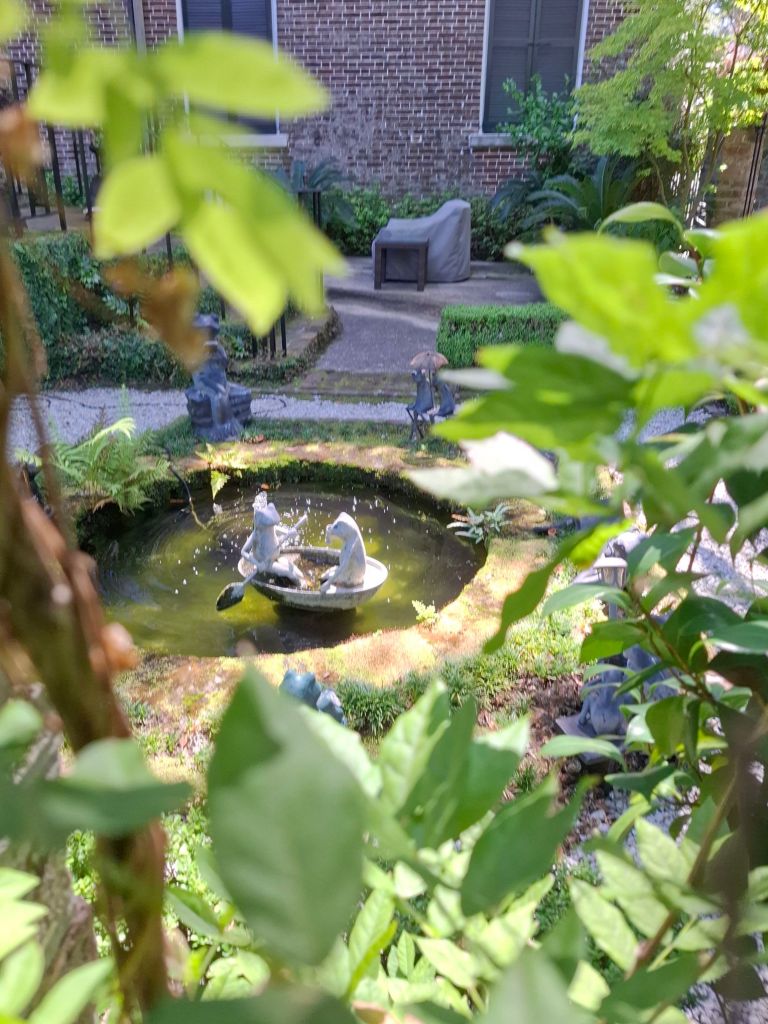
I squealed at them through a hole in the hedge. “This is it!” I said. “There is magic right here!”
Pond of dreams
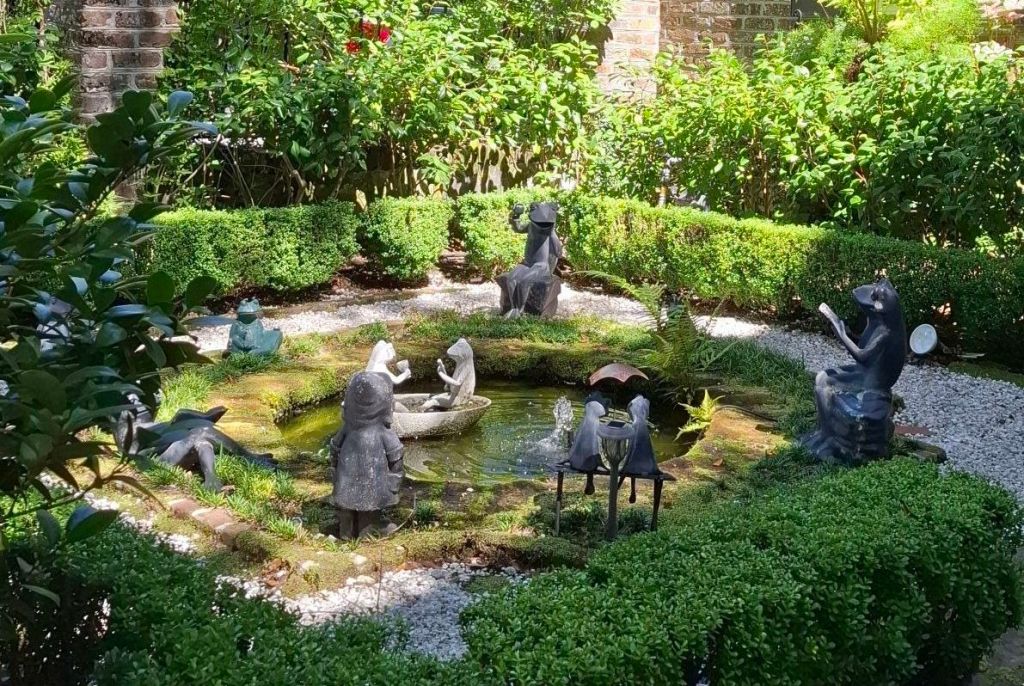
Thankfully, I did not have to stick my camera through the hedge. We turned the corner to see a ROUND frog pond with a frog party in progress.
Magical
I felt my feet growing roots. I was mesmerized like a blinded frog myself… Staring at something from my imagination created by a soulmate stranger.
There was something so familiar about the scene that I stayed silently planted on the sidewalk, hoping noone would break the spell of the frogs of my dreams surrounding the most adorable tiny floating boat.
It was like a scene from the beloved Frog and Toad books. Did the owners do this intentionally? Did they know their little frogs were wooing women as they passed and paused by their magic pond?
THIS is pure gold made of bricks, moss, water and metals. I do and will always love FROGS and Charleston. Now I know where to find them both together…Just like Frog and Toad!
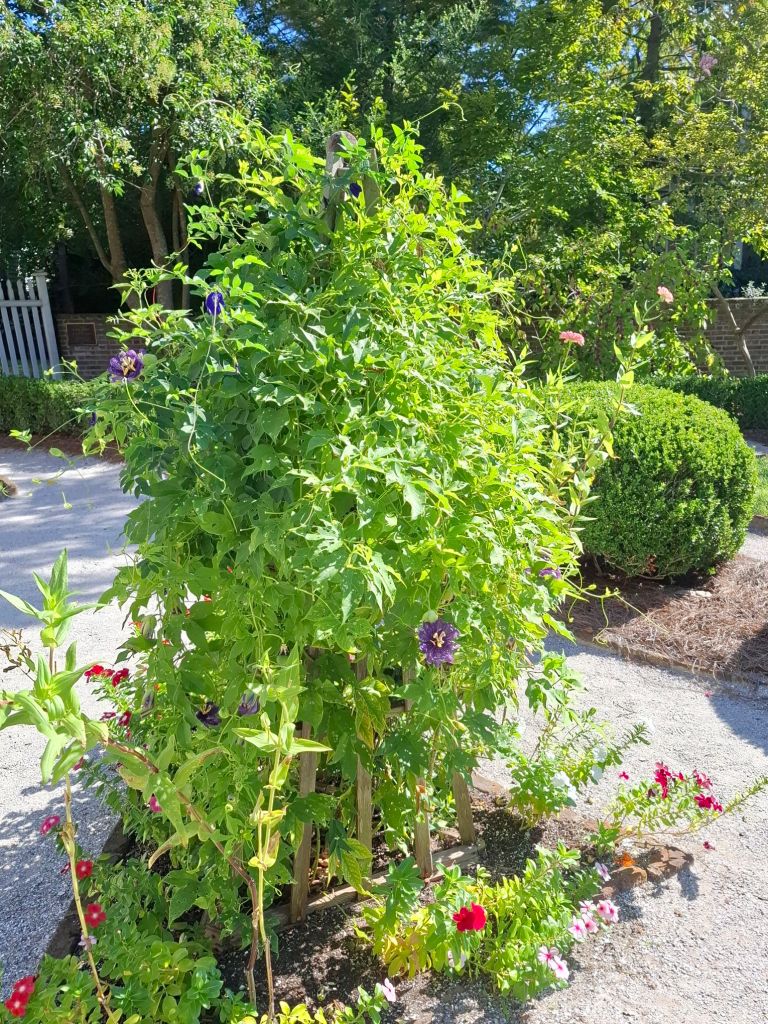
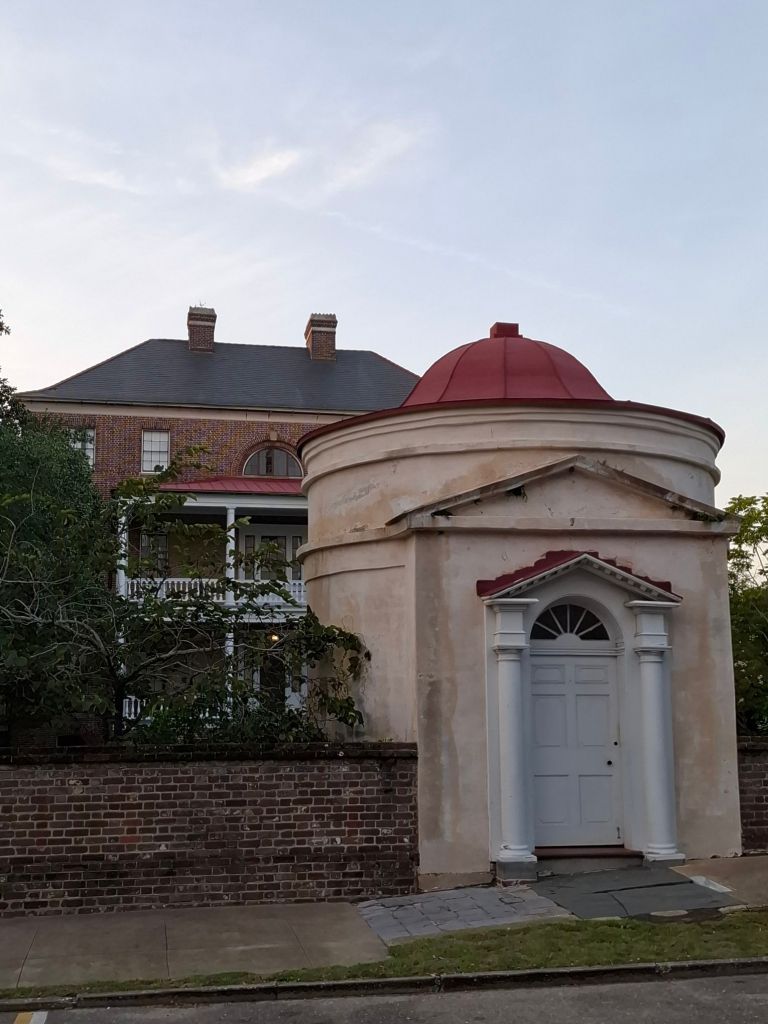
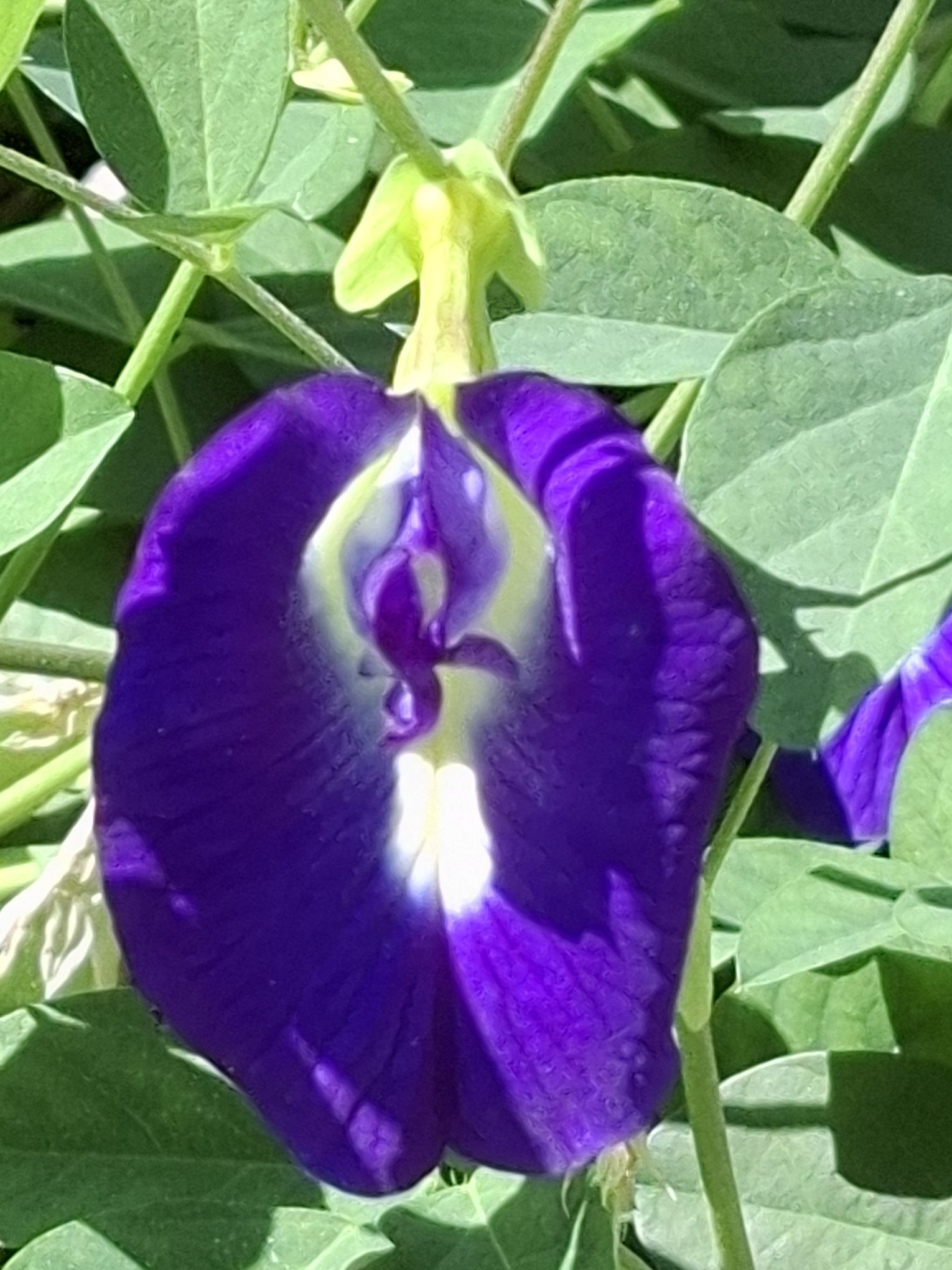
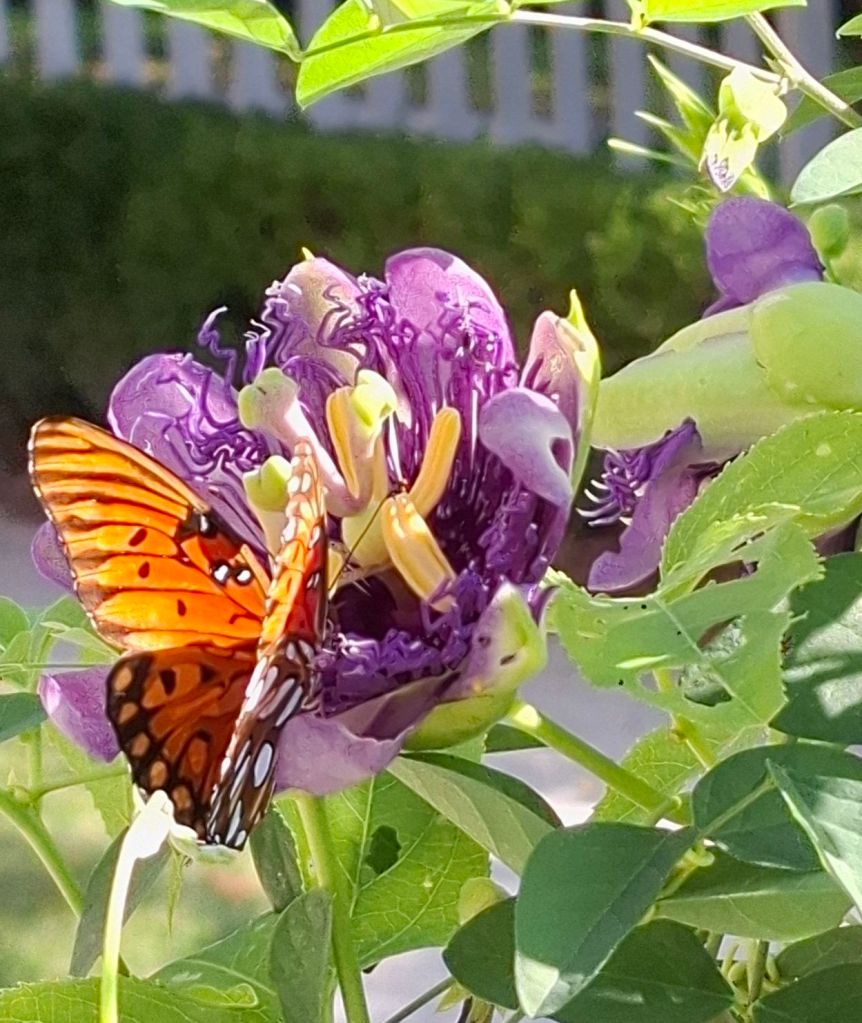
This was one of my favorite finds of the whole trip to Charleston. These two intertwined vines are covering two separate trellises in the gardens of the Manigault House.
Passiflora vines and Butterfly Pea/ Bluebell vines/Clitoria ternatea vines covering sidewalk sentinel trellises near the gatehouse.
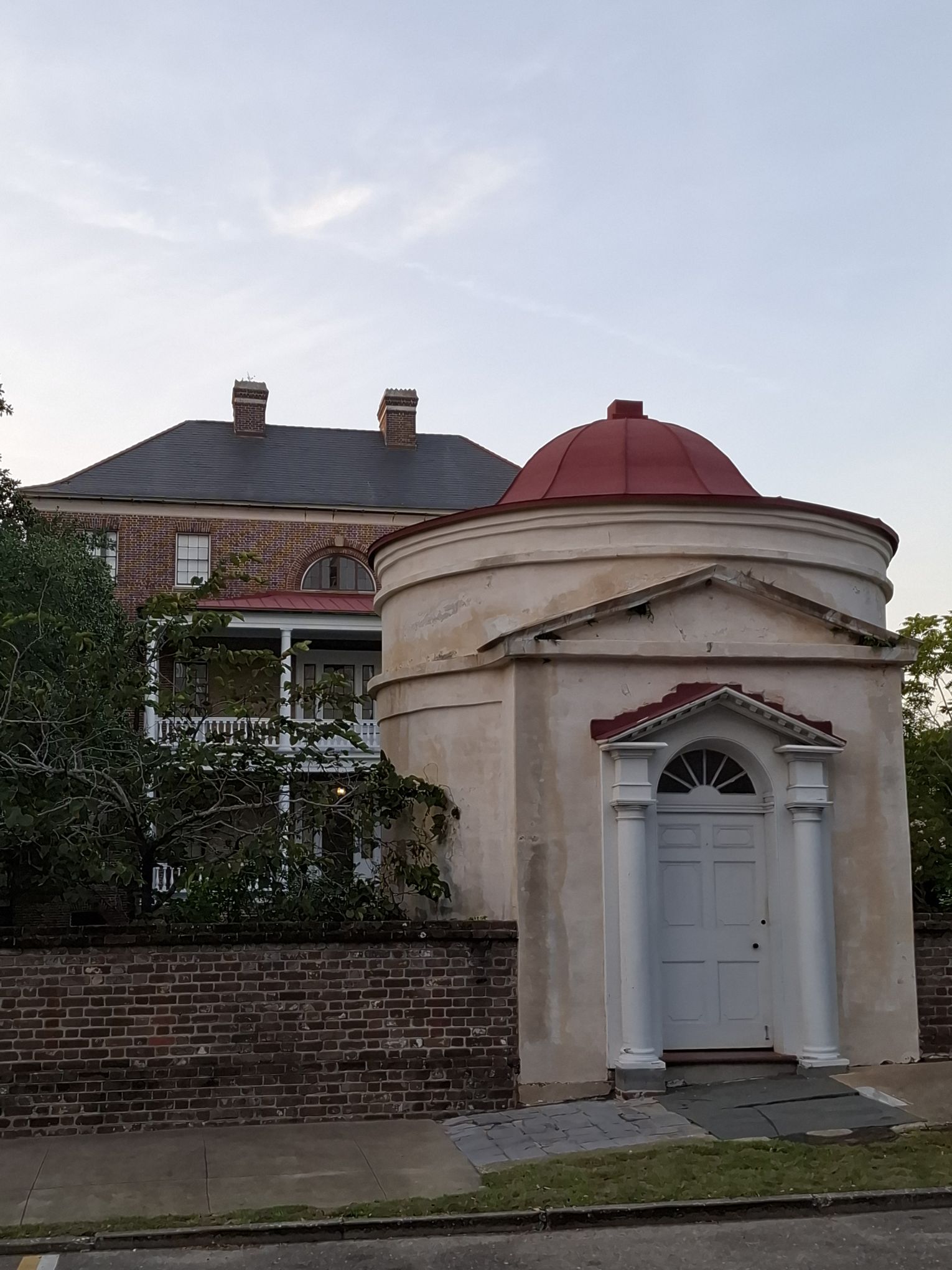
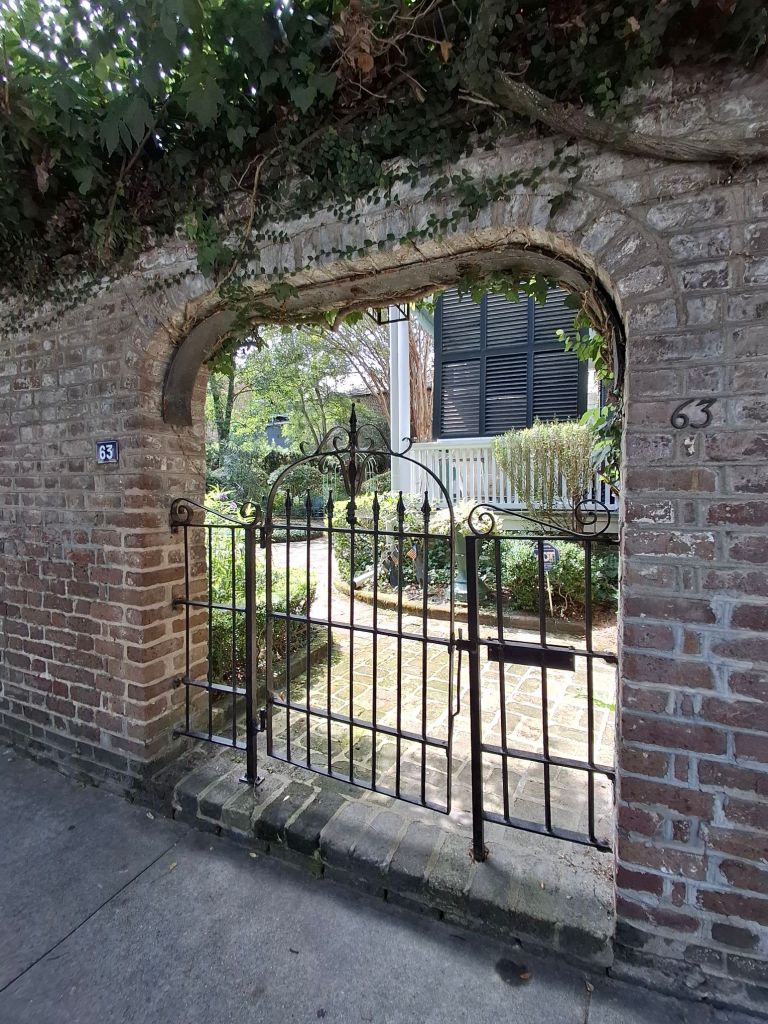
Gatehouse of the Manigault House
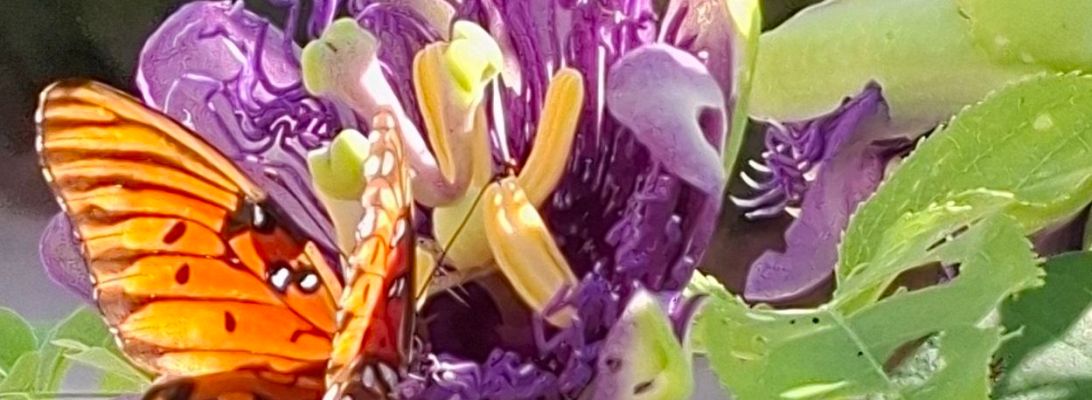
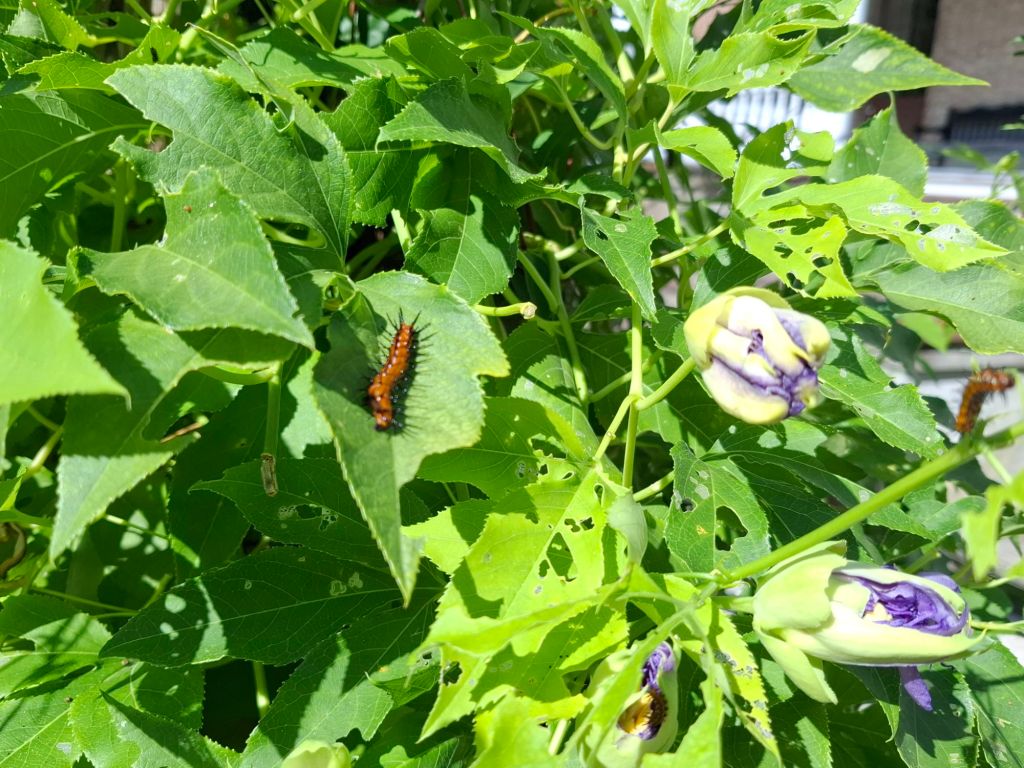
Not only are the blooming vines bursting with Fritillary butterflies. They are also crawling with caterpillars of all sizes.
Fritillary caterpillars all over Passion leaves
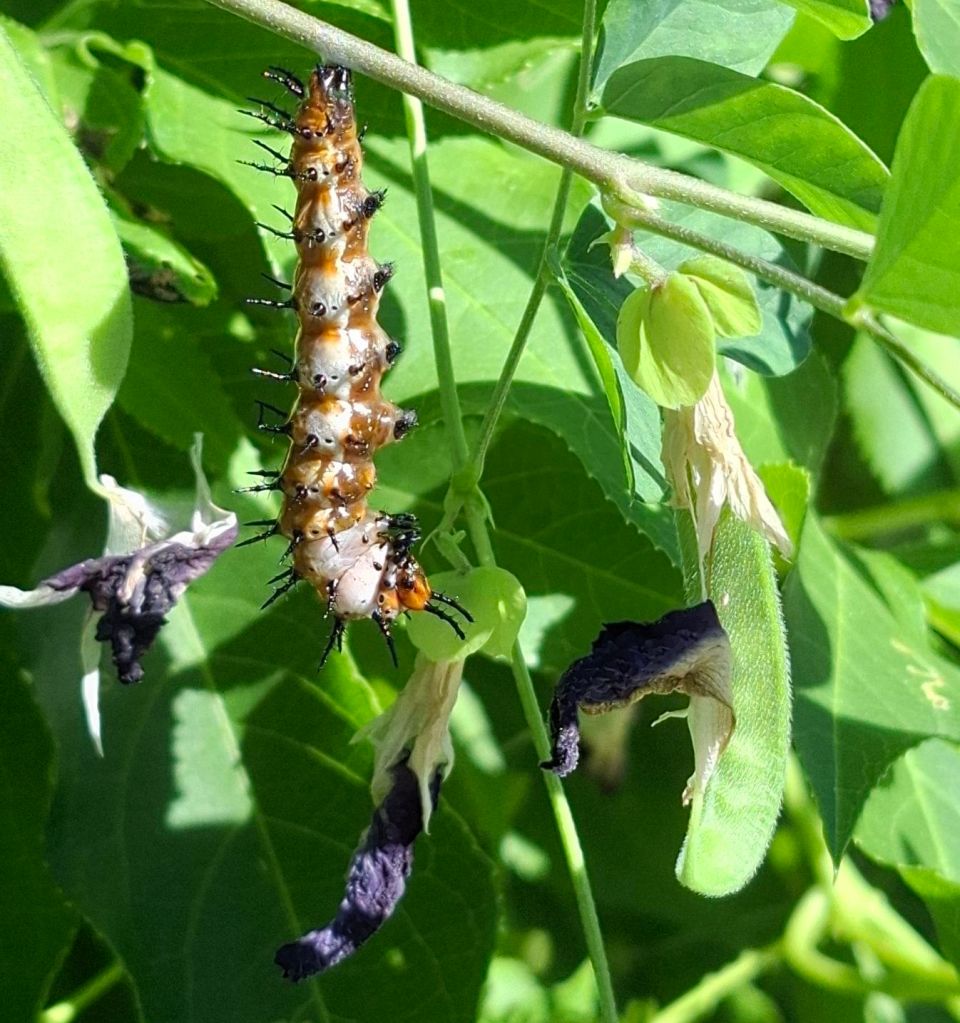
One is even forming a chrysalis. It was hanging beside a peapod of a similar shape.
Caterpillar to chrysalis
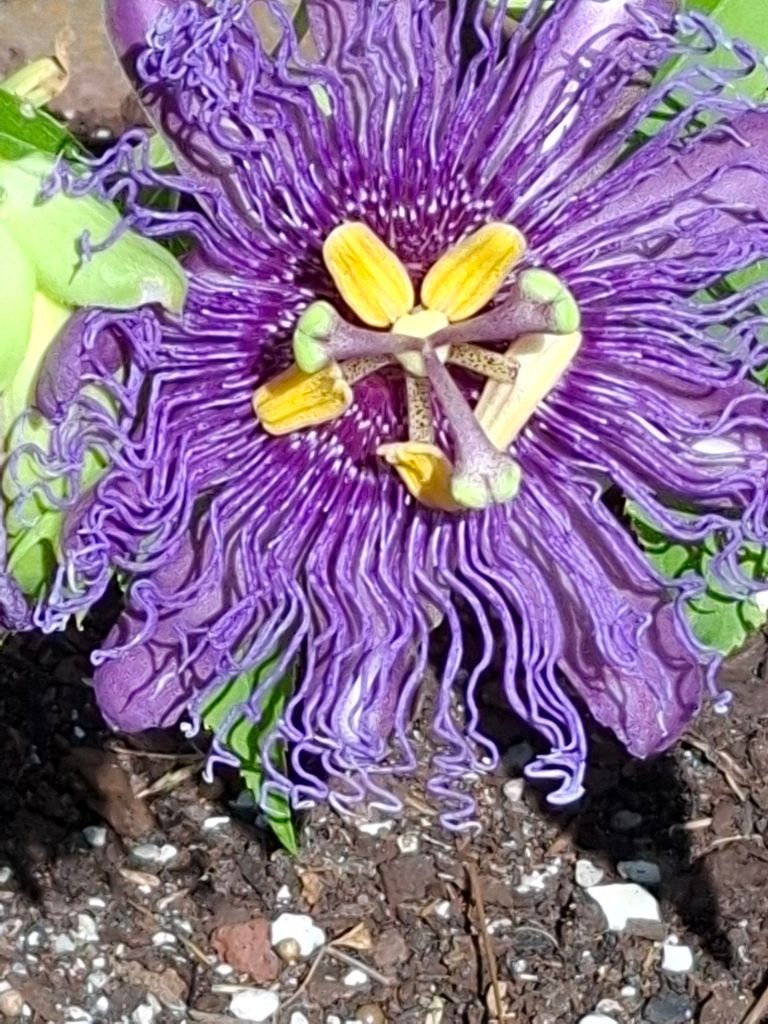
The passion flowers are a deep purple and the pea blooms are deep blue. My camera did not do them justice.
Passion flowerBlue Pea bloom/Bluebell/Butterfly Pea
I just had to pause a while to watch all the fluttering and crawling on these Passions and Peas.